Industrial Logistics Optimization for the Paris Metropolitan Basin
Strategic logistics infrastructure guidelines for supply chain managers operating along the Seine Axis, Grand Paris Express clusters, and the Île-de-France corridor.
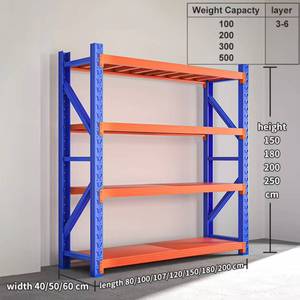
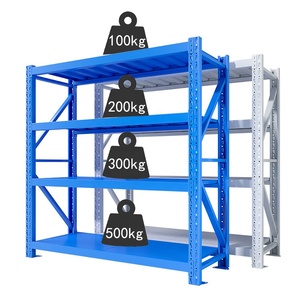
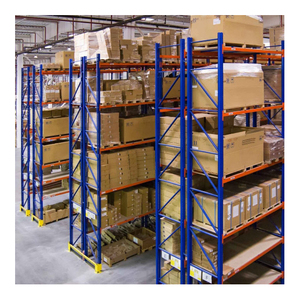
The Greater Paris region (Île-de-France) remains one of Europe's most dynamic and demanding logistics epicenters. Straddling prime transit corridors across the Seine Axis connecting Le Havre, Rouen, and Paris, warehouse real estate costs in municipalities such as Roissy-en-France, Marne-la-Vallée, and Saint-Quentin-en-Yvelines command steep premiums. In response to rising footprint costs, supply chain operators are shifting away from horizontal footprint expansion toward vertical cubic space maximization. Delivering certified heavy-duty industrial racking systems directly to the Paris logistical ecosystem requires a technical understanding of high-bay engineering, European standardizations, structural elasticity, and local fire regulations.
1. Localized Application Scenarios Across the Île-de-France Ecosystem
Deploying heavy-duty industrial racking within Paris and its suburban perimeters involves designing specifically around regional micro-logistics dynamics. Our structural solutions are deployed across three critical commercial sectors:
Multi-Tier E-Commerce Hubs
In logistics corridors near Saint-Denis and Garonor, urban distribution nodes require rack-supported mezzanines and multi-level picking systems to handle millions of fast-moving fashion, retail, and electronic consumer SKUs delivering within same-day Parisian windows.
Automotive & Industrial Assembly
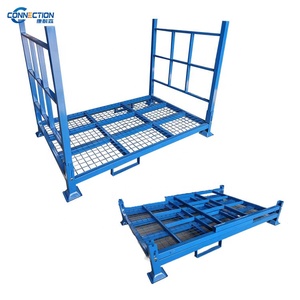
Industrial zones flanking the Seine Valley utilize cantilever and dynamic tire racking frameworks to support manufacturing supply chains, accommodating heavy stamping dies, elongated metal stock, exhaust assemblies, and fluctuating tooling volumes without rack deflection.
Cold Storage & Agro-Logistics
Directly supplying the massive Rungis International Market ecosystem requires high-density radio shuttle racks and drive-in configurations built with high-grade anti-corrosive finishes, maximizing thermal storage volume and enforcing FIFO discipline for perishable commodities.
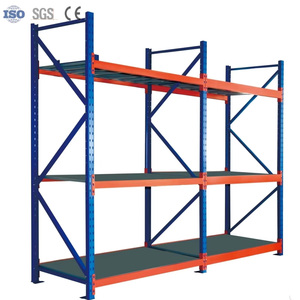
Whether configuring selective pallet racking for class-A 3PL warehouses or providing multi-tier longspan shelving for inner-ring urban depots, our engineering calculations systematically factor in Euro-pallet formats (800x1200mm) alongside industrial industrial containers (1000x1200mm), ensuring beam clearance matches precise mast clearances of major reach trucks and articulated narrow-aisle (VNA) vehicles.
2. Structural Dynamics & Emerging Logistical Trends in Paris
Logistical facilities across France are operating under strict environmental and structural regulations. With the enactment of the ZAN (Zéro Artificialisation Nette) objective under French climate law, municipal bodies severely limit the conversion of agricultural land into logistics zones. Consequently, the commercial development paradigm across Île-de-France focuses on redevelopment, multi-story warehousing, and optimizing vertical volume.
Modern Paris facilities are increasingly integrating semi-automated or fully automated guided vehicles (AGVs) and autonomous mobile robots (AMRs). These modern deployments necessitate cold-formed profile uprights manufactured with tight structural tolerances. System deflection cannot exceed 1/200th of the span under maximum operational capacity to avoid optical sensor errors on automated equipment. Concurrently, strict adherence to European Norms (EN 15512: Steel static storage systems, EN 15620, and EN 15635) mandates strict quality control over yield points, elongation indices, and weld penetration.
3. Enterprise Manufacturing Strengths: Guangzhou Heda Shelves Co., Ltd.
Operating since 2001, Guangzhou Heda Shelves Co., Ltd. delivers vertically integrated manufacturing excellence directly to French enterprises. Producing over 30,000 metric tons of high-grade structural steel storage units monthly within an advanced 30,000 m² factory environment, we control every manufacturing phase in-house.
Structural Integrity
Fabricated from certified prime Q235B and Q355B coil steel, engineered for superior elastic properties and dynamic load distributions.
Corrosion Passivation
Multi-stage chemical degreasing, pickling, and phosphating pre-treatment followed by high-adhesion electrostatic polyester powder coating.
Compliance & Approvals
Full verification with European CE marking (Certificate No. 2435-CPR-8605159) and ISO 9001:2015 quality management benchmarks.
Export Loading Plans
Optimized container packing using automated nest schemes, maximizing 40ft HQ volumetric utilization to reduce sea-freight overhead per pallet spot.
From automated multi-die CNC upright punching lines to dual-sided continuous robotic beam welding, our automated manufacturing lines reduce human variance. The result is uncompromised interchangeability, seamless onsite assembly, and reliable structural stability for French storage infrastructures.
Frequently Asked Questions (FAQ) for Parisian Procurement Directors
How do your racking systems comply with French fire protection (ICPE) and insurance (APSAD) mandates?
Industrial storage units in France often fall under installations classified for environmental protection (ICPE regime, rubric 1510). Our heavy-duty racking systems are engineered to facilitate ESFR (Early Suppression Fast Response) in-rack sprinkler drops. We supply specialized open wire mesh decking with open-area percentages exceeding 50% and configured flue-space beam stops, fulfilling insurer APSAD technical requirements.
What is the standard lead time and transport routing for bulk deliveries to Paris?
Production cycles generally require 15 to 25 business days depending on tonnage and project complexity. Consignments are containerized and dispatched directly via South China maritime routes to the Port of Le Havre (the principal gateway along the Seine axis) or Antwerp/Rotterdam, with transit completed via rail/barge/road freight to final hubs throughout the Paris basin. Full bill of lading, certificate of origin, and custom clearing documents are provided directly.
Can you provide technical calculation notes (Notes de Calcul) for local French site controllers?
Yes. Our engineering division compiles comprehensive 2D CAD architectural plans, 3D renderings, and finite element structural calculation dossiers detailing static load factors, beam deflection thresholds, and floor anchorage reaction values. These engineering documents enable our clients to easily obtain technical compliance validation from regional French inspection bureaus (such as Socotec, Apave, or Bureau Veritas).
Do your systems accommodate both Euro-pallets and industrial industrial formats interchangeably?
Yes. All beam levels, row spacer links, and column profiles are configurable. Our standard beam configurations range from 1,800mm to 3,600mm clear spans, comfortably housing two to four standard Euro-pallets (800x1200mm) or wide-format industrial skids (1000x1200mm), supported by integrated cross-tie pallet supports to eliminate pallet sagging risks.