Engineered High-Density Racking & Industrial Mezzanines
Manufactured under CE and ISO 9001:2015 certified quality controls, designed to meet rigorous Japanese warehousing load capacities, automated material handling clearances, and seismic tolerances.
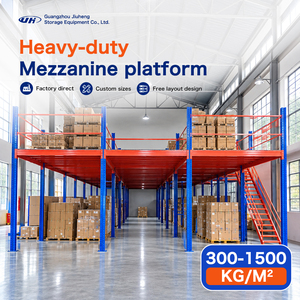
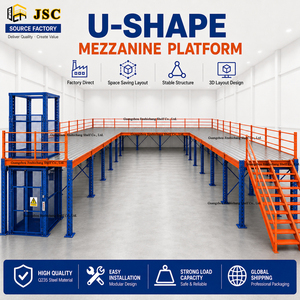
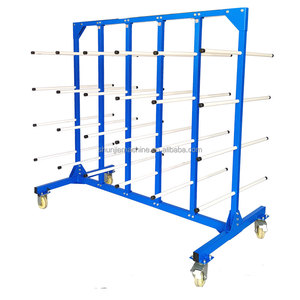
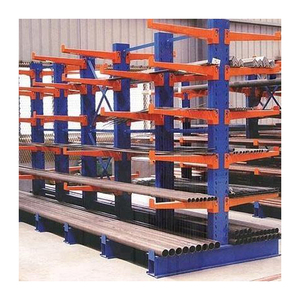
Engineering Excellence & Direct Factory Manufacturing Capabilities
Backing Japanese logistics operators, general contractors, and cold-chain facilities with over 25 years of specialized racking manufacturing expertise and comprehensive structural testing.
Direct Factory Scale & Cost Efficiency
Operating from our modern 30,000 m² Guangzhou production facility, HEDA Shelves maintains a monthly output capacity exceeding 30,000 tons. By eliminating intermediary trading costs, Japanese distributors and facility owners receive direct factory-gate pricing, transparent BOM steel cost breakdowns, and dependable delivery schedules via South China to Tokyo, Yokohama, Osaka, and Kobe container routes.
Full CE, ISO & Traceability Compliance
Every structural upright profile, pallet rail, cantilever arm, and tie-beam is manufactured from Q235B and Q355B cold-rolled structural steel with mill certificates. Certified under CE (No. 2435-CPR-8605159) and ISO 9001:2015 (No. 18624Q00169R0M), our automated continuous punching and cold roll-forming lines operate under strict tolerances meeting Japanese warehousing compliance standards.
Bespoke 3D Layout & Seismic Engineering
Our dedicated bilingual structural engineering division provides turnkey AutoCAD layouts, 3D renderings, and dynamic finite element analysis within 24 to 48 hours. From custom entry guides accommodating Japanese reach trucks to seismic floor-anchoring configurations designed for local peak ground accelerations, every system is tailored to project specifications.
Localized Applications of Drive-In Racking Across Japan
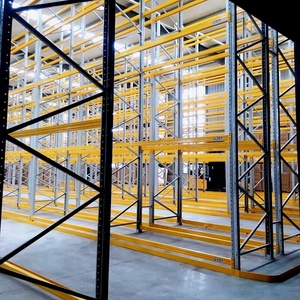
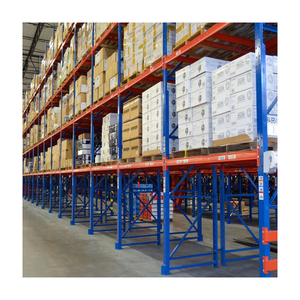
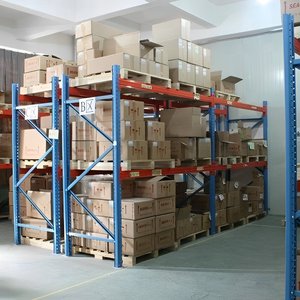
In high-density Japanese logistics nodes where industrial land leases (tsubo rental rates) remain premium, high-density Drive-In systems maximize cubic volume by up to 75% compared with conventional selective pallet racking.
Cold Chain & Frozen Food Warehouses (Reito Soko)
With massive cold-storage facilities concentrated in Yokohama, Kobe, and Hakata ports, refrigerated energy expenditures represent a heavy recurring overhead. Our Drive-In systems eliminate wasteful forklift aisles, consolidating frozen seafood, dairy, and agricultural stock into deep drive-in lanes. All structural steel components receive an advanced pickling and phosphating pre-treatment followed by thermosetting electrostatic powder coat or optional hot-dip galvanization to resist condensation-induced oxidation at -25°C.
Automotive Tier-1 & Tier-2 Supply Hubs (Chubu Region)
Across Aichi, Shizuoka, and surrounding prefectures supporting Toyota and automotive assembly supply chains, consistent batch components demand high-density staging prior to line-side delivery. Our heavy-duty Drive-In systems feature heavy-gauge cantilever support arms and continuous floor guidance rails, enabling reach truck drivers to shuttle standardized plastic bins and heavy steel container pallets smoothly with minimal impact risks.
Beverage, Brewery & Fast-Moving Consumer Goods (FMCG)
Major beverage bottling plants in the Kanto and Kansai regions handle high-volume, low-SKU inventory with rapid seasonal turnarounds. Drive-In racking configured in Last-In, First-Out (LIFO) or Drive-Through First-In, First-Out (FIFO) modes allows vertical stacking heights reaching 11 meters, fully capitalizing on high clear-height ceilings in modern logistics developments (GLP, Prologis, and Mitsui Fudosan parks).
Trends Reshaping Warehouse Storage Systems in Japan
Strategic structural adaptations designed to counteract rising construction costs, warehouse land shortages, labor constraints, and earthquake engineering mandates.
Seismic Resistance (Taishin) & Floor Anchorage
Japanese building authorities (Kenchiku Kijun-ho) require rigorous structural safety verifications. High-density racking systems in seismic-prone prefectures must absorb horizontal kinetic shockwaves without rail buckling. HEDA integrates reinforced heavy-duty baseplates, twin upright rear bracing trusses, and multi-bolt seismic anchor systems, providing full structural calculation documentation compatible with local building control inspections.
Addressing the "2024 Problem" via High Throughput
With statutory caps on truck driver overtime in Japan (the 2024 Logistics Problem), staging efficiency at cross-dock distribution hubs is paramount. Drive-In systems paired with flared rail entry mouths and bright guide rails expedite forklift loading cycles, drastically decreasing truck turnaround times at logistics facility docks across the Tokyo-Nagoya-Osaka corridor.
Hybridization with Shuttle Automation & JIS Pallets
While traditional Drive-In remains the most cost-effective bulk density solution, Japanese logistics designs are increasingly implementing hybrid Drive-In channels configured for future Radio Shuttle carrier retrofits. Furthermore, every system is designed around standard Japanese Industrial Standards pallets (JIS T11 type: 1,100 mm × 1,100 mm) as well as Euro and export pallets.
Frequently Asked Questions by Procurement Managers in Japan
Clear, technical explanations regarding standards, seismic compliance, JIS compatibility, installation, and import logistics.
Q1: Are HEDA Drive-In systems compatible with standard JIS 1100×1100 mm pallets?
Yes. We tailor rail clearance spans, structural load arms, and lane depths specifically for Japanese JIS T11 pallets (1,100 mm × 1,100 mm × 144 mm), as well as plastic skids and export wood pallets up to 1,500 kg per position. Our designs ensure ample fork safety margins and secure rail landing shoulders.
Q2: Can you supply seismic calculation reports for building permit submissions?
Yes. Our engineering department can calculate horizontal seismic coefficients (K-values) tailored to Japan's seismic intensity zones. We supply structural finite element analysis (FEA), static structural load data, and certified engineering documentation to assist your local architecture or contractor team during permit application processes.
Q3: How do your protective finishes withstand extreme cold in refrigerated warehouses?
For sub-zero food logistics (-18°C to -30°C), conventional spray paint frequently chips and corrodes. We utilize an automated continuous pre-treatment system involving steel shot-blasting, pickling, and phosphating, followed by electrostatic coating of cold-resistant polyester powder, or hot-dip galvanizing per ISO 1461 specifications.
Q4: What is the transit lead time and shipping process to major Japanese ports?
Orders are shipped directly from Guangzhou and Shenzhen maritime container ports. Ocean transit to Tokyo, Yokohama, Osaka, and Kobe typically requires only 4 to 7 days. We provide comprehensive container loading diagrams, export customs documentation, and sequentially labeled packing lists to ensure seamless customs clearance and site unboxing.
Q5: Can our Japanese installation team assemble the racking using your drawings?
Absolutely. Every order includes detailed 2D isometric assembly plans, 3D exploded layout drawings, bolt torque specifications, and installation video guides. Our components feature pre-punched precision slots that allow rapid mechanical assembly by local Japanese construction teams without field welding.
Q6: How does HEDA accommodate specialized reach trucks used in Japanese facilities?
Japanese distribution hubs frequently utilize compact electric stand-up reach trucks (Nichiyu, Toyota, Komatsu, Sumitomo). We tailor the lowest pallet beam clearance, entry flare angles, guide rail profiles, and column guard clearances to match your exact mast dimensions and forklift chassis widths.
Optimize Your Japanese Facility With Factory-Direct Storage Engineering
Send us your warehouse CAD floor plan, ceiling clear heights, and pallet specifications. Our engineering team will supply a customized 2D/3D layout, pallet capacity simulation, and direct factory quotation within 24 hours.
Contact Us