Industrial Storage Systems & Heavy-Duty Structural Equipment
Direct factory fabrication, certified high-tensile steel cold-forming, and modular warehouse racking solutions precision-engineered for GCC structural standards and logistical throughput.
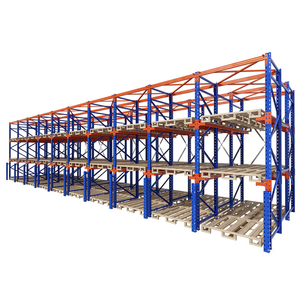
Drive-In & Drive-Thru Pallet Racking Systems
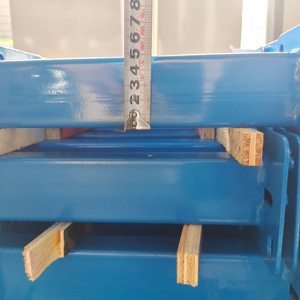
Adjustable Anti-Corrosion Heavy Steel Row Spacers
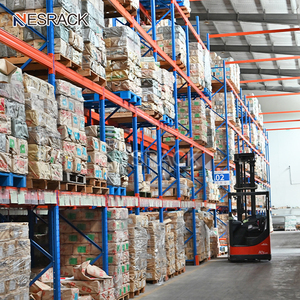
Heavy-Duty Selective Structural Pallet Racking
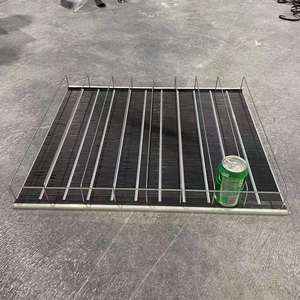
Customized Gravity Roller Dynamic Flow Shelf
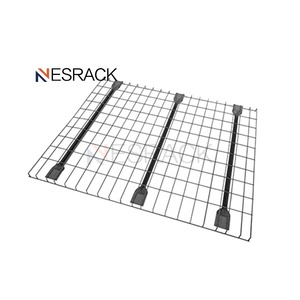
Galvanized Wire Mesh Decking & Flue Space Dividers
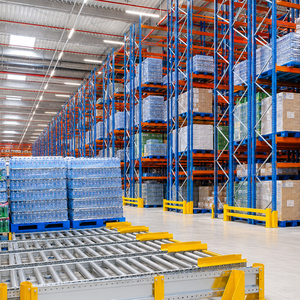
Adjustable 3000kg Industrial Warehouse Storage Racks
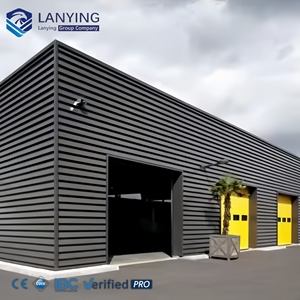
Prefabricated Steel Structure Logistics Warehouse Frame
Heavy Structural Wall Racks with Drainage Channels
Strategic Rationale: Why Riyadh Demands Double Deep Racking Systems
The logistics and supply chain ecosystem in the Riyadh Metropolitan Area is experiencing unprecedented transformation under Saudi Arabia's Vision 2030 and the National Industrial Development and Logistics Program (NIDLP). As the Kingdom accelerates the development of the Special Integrated Logistics Zone (SILZ) adjacent to King Khalid International Airport (KKIA), as well as industrial megahubs across MODON (Saudi Authority for Industrial Cities and Technology Zones) in Riyadh Second and Third Industrial Cities, industrial real estate lease yields are reaching historic highs. In this operating climate, standard single-deep selective racking systems no longer deliver the volumetric utilization efficiency required to justify operational overhead.
A Double Deep Racking System addresses this economic imperative by storing pallets two-deep in back-to-back configurations, effectively reducing the operating aisle requirement by approximately 35% to 45% compared to conventional selective racking. This design delivers a rapid 50% to 60% surge in storage density without the extreme capital investment, deep floor slab structural re-engineering, or lengthy deployment cycles associated with automated storage and retrieval systems (ASRS).
Operating a Double Deep configuration requires a specialized pantograph-reach truck or an articulating deep-reach mast fitted with dual-scissor fork extenders. By deploying these specialized materials handling vehicles down narrowed aisles (typically between 3.0m and 3.4m depending on chassis specifications), facility managers achieve optimal balance across key logistics metrics: holding identical SKUs in pairs, maintaining robust inventory turnover velocity, and significantly lowering ambient cooling cubic space in the hyper-arid Riyadh environment.
Specialized Deployment Across Riyadh Industrial Zones
From climatic extremes in Al Kharj corridors to cross-border FMCG fulfillment in Al Sulay, engineering configurations must adapt to distinct local warehouse operational parameters.
E-Commerce & 3PL Fulfillment Hubs (Al Sulay & Al Mashael)
Facilities operating in Riyadh's eastern distribution belts require flexible double-deep lanes dedicated to velocity-ranked fast-moving SKUs. Double-deep configurations allow regional 3PL consolidators to store secondary replenishment stock directly behind the primary active pick-face, cutting horizontal replenishment travel time across multi-tier facilities by up to 28%.
Cold-Chain & Frozen Logistics (Al Kharj Highway Corridors)
Refrigerating air in Central Saudi Arabia is energy intensive when ambient summer temperatures exceed 48°C. Double Deep configurations drastically reduce aisle dead space within temperature-controlled cold rooms (-22°C to 4°C), optimizing evaporator airflow dynamics and driving down the kilowatt-per-pallet refrigeration expenditure for dairy, poultry, and pharmaceutical supply chains.
Heavy Industrial & Spare Parts Staging (MODON Industrial Cities 1, 2 & 3)
Supporting manufacturing centers and equipment assembly plants, double-deep profiles accommodate customized multi-tiered heavy-duty beams rated up to 3,500 kg per level. Equipped with back-to-back mechanical barrel stops and anti-corrosive powder finishes, these structures resist fine limestone abrasive dust ingress common across industrial sectors of the Najd Plateau.
Localized Trends Shaping Warehousing Infrastructure in Central Saudi Arabia
Procurement directors and facility design leads in Riyadh are navigating significant shifts in regulatory frameworks, civil safety standards, and regional supply chain patterns. When selecting a Double Deep racking partner, engineering managers must account for three critical technical trends:
1. Strict Civil Defense & SASO Compliance: Storage configurations in Saudi Arabia must conform to rigorous Saudi Standards, Metrology and Quality Organization (SASO) codes and Saudi Civil Defense fire suppression dictates. Double deep racking systems require precise flue space management (both longitudinal and transverse) to guarantee that in-rack sprinkler heads or ceiling-mounted Early Suppression Fast Response (ESFR) systems achieve unobstructed water cone dispersion down to base levels.
2. Floor Flatness Standards for Deep-Reach Equipment: As lift heights in modern Riyadh logistics parks scale past 10 to 12.5 meters to maximize vertical cubic rights, floor slab tolerance becomes critical. Operating pantograph double-reach trucks at high elevations requires concrete floor finishes meeting DIN 18202 or TR34 (FM2 standard). Slight slab deviations can lead to significant mast sway, requiring racking suppliers to supply precision shim baseplates, extra anchor embeds, and heavy-gauge box beam connectors to resist dynamic eccentric forces.
3. Transition from LIFO to Managed Wave Picking: While double deep storage inherently functions on a Last-In, First-Out (LIFO) logic per dual slot, advanced Warehouse Management Systems (WMS) across Saudi retail and pharmaceutical operations now map SKUs into intelligent batches. Double Deep installations are increasingly integrated with guide rails or wire guidance pathways down access corridors, allowing double reach drivers to complete rapid staging runs without aisle-clamping risks.
Why Engineering Contractors Rely on Our Manufacturing Supply Chain
Direct structural engineering, precision roll-forming tolerances, and certified steel sourcing from our production hub to your Riyadh site.
Every upright section, beam bracket, and row spacer is cold-formed to strict international standards (CE No. 2435-CPR-8605159; ISO 9001:2015 No. 18624Q00169R0M). Fully compliant with European FEM and British SEMA design methodologies.
All steel elements pass through a continuous chemical bath: ultrasonic pickling, degreasing, and dense zinc phosphating prior to electrostatic polyester powder coating. This prevents salt-laden or arid dust corrosion, delivering high impact and scratch durability.
Our in-house project engineers evaluate your architectural schematics, floor slab designs, and forklift fleet parameters to provide comprehensive 2D CAD floor plans, 3D clearance simulations, and structural load charts within 24 to 48 hours.
We provide custom container load planning designed for efficient unloading at Riyadh Dry Port and King Abdulaziz Port in Dammam. Components arrive packed in damage-resistant bundles with labeled mechanical diagrams for streamlined installation.
Frequently Asked Questions by Riyadh Logistics Planners
Clear answers addressing technical parameters, regional compliance, material handling integration, and project timelines.
Selective racking delivers 100% immediate accessibility but low floor utilization (only ~40% floor area). Drive-In offers maximum density (~70-80%) but severe operational latency and zero selectivity. Double Deep strikes the balance: it increases pallet capacity by 30-40% over selective racking while retaining 50% accessibility, serving multi-SKU retail and distribution operations well.
Depending on the specific forklift manufacturer (e.g., Crown, Toyota, Jungheinrich) and pallet depth, standard clear aisle widths generally span between 3.0 meters and 3.4 meters for standard 1000x1200mm GMA/Euro pallets. Our engineering team calculates exact turning radii and mast deflection allowances prior to finalized column base layout drafting.
Yes. Our structural sections receive industrial pickling and phosphating followed by thermosetting electrostatic powder coating cured at 200°C. This smooth, non-porous finish resists abrasive limestone airborne particulates and maintains adhesion in non-air-conditioned warehouses. Hot-dip galvanization is also available for severe environments or exterior applications.
Yes. In compliance with NFPA 13 guidelines enforced by Saudi Civil Defense authorities, our Double Deep layout designs include 5-layer powder-coated row spacers to maintain a minimum 150mm (6-inch) longitudinal flue space. Wire mesh decking options are engineered to maintain a minimum 70% open area for vertical fire suppression flow.
To deliver an accurate design within 24-48 hours, our engineers require your building footprint (CAD or dimensioned DWG/PDF), clear internal building eaves height, floor slab load capacity, entry door/column locations, pallet profiles (W x D x H, plus gross weight), and your intended reach truck mast specifications.
Each shipment includes an indexed container load list, part-marked structural elements, and a detailed engineering assembly manual. We can provide on-site supervision engineers or connect clients with vetted Saudi-based warehouse installation contractors to execute turnkey erection, base-anchoring, and plumb testing according to approved specifications.
Plan Your Riyadh Warehouse Density Optimization Today
Speak directly with our heavy-duty racking engineering team. Receive complimentary 2D CAD layouts, accurate volumetric storage audits, and competitive factory-direct pricing for your logistics facility in Saudi Arabia.