Double Deep Pallet Racking: Architectural Mechanics & Information Gain
In an era of surging Nordic industrial real estate costs, Double Deep pallet racking serves as the optimum intersection between structural density and direct SKU selectivity, driving a 30% to 40% volumetric gain over standard selective formats.
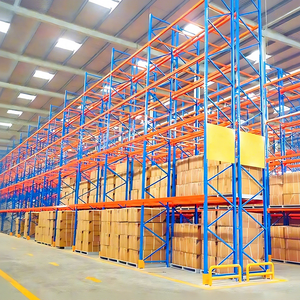
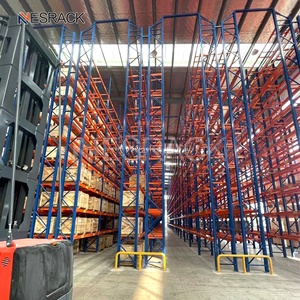
Double Deep Pallet Racking reconfigures standard industrial storage by positioning two pallet depths back-to-back within a single-entry row, or four pallet depths between access aisles. By eliminating every second operating aisle required in standard single-selective configurations, warehouse facilities substantially elevate floor-space utilization efficiency without incurring the multi-million-euro capital expenditures demanded by fully automated AS/RS cranes.
Operating on a Last-In, First-Out (LIFO) protocol per pair of pallet locations—or First-In, First-Out (FIFO) when managed systematically at batch-level batches—Double Deep systems require purpose-built material handling equipment. Warehouses utilize specialized pantograph reach trucks or deep-reach forklifts equipped with telescopic fork attachments, integrated mast cameras, and optical height selector sensors. This configuration is widely acknowledged by European supply chain engineers as one of the lowest capital expenditure mechanisms to counter extreme industrial footprint constraints.
Aisle Reduction Volumetrics
By transforming conventional 1:1 rack-to-aisle ratios into an optimized 2:1 configuration, Double Deep cuts overall aisle floor consumption by up to 45%. This generates immediate footprint gains for facilities handling homogenous inventory profiles, medium-turnover SKUs, and palletized bulk buffers.
Sub-Zero Thermal Retention
Within temperature-controlled cold stores operating between -20°C and -28°C across the Norwegian coast, cubic thermal retention is paramount. Eliminating redundant ambient aisles directly decreases refrigeration cubic meter loads, yielding substantial year-on-year kilowatt-hour energy savings.
Localization Dynamics & Structural Trends in Norway
Norwegian logistics infrastructure is defined by stringent building safety regulations (TEK17), Eurocode seismic mandates, and soaring urban land premiums in prime Eastern hubs.
Logistics operators across Norway—concentrated heavily within the Greater Oslo corridor (Vestby, Moss, Gardermoen, and Fugleåsen), as well as western hubs including Bergen and Stavanger—face distinct geographic and economic dynamics. Construction costs per square meter in Norway rank among the highest in Europe, driven by stringent structural regulations, strict insulation criteria, rock-drilling ground foundations, and high local labor rates. Consequently, Norwegian logistics directors are aggressively pivoting toward high-density racking assets that maximize clear roof heights up to 12.5 to 15 meters.
Simultaneously, Norway's multi-billion-kroner aquaculture and seafood export sectors necessitate specialized heavy-duty racking inside coastal blast-freezers and temperature-controlled cross-dock hubs. Seafood processors in Ålesund, Tromsø, and Trondheim handle heavy wooden EUR-pallets (800x1200 mm) and sea-freight industrial pallets (1000x1200 mm) loaded up to 1,200 kg to 1,500 kg each. For an overseas racking manufacturer and exporter, supplying this specialized market demands full technical adherence to Norwegian standards, CE-marking, and certified cold-environment steel ductility.
Vestby & Oslo 3PL Distribution Belt
Fast-moving consumer goods (FMCG) and multi-channel e-commerce hubs require dense reserve buffers positioned directly behind active forward picking faces. Double deep racking provides high-density buffer storage with 50% instant selectivity.
Aquaculture & Pelagic Cold Hubs
Blast freezing and storage of Norwegian salmon and cod in western/northern ports. Strict cold room energy control makes Double Deep the gold standard to reduce cubic refrigeration wastage without sacrificing accessibility.
Energy & Marine Industrial Supply
Heavy spare parts, industrial pumps, valves, and offshore consumables around Stavanger. Heavy-duty double deep configurations configured with structural tie-bars, timber-deck supports, and reinforced upright protections.
Engineering Compliance: NS-EN Standards & Nordic Sub-Zero Steel
Deploying warehouse racking into Norway requires adherence to unified European Standards (Eurocodes) adapted to local geotechnical, seismic, and low-temperature parameters.
Norwegian municipal building authorities and industrial safety insurers (such as Gjensidige and If P&C) enforce strict compliance with European standard NS-EN 15512 (Steel static storage systems – Adjustable pallet racking systems – Principles for structural design) and NS-EN 15635 (Steel static storage systems – Application and maintenance of storage equipment). Unlike standard tropical or temperate warehouse builds, cold-formed racking profiles engineered for Norwegian deep-freeze warehouses must mitigate low-temperature steel embrittlement risks.
NS-EN 15512 Structural Verification
Every upright upright profile, base-plate weldment, and beam connector undergoes finite element analysis (FEA) and physical stub-column testing to withstand combined dead loads, vertical live loads, and forklift impact dynamics.
Low-Temperature Steel Ductility
For operations dipping below 0°C to -30°C, structural steels are certified with Charpy V-Notch impact testing (EN 10025 standards) ensuring minimum impact energy absorption (27J at -20°C) to prevent catastrophic brittle failure.
CE Certification & Traceability
Fabrication executed strictly in accordance with Factory Production Control (FPC) systems, holding official CE certification (CE No. 2435-CPR-8605159) alongside ISO 9001:2015 quality management regimes.
Comparative Technical Matrix: Double Deep vs Alternative Systems
Evaluate spatial, financial, and operational trade-offs to select the optimal racking infrastructure for Norwegian logistics footprints.
| Storage System Type | Space Utilization | SKU Direct Selectivity | Handling Equipment Required | Capital Investment | Suited For Cold Store? |
|---|---|---|---|---|---|
| Double Deep Pallet Racking | 60% – 65% (High) | 50% (Medium) | Pantograph Reach / Deep-Reach Forklift | Low – Moderate | Excellent (High Energy ROI) |
| Selective Pallet Racking | 40% – 45% (Standard) | 100% (Instant) | Standard Counterbalance / Reach Truck | Lowest | Moderate (High Energy Cost/Pallet) |
| Radio Shuttle System | 75% – 85% (Ultra-Dense) | Low (Lane-Based) | Standard Forklift + Automated Carrier | High | Superior (Requires Battery Maint.) |
| Drive-In Racking | 65% – 75% (Dense) | Lowest (Strict LIFO) | Standard Reach / Counterbalance | Moderate | Good (High Risk of Mast Collisions) |
| Push Back Pallet Racks | 60% – 70% (High) | 2–6 SKUs Per Lane | Standard Forklift (Nested Carts) | Moderate – High | Good (Gravity Incline Limits Depth) |
Enterprise Manufacturing Strength: Guangzhou HEDA Shelves
Since 2001, Guangzhou Heda Shelves Co., Ltd. has engineered and exported heavy-duty industrial storage systems, combining high-grade steel manufacturing with international export reliability.
Operating out of our advanced 30,000 square meter industrial manufacturing plant in Guangzhou, China, HEDA Shelves maintains complete, end-to-end control across the structural fabrication lifecycle. With over 300 experienced engineers, CNC tooling technicians, and project delivery managers, our monthly production capacity exceeds 30,000 metric tons. For Norwegian logistics developers, general contractors, and storage equipment dealers, HEDA acts as a direct, unmediated factory partner providing custom CAD layout designs, finite structural calculations, container packing optimization, and CE-marked components.
In-House Ten-Step Manufacturing & QC
Every cold-formed profile undergoes a ten-stage production sequence: automated coil slitting, high-precision hydraulic multi-punching, progressive cold roll-forming, robotic welding, shot-blasting, chemical pickling and phosphating, and automated electrostatic powder coating. This guarantees maximum paint adhesion and prevents corrosion in harsh sub-zero or humid marine environments.
Direct Ocean Freight to Norwegian Ports
All export orders are bundled with customized container loading plans, utilizing nested steel strapping and anti-abrasion edge protectors to maximize 40ft High Cube container volumetric fills. Shipments depart directly from Guangzhou/Shenzhen ports arriving smoothly at Port of Oslo, Drammen, Brevik, or Bergen with complete customs documentation and EN 10204 3.1 mill test certificates.
Project Lifecycle: From Architectural CAD to Site Handover
A transparent, reliable 4-stage engineering delivery workflow customized for Norwegian procurement specifications.
Frequently Asked Questions for Norwegian Warehouse Buyers
Direct answers addressing technical compliance, structural safety, import tariffs, and operations in Norway.
How does Double Deep pallet racking accommodate standard European (EUR) pallets vs industrial pallets in Norway?
What type of forklift is strictly required for operating Double Deep racks in Norwegian warehouses?
Are HEDA racking components certified under European CE and Norwegian structural standards?
How do you prevent steel embrittlement and coating failure in sub-zero Norwegian seafood freezers?
What are the import procedures, customs duties, and maritime shipping logistics from Guangzhou to Norway?
Can HEDA provide customized layouts accommodating Norwegian sprinkler and TEK17 fire regulations?
Plan Your Norwegian Warehouse Racking System Today
Upload your building CAD drawings or architectural floor plans. Our senior structural storage engineers will return a complete 2D layout, 3D volumetric rendering, and load calculation report within 24 to 48 hours—fully compliant with Norwegian NS-EN standards.
Get a Quote