Engineering Whitepaper: Technical Criteria for Procuring Structural Pallet Racks
In modern industrial logistics, selecting between roll-formed light-gauge steel and structural hot-rolled structural steel (C-channels and I-beams) defines warehouse safety margins, seismic survivability, and total cost of ownership (TCO). While roll-formed racking represents a widespread solution for moderate distribution, demanding supply chain nodes—such as low-temperature freezer warehouses, heavy beverage bottling plants, and high-frequency automated transit hubs—require structural pallet racking systems engineered to handle torsional loads and inevitable impact stresses.
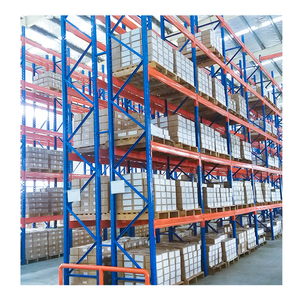
Technical Delineation: Structural pallet racks are fabricated from hot-rolled structural C-channels with high-yield strength tensile properties. Unlike roll-formed frames prone to local buckling when impacted by reach trucks or counterbalance forklifts, structural uprights boast substantially thicker column profiles (up to 5mm–8mm structural web gauge) and bolted beam-to-column connections that eliminate the risks of accidental beam dislodgement under dynamic loads.
Material Yield Strength, Section Modulus & Impact Resistance Benchmarks
Procuring structural racks from world-class manufacturing plants involves auditing raw steel metallurgy and cold-forming versus hot-rolling specifications. Industrial racking must meet rigorous international structural codes, including the Rack Manufacturers Institute (RMI MH16.1), European Standard EN 15512, and ISO 9001 quality compliance. When evaluating engineering tenders, procurement heads must analyze structural section moduli:
1. Column Web & Flange Durability: Structural rack columns typically feature heavy-duty C-channel profiles ranging from C3 to C5 structural channels. The flange edges provide exceptional resistance to fork-tine impacts at lower aisle tiers—the primary culprit of catastrophic rack collapse in high-turnover logistics centers.
2. Bolted Structural Beam Connectors: Roll-formed clip-in pins rely on teardrop engagement which can shear under extreme upward forklift collisions. In contrast, heavy structural racks utilize Grade 5 or Grade 8 high-tensile structural bolts securing 2-bolt or 4-bolt connection plates. This moment-resisting connection creates exceptional rotational stiffness, drastically reducing frame sway at operating heights surpassing 12 to 16 meters.
3. Anti-Corrosion Surface Finishing: For blast freezers and sub-zero cold chain logistics down to -30°C, micro-cracking in low-grade electrostatic paint creates structural embrittlement. Top-tier factories subject every structural element to shot blasting, acid pickling, phosphating, and heavy-duty thermosetting polyester powder coating, or hot-dip galvanizing complying with ASTM A123 standards to protect against ambient moisture condensation and chemical corrosion.
Future Procurement Trends in Intralogistics Storage (2025–2030)
Driven by skyrocketing land acquisition prices and supply chain volatility, enterprise warehousing is undergoing profound structural shifts. Procurement directors must anticipate the following trends to protect their capital investments over a 15- to 20-year structural lifespan:
High-Density Cube Utilization
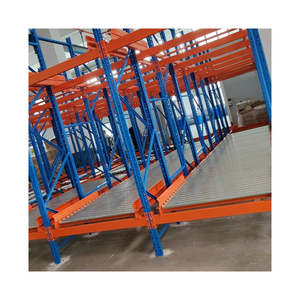
Transition from standard selective layouts to deep-lane dynamic storage, such as Radio Shuttle systems, multi-deep Push-Back, and Gravity Flow, compressing footprint while boosting pallet capacity by up to 65%.
Seismic Resilience Engineering
Advanced non-linear dynamic simulation to accommodate Pacific Ring of Fire seismic requirements (Indonesia, Philippines, Japan), utilizing oversized structural footplates and heavy-duty anchorages.
Automation-Ready Tolerances
Tighter manufacturing tolerances (+/- 1.0mm) allowing seamless retrofitting for Automated Guided Vehicles (AGVs), Autonomous Mobile Robots (AMRs), and AS/RS cranes without structural beam rework.
Technological Evolution: The Convergence of Structural Durability and Automation
The historical divide between purely manual structural racking and high-speed automated storage is dissolving. Today's structural rack factories produce specialized hybrid systems where hot-rolled structural steel frames provide the rigidity required for AS/RS automated stacker crane guide rails, while precision cold-formed components make up secondary decking and product dividers.
Furthermore, digital twin integration via detailed CAD and 3D Building Information Modeling (BIM) allows supply chain architects to visualize deflection profiles, aisle turning radii, and sprinkler pipe clearances long before steel coils are fed into roll-forming and punching lines. This predictive modeling slashes commissioning times and ensures total alignment with local building safety codes.
Enterprise Advantage: Guangzhou Heda Shelves Co., Ltd.
Founded in 2001, Guangzhou Heda Shelves Co., Ltd. has established itself as an authoritative global manufacturer of high-performance pallet racking, automated storage solutions, and warehouse mezzanine systems. Our modern production headquarters spans over 30,000 square meters, supported by 300+ seasoned engineers, manufacturing specialists, and logistics consultants handling over 30,000 tons of monthly capacity.
Certified Integrity
CE Certification (No. 2435-CPR-8605159), ISO 9001:2015 Quality Management, and full RoHS eco-coating compliance.
Full In-House Cycle
Integrated 10-step fabrication: precision laser profiling, automated punching, cold-bending, robotic welding, and phosphating.
Rapid 3D Engineering
Complimentary customized 2D CAD layout and dynamic 3D warehouse visualization delivered within 24 to 48 hours.
Strategic Maritime Hub
Direct shipments from South China container ports ensuring minimal sea freight transit and lower transport costs to ASEAN, Middle East, and the Americas.
Procurement FAQ: Engineering, Logistics & Compliance
What is the definitive advantage of structural channel pallet rack over roll-formed rack?
How does the factory verify seismic safety for high-risk zones across Asia and the Pacific?
What technical documentation is required to receive a formal structural layout and load quotation?
How does the pickling and phosphating pre-treatment protect against corrosion in tropical climates?
What is the standard delivery cycle and overseas installation support provided?
Ready to Engineer Your High-Density Storage Facility?
Contact our senior structural engineers today for technical consultation, load calculation, and custom CAD layouts.