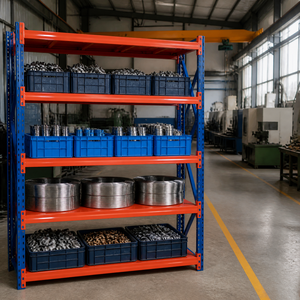
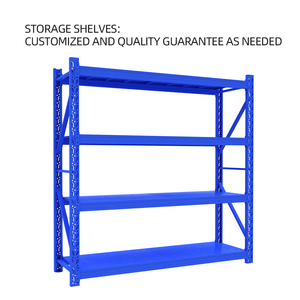
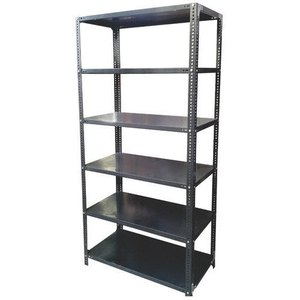
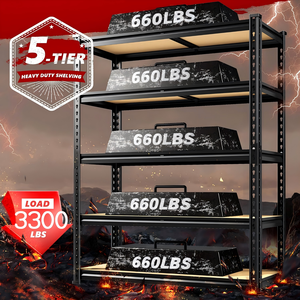
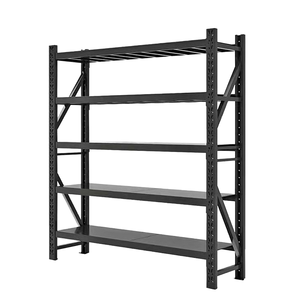
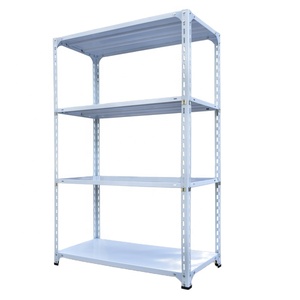
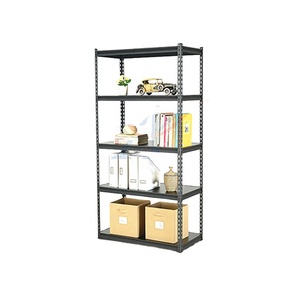
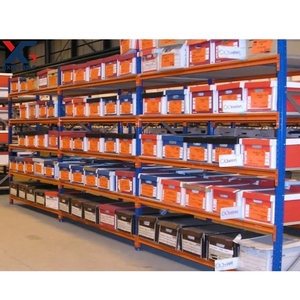
Industrial slotted angle racks remain one of the most versatile mechanical storage systems globally. However, international logistics planners frequently encounter premature frame failure, racking deflection, and rapid paint degradation due to ambiguous B2B procurement specifications. Selecting high-reliability slotted angle systems demands clear technical scrutiny of hole geometries, cold-roll metallurgical properties, and corrosion-prevention methods.
The core structural profile utilizes high-grade cold-rolled Q235B structural carbon steel. Unlike lightweight commercial utility shelving manufactured from scrap-reprocessed thin steel (often under 0.8mm), true industrial slotted angles require nominal steel thicknesses ranging from 1.5mm to 3.0mm. During production, continuous cold-roll forming progressively folds the sheet metal into equal or unequal L-shaped sections (e.g., 38×38mm, 40×40mm, or 50×50mm). This multi-stage roll-forming induces cold working, raising the yield point of the steel to withstand higher compressive buckling forces under dynamic warehouse conditions.
A critical differentiator in safety engineering is the hole-to-web ratio. Punching slots into the angle reduces the effective cross-sectional steel area. Our computerized German-calibrated stamping lines produce precision multi-pattern oval and round slots that facilitate universal multi-angle bolting while keeping steel mass loss below 18% of the flange surface. Corner joints are reinforced with hot-dip stamped triangular corner plates (gussets) fastened by grade 8.8 high-tensile zinc-plated metric bolts, securing structural squareness and preventing lateral parallelogram sway under seismic or horizontal forces.