Featured Industrial Racking & Multi-Tier Systems
Factory-direct structural components engineered to FEM 10.2.02, EN 15512, and RMI standards. Sourced directly from our automated Guangzhou production hub to eliminate intermediary margins.
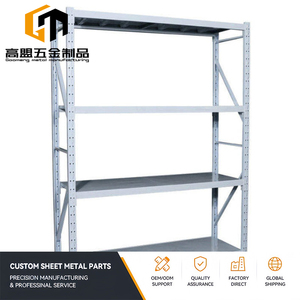
Adjustable Layer Light Duty Warehouse Storage Steel Rack Boltless Metal Shelving Unit For Garage Factory Workshop
Quick-assembly teardrop slot design featuring cold-rolled Q235 steel deck boards for manual parts sorting and light assembly lines.
- 100-250 kg/Layer
- Boltless Interlock
- Epoxy Powder Coated
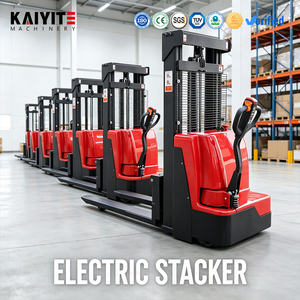
Industrial Electric Stacker 1Ton 2Ton Pallet Stacking Truck 3500mm Lift Height For Racking System
Tight-turning radius electric pallet walkie engineered specifically for narrow aisle rack loading, mezzanine feed gates, and staging bays.
- 1000 - 2000 kg Payload
- 3500mm Mast Reach
- Regenerative Braking
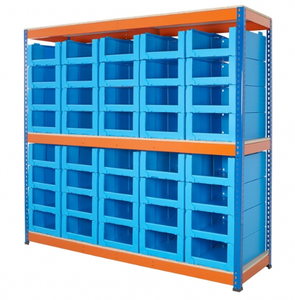
Corrugated Plastic SEMI-OPEN Stacking Warehouse Bin Small Spare Parts Pick Sorting Storage Organizer Box Bin Shelving Wholesale
Chemical-resistant, moisture-impervious PP corrugated semi-open picking receptacles designed to optimize multi-tier mezzanine picking density.
- Virgin Polypropylene
- ESD Safe Coating
- Modular Stackability
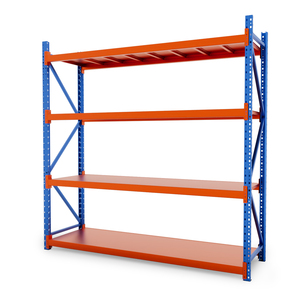
Wholesale Heavy Duty Pallet Rack 3000kg High Load 4 Layer Metal Shelves Durable Longspan Pallet Racking For Warehouse Storage
Structural box-beam selective racking built with 90-120mm upright sections engineered to serve as ground-level supports for mezzanine walkways.
- 3000 kg/Beam Pair
- Q355B Structural Steel
- 75mm Pitch Adjustable
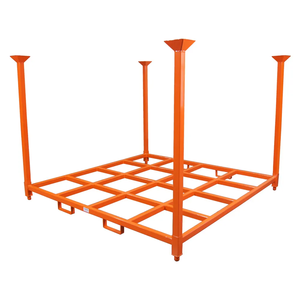
Factory Direct Customized China Supplier Warehouse Storage Inverted Style Rack Metal Pallet Stack Rack with Good Quality
Inverted steel post nesting racks engineered for transient warehousing, bulk seasonal overflow, and dynamic forklift floor stacking.
- 1500 kg Payload
- 4-Tier Nestable
- Hot-Dip Galvanized / Powder
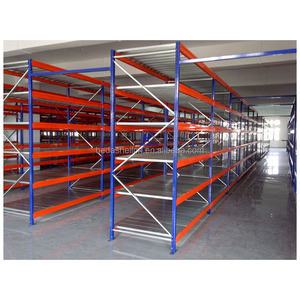
Heda Manufacture Storage Shelves Metal Boltless Warehouse Shelves System Medium Duty Racks for Sale
Industrial longspan steel shelving framework optimized for multi-level order picking aisles and shelving-supported mezzanine floor configurations.
- 300-500 kg/Tier
- Solid Steel Panels
- Butterfly Hole System
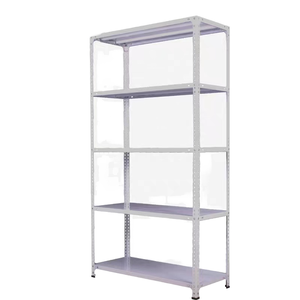
4 Layer Heavy Duty Steel Boltless Shelving Unit 100kg Capacity for Warehouse Storage
Commercial grade 4-layer rivet steel shelving unit with anti-corrosion phosphated finish, built for e-commerce fulfilment and backroom supply depots.
- 100-200 kg Uniform Load
- Cold-Rolled Frame
- Tool-Free Erection
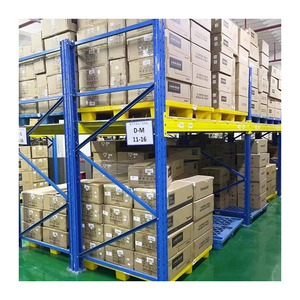
FIFO Direct Circulation Storage Frame Time-Sensitive Goods First In First Out Warehouse Racking System Steel
Gravity-flow dynamic roller lane racking engineered for automated pallet flow under mezzanine overhead spaces to achieve zero-energy stock turnover.
- Strict FIFO Flow
- Centrifugal Brake Rollers
- Zero Energy Consumption
Engineering Whitepaper: Structural Steel vs. Rack-Supported Mezzanine Systems
Industrial warehouse operators facing skyrocketing land rents must monetize vertical air rights without triggering exorbitant structural brick-and-mortar expenditures. Understanding the mechanical structural bifurcation between clear-span platforms and rack-supported systems is paramount for maximizing CapEx return.
A racking mezzanine floor (often categorized as a rack-supported platform or multi-tier pick module) utilizes the structural racking uprights and horizontal cross-beams themselves as the primary load-bearing columns. By distributing live floor loads (personnel, hand trucks, conveyor systems, sorting machinery) across heavy-duty cold-formed profile steel columns (up to 120mm profile width with 2.5mm–3.0mm gauge steel), it simultaneously yields dense pallet storage beneath and continuous manual order-fulfillment walkways above. Conversely, a structural steel mezzanine platform leverages hot-rolled universal structural I-beams (H-beams, C-channels) anchored into concrete footings via expanded seismic baseplates, creating wide clear spans (up to 6m to 12m column spacing) ideal for high-throughput automated machinery, forklift transit beneath, and modular executive cleanrooms above.
| Structural Parameter | Rack-Supported Mezzanine Floor | Structural Steel Mezzanine Platform | High-Density Pallet Flow / Multi-Tier Module |
|---|---|---|---|
| Primary Steel Substrate | Cold-Formed High-Tensile Q235B / Q355B Steel | Hot-Rolled Structural Universal Beams (Q355B/S355JR) | Dual-Phase Heavy Upright Columns with Structural Box Beams |
| Uniform Distributed Load (UDL) | 300 kg/m² – 1,000 kg/m² | 500 kg/m² – 2,500 kg/m² | Up to 3,500 kg/pallet position |
| Column Grid Span Capability | 1.8m – 3.2m (Tied directly to pallet rack bay widths) | 4.5m – 12.0m (Maximizes wide-open ground logistics flow) | Modular bay spacing (1.2m – 2.7m custom-engineered) |
| Vertical Usable Multi-Tiers | 2 to 4 Structural Levels (Up to 12m clear building heights) | 1 to 3 Platform Decks (Subdivided for office/assembly) | Integrated with dynamic spiral chutes and vertical lifts |
| Floor Decking Options | Galvanized Perforated Steel Planks, 25mm B-Deck + Plywood | Checkered Steel Plate, Bar Grating, Poured Concrete Decking | Heavy-Duty Wire Mesh Decking, Solid Zinc-Plated Steel Planks |
| Permitting & Seismic Deflection Ratios | Conforms to FEM 10.2.02, Deflection limit L/200 - L/300 | AISC 360 / EN 1993 Eurocode 3, Deflection L/350 - L/400 | RMI MH16.1 & ISO 9001:2015 Structural Code Compliance |
Procuring a custom industrial mezzanine floor involves calculating dead loads (self-weight of structural steel, purlins, decking, fire sprinkler lines, electrical raceways), live loads (concentrated pallet weights, operating staff, dynamic push-cart forces), and seismic lateral accelerations. For regions prone to ground movement—such as Japan, Taiwan, the Philippines, and Indonesia—HEDA Shelves conducts non-linear finite element structural simulations to reinforce baseplate anchoring with dual-wedge anchor arrays, reinforced cross-bracing configurations, and enlarged floor gusset brackets to prevent dynamic harmonics or structural drift under catastrophic shock loading.
Why HEDA Shelves Is the Benchmark Among Global Mezzanine Suppliers
Headquartered in Guangzhou with over two decades of metallurgical and structural innovation, HEDA Shelves empowers distributors, 3PL logistics corporations, and industrial facilities across 120+ countries with uncompromised manufacturing integrity.
CE & ISO 9001 Certified Metallurgical Quality
Our production processes strictly enforce CE Certification (No. 2435-CPR-8605159) and ISO 9001:2015 Quality Management standards. Every mill heat of prime steel coil is inspected for yield strength, tensile elongation, and chemical alloy purity prior to roll-forming.
10-Step Automated Production & Surface Treatment
From computer-controlled cold roll-forming and CNC continuous upright punching to 8-stage immersion pickling, phosphating pre-treatment, and RoHS-compliant electrostatic powder coating, our components resist severe humidity, salt-mist, and abrasive wear.
Turnkey 3D CAD Modeling & Engineering Reports
Procuring from HEDA guarantees engineering accountability. Our dedicated technical office prepares free customized 2D CAD layouts, isometric 3D plant renderings, finite-element deflection checks, and seismic calculations within 24 to 48 hours of project consultation.
Tropical Monsoon & Coastal Corrosion Resistance
Engineered specifically for challenging environments across Southeast Asia, South Asia, and the Gulf, we supply high-micron thermo-cured epoxy coatings or heavy-gauge Hot-Dip Galvanizing (HDG) to ensure rust-free longevity inside cold stores and coastal facilities.
Rapid Sea Logistics & 3D Container Loading Plans
Shipping directly out of deep-water South China ports (Guangzhou, Shenzhen), we provide short maritime transit to ASEAN and Middle Eastern ports. We execute computerized container-loading simulations to pack up to 25 tons per 40HQ container without freight transit damage.
Full OEM/ODM Support for Global Rack Distributors
In addition to complete turnkey warehouse installations, HEDA Shelves serves as the silent manufacturing backbone for racking distributors, system integrators, and structural engineering firms across North America, Europe, Australia, and the Middle East.
Future Procurement Trends in Industrial Mezzanine & Racking Platforms
The convergence of rapid e-commerce SKU proliferation, rising labor costs, and automated logistics is transforming warehouse design. Here are the core structural paradigms shaping B2B procurement over the coming decade.
Hybrid Automated Mobile Robot (AMR) Flooring Integration
Modern mezzanine floors are transitioning away from purely human-operated pick pathways toward dual-use surfaces engineered for Autonomous Mobile Robots (AMRs) and automated sorting bots. Procurement managers must specify ultra-flat high-density composite decking, electrostatic dissipative (ESD) resin top-coats, and deflection parameters tightened to L/400 or L/500 to prevent automated robotic navigation drift.
Demountable, 100% Bolted Structural Scalability
With commercial warehouse lease terms fluctuating between 3 to 7 years, logistics managers prioritize modular, demountable mezzanine configurations that avoid welded fixed structures. Modern systems feature cold-rolled C and Sigma-section beams with pre-punched web holes and bolt-together staircases, permitting complete structural disassembly, relocation, and dimensional reconfiguration with zero structural loss.
Green Steel Metallurgy & Carbon Border Compliance
Global environmental directives (such as the EU Carbon Border Adjustment Mechanism and corporate ESG frameworks) require industrial supply chains to audit embedded embodied carbon. Progressive suppliers are engineering mezzanine columns utilizing high-tensile Q355B and S355 grade steels produced in Electric Arc Furnaces (EAF), delivering up to 30% higher load performance per kilogram of steel consumed.
Thermal Density Optimization for Cold Logistics
Refrigerating unoccupied warehouse headspace generates unsustainable electrical utility costs. Next-generation cold storage facilities leverage multi-tier drive-in and shuttle-supported mezzanine floors to compress vertical cubic footage down to the millimeter, coupling galvanized structural profiles with open-mesh grating to preserve laminar cold-air convection.
Sensorized Structural Health Monitoring (SHM)
Safety standards are demanding continuous structural integrity oversight. Tier-1 industrial mezzanine installations are adopting low-cost IoT strain gauges, beam impact acoustic sensors, and vertical load-cell arrays along main uprights to provide early warning alerts for forklift collisions, localized rack overloading, or foundation settling.
Integrated Pre-Engineered In-Rack Sprinkler Systems
Municipal building authorities and fire insurance underwriters enforce stringent requirements on multi-tier mezzanines exceeding 150m² of floor space. Leading suppliers pre-fabricate perforated deck profiles and upright beam collars with standardized pipe-hanging cutouts, reducing on-site installation time for NFPA 13 early-suppression fast-response (ESFR) sprinkler heads by over 40%.
Frequently Asked Technical Questions on Mezzanine Floors
Clear, authoritative technical answers from our senior structural engineering team addressing load calculations, local seismic compliance, municipal fire approvals, and project installation timelines.
What are the key engineering distinctions between a rack-supported mezzanine and a structural steel platform?
How do you calculate seismic load factors for multi-tier mezzanine installations in earthquake-prone regions?
What building code and fire protection standards must be satisfied before procuring an industrial mezzanine?
How does tropical humidity affect racking steel, and when should hot-dip galvanization be specified instead of powder coating?
What floor decking materials are available and how do they compare in terms of load capacity, durability, and cost?
1. Perforated / Slotted Galvanized Steel Planks: Highly durable, non-combustible, and water-permeable for sprinkler systems; ideal for pick module aisles.
2. Heavy-Duty Corrugated B-Deck with High-Density Plywood: Excellent sound dampening, cost-efficient, and smooth for manual hand trolleys and light roll containers.
3. Industrial Steel Bar Grating: Maximum structural strength, optimal natural light and airflow transmission, zero debris accumulation, and excellent slip resistance.
4. Heavy-Gauge Checkered (Diamond) Steel Plate: Extreme point-load resistance and durability for heavy tooling drop zones and staging platforms.
What is the typical return on investment (ROI) timeline when installing a mezzanine compared to moving or building expansion?
Accelerate Your Warehouse Capacity: Request an Engineering Layout
Send our senior engineering team your warehouse architectural floor plan and operating parameters. We deliver an accurate 2D CAD layout, 3D structural rendering, static load report, and factory-direct quotation within 24 to 48 hours.
- Warehouse Clear Height (Under Beam)
- Concrete Slab Thickness & Strength (MPa)
- Target Uniform Live Load (kg/m²)
- Pallet Dimensions & Maximum Load (kg)
- Forklift Operating Type & Turning Radius
- Project City & Seismic / Wind Parameters
Direct Factory Engineering Desk
Connect immediately with our structural racking project managers. All projects include certified manufacturing warranties and installation guidance.