High-Performance Pallet Racking & Material Handling Units
Manufactured with premium cold-formed structural steel, high-durability electrostatic powder coating, and precision column-hole stamping designed to withstand rigorous daily loading environments.
Structural Metallurgy, Safety Standards, and Industrial Storage Architecture
A rigorous examination of load deflection curves, seismic compliance, and modern intralogistics optimization for global procurement authorities.
Key Engineering Standard Compliance (EN 15512 vs ANSI MH16.1 vs AS 4084)
Premium global rack manufacturing requires adherence to strict dimensional, yield, and deflection tolerances. Our structural designs are certified against European standard EN 15512 (Steel static storage systems), American RMI ANSI MH16.1 (Specification for the Design, Testing and Utilization of Industrial Steel Storage Racks), and Australian AS 4084 standards. Uprights and boxed step beams undergo Finite Element Method (FEM) computer stress modeling before physical coil cold-forming to guarantee certified safety factors of no less than 1.65 to 1.95 under ultimate limit state load scenarios.
| System Archetype | Direct Accessibility | Space Utilization | Rotation Discipline | Primary Industrial Fit |
|---|---|---|---|---|
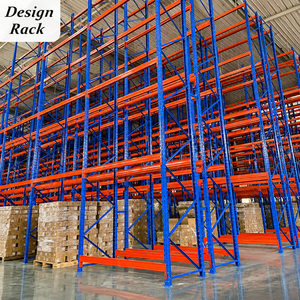
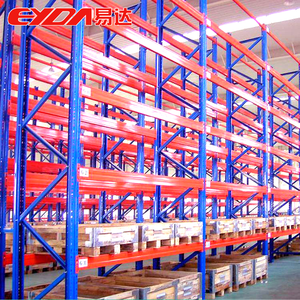
| Selective Pallet Racking | 100% Immediate Access | Medium (~40% floor footprint) | FIFO / Random Access | FMCG, 3PL Distribution, Multi-SKU E-Commerce |
| Drive-In / Drive-Through | Low (Tunnel Entry Required) | Extremely High (~75% footprint) | LIFO (Drive-In) / FIFO (Drive-Thru) | Cold Storage, Beverage Bottling, Raw Commodities |
| Semi-Automated Radio Shuttle | Moderate (Lane Selective) | Maximum Density (~85% footprint) | Configurable FIFO or LIFO | Chilled Food, Pharmaceutical Bulk, Deep Channel DCs |
| Dynamic Gravity Flow | High at Discharge Face | High (~70% footprint) | Strict Automatic FIFO | Perishables, Fast Batch Picking, Cross-Docking |
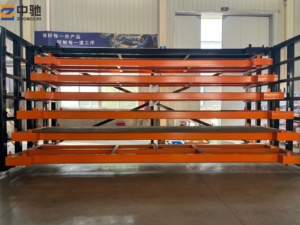
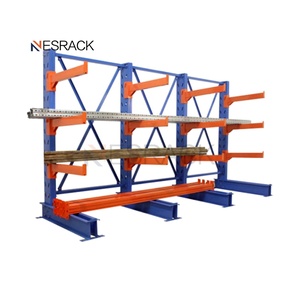
| Heavy-Duty Cantilever | 100% Unobstructed Length | Custom Variable | Flexible SKU Dependent | Structural Steel, Timber, Extrusions, Conduit Pipes |
Future Procurement Trends in Industrial Pallet Storage (2026–2030)
How progressive logistics managers and EPC contractors are reshaping warehouse equipment tenders to lower Total Cost of Ownership (TCO).
1. Convergence of Automation-Ready Geometry
Procurement specifications are shifting rapidly away from standard manual-lift tolerances toward tight-tolerance AS/RS and AMR (Autonomous Mobile Robot) readiness. Modern selective and double-deep racking profiles now integrate pre-drilled micro-apertures and laser-aligned beam levels capable of accommodating shuttle track retrofits without full system teardowns.
2. Cold-Chain & High-Density Real Estate Optimization
With industrial land premiums in gateway ports (Singapore, Dubai, Rotterdam, Los Angeles) reaching all-time highs, warehouse square meters are being traded for cubic meters. Radio shuttle systems and 8-to-12 tier high-bay pallet racking maximize chilled air utilization, slashing the refrigeration kWh footprint per stored pallet by up to 40%.
3. Decarbonized Steel & Eco-Compliant Surface Finish
Corporate ESG directives are penetrating capital equipment procurement. Exporters are heavily vetted on their steel sourcing and coating chemistry. Tier-1 manufacturers utilize certified low-carbon recycled content steel and thermoset epoxy-polyester powder systems completely free of heavy metals and VOCs, complying with stringent RoHS standards.
Technological Frontiers in Pallet Storage Racking Engineering
Advanced metallurgy, seismic dissipation baseplates, and smart condition-monitoring innovations reshaping global warehouse facilities.
Advanced Seismic Baseplates & Upright Damping
Modern engineering incorporates high-ductility baseplates and energy-dissipating bolted brace junctions. When installed in high-seismic regions (such as the Pacific Rim or Alpine tectonic zones), our computer-modeled upright configurations allow controlled elastic deformation during earth tremors, preventing brittle beam-end disconnection and catastrophic progressive rack failure.
Anti-Corrosion Nanotechnology (C3 to C5 Protection)
For chemical warehousing, seaside port logistics, and ultra-deep freeze facilities (-30°C), standard single-layer coatings fall short. Advanced multi-stage zinc-phosphate immersion pre-treatment followed by cathodic electrophoretic deposition or heavy-gauge hot-dip galvanization provides tested salt-spray resistance up to 1,000 hours, preventing subsurface iron oxide expansion.
Integrated IoT Structural Deflection Telemetry
The dawn of the intelligent warehouse introduces sensorized beam-connector clips and wireless laser alignment nodes. These battery-free strain-gauge monitors notify warehouse managers via WMS dashboards whenever a beam exceeds L/200 deflection limits or sustains an illegal forklift collision, facilitating preventative maintenance long before critical structural failure.
Why International Logistics Leaders Partner with Us
Combining heavy industrial manufacturing capacity in Guangzhou with bespoke engineering excellence and international certification.
Accredited Certifications
Certified CE Factory Production Control (No. 2435-CPR-8605159), ISO 9001:2015 Quality Management System (No. 18624Q00169R0M), and comprehensive RoHS environmental safety compliance.
End-to-End In-House Production
Spanning 30,000 square meters with monthly steel processing exceeding 30,000 tons. Cutting, precision punching, roll profile bending, robotic welding, and automatic coating executed under one roof.
Rapid 24-48h 3D CAD Modeling
Dedicated warehouse engineering team generates complete 2D floor plans, 3D parametric renderings, and structural deflection checks within 24 to 48 hours of receiving floor plan specifications.
Container Loading Optimization
Direct export dispatch from Guangzhou sea terminals. Precision nested packaging designs maximize maritime container cube utilization, minimizing transoceanic shipping costs per pallet position.
Frequently Asked Questions on Industrial Pallet Racking Systems
Essential technical, legal, and operational guidance addressing complex warehouse procurement challenges.
1. What parameters are essential for engineering an optimized warehouse racking layout?
To produce an exact structural and spatial layout, our engineering team requires: (a) Warehouse architectural CAD files or dimensional drawings showing clear roof heights, column grids, fire sprinkler drops, and dock door placements; (b) Pallet dimensions (Length × Width × Overall Stored Height including overhang) and gross weight per unit; (c) Forklift specifications including mast stage heights, aisle turning radius (Ast), and maximum reach capability; (d) Total SKU inventory volume and desired throughput turnaround velocity (FIFO vs. LIFO).
2. How is beam deflection calculated, and what safety factor is acceptable?
Under international standards (such as EN 15512 and ANSI MH16.1), the maximum vertical deflection of a horizontal pallet rack beam under uniformly distributed design load must not exceed L/200 (the length of the beam divided by 200). In specialized automated systems, tighter tolerances of L/300 or L/400 may be specified. Our beams are cold-formed from high-yield structural steel coils and undergo robotic welding with three-to-four-claw connector brackets, delivering safety factors well above statutory requirements.
3. How does HEDA Shelves address seismic considerations for active earthquake zones?
For installations situated in seismically active regions—such as Indonesia, the Philippines, Japan, New Zealand, or Chile—our structural engineers run localized seismic response spectra analyses. We increase upright profile gauge thicknesses, implement heavy-duty welded or bolted diagonal K-bracing, enlarge footprint anchor baseplates, and calculate soil-structure anchor bolt pullout shear forces to supply full third-party certifiable engineering calculation dossiers.
4. What coating protection is recommended for high humidity and cold-chain facilities?
In tropical monsoon zones (e.g., Southeast Asia) and sub-zero blast-freezing environments (-25°C to -30°C), moisture condensation creates significant corrosion hazards. We utilize a multi-phase pre-treatment regime comprising chemical degreasing, acid pickling, and micro-crystalline zinc phosphating, followed by automated electrostatic polyester powder application cured at 180°C–200°C. For harsh chemical environments or exterior open-yard racks, full hot-dip galvanization according to ISO 1461 standards is deployed.
5. Can your industrial storage systems be customized for non-standard or oversized cargo?
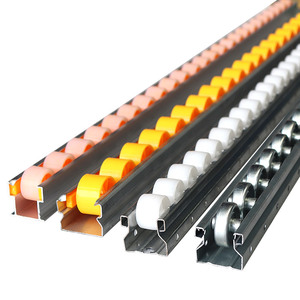
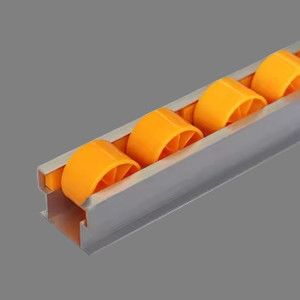
Yes. As an original equipment manufacturer (OEM/ODM) with comprehensive in-house tooling capabilities, we configure custom industrial storage solutions across diverse verticals. These include heavy-duty cantilever systems with adjustable pivoting arms for structural steel and timber packs, rack-supported multi-tier mezzanine floors that multiply vertical square footage, and specialized flow-racks fitted with heavy aluminum alloy gravity rollers for automated component assembly lines.
6. What documentation is supplied with international export shipments to facilitate customs and permitting?
Every commercial consignment exported from our factory is supported by complete traceability and compliance packages: Original Certificate of Quality, Mill Test Certificates (MTC) verifying raw material chemical and mechanical properties, CE Declaration of Performance (DoP), ISO 9001:2015 audit certificates, detailed container loading diagrams, step-by-step assembly drawings, and comprehensive operating load plaques for mandatory site display.
Accelerate Your Intralogistics Efficiency Today
Connect directly with our senior racking design engineers. Receive a comprehensive CAD floor layout, 3D structural rendering, and container-optimized budget quotation tailored to your operational specifications.
Get Catalog