Featured Industrial & Narrow Aisle Storage Portfolio
Precision-formed cold-rolled structural steel systems engineered for maximum volumetric cube utilization, high-bay stability, and extreme dynamic load capacities.
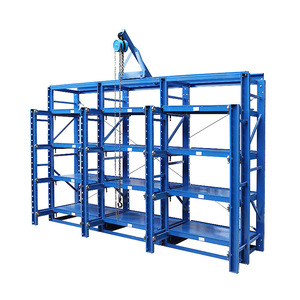
Fully Open Intelligent Mold Rack with Automatic Pull-Out System Heavy Duty Warehouse Stacking Rack for Injection Mold Storage
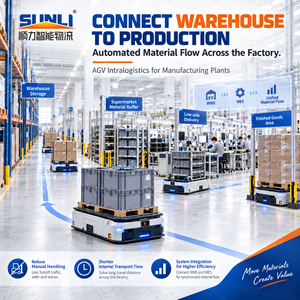
SUNLI Pallet AS/RS Smart Warehouse Automated Storage And Retrieval System With WMS/WCS Stacker Crane Racking Steel Shuttle Rack
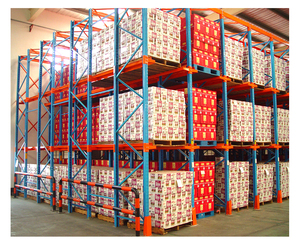
China Factory Wholesale 5-Layer Metal Pallet Racking System Steel Drive-in Racks with Corrosion Protection for Warehouse Storage
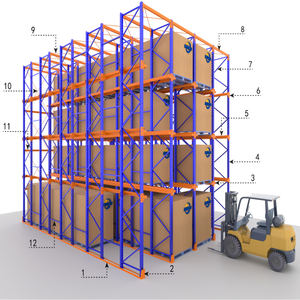
Kaku Heavy Duty Steel Drive Through Pallet Rack System with 500-1500kg/pallet Capacity for Warehouses
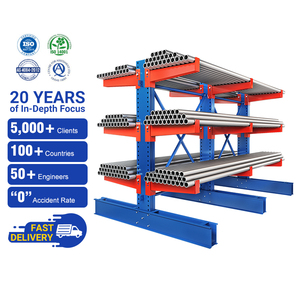
Durable Heavy-Duty Industrial Shelving Unit Durable Adjustable Cantilever Arm Racks Racking System for Warehouse Storage
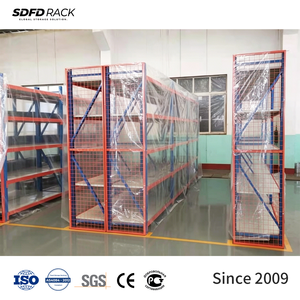
Wholesale Hot Selling 2400x600x2200 Medium Duty Longspan Warehouse Shelves 4 Layers/400kg Load Capacity Industrial Storage Racks
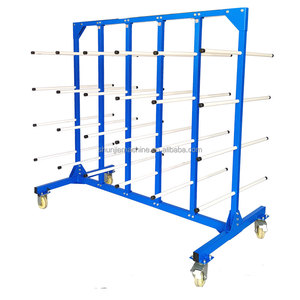
Customized 5 Tiers Cantilever Racking For Warehouse With Wheels Long Arms Metal Double Side Cantilever Rack Cart
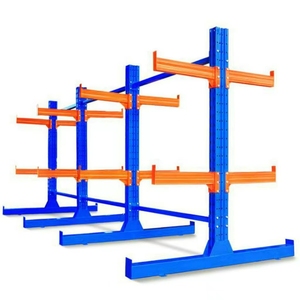
Steel Cantilever Pallet Racking Single Side Heavy Duty Multi-Level Corrosion Protection Garage Use CE Certified 500-3000kg Racks
Engineering Foundations of Narrow Racking & VNA Architecture
In modern supply chain infrastructures where industrial real estate premiums have surged globally, Narrow Aisle (NA) and Very Narrow Aisle (VNA) racking systems represent the optimal convergence of high storage density and 100% immediate pallet selectivity.
Volumetric Cube Maximization
Standard selective racking configurations dedicate up to 60-65% of warehouse floor footprint exclusively to forklift operating aisles (typically 3.2m to 3.8m wide for counterbalance or standard reach trucks). By contrast, VNA systems reduce operating aisles down to 1.5m – 1.85m, recovering up to 45% of lost footprint and expanding total vertical utilization up to 18 meters.
- Floor Area Footprint Reduction: 40% – 50%
- Usable Vertical Clear Height: Up to 18,000 mm
- Storage Capacity Enhancement: +40% over wide-aisle
Guidance Systems: Rail vs. Wire
Because clearance between the handling equipment and steel uprights is measured in millimeters, specialized guided material handling equipment is essential. Buyers must specify either low-profile mechanical guide rails (anchored angle steel C30/C37) or inductive floor-embedded wire guidance systems connected to the turret truck's steering servo controllers.
- Mechanical Rail Guidance: 100x75x10mm unequal angles
- Inductive Wire Guidance: 5-8 kHz embedded frequency loop
- Truck Speeds: Up to 12 km/h safe in-aisle transit
Dynamic Sway & Elastic Deflection
Operating turret trucks with masts extending beyond 12 meters introduces intense dynamic rotational forces and harmonic oscillations during high-speed pallet retrieval. Upright cold-rolled omega profiles require precise section modului (Ix, Iy) engineered in conformity with EN 15512 and FEM 10.2.02 deflection safety boundaries.
- Beam Deflection Limitation: L/200 under maximal working load
- Frame Sway Tolerances: Strict adherence to EN 15620 Class 200
- High-Tensile Cold-Rolled Substrates: Q235B / Q355B yield
| Storage Topology | Operating Aisle Width | Maximum Practical Height | Pallet Selectivity | Floor Flatness Standard | Comparative Capex / Pallet |
|---|---|---|---|---|---|
| Standard Wide Aisle (APR) | 3,200 mm – 3,800 mm | 8,500 mm – 10,000 mm | 100% (Direct Access) | DIN 18202 (Standard Flat) | Baseline ($) |
| Narrow Aisle Racking (VNA) | 1,500 mm – 1,850 mm | 14,000 mm – 18,000 mm | 100% (Direct Access) | DIN 18202 Class 4 / VDMA 15251 | Moderate ($$) |
| Drive-In / Drive-Through | Continuous Channel | 9,000 mm – 11,000 mm | Low (Last-In-First-Out) | DIN 18202 (Standard) | Low-Moderate ($) |
| Radio Shuttle System | Lane-based Automated | 12,000 mm – 15,000 mm | Medium (Batch FIFO/LIFO) | DIN 18202 (Standard Industrial) | Moderate-High ($$$) |
| Automated AS/RS Crane | 1,350 mm – 1,600 mm | 24,000 mm – 40,000 mm | 100% (Automated) | Superflat F-Min / EN 15620 Type A | High ($$$$) |
Future Procurement Trends for Industrial Narrow Racking Systems
Global supply chain directors and facility planning executives are navigating rapid shifts in operational automation, carbon accountability, and structural modularity.
Convergence with Autonomous AGV/AMR Turret Trucks
Procurement specifications are shifting from manual man-up or man-down VNA turret trucks to unmanned Autonomous Mobile Robots (AMRs) and autonomous guided turret systems. This evolution demands higher manufacturing precision from racking factories, as automated optical positioning requires beam slot tolerances under ±0.5 mm across an entire 15-meter bay.
Life Cycle Assessment & Green Steel Mandates
Global logistics REITs and multinational corporations increasingly require Scope 3 emission declarations for logistics steelwork. Leading factories are introducing low-carbon electric arc furnace (EAF) structural steel coils, coupled with heavy metal-free powder coatings certified under RoHS and non-toxic zinc phosphating wash protocols that minimize corporate ecological footprints.
Hybrid Modular Mezzanine Integration
Procurement teams are moving away from monolithic single-purpose structures toward hybrid environments. High-bay VNA pallet racking is being engineered with structural pick-tower mezzanine modules, integration decks for overhead spiral conveyors, and hanging carton-flow lanes beneath high-level pallet reserve blocks to unify multi-channel distribution in one cube.
Structural Innovation: Steel Metallurgy & Seismic Design
As warehouse structures climb higher into the vertical envelope, narrow racking design requires meticulous structural engineering calculations to withstand localized dynamic impacts, thermal cycles, and seismic events.
Continuous Cold-Roll Forming & Omega Profiles
Modern narrow aisle uprights use advanced closed-flange Omega (Ω) profiles produced on continuous multi-station cold-rolling lines. These configurations offer superior torsional stiffness (polar moment of inertia) over open channel profiles, preventing twist and localized buckling when subjected to eccentric horizontal mast loading.
Seismic Dissipation & Dual Baseplate Engineering
In seismically active regions across the Pacific Rim, Middle East, and Mediterranean, narrow racking can magnify ground acceleration forces across top tiers. Advanced finite element analysis (FEA) guides the implementation of widened ductile baseplates with dual chemical anchor studs, heavy horizontal spine bracing systems, and top-tier portal tie beams that disperse kinetic forces into building structural portals.
Automated Robotic Plasma Weldments
Beam end connectors rely on 3-prong, 4-prong, and 5-prong cold-formed connection claws that lock into upright column slots with an interference fit. Robotic laser tracking and automated MAG/MIG welding lines eliminate micro-cracking and HAZ (Heat Affected Zone) embrittlement, ensuring that beam-to-column rotational stiffness matches FEM 10.2.04 parameters.
Guangzhou Heda Shelves Co., Ltd.: Manufacturing Pedigree Since 2001
Backed by a 30,000 m² state-of-the-art production base in Guangzhou, China, HEDA Shelves operates as an authoritative Tier-1 manufacturer supplying turnkey storage infrastructure to more than 120 countries globally.
Certified Compliance & Structural Verification
Every narrow racking component manufactured within our plant complies with global structural standards. HEDA holds CE Certification (No. 2435-CPR-8605159), ISO 9001:2015 Quality Management Certification (No. 18624Q00169R0M), and environmental RoHS validation, ensuring smooth regulatory approvals on municipal logistics projects.
24–48 Hour Engineering Turnaround
Our in-house technical department of 30+ structural designers provides comprehensive 2D CAD layouts, 3D volumetric space models, and finite element load verification within 24 to 48 hours of project data submission, accelerating contractor bid submissions and stakeholder investment reviews.
South China Deep-Water Port Logistics
Located near major ocean freight hubs in Guangzhou and Shenzhen, HEDA Shelves creates customized container packing schemes, bundling components with heavy protective wrap, timber dunnage, and labeled pallet positions to optimize container cube volume and eliminate in-transit saltwater oxidation.
Our 10-Stage Precision Manufacturing & Quality Control Lifecycle
From certified raw steel coil inspection to final automated packaging, every process is conducted within HEDA's wholly owned factory facilities.
Frequently Asked Questions for Narrow Racking Procurement
Key structural, mechanical, and civil considerations addressed directly by our senior structural engineering team.
What slab flatness tolerances are required for narrow aisle (VNA) racking systems?
How do mechanical guide rails compare with inductive wire guidance?
What is the standard beam deflection ratio specified by FEM and EN codes?
How are fire safety and in-rack sprinklers coordinated in high-bay narrow racking?
Can HEDA Shelves design narrow racking for high-seismic zones?
What lead times and container shipment capacities can be expected from HEDA?
Consult with Our Structural Racking Engineers
Accelerate your warehouse volumetric efficiency with factory-direct narrow racking solutions. Share your building layout, pallet metrics, and forklift specifications for a comprehensive 2D CAD floor plan, 3D render, and structural quotation within 24 hours.