Factory-Engineered Heavy Duty Racking Systems
Every rack profile is precision roll-formed from cold-rolled structural steel coils, chemically pre-treated through a 10-stage phosphating cycle, and finished with electrostatic thermosetting powder coating to deliver uncompromised load-bearing safety.
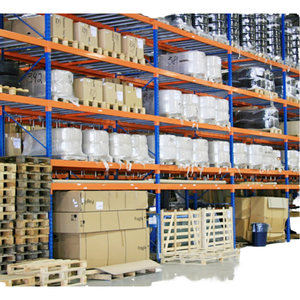
Steel Warehouse Van Rack System Heavy Duty Adjustable Corrosion Protected Epoxy Powder Coated Stacking Pallet Shelves Single
- Epoxy Powder Coated
- Stacking Optimization
- Adjustable Uprights
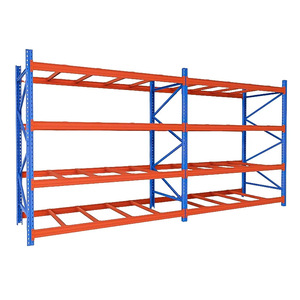
Safe and Durable Industrial Storage Pallet Rack Storage System Cold Rolled Steel Heavy Duty Adjustable Storage Shelves
- Cold-Rolled Steel
- Boltless Connector Pins
- Modular Bays
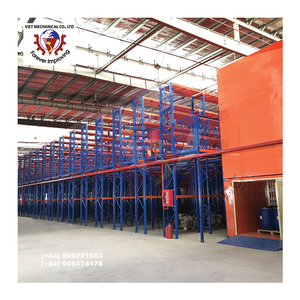
Customized Adjustable Metal Mezzanine Floor Racking System For Efficient Pallet And Warehouse Storage
- Up to 1000kg/m²
- Integrated Staircases
- Floor Space 200%
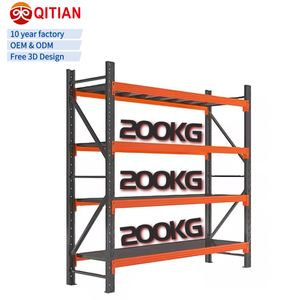
Factory Customized Steel Light Duty Industrial Storage Shelves 4 Layer Warehouse Rack System 200kg Capacity Storage Rack
- 4-Tier Configuration
- Manual Pick Ready
- Quick Snap Fit
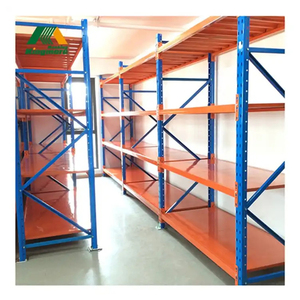
CE Certification Safe and Stable Storage Heavy Duty Selective Bolted Assemble Industrial Steel Warehouse Pallet Rack Shelving
- CE CPR-8605159
- Bolted Upright Frame
- High-Torque Anchoring
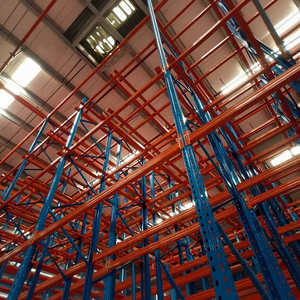
Heavy Duty Single Deep Industrial Selective Pallet Rack Steel Corrosion Protected Powder Coated Garage Storage Warehouse Racks
- Single Deep Layout
- Universal Forklift Access
- Safety Beam Locks
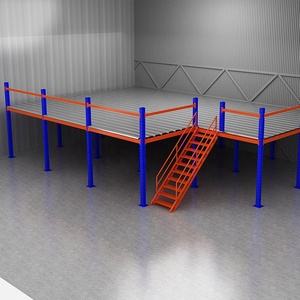
Industrial Steel Heavy Duty Mezzanine Floor Warehouse Platform Rack System with Adjustable Storage Capacity and Modular Design
- Steel Mesh / Solid Deck
- Integrated Loading Gates
- Seismic Baseplates
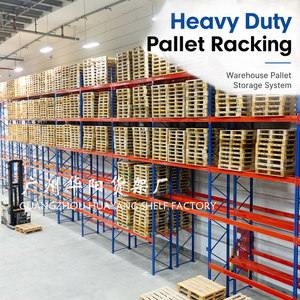
3000KG Per Level Heavy Duty Pallet Rack Industrial Warehouse Storage Steel Shelving Adjustable Pallet Racking System
- Reinforced Step Beams
- Dual Upright Anchors
- Extreme High-Bay Ready
Heavy-Duty Rack Metallurgy, FEA Stress Profiles & Safety Compliance
Selecting industrial racking requires looking beyond static cost-per-pallet position. Engineering teams must evaluate structural steel grades, yield thresholds, deflection metrics under maximum live loads, and micro-crack prevention along cold-formed bends.
Structural Steel Metallurgy: Q235B vs. Q355B
Industrial rack uprights and box beams are subject to severe axial compression and torsional deflection. Our production lines utilize certified high-tensile hot-rolled strip steel (coiled raw material strictly controlled under ISO 9001:2015 parameters). While basic commodity racking uses unstabilized commercial sheet metal, heavy-duty applications demand certified Q235B (yield strength ≥ 235 MPa) or Q355B low-alloy steel (yield strength ≥ 355 MPa). Higher tensile integrity prevents buckling at perforated punch zones and maintains elasticity during seismic events or accidental material handling equipment (MHE) collisions.
- Tensile: 370-500 MPa
- Yield ≥ 235 / 355 MPa
- Cold Bend Test: 180°
Finite Element Analysis & Deflection Tolerance
Under FEM 10.2.02 and ANSI MH16.1 specifications, beam deflection under full rated capacity must not exceed L/200 (where L is the clear span distance between upright columns). For sensitive automated picking operations or high-bay narrow aisle (VNA) systems, our structural engineering team tightens this threshold to L/300. Using computer-simulated Finite Element Method (FEM) modeling, load paths are distributed across multi-claw beam connectors, transferring moment stresses uniformly into continuous omega-profile upright columns without localized shear failure.
- Standard Deflection: L/200
- VNA Deflection: L/300
- Safety Factor: 1.5 - 1.8
Anti-Corrosion Pre-Treatment & Salt Spray Resistance
Steel corrosion in humid or coastal climates is the primary trigger of hidden catastrophic rack collapse. Inferior workshops apply paint directly over oily, oxidized steel. Direct-factory production at our Guangzhou manufacturing facility subjects all components to a thorough 10-step surface treatment: warm alkaline degreasing, twin water rinses, acid rust stripping, zinc phosphating pre-treatment, passivation, and electrostatic application of thermosetting polyester-epoxy powder cured at 180°C-200°C. This process delivers 60-80 μm coating thickness and passes 500+ hours of continuous salt-spray testing.
- Coating: 60-80μm
- ASTM B117 Salt Spray: 500h+
- Lead-Free RoHS Certified
Emerging Procurement Trends Shaping Heavy Duty Racking (2026–2035)
As global supply chains accelerate toward end-to-end automation, warehouse footprints face severe real-estate cost compression. Supply chain leaders are pivoting from legacy static pallet racks toward intelligent, reconfigurable, and ultra-high-density storage matrices.
1. Convergence of Racking & Four-Way Pallet Shuttles
The global logistics landscape is experiencing a massive pivot toward semi-automated radio shuttle and 4-way intelligent shuttle systems. Procurement directives are prioritizing racking profiles rolled with ultra-narrow dimensional tolerances (±0.5mm) to support autonomous carrier rails without wheel derailment or sensor false-alarms.
- High-Density LIFO/FIFO
- Continuous Rail Roll-Forming
2. Seismic-Engineered Base Connections for Active Zones
Across seismically active corridors in Southeast Asia, Japan, Taiwan, and the Pacific Rim, rack procurement mandates certified seismic site coefficient compliance. Racking manufacturers must provide dynamic load modeling under cyclic earthquake stress, incorporating enlarged ductile baseplates and chemical anchor bolt embedment depths up to 150mm.
- Dual Anchor Baseplates
- Non-Linear Ductility Analysis
3. Ultra-High Cold-Chain Energy Optimization
Refrigerated storage incurs 3.5× higher energy operating costs per cubic meter than ambient facilities. Procurement trends dictate high-density drive-in and shuttle racking systems operating in temperatures down to -30°C. Steel specifications must avoid low-temperature impact brittleness, utilizing hot-dip galvanized (HDG) coatings or cold-resistant powder finishes.
- Sub-Zero Steel Toughness
- Thermal Loss Reduction
4. Multi-Tier Rack-Supported Pick Towers for Omnichannel 3PL
With the explosive growth of rapid-fulfillment e-commerce, operators are converting vertical dead space into 3-to-5 tier rack-supported picking mezzanines. By utilizing structural racking columns as vertical load-bearing building pillars, facilities bypass expensive architectural building expansions and deploy integrated spiral chutes and conveyors.
- Integrated Chutes & Lifts
- Zero Structural Relocation
Supply Chain Evaluation Matrix: Direct Factory vs. Intermediaries
Procuring heavy-duty warehouse infrastructure requires evaluating risk, engineering accountability, and long-term supply integrity. Review the comparative operational audit below to understand the total cost of ownership (TCO) impact.
| Evaluation Parameter | Direct Tier-1 Factory (e.g. HEDA Shelves) | Export Trading Intermediary | Local Small Fabricator |
|---|---|---|---|
| Steel Certification & Traceability | Mill Test Certificates (MTC) with strict batch tracking (Q235B/Q355B raw coil QA). | Secondary sourced; variable material traceability across fragmented sub-mills. | Inconsistent non-certified scrap mix steel; high risk of brittle cold-punching. |
| Engineering & Load Verification | In-house CAD/3D modeling & FEM static/dynamic calculations within 24-48 hours. | Outsourced third-party drafting; slow turnarounds and zero engineering liability. | Basic empirical guesswork without finite element safety factor verification. |
| Pre-Treatment & Powder Coating | 10-step pickling & phosphating line; 60-80μm electrostatic powder; 500h salt spray. | Varies by subcontracted supplier; frequent surface peeling in humid climates. | Manual spray painting over unwashed steel; rapid oxidation and peeling within 12 months. |
| Seismic & Building Code Compliance | Engineered to ANSI MH16.1, EN 15512, AS 4084; site-specific seismic design calculations. | Relies on general manufacturer claims; unable to sign off structural documentation. | Non-compliant with international building regulations or warehouse safety audits. |
| Container Loading & Freight Optimization | Software-optimized packing plans; 3D nesting bundles; short sea routes from South China ports. | Generic pallet loading with dead container volume; higher ocean freight per unit. | High local transport cost; zero overseas shipping engineering capability. |
| Customization & OEM Flexibility | Full OEM/ODM engineering; custom punching pitches, column depths, and brand powder matching. | Limited to fixed catalog sizes offered by subcontracted partner networks. | Crude modifications requiring on-site cutting and structural compromise. |
Direct-Factory Capacity & Global Operational Strengths
Founded in 2001, Guangzhou Heda Shelves Co., Ltd. has established itself as an authoritative manufacturer of heavy-duty pallet racking, multi-tier industrial mezzanines, and high-density warehouse storage systems. Operating from our advanced Guangzhou production plant, we control every phase of manufacturing under one roof.
The 10-Step In-House Production & Quality Control Pipeline
Strict dimensional tolerances, robotic welding integrity, and long-lasting surface protection are governed by our end-to-end factory quality assurance process.
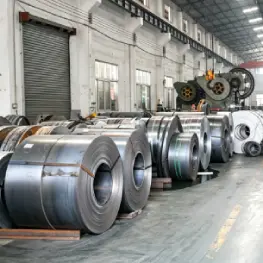
Raw Material QA
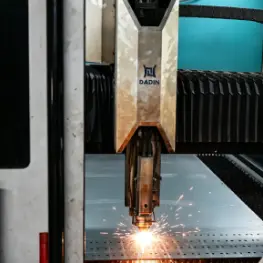
Precision Cutting
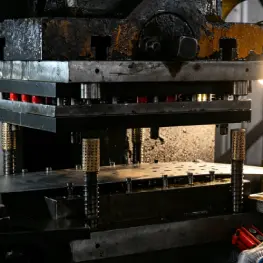
Column Punching
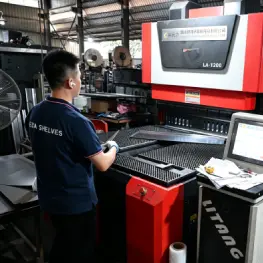
Cold Bending
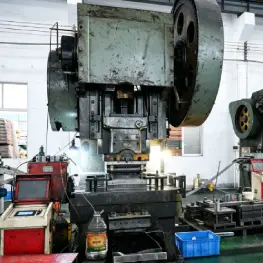
Profile Forming
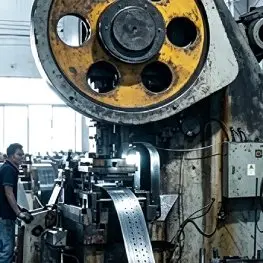
Edge Polishing
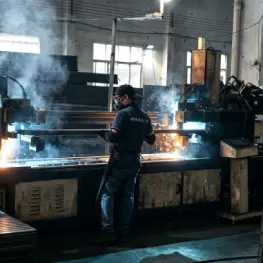
Robotic Welding
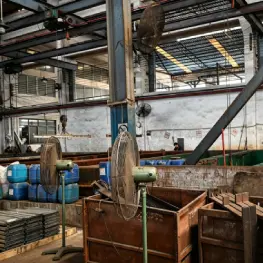
Pickling & Phosphating
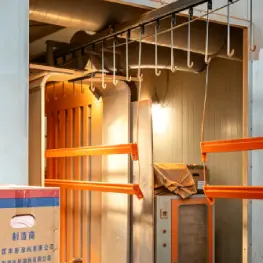
Powder Coating
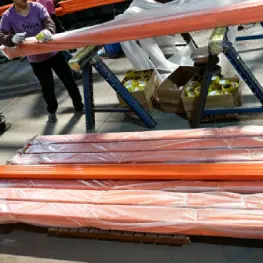
QC & Ocean Packing
Frequently Asked Questions on Heavy Duty Rack Procurement
Critical technical insights addressing warehouse load safety, seismic validation, international building codes, and logistics planning to streamline commercial procurement.
How do you calculate safe working loads (SWL) for beam levels and upright frames?
Safe working load calculations must strictly conform to European Standard EN 15512 or American standard ANSI MH16.1. Beam capacity is calculated using the elastic section modulus of paired C-channels welded into a closed box beam, loaded uniformly under distributed conditions (UDL). Total allowable load is governed by two limits: the structural bending stress (incorporating a minimum 1.5× to 1.8× yield safety factor) and the maximum permissible vertical deflection (limited to ≤ L/200 under full rated capacity).
Upright frame capacities depend not only on vertical weight, but on the unbraced vertical distance between the first beam tier and the ground floor slab (commonly known as the "unsupported floor clearance"). A frame rated for 15,000 kg with beam elevations every 1.5 meters drops significantly in capacity if the first beam tier is elevated to 2.5 meters. Our design engineers calculate Euler buckling coefficients, cross-aisle and down-aisle bracing shear forces, and floor slab point-load bearing before finalizing column profile thicknesses (ranging from 1.5mm to 2.5mm).
What structural data is required to generate a certified 2D CAD layout and 3D rendering?
To deliver an accurate, code-compliant engineering proposal within 24 to 48 hours, our structural team requires five essential parameters:
1. Warehouse Building Dimensions: Architectural CAD file (or dimensioned layout) showing clear ceiling height under low trusses, column grid locations and dimensions, floor slab expansion joints, overhead fire sprinkler heads, and dock door openings.
2. Unit Load Specifications: Pallet dimension (Depth × Width × Overall Height including cargo overhang), pallet entry orientation (2-way vs. 4-way), maximum gross pallet weight, and bottom runner structure (wooden Euro, perimeter-base plastic, or steel skid).
3. Material Handling Equipment (MHE): Forklift model, minimum clear turning radius (Right Angle Aisle Stacking Aisle), mast maximum lift reach, and outrigger dimensions.
4. SKU Velocity & Throughput: Total SKU count, pick rates, FIFO vs. LIFO operational logic, and inventory turnover cycles.
5. Facility Environmental Parameters: Operating temperatures (ambient vs. sub-zero cold room) and local seismic building codes.
How does HEDA Shelves engineer racking systems for high seismic hazard zones?
For projects across earthquake-prone countries such as Indonesia, the Philippines, Japan, New Zealand, and regions following US IBC (International Building Code) regulations, seismic racking requires sophisticated dynamic modal response spectrum analysis.
We engineer racks to absorb and dissipate lateral ground acceleration without progressive collapse. Key modifications include: increasing upright section width (e.g., transitioning from 90mm to 100mm or 120mm profiles); utilizing heavy-duty ductile baseplates with dual concrete mechanical or chemical wedge anchor studs; implementing closed-section K-bracing and D-bracing patterns along the side upright frames; and integrating heavy-duty top-tie beams across back-to-back rack runs. Structural calculation reports showing natural frequency, base shear, and drift displacement can be generated to obtain municipal building permits.
Hot-Dip Galvanizing (HDG) vs. Electrostatic Powder Coating: Which finish should you choose?
Electrostatic Powder Coating: Ideal for dry indoor logistics hubs, general manufacturing, commercial retail picking, and ambient food warehouses. Our multi-stage pickling, zinc phosphating, and thermosetting epoxy-polyester powder coat provides a smooth, attractive finish with superior scratch resistance and color-coded bay management (e.g., Safety Orange beams with Gentian Blue uprights). Coating thickness ranges from 60μm to 80μm.
Hot-Dip Galvanizing (HDG according to ISO 1461): Mandatory for open outdoor storage yards, high-humidity coastal ports, fertilizer storage, and extreme sub-zero cold storage facilities with frequent condensation and washdowns. Steel profiles are submerged in molten zinc at ~450°C, creating an alloyed zinc-iron metallurgical bond inside and outside the tube profile. This provides 80μm to 120μm of sacrificial corrosion protection lasting 25+ years even in harsh environments.
How are heavy-duty components packaged to prevent container transit damage?
Long-distance ocean freight can subject racking to shifting, dynamic swells, and marine container moisture. Direct factory shipments from our Guangzhou plant leverage engineered packaging protocols:
Uprights and beams are bundled using high-tensile steel banding over protective corrugated paper edge-guards and foam cushioning. Bundles are nested head-to-toe on custom heavy-duty timber dunnage skids, allowing warehouse crews to safely unload with long-fork counterbalance trucks without bending beam connector clips. Small hardware, bolts, nuts, baseplates, and spring safety pins are vacuum-sealed in moisture-resistant polyethylene bags inside reinforced plywood crates with desiccant packs. Full 3D container loading optimization software ensures maximum cubic utilization in 40ft High Cube (HQ) containers while preventing transit weight imbalance.
Plan Your Next Warehouse Expansion with Certified Racking Engineers
Avoid expensive structural rework, building permit delays, and storage density bottlenecks. Collaborate directly with HEDA Shelves' dedicated engineering team to receive an optimized 2D CAD floor plan, 3D visualization, and structural load report.
- CE CPR-8605159 & ISO 9001:2015
- Free 2D CAD & 3D Design in 24–48h
- Direct South China Port Rapid Shipping
- OEM/ODM Private Label for Distributors
Download Technical Specs
Connect with our technical export division to get load charts, profile dimensions, and sample layout drawing packages.
Get Catalog