ISO 9001:2015 & CE Certified Intralogistics Engineering
Top Trusted Flow Through Pallet Racking Factories & Exporter
Authoritative Technical White Paper & Direct-From-Factory Procurement Manual for High-Density Gravity FIFO Storage, Structural Dynamic Roller Systems, and Worldwide Industrial Supply Chains.
Engineered Storage Solutions
High-Density Warehouse Racking Systems
Manufactured from certified high-yield structural steel, our dynamic gravity flow channels, live storage tracks, and modular upright frameworks are custom-calibrated to optimize inventory throughput, floor utilization, and continuous First-In, First-Out (FIFO) material distribution.
Over 10,000+ warehouse projects successfully delivered
Technical Architecture
Kinematics & Structural Mechanics of Gravity Flow Racking
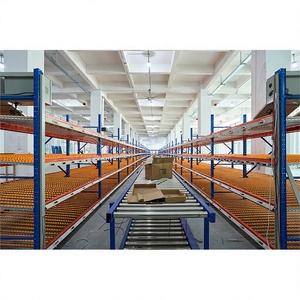
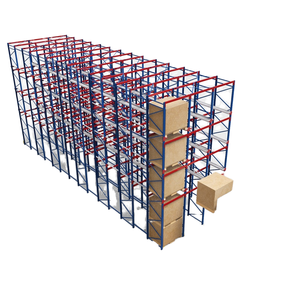
Flow-through pallet racking (often termed Pallet Live Storage or Gravity Flow Racking) operates as an autonomous, gravity-powered kinetic system designed around strict First-In, First-Out (FIFO) warehousing principles. Operating across a declined plane ranging between 3° and 4° (approximately 3.5% to 6% grade), pallets placed at the upper loading end glide smoothly along inclined roller beds under gravitational pull toward the picking face.
Unlike standard static selective racking, pallet live storage systems require rigorous engineering control to mitigate dynamic kinetic momentum and prevent runaway impacts. Our specialized roller channels incorporate centrifugal mechanical or eddy-current magnetic brake rollers positioned at designated lane intervals. These controllers govern travel velocities to a consistent 0.25 to 0.3 meters per second, irrespective of pallet weight variations ranging from 300 kg to 1,500 kg.
Automatic Pallet Separation Devices (Time-Delay Separators)Eliminates line pressure by mechanically decoupling the lead pallet from subsequent pallets in the lane, allowing forklift tines safe and unhindered extraction.
Heavy-Duty Zinc-Galvanized Steel RollersRollers with precision-machined sealed ball bearings and cold-drawn solid steel hex axles handle repeated impact loads without surface brinelling or bearing degradation.
Seismic & Cold-Chain Structural ResilienceManufactured in compliance with EN 15512:2020 and RMI MH16.1 specifications, offering custom base-plate anchors and heavy bracing to withstand high-magnitude seismic events and -30°C freezer environments.
Future Procurement Trends for Warehouse Racking (2025–2030)
As warehouse real estate valuations climb and automated distribution ecosystems become paramount, procurement managers are transitioning from conventional commodity racking toward high-efficiency, multi-dimensional dynamic storage infrastructures.
TREND 01
Integration with AS/RS & Autonomous Mobile Robots (AMRs)
Static storage racks are rapidly being superseded by dynamic gravity flow lanes engineered to serve as high-density buffering zones feeding Automated Guided Vehicles (AGVs) and AMRs. In modern omnichannel supply chains, automated pick-and-deposit stations rely on gravity flow lanes to maintain an unbroken buffer of fast-moving SKUs. This eliminates lift-truck transit congestion and optimizes robot cycle efficiency across 24/7 operating cycles.
With global temperature-controlled logistics experiencing a compound annual growth rate exceeding 14%, operators must aggressively squeeze every chilled cubic meter. Flow-through pallet racking removes interior access aisles, consolidating multiple pallet depths into a single footprint. This minimizes the refrigerated air volume that requires active cooling, cutting per-pallet refrigeration electrical costs by 35% compared to conventional selective configurations.
International 3PL operators and general warehouse contractors are shifting away from intermediate trading agents in favor of direct collaboration with specialized Asian manufacturers like Guangzhou Heda Shelves. Procuring factory-direct grants clients immediate access to certified structural finite element analyses (FEA), tailored seismic load engineering, custom powder-coat chemistry, and substantial cost advantages that simplify capital expenditure (CapEx) approvals.
R&D Roadmap
Technological Innovations in Gravity Flow Systems
The evolutionary trajectory of flow-through pallet racking is driven by material science, frictionless mechanical dampening, and intelligent digital feedback loops embedded directly into mechanical tracks.
Eddy-Current Magnetic Non-Contact Braking
Traditional friction-based centrifugal brake rollers experience continuous internal pad degradation, requiring scheduled replacement cycles. Next-generation gravity flow lanes are shifting toward hermetically sealed eddy-current magnetic braking mechanisms. By leveraging non-contact electromagnetic induction, these rollers deliver consistent speed governance, generating zero mechanical friction, zero dust particulate, and virtually indefinite operating lifespans even in harsh deep-freeze environments.
Hybrid Multi-Wheel Split-Roller Dynamic Tracks
Historically, flow racking required flawless wooden Euro or GMA pallets with solid runner boards. Modern R&D centers on high-impact polymer composite split-rollers and multi-wheel skate assemblies. Engineered with staggered dual-roller lines, these advanced surfaces smoothly convey irregular plastic runners, perimeter-base stringers, and steel skids without skewing, jamming, or surface gouging.
Sensorized IoT Lane Occupancy Telemetry
Integrating optical time-of-flight (ToF) sensors and load-cell telemetric strips directly into the gravity track structural profile enables automated real-time inventory management. Facility operators gain granular, instantaneous visibility into lane fill percentages, pallet movement speed, and potential structural jams, triggering alerts to warehouse management software (WMS) long before bottlenecks disrupt picking routines.
Enterprise Manufacturing Authority
Why Global Procurement Leaders Choose HEDA Shelves
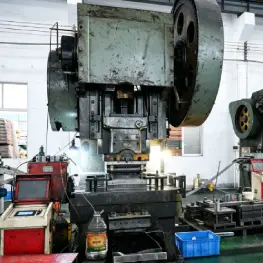
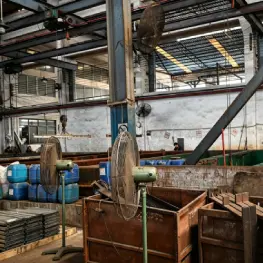
Founded in 2001, Guangzhou Heda Shelves Co., Ltd. operates a 30,000 square meter high-precision manufacturing complex equipped with over 300 experienced engineers, project managers, and automated cold-forming lines delivering up to 30,000 metric tons monthly.
10-Step Factory Quality Assurance & Production Flow
STEP 01
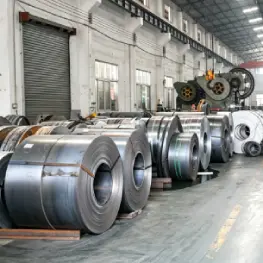
Raw Material Verification
STEP 02
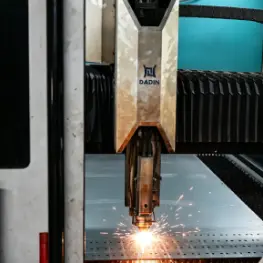
Precision CNC Cutting
STEP 03
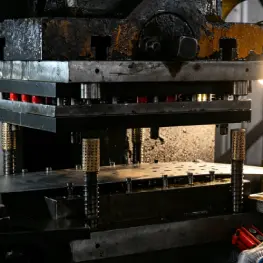
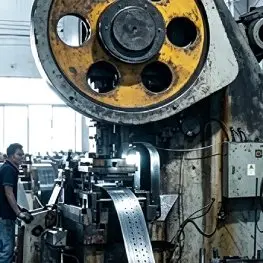
Automated Upright Punching
STEP 04
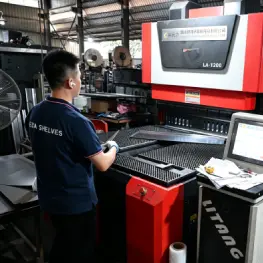
Cold Bending & Forming
STEP 05
Continuous Roll Profiling
STEP 06
Deburring & Polishing
STEP 07
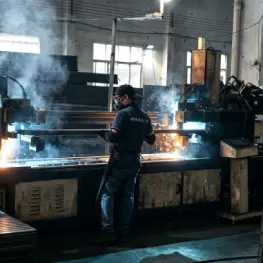
Robotic Bevel Welding
STEP 08
Pickling & Phosphating
STEP 09
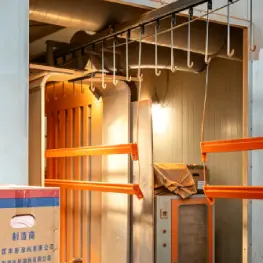
Electrostatic Powder Coat
STEP 10
QC Load Check & Export Packing
Verified Compliance
International Testing & Structural Conformity
Every pallet racking batch exported from our facility is backed by third-party metallurgical certificates, load-deflection test data, and chemical analysis sheets conforming to world-recognized safety covenants.
CE Certification No. 2435-CPR-8605159 — Structural steel verification in accordance with Construction Products Regulation (EU) No 305/2011.
ISO 9001:2015 Management System No. 18624Q00169R0M — Full traceability from incoming raw steel coil through final container staging.
Seismic Compliance & Calculations — Dynamic response spectra calculations provided for seismically active regions across the Pacific Rim, Middle East, and Mediterranean basins.
Free 2D CAD & 3D Modeling (24-48 Hours) — Full structural layout drafting including aisle clearances, column obstacle adjustments, and loading schedules.
Engineering Consult
Frequently Asked Questions on Flow Racking Procurement
Explore technical clarifications direct from our senior structural engineering team. Have a specialized facility challenge or atypical pallet configuration? We offer complimentary engineering consultations.
What is the optimal incline slope for gravity flow pallet racking?
The typical slope for flow-through pallet racking is calibrated between 3.0% and 4.0% (approximately 1.7° to 2.3° declination angle). For lighter loads (under 400 kg) or plastic pallets with higher surface friction, a 4.0% to 4.5% incline is utilized. For standard heavy wooden GMA or Euro pallets (up to 1,200 kg), a 3.5% incline provides adequate gravitational flow while limiting excessive terminal velocity. Our engineers conduct physical roll-testing using your specific pallet samples to determine the ideal track angle prior to mass beam punching.
How do centrifugal speed controller rollers operate without electrical power?
Speed controller rollers are purely mechanical and unpowered. They integrate an internal planetary gear set linked to spring-loaded centrifugal brake shoes. As a pallet rolls over the controller, rotation accelerates the internal gear assembly; centrifugal force expands the internal friction shoes outward against an internal brake drum. The braking force increases proportionally to the rotational speed, preventing runaway acceleration and locking pallet travel to a smooth, controlled 0.25 m/s across the entire lane.
Can flow-through pallet racking accommodate plastic or defective pallets?
Standard flow tracks rely on flat, continuous wooden bottom runners (such as 3-runner Euro or perimeter base GMA pallets). Cracked boards, protruding nails, or missing bottom runners can cause pallets to jam. For plastic pallets or variable bottoms, HEDA provides three-track roller assemblies, full-width cylindrical steel rollers, or specialized multi-wheel skate beds. These distribute ground contact over a broader surface area, ensuring smooth gliding without roller snagging.
What is the function of the pallet separator mechanism at the pick face?
In a deep lane (e.g., 10 to 20 pallets deep), cumulative backpressure from the trailing pallets acts directly against the first pallet resting at the pick face. Without a separator, this hydrostatic line pressure can pin the front pallet against the end stop, making extraction with a forklift hazardous and risking rack deflection. A mechanical pallet separator engages a physical stop behind the lead pallet, isolating it entirely. When the forklift lifts and removes the front pallet, a foot pedal or trip lever resets, allowing the rear queue to advance one position smoothly.
How does HEDA protect pallet flow systems in cold-storage and freezer facilities?
For sub-zero environments down to -30°C, ordinary bearings seize, standard powder coat can micro-fracture, and carbon steel risks low-temperature embrittlement. HEDA engineers cold-chain racking with specialized impact-tested low-temperature steel (Q355D/E), hot-dip galvanized structural profiles (EN ISO 1461), low-viscosity synthetic synthetic freezer-grade bearing grease, and stainless-steel axle pins. This prevents moisture freezing, oxidation, and roller stalling during defrost cycles.
What information is needed to obtain a free 3D CAD layout and quotation?
To engineer an accurate layout and structural proposal within 24 to 48 hours, our team requires: (1) Warehouse architectural drawings (CAD or dimensioned PDF) indicating clear ceiling height, column grid coordinates, and door clearances; (2) Pallet specifications (width, depth, height, and gross weight); (3) Pallet bottom runner design (drawing or photo); (4) Desired lane depths and SKU turnover metrics; and (5) Lift truck make, maximum mast lift height, and turning radius.
What are the standard shipping, containerization, and lead times from Guangzhou?
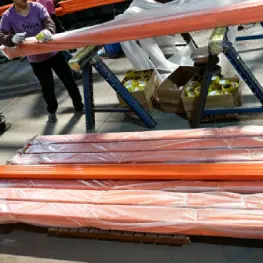
Standard production lead times range from 15 to 25 days depending on project tonnage. Our Guangzhou manufacturing hub provides convenient logistics access to major South China seaports (Nansha, Huangpu, Shenzhen, Hong Kong). Upright frames are pre-assembled or flat-packed with structural steel strapping, protective corrugated interleaves, and water-resistant shrink wrapping to prevent transit friction. Every order includes a comprehensive container loading plan and 3D installation manual for straightforward local installation.
Direct Factory Sourcing
Accelerate Your Warehouse Capacity with Expert Engineering
Connect directly with HEDA Shelves' structural design department in Guangzhou. Benefit from factory-direct pricing, custom CAD layout optimization, FEA load calculations, and end-to-end containerized export coordination.
Detailed 2D & 3D Layout Drawings (Free)
Structural Deflection & Seismic Checks
Guaranteed CE & ISO 9001:2015 Compliance
Global Export Staging & Fast Transit
Request an Engineering Proposal
Our multilingual structural engineering group typically responds within 1 business day with preliminary assessments.