Featured Heavy-Duty Warehouse Storage & Racking Configurations
From high-throughput carton dynamic flows and extra-capacity cantilever arms to modular automated sheet metal systems, explore our factory-tested industrial storage solutions.
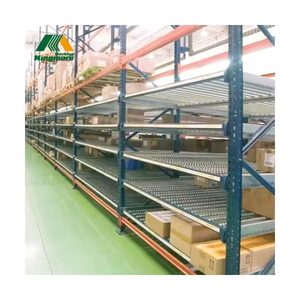
Durable Steel Storage Warehouse Gravity Flow Roller Racking Systems Carton Flow Racks
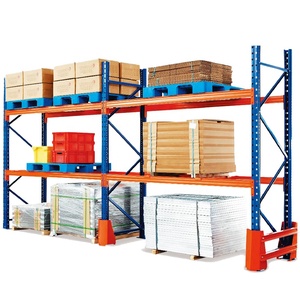
Wholesale Heavy Load Racks Supplier Adjustable Heavy Duty Cold Rolled Steel Shelving
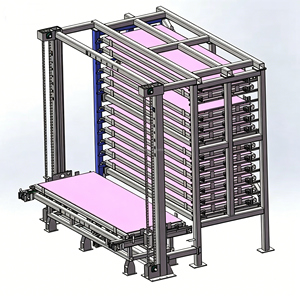
Durable Anti-Rust Heavy Duty Steel Electric Sheet Metal Rack Drawer Type System
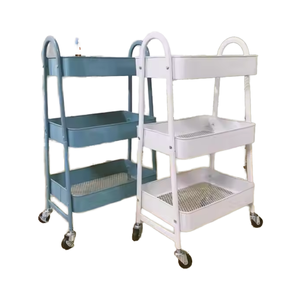
3 Tier Rolling Rack Stainless Steel Kitchen and Utility Mobile Storage System
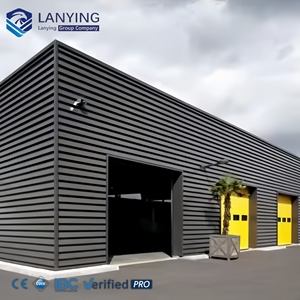
Prefabricated Steel Structure Logistics Warehouse Workshop Commercial Steel Building
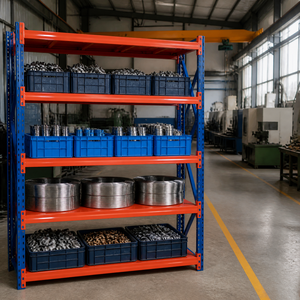
Custom Adjustable Anti-Rust Metal Stacking Racks VNA Pallet Racking System
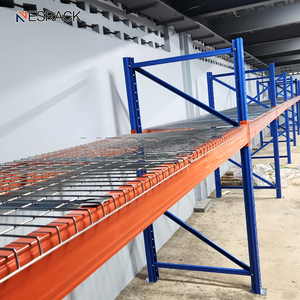
Customized Heavy Duty Pallet Rack 1000kg Galvanized Wire Mesh Decking System
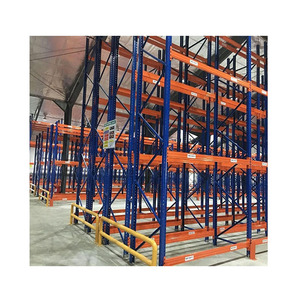
Industrial Galvanized Steel Rack Heavy Duty VNA & Double Deep High Density Racking
Cantilever Engineering Mechanics: Structural I-Beam vs. Roll-Formed Profiles
Cantilever warehouse racking systems represent the pinnacle of structural mechanics tailored for awkward, long, and unevenly distributed inventory. Unlike standard selective pallet racking that relies on front upright columns connected by horizontal load beams, cantilever racks utilize centralized vertical columns anchored to base channels, with load-bearing arms projecting forward uninhibited by front vertical obstructions. This continuous longitudinal opening eliminates handling friction when manipulating structural steel sections, tubing, extruded aluminum, timber packs, gypsum boards, and industrial sheet metals.
When specifying an enterprise cantilever storage array, global procurement teams must delineate between Roll-Formed Steel and Structural Hot-Rolled I-Beams (H-Sections). Roll-formed uprights and arms, cold-coiled from Q235B high-tensile strip steel, provide a cost-effective, adaptable profile for light-to-medium uniform distributed loads (UDL) up to 800 kg per arm. Conversely, structural cantilever racking fabricated from heavy hot-rolled Q355B H-sections delivers exceptional resistance against dynamic torsional twisting, side-impact forces from heavy-duty mast forklifts, and severe point-loading exceeding 3,000 kg per arm level.
Critical Deflection Standard: In compliance with ANSI MH16.2 (RMI) and FEM 10.2.02 European Racking Norms, maximum permissible vertical arm deflection under uniform static loading must not exceed L/250 to L/300 of the cantilever arm span. Furthermore, arms are engineered with an inherent 1.5° to 2.5° upward pitch to compensate for gravitational elastic sag upon maximum rated loading, eliminating slippage hazards during reach operations.
| Mechanical Specification | Light / Medium Roll-Formed | Heavy-Duty Structural I-Beam | Galvanized External Yard Spec |
|---|---|---|---|
| Core Steel Grade | Q235B Cold Rolled Carbon Steel | Q355B Hot-Rolled Structural H-Beam | Q355B Hot-Dip Structural Profile |
| Arm Load Range (UDL) | 250 kg – 800 kg per arm | 1,000 kg – 3,500 kg per arm | 1,000 kg – 3,000 kg per arm |
| Column Height Reach | Up to 6,000 mm | Up to 12,000 mm | Up to 9,000 mm (Wind Rated) |
| Arm Length Variations | 600 mm, 800 mm, 1,000 mm | 800 mm, 1,200 mm, 1,800 mm | 1,000 mm, 1,200 mm, 1,500 mm |
| Finishing Treatment | Phosphated Epoxy Powder Coat | Electrostatic Powder Coated (60-80μm) | Hot-Dip Galvanized (ISO 1461 ≥85μm) |
| Seismic / Torsional Bracing | Bolted Cross & Diagonal Ties | Heavy-Duty Welded Tubular K-Bracing | Reinforced High-Torque Wind Bracing |
The structural integrity of cantilever arrays is determined not only by column profile selection, but fundamentally by horizontal and diagonal cross-bracing bays. Cantilever columns exhibit significant rigidity in the front-to-back direction via broad base channel connections, yet require structural spine bracing down the aisle axis to absorb longitudinal racking harmonics induced by high-reach side-loaders and articulated counterbalance forklifts.
HEDA Shelves: Engineered Reliability Since 2001
Leveraging 25 years of end-to-end industrial racking manufacturing, our dedicated Guangzhou facility produces certified, project-engineered logistics systems serving over 120 countries.
Integrated Factory Scale
Operating across a modernized 30,000 m² facility with 300+ precision-trained manufacturing technicians, our plant achieves a monthly output volume exceeding 30,000 metric tons of finished industrial steel racking systems.
- Complete roll-forming & H-beam milling lines
- Zero-defect robotic continuous weld cells
Rigorous Global Certification
Engineered to international regulatory codes. Our racking complies with CE Certification (No. 2435-CPR-8605159), ISO 9001:2015 Quality Management standards (No. 18624Q00169R0M), and strict RoHS eco-coating protocols.
- Full finite element analysis (FEA) testing
- Third-party batch metallurgical mill certificates
Climatic & Seismic Hardening
Engineered for high-humidity monsoon environments across Southeast Asia and aggressive Middle Eastern desert yards. Featuring phosphate pickling pretreatment, multi-layer electrostatic powder coating, or hot-dip galvanizing.
- Seismic base-plate engineering for sub-Pacific zones
- Certified marine-grade salt-spray corrosion resistance
Future Procurement Trends in Industrial Cantilever Systems
Shifting macroeconomic pressures, real estate footprints, and warehouse automation are fundamentally reshaping how industrial enterprises procure and configure long-load storage infrastructure.
1. Mobile Electrified Bases
With industrial land lease rates surging across Tier-1 distribution hubs, static cantilever aisles that consume 50-60% of floor area are giving way to motorized mobile cantilever systems. By mounting structural cantilever uprights on heavy-duty rail-guided powered floor carriages, operators open a single access aisle on demand via radio remote. This increases raw steel and lumber storage density by 80% within the exact same footprint.
2. Automated Stacker Crane Integration
Autonomous materials handling is expanding from standard box pallets to heavy, non-uniform loads. Procurement specifications increasingly require cantilever arms equipped with laser alignment sensors, mechanical entry guides, and end-stops that communicate with cantilever AS/RS stacker cranes. These systems eliminate operator reach error, accelerate high-bay retrieval up to 24 meters, and protect structural arms from forklift collisions.
3. Digital Twin & Strain Gauge Telemetry
Next-generation enterprise projects integrate IoT strain sensors and laser deflection monitoring on high-capacity cantilever arms. As structural steel sections or heavy pipe bundles are set down, real-time telemetry registers dynamic shock load, arm deflection angles, and cumulative cyclic fatigue. Fleet supervisors receive real-time notifications before asymmetric overloading induces permanent plastic column deformation.
Cantilever Racking Technological Advancements
State-of-the-art metallurgical engineering, modular adjustability mechanisms, and sustainable manufacturing practices are establishing new performance benchmarks for warehouse operations.
Micro-Alloyed High Yield Steels
Transitioning from conventional carbon steel to high-tensile micro-alloyed variants reduces deadweight by up to 18% while maintaining identical modulus of elasticity ($E = 210,000 \text{ N/mm}^2$). This enables lower shipping freight costs and superior seismic floor acceleration resistance.
Boltless Pivot-Pin Arm Linkage
Traditional bolted arm connectors require significant re-torque maintenance. Modern systems utilize high-shear forged alloy pivot pins. If a forklift mast accidentally lifts the arm while picking, the arm pivots freely upward without fracturing the column face, preventing catastrophic structural collapse.
Advanced Duplex Zinc-Polymer Coats
Harsh outdoor pipe yards face aggressive UV, rain, and chemical corrosion. The development of duplex protective coatings—combining an automated thermal diffusion zinc undercoat with a 90μm architectural polyester powder layer—triples service lifetime over single-dip paint.
Low-Carbon EAF Steel Fabrication
Driven by European Scope 3 emissions regulations and global ESG mandates, manufacturers are sourcing steel feedstock smelted via Electric Arc Furnaces (EAF) powered by green renewables, reducing the embedded carbon footprint of heavy industrial cantilever systems by over 45%.
Frequently Asked Questions by Industrial Buyers
Essential technical guidelines, calculation methods, and site-readiness factors for warehouse operations managers, general contractors, and structural consultants.
How do structural engineers determine maximum load capacities for cantilever arms and columns?
Cantilever structural load capacity is calculated according to the principles of uniform distributed load (UDL) acting across an unsupported projected beam. The arm bending moment is calculated via $M = (w \cdot L^2) / 2$, where $w$ is the distributed load per unit length and $L$ is the effective arm length from the column face.
Crucially, cantilever arms must never be loaded with severe point loads at their distal tips without de-rating the allowable capacity by at least 50%. The total column capacity is not simply the sum of the arm capacities; engineers must calculate combined axial compression combined with eccentric bending moments ($P/A \pm M/Z$) transferred from loaded arms across one or both column faces, ensuring adequate safety factors ($\ge 1.67$) under all asymmetric loading patterns.
What is the difference between single-sided and double-sided cantilever columns in warehouse layout design?
Single-sided cantilever columns feature projecting arms on one face only and are almost exclusively placed against perimeter warehouse walls or property boundaries. Their base channel must be significantly longer than the arm reach (typically 1.2x to 1.4x the arm length) to resist forward overturning moments unless permanently back-anchored to certified structural building columns.
Double-sided cantilever columns project arms in opposite directions from a single central vertical spine, acting as island rows within the warehouse floor. Double-sided arrays offer far superior structural efficiency: when both sides are loaded, the opposing bending moments cancel each other out, subjecting the column core primarily to pure axial compression. However, the system must always be engineered for the "worst-case asymmetric load condition"—when one side is completely full to capacity while the opposing side is completely vacant.
What concrete slab specifications and anchoring foundations are required for heavy-duty cantilever racks?
Because cantilever racks exert concentrated point loads and massive overturning rotational moments directly through their baseplates, standard unreinforced 100mm industrial slabs are insufficient. Heavy-duty cantilever installations require a minimum reinforced concrete slab thickness of 150mm to 250mm with a compressive strength rating of at least $f'_c \ge 25 \text{ MPa}$ to $30 \text{ MPa}$ (3,500 to 4,500 PSI).
Anchoring is executed using heavy-duty chemical capsule adhesive anchors (such as M16–M24 Grade 8.8 threaded rods) or certified seismic mechanical undercut anchors drilled to depths between 120mm and 200mm. Anchor embedment depth and edge distance spacing must be verified to prevent concrete cone breakout failure under extreme overturning uplift forces.
Can cantilever racking systems be installed outdoors, and how is wind/environmental loading handled?
Yes, cantilever racking is frequently installed outdoors in timber yards, steel fabrication yards, and concrete pipe depots. For outdoor installations, all steel components must undergo hot-dip galvanization in accordance with ISO 1461 / ASTM A123, yielding a bonded zinc coating thickness of no less than 85 microns to guarantee 25+ years of corrosion protection.
Furthermore, outdoor cantilever arrays can be outfitted with cantilever roof canopies. When designing canopy racks, our engineering team factors in local basic wind speed velocity ($V_{\text{basic}}$), topographic exposure categories, and regional snow loads. The top of the column is extended into an inclined structural rafter, and vertical loads must be calculated with additional aerodynamic uplift coefficients.
How do material handling vehicle types influence cantilever aisle clearances and guide rail choices?
The choice of material handling equipment dictates aisle dimensions and floor protection. Standard counterbalance forklifts require broad aisles between 4.5m and 6.0m to maneuver 6-meter long steel profiles into the rack openings, drastically reducing floor utilization.
To optimize space, modern facilities deploy Four-Way Directional Reach Trucks or Dedicated Multi-Directional Side-Loaders. Side-loaders can carry extra-long loads down aisles as narrow as 2.2m to 2.8m. In these high-density layouts, structural steel guide rails (such as inverted $100\times50\times6\text{mm}$ angle iron or structural channels) are securely anchored along the cantilever baseplates, providing physical guidance for the side-loader's guide rollers and protecting columns from wheel impacts.
Request an Engineered 2D/3D Warehouse Cantilever Layout & Structural Load Report
Collaborate directly with HEDA Shelves' senior application engineers. Provide your facility floor dimensions, material profiles, unit pack weights, and handling machinery to receive a free, comprehensive CAD layout and structural feasibility study within 24–48 hours.