Featured Heavy-Duty Warehouse Storage & Pallet Racking Roster
Manufactured under strict ISO 9001:2015 and CE certification standards utilizing high-tensile Q235B and Q355B cold-rolled structural coils, tailored for high-density logistics hubs and automated distribution centers.
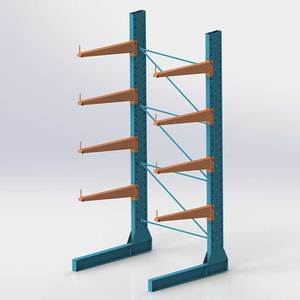 Long Loads
Industrial Heavy Duty Double Sided Cantilever Racking System
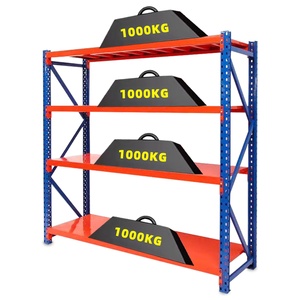 Universal 100% Access
Customized Heavy-Duty Steel Warehouse Pallet Racking System
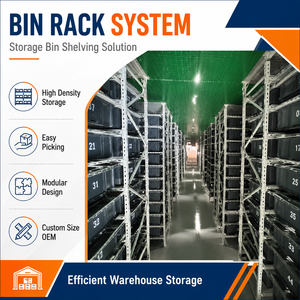 Automation Ready
Mini Load ASRS Tote Storage Rack Automated Bin Racking System
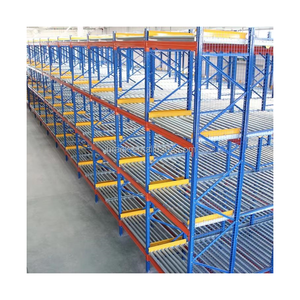 Strict FIFO Flow
Galvanized Warehouse Storage Pallet Flow Racking System
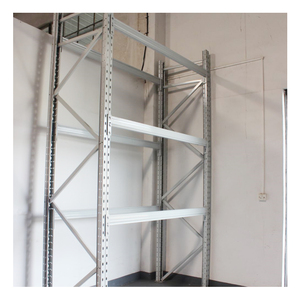 Rapid Modular Assembly
Heavy Duty Boltless Steel Warehouse Storage Rack Shelving
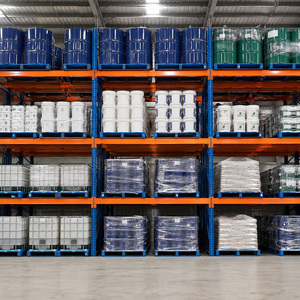 Automotive Logistics
Industrial Racks Heavy Duty Steel Pallet Racking for Auto Parts
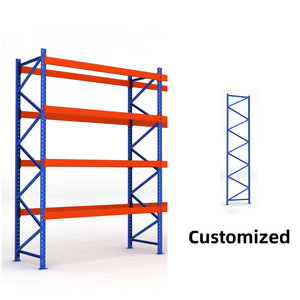 Heavy Duty Box Beam
Warehouse Steel Heavy Duty Beam Rack Pallet Racking System
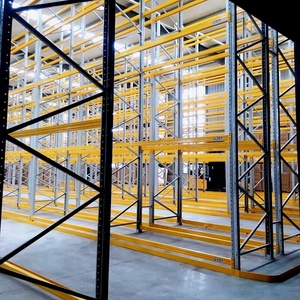 VNA Maximum Cube
Narrow Aisle (VNA) Selective Warehouse Racking System
1. The Global Supply Chain Shift: Sourcing Pallet Racking Systems Directly from China
Modern warehouse logistics have entered a pivotal paradigm marked by skyrocketing industrial square footage costs, escalating consumer velocity across omni-channel fulfillment networks, and the imperative for absolute spatial optimization. Consequently, evaluating top China warehouse pallet racking system factories and suppliers is no longer merely a low-cost purchasing drill; it is a mission-critical structural engineering investment. Warehouse operations managers, third-party logistics (3PL) conglomerates, EPC contractors, and multinational project procurement leaders seek manufacturing partners capable of balancing metallurgical integrity, rigorous international safety codifications (including RMI, FEM 10.2.02, AS 4084, and EN 15512), and tailored dynamic flexibility.
Within this industrial landscape, Guangzhou Heda Shelves Co., Ltd. (operating globally as HEDA Shelves) stands out as an industry benchmark. Established in 2001, HEDA Shelves has accumulated more than two and a half decades of localized production and worldwide project delivery experience. Operating an expansive 30,000 m² state-of-the-art facility staffed by over 300 experienced engineers, CNC tooling specialists, and intralogistics project leads, the enterprise converts upwards of 30,000 tons of high-grade steel monthly. This scale of localized direct processing from coil unrolling to robotic multi-axis welding guarantees structural consistency and insulates global buyers from intermediate broker markups, erratic quality tiers, and uncoordinated lead times.
Strategic Engineering Directive: Structural stability in heavy racking is fundamentally dictated by cold-rolled section geometry, notch punching precision, and chemical surface preparation. Sourcing directly from verified Tier-1 Chinese manufacturers with in-house continuous roll-forming lines mitigates micro-deflection risks and eliminates secondary subcontracting compromises.
2. Comparative Technical Architecture: Structural Matrix of Modern Racking Solutions
Warehouse space yields return on investment only when the configured racking typology directly synchronizes with inventory unit characteristics, turnover frequency, and lifting apparatus specifications. Standardizing on a single generic shelf blueprint frequently precipitates floor-capacity bottlenecks, aisle congestion, and unnecessary manual travel times. The matrix below outlines how modern racking configurations differ across mechanical tolerances, density ratios, and operational dynamics.
| Racking Typology | Typical Load Rating | Density vs Selectivity Ratio | Material Handling Interface | Target Industrial Use Case |
|---|---|---|---|---|
| Selective Pallet Racking | 1,000 to 4,500 kg per beam level | 100% Selectivity / Moderate Density | Standard Counterbalance, Reach Trucks | Multi-SKU 3PL, FMCG distribution, retail hubs |
| Drive-In / Drive-Through | 800 to 2,000 kg per pallet position | 85% Floor Utilization / Strict LIFO/FIFO | Specialized Narrow Counterbalance Trucks | Cold storage, raw beverage aging, bulk batch storage |
| Radio Shuttle System | Up to 2,000 kg per pallet lane | Extreme Density / Semi-Automated | Automated Carrier Shuttles + Forklift | Pharmaceutical buffers, deep-freeze cold chains |
| Pallet Flow / Gravity Roller | 500 to 1,500 kg per pallet lane | High Density / Dynamic Gravity FIFO | Brake Roller System + Standard Lift | High-throughput perishable goods, date-sensitive stock |
| Very Narrow Aisle (VNA) | Up to 3,500 kg per pair of beams | Maximum Vertical Rise / 100% Selectivity | Man-Up / Man-Down Turret Trucks, Wire Guided | Expensive urban logistics centers, high-bay warehouses |
| Heavy Duty Cantilever | 500 to 3,000 kg per structural arm | Unobstructed Horizontal Span | Side Loaders, 4-Way Multi-Directional Lifts | Structural steel beams, PVC pipe, timber, sheet metal |
3. Future Procurement Trends: Where Industrial Storage Technology is Headed (2025–2035)
Procuring warehouse storage infrastructure requires anticipating technological convergences over a 15-to-20-year structural lifespan. Leading supply chain operators are modernizing their facilities to respond to the following global market trends:
1. Hybrid Robotic Intralogistics & ASRS
Traditional static storage is transitioning to high-tolerance, automated rack-supported buildings. Uprights and tie beams must conform to millimetric deflection thresholds (under 1/1000 of clear span) to accommodate Autonomous Mobile Robots (AMRs), automated guided vehicles (AGVs), and stacker cranes without mechanical jamming.
2. High-Efficiency Cold-Chain Optimization
As biological pharmaceutical storage and global frozen food trade expand, the cost per cubic meter of conditioned air continues to climb. High-density semi-automated radio shuttle systems and compact drive-in configurations with hot-dip galvanized finishes maximize volumetric cubic yield while withstanding constant -30°C thermal conditions.
3. Seismic Resilience & Parametric FEA Modeling
International building codes increasingly mandate dynamic response spectrum analyses. Warehouse owners across seismic corridors (such as Indonesia, the Philippines, Japan, New Zealand, and western Latin America) require verified Finite Element Analysis (FEA) reports calculating plastic hinge formation, dynamic ductility, and anchor shear capacities.
4. Sustainable Green Metallurgy & Carbon Auditing
Global brands are prioritizing Scope 3 emissions reductions across their supply chain infrastructure. Modern Chinese tier-one mills incorporate clean hydrogen-reduced scrap steel alongside electrostatic powder coating curing processes that minimize volatile organic compounds (VOCs) and reduce energy consumption during pre-treatment.
5. Fully Customized Modular Expansion
Fixed catalogue systems are being replaced by modular, configurable racking geometries. Standardizing upright hole configurations on 50mm and 75mm pitches enables multi-tier mezzanine floors to be integrated on top of pallet racking bays as warehouse order volume expands over time.
6. Digital Twin Layouts & 3D Pre-Engineering
Procurement cycles are accelerating through 24-to-48-hour 3D CAD modeling and automated warehouse simulation. This preliminary engineering review verifies clear ceiling heights, sprinkler clearances, forklift turning radii, and slab point-load distributions prior to steel fabrication.
4. Complete Quality Control: Inside HEDA Shelves' 10-Step Manufacturing Process
A primary factor distinguishing established China racking manufacturers from low-tier fabricators is strict internal process control. HEDA Shelves utilizes a 10-stage manufacturing and quality assurance workflow to ensure structural consistency across long production runs:
Raw Material QA
Certified prime cold-rolled steel coils verified for chemical composition and tensile yield strength.
Precision Slitting
High-speed laser and rotary shear cutting maintaining width tolerances under ±0.5mm.
Automated Punching
High-tonnage continuous CNC punch presses producing uniform teardrop and butterfly pitches.
Continuous Roll Forming
Multi-stand automated cold-roll forming lines shaping open omega columns and heavy box beams.
Precision Bending
Secondary brake-press calibration for specialized footplates, column protectors, and frame ties.
Mechanical Polishing
Automated deburring, shot-blasting, and weld seam dressing to remove all surface scale and sharp edges.
Robotic Welding
Six-axis robotic workstations fusing beam connectors and structural base plates with shielded arc gas.
Pickling & Phosphating
Nine-tank chemical dip cleaning removing oils and rust, forming a crystalline rust-inhibiting conversion layer.
Powder Coating
Electrostatic spray lines applying durable epoxy-polyester thermoset powder cured at 180°C to 200°C.
QC & Container Packing
Micrometer film checks, load testing, bundled strapping, and containerization with dunnage protection.
5. Enterprise Advantages: Why Global Buyers Partner with HEDA Shelves
Navigating global procurement requires confidence in your supplier's technical depth, production scalability, and logistics capabilities. HEDA Shelves combines manufacturing scale with engineering support to address common procurement challenges:
Factory-Direct Pricing
By producing components entirely in-house across our 30,000 m² Guangzhou facility, we eliminate export trading intermediaries, delivering competitive factory-gate pricing and clear production timelines directly to the end client.
Rapid Design Support
Our dedicated engineering department provides custom 2D CAD floor plans, 3D structural visual renders, and pallet position optimization calculations within 24 to 48 hours of initial warehouse data review.
Certified Structural Compliance
Fully compliant with international quality protocols, holding CE Certification (No. 2435-CPR-8605159), ISO 9001:2015 Quality Management accreditation (No. 18624Q00169R0M), and environmental RoHS safety compliance.
Optimized Export Packaging
Upright profiles, beam bundles, and small accessories receive protective bubble wrapping, heavy steel strapping, and custom container loading plans that maximize container cube utilization and minimize sea transit abrasion.
Frequently Asked Questions: Sourcing Pallet Racking from China
Essential engineering, logistics, and quality assurance considerations answered by our senior project engineering desk.
What core parameters are required for a structural racking quotation?
To produce an accurate 2D/3D layout and structural calculation, our engineering team requires: (1) Warehouse architectural drawings indicating clear ceiling heights, column locations, and fire exit doors; (2) Pallet specifications including width, depth, height, and gross pallet weight; (3) Forklift model, turning radius, and maximum mast extension; (4) Total target SKU positions and required daily pallet throughput.
What steel grades are used, and how is tensile strength verified?
Our standard profiles utilize certified structural steel grades Q235B (yield strength ≥ 235 MPa, comparable to ASTM A36 / EN 10025 S235JR) and high-load grade Q355B (yield strength ≥ 355 MPa, comparable to S355JR). Raw materials are sourced from certified domestic steel mills with raw-material mill test certificates (MTC) documenting chemical and mechanical properties.
How do you protect steel components against tropical humidity and corrosion?
Every cold-formed component undergoes an automated 9-tank chemical pre-treatment process: alkaline degreasing, multi-stage water rinsing, acid pickling to eliminate scale, and zinc phosphating to establish an inert conversion base. We then electrostatically apply a 60–80 μm thermosetting epoxy-polyester powder coat. For cold rooms, outdoor yards, and high-salinity coastal ports, full hot-dip galvanization is available.
Can HEDA Shelves engineer racking systems for active seismic zones?
Yes. We routinely engineer racking for seismic regions across Indonesia, the Philippines, Japan, and the Middle East. Our structural engineers adjust upright cross-sections, increase material gauges, incorporate specialized back and top horizontal bracing configurations, and engineer enlarged heavy baseplates with high-tensile wedge anchors to meet local building codes.
What is your production lead time, and how do you handle international shipping?
Standard fabrication runs generally range from 15 to 25 working days depending on total project tonnage and surface finish options. Located in Guangzhou near major South China container ports (Huangpu, Nansha, Shenzhen), we coordinate direct FCL container freight to major global ports with optimized dunnage plans and moisture-absorbing desiccants inside every container.
Can our local installation crew assemble your racking systems easily?
Yes. Every delivered project is accompanied by detailed CAD assembly drawings, bay elevation diagrams, safety pin seating protocols, and torque ratings for floor anchors. Structural beams feature modular connector hooks that engage into column teardrop or butterfly perforations, secured with spring safety lock pins to prevent accidental dislodgement.
Request Your Custom Warehouse Layout & Engineering Plan
Send our Guangzhou design desk your warehouse dimensions, pallet specifications, and throughput targets. Receive a comprehensive CAD floor plan, 3D structural visual rendering, and itemized factory-direct quote within 24 to 48 hours.