Featured Industrial Racking & Multi-Tier Storage Systems
Engineered directly from South China's leading manufacturing facilities with automated continuous roll-forming lines, robotic MIG welding, and international testing validations.
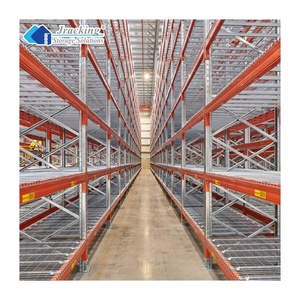
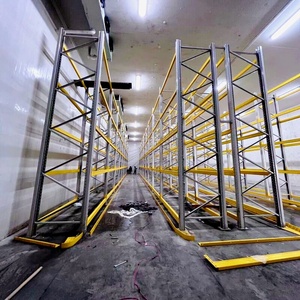
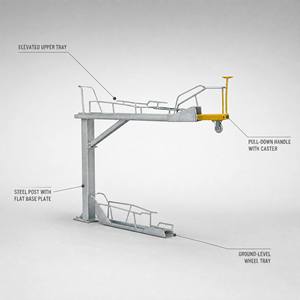
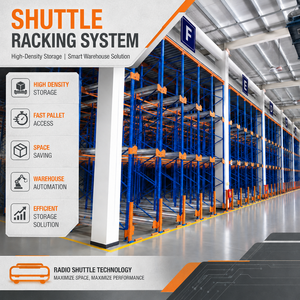
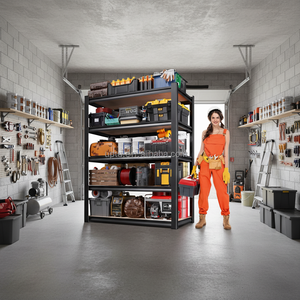
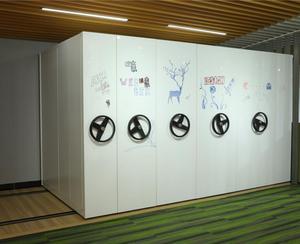
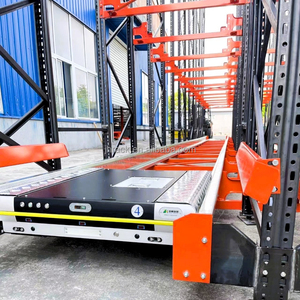
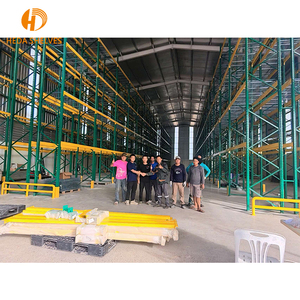
Industrial Metallurgy & Structural Architecture of Slotted Angle Racking
Slotted angle racking systems—historically known as angle iron frameworks or boltless light-to-medium utility shelving—represent the foundational skeleton of commercial storage worldwide. While heavy-duty selective pallet racks and automated storage and retrieval systems (ASRS) dominate primary bulk logistics distribution centers, the slotted angle profile remains an irreplaceable asset across tier-one retail stockrooms, automotive parts sorting bins, pharmaceutical archives, and multi-tier picking mezzanines.
To the untrained procurement agent, an angle post appears to be a rudimentary L-shaped profile stamped with perforations. However, from the perspective of cold-formed structural engineering (governed by standards such as EN 15512, ANSI MH16.1, and AS 4084), slotted angle profiles are complex load-bearing sections subjected to eccentric compression, local buckling, and torsional flexure. Top-tier Chinese manufacturers utilize prime cold-rolled structural steel grades—chiefly Q235B and SPCC/SPCD—characterized by a verified minimum yield strength of 235 MPa and ultimate tensile resistance upwards of 370 to 500 MPa. Sourcing raw coils directly from state-owned enterprises like Baosteel and Ansteel guarantees uniform carbon distribution, minimal non-metallic inclusions, and tight thickness tolerances (±0.05 mm), preventing sudden structural shear under rated static and seismic loads.
| Engineering Parameter | Commercial Grade (Low-End Market) | Export Specification (Heda Standard) | Structural Impact / Quality Dividend |
|---|---|---|---|
| Base Steel Substrate | Recycled Q195 / Scrap Strip Steel | Prime Q235B Cold-Rolled Certified Coil | Prevents brittle micro-cracks at high-stress punch radii. |
| Profile Thickness (Gauge) | 1.0 mm – 1.2 mm (Nominal -15% Tol.) | 1.5 mm – 2.5 mm (Exact ±0.03 mm Tol.) | Guarantees rated vertical load without column buckling. |
| Perforation Pitch Precision | Single mechanical punch (±1.5 mm drift) | Multi-stage CNC progressive die (±0.1 mm) | Eliminates diagonal rack racking; ensures squareness. |
| Pre-Treatment Protocol | Manual solvent degreasing only | Automated 7-stage acid pickling & phosphating | Eliminates mill scale, rust under film, and salt delamination. |
| Powder Coating Adhesion | Single-pass manual spray (35–45 µm) | Electrostatic thermosetting epoxy-polyester (70–90 µm) | Exceeds 500 hours neutral salt spray testing (ASTM B117). |
| Fastener / Rivet System | Grade 4.8 unhardened zinc bolts | Grade 8.8 tensile hardware or cold-riveted keys | Maintains joint rigidity under dynamic manual loading cycles. |
Manufacturing Precision: Progressive Stamping and Automated Roll-Forming
The mechanical integrity of slotted angle racking is governed by hole geometry and hole density. Each slot removed from an L-profile diminishes the gross cross-sectional area, reducing axial load capacity. Elite Chinese exporters deploy advanced finite element analysis (FEA) to calculate the precise mathematical balance between slot configuration (teardrop, keyhole, oval, or butterfly) and residual flange stiffness. Continuous progressive stamping dies punch accurate modular patterns at standard 50 mm, 50.8 mm (2-inch), or 75 mm pitch centers before the steel strip enters multi-pass cold roll-forming lines.
In inferior workshops, unguided eccentric stamping presses induce internal residual stress and slight longitudinal twisting (camber and bow) along the 3-meter or 6-meter upright profile. When hundreds of such uprights are erected in a multi-bay warehouse run, accumulated angular error causes rack leaning, requiring dangerous field shimming. Conversely, certified manufacturers enforce strict dimensional tolerances using multi-stand roll-forming cassettes that shape the steel gradually across 12 to 16 cold-forming passes, locking the flange at an exact 90° ± 0.5° angle with zero twist.
Future Procurement Trends for Slotted Angle & Industrial Racking
How changing supply chain demographics, nearshoring shifts, freight economics, and environmental regulations are reshaping global racking contracts through 2026–2030.
Transition to Boltless Rivet & Clip Architectures
Rising international jobsite labor costs across North America, Europe, Australia, and the Middle East are accelerating the phase-out of traditional nut-and-bolt slotted angle assemblies. Forward-looking procurement directors are prioritizing rivet-lock, teardrop, and snap-in clip designs that slash on-site erection time by up to 60%, eliminating specialized torque-tool requirements while securing self-locking stability.
Container Freight Optimization via Nestable Profiles
With ocean freight volatility remaining a recurring line-item threat, progressive exporters design nesting-profile angles and demountable shelving decks that maximize volumetric cube utilization inside 40ft High Cube containers. High-density bundle strapping protocols and palletized modular packing schemes now allow up to 26–28 metric tons of steel to be loaded without void space, lowering freight cost per linear storage meter.
Pre-Galvanized Substrates for Harsh Climates
Procurement managers servicing tropical regions across ASEAN (Vietnam, Malaysia, Indonesia, the Philippines) and high-salinity coastal logistics hubs in the GCC are demanding pre-galvanized (hot-dip galvanized coil) slotted angles or zinc-rich polyester hybrid powder coats. This protects shelf corners and shelf lip edges from scratching, moisture infiltration, and corrosion in non-climate-controlled storage warehouses.
Integration with Micro-Fulfillment & Mezzanines
Urban logistics real estate costs have triggered massive demand for vertical density. Slotted angles are no longer deployed solely as standalone ground bays; they serve as structural joists and upright columns for multi-tier catwalk picking mezzanines. Chinese factories capable of delivering integrated structural calculations, staircases, and grating systems dominate comprehensive warehouse contract awards.
Stricter ESG & Low-VOC Powder Coating Compliance
Global corporate ESG directives demand verification of non-toxic powder coating chemistries. Chinese Tier-1 exporters are standardizing RoHS, REACH, and TGIC-free epoxy-polyester coatings. These prevent heavy-metal outgassing in closed archive facilities and cold-storage food hubs, providing clients with verified environmental safety credentials for institutional tenders.
BIM & Automated 3D Spatial Modeling
Sourcing decisions are no longer made strictly from static PDF catalogs. Modern engineering teams require native Revit BIM objects, STEP CAD blocks, and warehouse simulation models within 24 to 48 hours of initial inquiry. Manufacturers offering fully digitized structural clash detection and loading simulations secure preferred supplier status.
Guangzhou HEDA Shelves: 25 Years of Manufacturing Authority
Founded in 2001 in Guangzhou, China, HEDA Shelves operates as a fully integrated manufacturer, design authority, and direct exporter for commercial and industrial warehouse infrastructure.
In-House Manufacturing Ecosystem
Our 30,000 square meter factory executes all critical operations in-house: automated coil slitting, cold roll-forming, CNC punching, welding, multi-stage acid pickling, phosphating, and electrostatic powder coating. Nothing is subcontracted to unmonitored workshops.
Certified Structural Compliance
Every batch is manufactured under strict ISO 9001:2015 quality assurance protocols and audited CE Certification (No. 2435-CPR-8605159). We provide verified mill certificates, coating thickness gauge tests, and static load test reports for municipal building approvals.
Rapid Engineering & 3D Modeling
Our technical engineering department provides custom 2D layout planning and photorealistic 3D warehouse simulations within 24–48 hours. We calculate load distribution charts, seismic bracing factors, and forklift operating clearances tailored to specific site dimensions.
South China Export Gateway
Located in Guangzhou near major container terminals (Nansha, Huangpu, Shenzhen Yantian/Shekou), HEDA Shelves ensures short maritime lead times, competitive ocean rates to ASEAN, the Middle East, Europe, and the Americas, and optimized container packing lists.
OEM / ODM Distributor Programs
We partner with over 40 regional racking distributors worldwide, providing private-label powder coating colors (RAL matching), custom carton packaging, laser-engraved branding, and pre-assembled sub-components that integrate seamlessly into existing distributor lines.
Over 10,000 Projects Completed
From e-commerce fulfillment multi-tier mezzanine floors in Thailand to cold chain drive-in racks in the UAE and pharmaceutical spare parts storage in Singapore, our technical footprint spans 120+ countries with verified long-term field stability.
Frequently Asked Questions for Slotted Angle & Warehouse Racking
Direct technical and commercial answers compiled by HEDA’s senior structural engineers and international export directors to facilitate professional supplier auditing.