High-Performance Pallet Racking & Multi-Tier Storage
Engineered cold-formed steel solutions designed to withstand extreme thermal variations, dynamic seismic stresses, and rigorous daily logistics cycling.
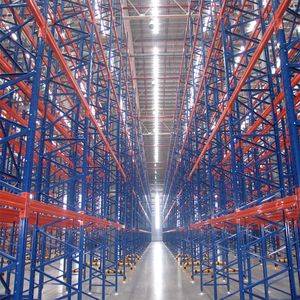
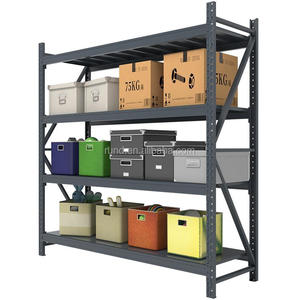
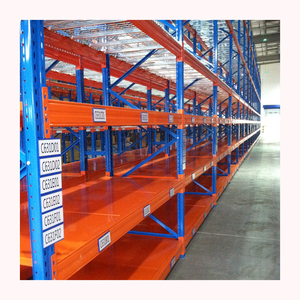
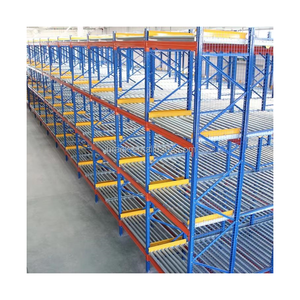
High-Density Radio Shuttle Systems: Engineering Architecture & Mechanics
A comprehensive examination of dynamic deep-lane logistics, structural integrity, and modern automation ROI for supply chain directors.
1. Kinematic Mechanics & Rail Integration Dynamics
A modern Radio Shuttle Racking System represents the nexus of high-density passive structural steel and automated robotic conveyance. Unlike conventional drive-in systems where forklifts enter the structural bays—introducing severe impact hazards and requiring wider tolerances—a shuttle system decouples vertical lift operations from horizontal deep-lane movements. The core shuttle vehicle is equipped with high-precision optical encoders, laser obstacle-detection sensors, and poly-wheel drive mechanics running over specialized galvanized cold-formed guide rails. These rails serve a dual functional purpose: supporting pallet point loads up to 1,500 kg while simultaneously maintaining ultra-precise lateral alignment tolerances of ±1.5 mm for continuous shuttle travel up to 1.2 m/s.
The structural load transfers are calculated using nonlinear finite element methods (FEM) in compliance with EN 15512 and RMI (Rack Manufacturers Institute) design codes. Uprights are stamped with an Omega profile featuring 75 mm or 50 mm pitch settings, cold-rolled from certified Q355B structural coil steel. This high-tensile material maintains optimal yield stress and elongation metrics, ensuring that dynamic braking forces exerted by the radio shuttle during high-speed deceleration cycles do not induce micro-fatigue along the beam connectors or diagonal bracing nodes.
2. Energy Architecture: Ultra-Capacitors vs. Advanced LiFePO4
Thermal stability and uninterrupted cycle times are paramount for cold chain distribution facilities (-25°C to -30°C). Traditional lead-acid formulations fail rapidly due to electrolyte freezing and voltage degradation. As a pioneering manufacturer in China, our facilities engineer dual-platform power architectures:
| Kinetic Power Technology | Cycle Lifespan (80% DoD) | Cold Room Operational Resilience (-25°C) | Fast Charge Turnaround | Target Supply Chain Operation |
|---|---|---|---|---|
| Industrial LiFePO4 Lithium | 3,500 – 4,000 Cycles | Thermal Pre-heating Core Built-in | 2.0 Hours (Full Charge) | Standard Continuous 2-Shift DC Operations |
| Hybrid Supercapacitor Array | 100,000+ Cycles | Instant Discharge; Zero Thermal Degradation | 15 – 30 Seconds Opportunity Charging | Fully Automated 24/7 Dark Warehouse Hubs |
| Gel Deep Cycle Matrix | 800 – 1,200 Cycles | High Internal Resistance Drop | 8.0 Hours (Bench Swapping) | Legacy & Budget Ambient Distribution |
3. LIFO vs. FIFO Flow Topology Optimization
Operational design starts by evaluating batch turnover cycles. In high-velocity food and beverage environments, First-In, First-Out (FIFO) topologies are engineered using dual-access aisles: charging lanes at the deposit face and picking lanes at the discharge end. This architectural split eliminates internal traffic bottlenecks and supports high-volume dispatch. Conversely, for seasonal reserve holdings, cold storage meat facilities, and bulk manufacturing holding buffers, Last-In, First-Out (LIFO) designs consolidate handling aisles to a single building perimeter, reducing non-productive aisle footprint from 60% of warehouse floor area down to less than 18%.
Guangzhou HEDA Shelves: 25+ Years of Production Dominance
Established in 2001, Guangzhou Heda Shelves Co., Ltd. operates state-of-the-art heavy engineering facilities dedicated to global logistics infrastructure.
Full Regulatory Certifications
Certified under CE Certification No. 2435-CPR-8605159 and ISO 9001:2015 Certificate No. 18624Q00169R0M. Surface coatings comply fully with global RoHS non-toxic finishing mandates.
10-Stage Precision Manufacturing
Complete in-house control: high-tensile steel slitting, automated CNC upright punching, multi-roll progressive forming, robotic seam welding, 8-stage pickling and phosphating, and electrostatic epoxy coating.
Rapid Asia-Pacific Sea Dispatch
Strategic manufacturing located in Guangzhou gives instant transit through major South China deepwater ports (Nansha, Huangpu, Shenzhen), delivering containerized shipments to ASEAN hubs in under 7 days.
Strategic Purchasing Trends & Next-Gen Technology Evolution
Key economic, structural, and automation shifts reshaping how multinational distribution networks specify racking hardware.
Shift from Manual Shuttles to 4D Pallet Swarms
While 2D shuttles move along single deep-lanes, procurement is pivoting toward 4-Directional High-Bay Shuttles. These units transition across longitudinal and transverse tracks via automated lifts, eliminating forklift involvement entirely and enabling 24-meter vertical storage heights.
Carbon-Optimized Steel Sourcing
Supply chain leaders now require Environmental Product Declarations (EPD). Procuring lightweight, high-tensile micro-alloy steels (such as Q355B and Q460) reduces total steel mass by up to 14% without compromising load-bearing deflection ratios (1/200).
Integration with WCS & Industrial IoT Sensors
Modern radio shuttle fleets must provide native API communication with SAP, Oracle, and Manhattan WMS systems. Onboard IoT sensors now stream real-time data on wheel vibration, battery temperature, motor torque, and rail friction for predictive maintenance.
Frequently Asked Questions for Project Directors & Buyers
Technical clarity directly from our Guangzhou engineering team to help you validate project specifications.
What floor slab tolerances are mandatory for a radio shuttle rack?
According to DIN 18202 Table 3 Group 4 standards, the concrete slab must maintain an overall levelness deviation of less than 3 mm over a 2-meter straightedge. Slab settlement must remain under 1/500 to prevent rail misalignment and ensure optimal sensor positioning.
How does the system ensure structural safety during seismic events?
For installations across earthquake zones (e.g., Indonesia, Philippines, Japan), our engineers utilize dynamic response spectrum analysis. We reinforce the base plate footprint, double-anchor footings with M16 chemical anchors, and increase horizontal bracing node frequency.
Can the same radio shuttle handle varied pallet dimensions?
Standard shuttles are calibrated for specific base footprints (e.g., 1200x1000mm or 1200x800mm). However, we build multi-pallet dual-sensor carriages featuring adjustable optical sensors that automatically identify overhang variants from 800 mm to 1200 mm.
What is the standard production and shipping lead time from China?
A standard 5,000-to-15,000 pallet position project requires 20 to 25 business days for precision roll-forming and powder coating. Container stuffing is optimized via 3D software to eliminate damage, with direct sea transits across Asia arriving in 5 to 14 days.
How are warranty and post-sale technical support handled internationally?
All structural steel racking is backed by a 5-year structural warranty, while shuttle vehicles feature a comprehensive 1-year mechanical/electrical guarantee. We deliver modular plug-and-play electronic replacement trays and provide 24/7 video engineering support.
How does surface treatment withstand humid tropical environments?
Every profile undergoes an 8-stage pre-treatment line, including acid pickling to eliminate mill scale and zinc phosphating to establish an inert crystalline bonding layer, followed by automated electrostatic epoxy-polyester thermoset powder coating baked at 200°C.