Industrial Heavy-Duty Pallet Racking Systems
Precision cold-formed high-tensile steel racking systems customized for multi-tier fulfillment hubs, raw material storage, and cold-chain warehouses worldwide.
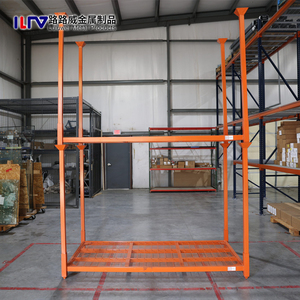
Warehouse Storage Steel Stackable Racks Portable Stacking Racking with Mesh Pallet
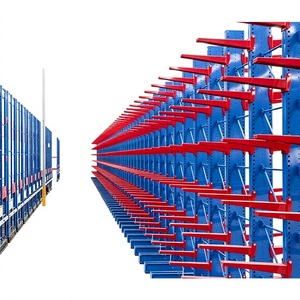
Customized Industrial Cantilever Racking Upright Frames Heavy Duty Steel Storage Shelf
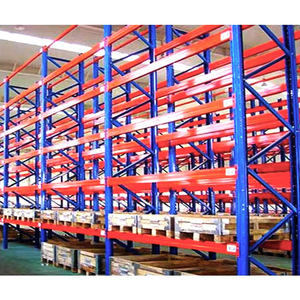
Easy Assembly Heavy Duty Pallet Racking Modular Warehouse Storage System Industrial Racks
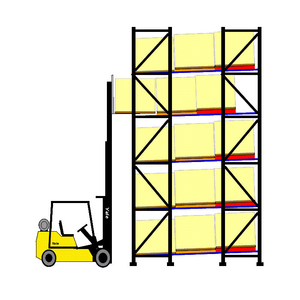
Warehouse Storage Rack Pallet Racking Heavy Duty Push Back Pallet Racking System
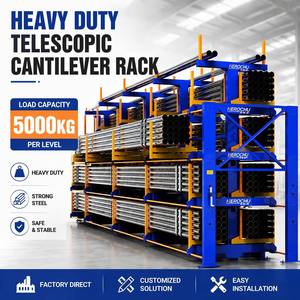
Heavy Duty Steel Telescopic Cantilever Rack System Corrosion Resistant Warehouse Racking
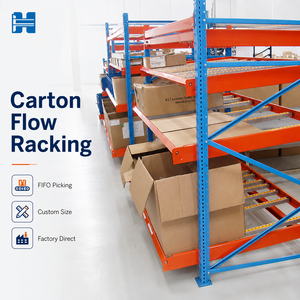
Warehouse Flow Rack Carton Gravity Roller FIFO Storage Racking System OEM Custom
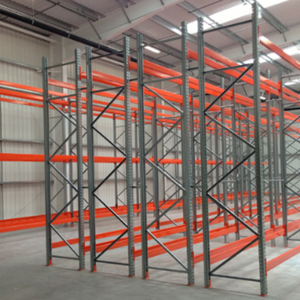
Double Deep Pallet Rack Heavy Duty Pallet Storage Racking 500kg-3000kg Per Layer
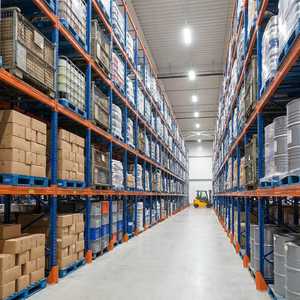
Warehouse Steel Storage Rack Heavy Duty Adjustable Selective Pallet Racking System
Why Global Supply Chains Rely on HEDA Shelves
Established in 2001 in Guangzhou, HEDA Shelves integrates precision structural engineering, ISO 9001 certified roll-forming, and full-spectrum export compliance for over 120 nations.
Navigating the complex operational landscape of modern supply chain engineering requires an experienced manufacturing partner. At Guangzhou HEDA Shelves Co., Ltd., every racking profile is rolled from certified structural coils from leading tier-one steel mills. We don’t just fabricate steel racks; our in-house structural engineering office performs comprehensive load modeling, finite element analysis (FEA), and seismic deflection assessments compliant with EN 15512, FEM 10.2.02, and ANSI/RMI MH16.1 specifications.
Unlike regional traders or fragmented workshops, our unified Guangzhou manufacturing base houses integrated cold-roll forming lines, automated 500-ton CNC column punching, robotic seam welding, and closed-loop electrostatic powder-coating plants. Controlling the complete lifecycle under one roof guarantees continuous quality, precise hole pitch alignment (down to ±0.2 mm tolerances), and uniform surface curing that easily withstands high-temperature, humid oceanic shipping conditions.
Our global engineering service bridges technical conceptualization with ground-level logistics execution. Whether your project involves retrofitting an existing facility in Bangkok, constructing a cold-chain seafood DC in Jakarta, or installing a 4-tier rack-supported mezzanine in Singapore, our team delivers detailed 2D CAD spatial planning, interactive 3D visual walkthroughs, and custom connection node details within 24 to 48 hours of initial inquiry.
With verified CE certification (No. 2435-CPR-8605159), ISO 9001:2015 accreditation, and RoHS material compliance, our documentation sets pass demanding municipal building inspections, port customs audits, and tier-1 contractor tender evaluations with zero delay. Every shipment includes tailored container nesting diagrams that maximize sea-freight cube utilization, dramatically lowering freight expenditure per pallet position.
HEDA In-House 10-Step Quality Verification Pipeline
Steel Inspection
Spectrometry & tensile test for certified Q235B/Q355B coils.
Precision Slitting
High-speed CNC slitting ensuring zero edge burrs and warping.
CNC Column Punching
Automated single-pass 50/75mm pitch diamond hole punch.
Continuous Roll Forming
24-station rolling stands creating rigid omega uprights.
Step-Beam Profiling
Closed-box interlocking welding for optimal torsion resistance.
Robot Seam Welding
Multi-axis robotic arm welding connector brackets to beams.
Phosphate Treatment
Acid pickling, degreasing and zinc phosphating pre-wash.
Powder Coating
Automated electrostatic gun array applying 60-80μm polymer.
High-Temp Curing
Baking at 200°C for cross-linked anti-scratch paint adhesion.
Export Bundling
Protective foam wraps, corrugated buffers & steel banded skids.
Strategic Sourcing Trends in Pallet Racking (2025–2030)
How evolving industrial automation, real estate inflation, extreme climates, and supply chain volatility are reshaping global warehouse infrastructure investments.
Total Cost of Ownership (TCO) Prioritization
Global procurement officers are moving away from evaluating pallet racks simply on nominal FOB steel tonnage. Instead, decisions prioritize beam deflection lifespan (L/200), upright fatigue resilience, dynamic impact recovery, and reconfigurability. High-grade hot-rolled structural steel combined with resilient electrostatic coatings reduces downtime, minimizes forklift rack replacements, and cuts maintenance expenses over a 15-year facility horizon.
Convergence of Racking with AMR & AS/RS
The rapid transition from manual forklifts to Autonomous Mobile Robots (AMRs), automated pallet shuttles, and stacker cranes demands unprecedented fabrication tolerances. Racking manufacturers must maintain frame verticality tolerances under 1:1000 and millimeter-level rail flatness. Modern procurement requires suppliers to engineer hybrid frameworks capable of seamless conversion from manual selective racks into high-density automated shuttle lanes as order volume scales.
Standardized Seismic & Geological Validation
With industrial expansion across seismically active zones such as the Pacific Rim (Indonesia, Philippines, Japan), Turkey, and Latin America, standard catalogue designs are obsolete. Global EPC contractors now insist on project-specific dynamic FEA calculations under UBC, IBC, or Eurocode 8. Upright section geometries, widened heavy-duty baseplates, twin back-to-back run spacers, and floor anchor embedment depths must be verified against site-specific peak ground acceleration (PGA) metrics.
Strategic Procurement Insight: Warehouse real estate acquisition costs have escalated by an average of 42% across global logistics corridors since 2020. Maximizing cubic volume utilization via multi-tier rack-supported mezzanines, Narrow Aisle (VNA) systems, and Push-Back configurations reduces warehouse footprint requirements by up to 55%, delivering break-even returns within 18 months of commissioning compared to standard greenfield construction.
Technical Architecture Selection Matrix for Procurement Directors
| Racking Architecture | Space Efficiency | Direct Selectivity | Rotation Principle | Optimal Application Scenarios | Average Investment per Pallet |
|---|---|---|---|---|---|
| Standard Selective Racking | 40% – 50% | 100% Direct | FIFO / LIFO | High SKU variety, fast-moving consumer distribution, standard 3PLs | Low (Baseline) |
| Double-Deep Pallet Rack | 60% – 65% | 50% Semi-Direct | LIFO | Homogeneous bulk inventory, medium SKU count, beverage bottling | Low-Medium (+20%) |
| Drive-In / Drive-Through | 70% – 80% | Low (Batch Access) | LIFO (Drive-In) / FIFO | Cold storage, seasonal raw materials, deep bulk storage | Medium (+35%) |
| Push-Back Racking (Cart) | 75% – 85% | Lane Selectivity | LIFO | 2–6 deep multi-SKU storage where forklifts must stay in aisle | Medium-High (+65%) |
| Gravity Pallet Flow | 80% – 90% | Facing Pallet | Strict FIFO | Perishable food, pharmaceuticals, cross-dock buffer staging | High (+110%) |
| Industrial Cantilever Rack | Custom Vertical | 100% Direct (Unobstructed) | FIFO / LIFO | Steel pipes, timber bundles, extrusions, sheet metals, bulky rolls | Medium-High (Per Ton) |
Structural Innovations in Pallet Racking Metallurgy & Safety
Continuous improvements in high-yield micro-alloyed steels, advanced beam-to-column interlocking joints, and multi-layer corrosion defense systems.
1. Micro-Alloyed Steels & Cold-Roll Forming Geometry
Traditional racking relied heavily on standard structural hot-rolled sections with excessive dead weight. Modern structural engineering leverages modified Q235B and Q355B structural coil grades with controlled carbon equivalents, providing superior yield strength (>355 MPa) and guaranteed elongation rates (>22%). This metallurgy enables cold-roll forming lines to fabricate complex 12-bend to 16-bend omega upright profiles that distribute vertical axial compression and torsional buckling loads far more efficiently than basic C-channels.
By optimizing the radius-to-thickness ratio at each corner fold, local buckling under concentrated forklift shock is substantially mitigated. This delivers a 20% increase in load capacity while reducing overall steel deadweight, directly lowering foundation concrete point-load requirements and saving on global container shipping charges.
2. Positive-Lock Connections & Impact Dissipation
The structural vulnerability of any pallet rack resides at the beam-end connector joint. Recent design shifts have replaced conventional 3-claw brackets with precision robotic welded 4-claw and 5-claw connectors engineered with negative rake angles. As beam downward deflection occurs under maximum load, the gravitational wedge action tightens the connector teeth securely into the column's teardrop or diamond apertures, increasing structural moment-stiffness.
Simultaneously, drop-in spring-steel safety locking pins prevent accidental vertical dislodgement during aggressive high-speed forklift pallet extraction. At ground level, reinforced wraparound column protectors lined with dense elastomeric dampers absorb accidental MHE (Material Handling Equipment) lateral collisions without transferring destructive shear forces directly into the anchor bolts.
3. Climate-Resilient Duplex Coating Technologies
Warehousing operations in tropical maritime zones (Southeast Asia, the Caribbean, the Gulf Coast) encounter extreme humidity, high ambient salinity, and condensation cycles. Standard air-dried industrial paints quickly experience underfilm corrosion, leading to beam delamination and localized failure. HEDA Shelves addresses this through multi-stage surface preparation: acid pickling and degreasing followed by microcrystalline zinc phosphating.
This forms an inert chemical bond with the substrate prior to electrostatic application of thermosetting TGIC-free polyester powder (60–80 μm thickness), cured in ovens at 200°C. For deep sub-zero cold rooms (-30°C) and corrosive chemical yards, components are treated with continuous Hot-Dip Galvanizing (HDG) per EN ISO 1461, yielding over 500 hours of continuous neutral salt spray resistance (ASTM B117) with zero rust creep.
4. Digital Twins & BIM Structural Integration
Modern mega-fulfillment centers require complete architectural synchronization. Building Information Modeling (BIM) files allow racking structural models (including columns, beams, aisle cross-bracing, wire mesh decks, and sprinkler flue clearances) to be integrated into Revit or Navisworks master models. This pre-construction simulation identifies spatial conflicts between rack frames, overhead HVAC ducting, in-rack fire suppression nozzles, and ceiling structural trusses weeks before containerized steel reaches the job site.
Frequently Asked Questions for Warehouse Racking Importers
Detailed answers prepared by senior structural engineers covering technical parameters, international building codes, logistics, and quality assurance.
What essential warehouse data is required to generate an accurate CAD layout and price quotation?
To design an optimized warehouse storage configuration and compute exact steel tonnages, our engineering team requires:
1. Architectural Floor Plan: Architectural CAD drawing (.dwg) or dimensioned blueprint showing clear ceiling height to the lowest obstruction (truss or light fixture), column grid locations/dimensions, wall construction, and location of dock doors, fire escapes, and internal staging zones.
2. Pallet Specifications: Pallet dimensions (Width x Depth x Overall Height including cargo overhang) and maximum gross weight per unit load. Specify pallet construction (e.g., Euro-pallet 800x1200mm, Standard Industrial 1000x1200mm, or custom GMA skids).
3. Material Handling Equipment (MHE): Forklift type (counterbalance, reach truck, articulated, or VNA turret truck), maximum fork lift height, collapsed mast height, and minimum manufacturer-recommended right-angle stacking aisle width (ASt).
4. Environmental Requirements: Operating temperature range (ambient, refrigerated, or sub-zero blast freezer), regional seismic zone codes, and building slab load-bearing capacity (kN/m²).
What international structural design standards and safety factors do HEDA racking systems comply with?
All HEDA Shelves structural profiles are engineered in strict compliance with international cold-formed steel and storage racking codes:
• European Union: EN 15512 (Steel static storage systems – Adjustable pallet racking systems – Principles for structural design), EN 15620 (Tolerances, deformations and clearances), and FEM 10.2.02.
• North America: ANSI/RMI MH16.1 (Specification for the Design, Testing and Utilization of Industrial Steel Storage Racks) and AISI S100 for cold-formed steel structural members.
• Australasia: AS 4084:2023 (Steel storage racking compliance).
Our standard structural safety factor for beam bending and deflection is engineered to a maximum allowable deflection of L/200 under nominal uniform design load. Cold-formed vertical columns incorporate a minimum safety design factor of 1.65 to 1.95 against ultimate yield failure, accommodating real-world operational dynamic impacts.
How does HEDA prevent corrosion during ocean freight and in high-humidity tropical warehouse environments?
Corrosion mitigation begins with automated chemical pre-treatment rather than simple surface wipe-downs. Our continuous 5-stage pre-treatment line includes immersion degreasing, clean-water cascading rinses, acid pickling to eliminate mill scale, and micro-crystalline zinc phosphating. This forms a passive conversion coating that prevents underfilm oxidation.
The components then receive an automated electrostatic application of premium TGIC-free polyester architectural powder coat (minimum 60–80 μm dry film thickness), cured in a computer-controlled 200°C oven. For high-humidity coastal zones (such as Southeast Asia, GCC, and island ports) or sub-zero cold stores, we offer Hot-Dip Galvanizing (HDG) per ISO 1461, providing a metallurgical zinc-iron alloy barrier exceeding 85 μm that offers cathodic self-healing protection against mechanical scratch exposures.
Can your engineering office provide seismic calculations for local municipal and building authority permits?
Yes. For projects located in seismic zones (such as Indonesia, the Philippines, New Zealand, Japan, Chile, or the Western US), our structural engineering team generates comprehensive static and dynamic finite element calculation dossiers.
We analyze the building’s specific Seismic Site Class, Spectral Acceleration parameters (Ss, S1), and Importance Factor (Ip). Based on these values, our engineers upgrade the frame design by widening footprint baseplates, utilizing high-tensile seismic expansion wedge anchors, incorporating heavy-gauge diagonal column bracing panels, and adding heavy-duty horizontal back-to-back run spacers to disperse dynamic horizontal inertial forces smoothly into the slab.
What are typical production lead times, and how are shipping containers optimized to minimize damage and freight costs?
Standard fabrication lead time for standard selective or drive-in projects (1 to 5 containers) is 15 to 20 business days from approved CAD drawings. Larger multi-tier mezzanine frameworks or projects exceeding 1,000 tons are phased according to site construction milestones.
Export packaging is engineered to eliminate transit movement and moisture damage. Upright frames are pre-assembled or nested with high-density EPE foam spacers, steel-strapped onto custom structural steel runners that facilitate easy forklift discharge at the destination dock. Beams are stacked in custom wooden-cradled bundles with corner-board edge protectors. Fasteners, baseplates, and hardware are crated in seaworthy palletized crates with vapor-phase corrosion inhibitors (VCI). Our 3D container loading simulation guarantees up to 98% space utilization in 40ft High Cube containers, minimizing ocean freight cost per pallet position.
Do you offer third-party testing reports and raw material mill test certificates (MTC)?
Every production batch is accompanied by traceable Mill Test Certificates (MTC) conforming to EN 10204 Type 3.1, detailing the chemical composition (Carbon, Manganese, Silicon, Phosphorus, Sulfur) and mechanical parameters (Yield Strength ReH, Tensile Strength Rm, Elongation A50). Furthermore, HEDA regularly coordinates with independent third-party inspection agencies such as SGS, TÜV Rheinland, and Intertek for destructive weld testing, load-deflection beam tests, and coating adhesion cross-hatch assessments prior to container sealing.
Transform Your Warehouse Storage Density & Throughput Today
Partner directly with one of China's most established pallet racking manufacturers. Provide your warehouse parameters to receive a complimentary 2D CAD spatial layout, structural load verification, and transparent direct-factory FOB/CIF pricing within 24 hours.
- Free 2D CAD & 3D Modeling Layouts
- Certified EN 15512 & CE Structural Compliance
- Direct Factory Pricing (Zero Middleman Margins)
- Turnkey Global Sea Logistics & Installation Guidance
Connect with an Applications Engineer
Immediate live consultation for custom dimensions, seismic requirements, and container optimization.
Send an Inquiry