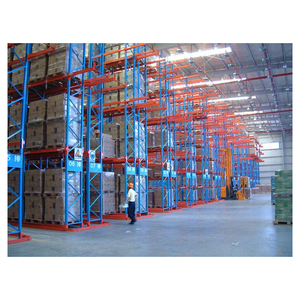
Narrow Aisle Racks Factory Price Heavy Duty VNA Rack
Engineered to cut aisle widths down to 1.6m–1.8m, boosting floor space volumetric density by up to 45% while retaining 100% individual pallet selectivity.
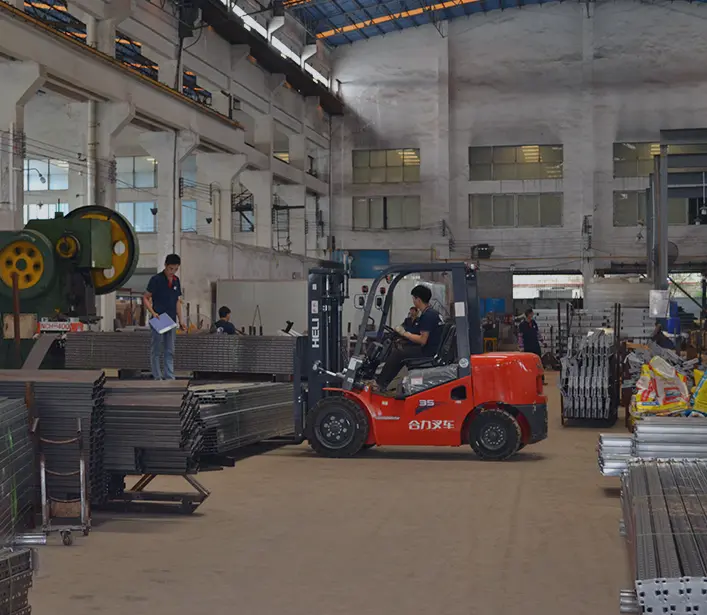
Direct from our Guangzhou heavy-machinery manufacturing plant: cold-rolled structural steel profiles, precision-punched uprights, robotic continuous seams, and durable electrostatic polymer coatings.
Engineered to cut aisle widths down to 1.6m–1.8m, boosting floor space volumetric density by up to 45% while retaining 100% individual pallet selectivity.
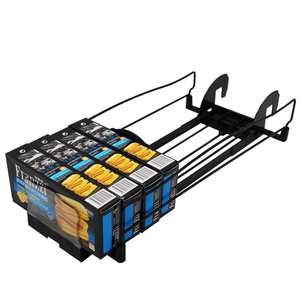
High-durability mechanical spring pusher track ensuring automated front-facing item presentation for high-turnover retail and fast-picking micro-fulfillment hubs.
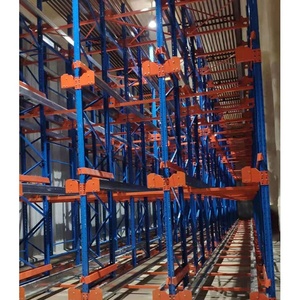
Semi-automated deep lane storage integrating autonomous radio shuttle carts; eliminates forklift penetration into lanes and slashes cycle dispatch intervals.
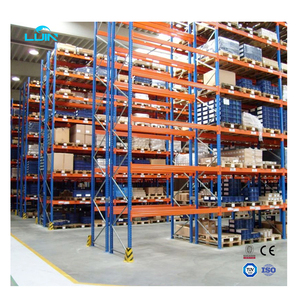
Industry benchmark heavy-duty multi-level beam racks fabricated with Q235B high-tensile steel. Carrying capacities certified up to 4,500kg per shelf layer.
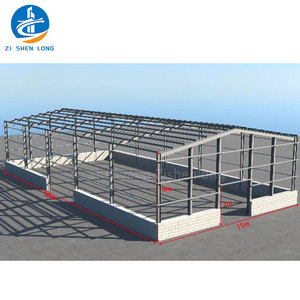
Modular portal-frame engineered steel structures for industrial workshops and clear-span logistics hangars, fully calculated for dynamic environmental loads.
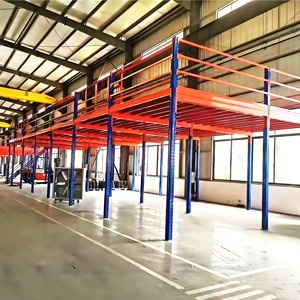
Engineered multi-tier structural steel mezzanine multiplying existing overhead square footage for order-picking, administrative pods, or light assembly zones.
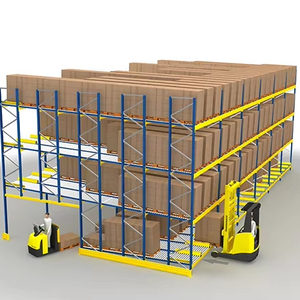
Inclined gravity roller tracks configured for fail-safe First-In-First-Out (FIFO) stock rotation. Fitted with centrifugal brake rollers for speed damping.
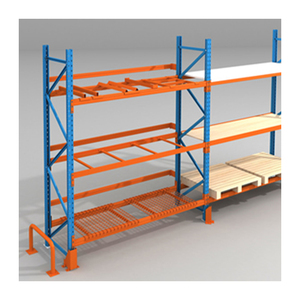
Versatile multi-tier boltless shelving/racking integration coated in anti-microbial epoxy-polyester powder for pharmaceutical, chemical, and manual split-case bays.
Founded in 2001, Guangzhou Heda Shelves Co., Ltd. has spent over two decades engineering and manufacturing high-integrity metal racking systems for critical logistics facilities across 120+ sovereign markets.
Unlike trading brokers, our fully owned 30,000 m² factory controls every stage of structural metallurgy: uncoiling prime Q235B/Q355B coils, CNC multi-stage continuous roll forming, automated robotic welding, 8-phase chemical pickling and phosphating, through to automated curing ovens.
Modern warehousing faces climbing real estate valuations, regional climate volatility, and tighter ESG mandates. Here is how enterprise buyers are transforming their material handling strategies.
As Autonomous Mobile Robots (AMRs), Automated Guided Vehicles (AGVs), and stacker cranes replace manual forklifts, racking deflection criteria are tightening. Standard EN 15620 classes dictate structural tolerances under 1.5mm to eliminate optical scanner sensor misalignment.
Industrial land leasing rates in key logistics hubs (Singapore, Dubai, Bangkok, Riyadh) have grown over 32% since 2021. Facilities are shifting away from 2.8m-aisle counterbalanced selective layouts toward Very Narrow Aisle (VNA) and vertical multi-tier steel mezzanines.
Cross-border cold chain investments and monsoon coastal facilities face rapid metal degradation from moisture, condensation, and temperature swings. Modern procurement favors thermoset multi-layer epoxy powder and continuous hot-dip galvanizing over basic enamel dip coatings.
Warehouse storage has evolved from passive floor stacking to software-integrated structural engineering. Trace the technological shifts that define modern warehouse layouts.
Standard slotted upright profiles carrying low-density single pallets. Dependent entirely on wide aisles (3.5m+) and standard counterbalanced forklift maneuvering.
The deployment of Drive-In, Push-Back, and Gravity Roller systems. Elimination of intermediate aisles through concentrated multi-deep FIFO/LIFO lanes for bulk uniform SKUs.
Integration of battery-driven cart carriers dispatched via RF controls down dedicated guide tracks. Drastically lowered collision risks and improved cycle speeds in cold storage.
Fully automated high-bay clad racks (rack-supported buildings) integrated with cloud WMS/WCS platforms, continuous load sensors, and predictive maintenance telemetry.
Technical, structural, and international trade answers for warehouse planners, engineering contractors, and operations managers.
We require your warehouse architectural plan (AutoCAD preferred) showing clear internal ceiling heights, column grids, fire protection mains, and dock doors; pallet specifications (W × D × H inclusive of overhang and gross cargo weight); forklift type, minimum turning radius (AST), and maximum mast lift elevation; as well as local seismic acceleration coefficients where applicable.
We source prime, mill-certified hot-rolled steel coils (Q235B and Q355B equivalent to ASTM A36 and S355JR). Every heat batch undergoes laboratory tensile, yield, and elongation testing. Structural calculations follow FEM 10.2.02 and SEMA standards, applying safety factors of 1.5 to 1.65 to ensure maximum beam deflection remains within 1/200th of the span under full static payload.
Upright frames and horizontal beams are bundled using custom heavy-gauge dunnage, corrugated protective wrapping, and polyester banding to prevent friction abrasions. Small hardware, base plates, splice packs, and safety locks are crate-packed in moisture-resistant wooden cartons with desiccant packs, optimized for 40ft High Cube container load factors.
Yes. For seismically active regions across Southeast Asia, Japan, New Zealand, and the Americas, our structural engineers model ground motion parameters and seismic zones using SAP2000 and FEA software. We supply complete 3D structural calculation packages, anchor pull-out ratings, baseplate shearing profiles, and compliance documents for your local municipal permitting.
Connect with our technical design team for a complimentary 2D CAD layout, 3D structural rendering, and detailed bill of materials priced directly from our factory floor.