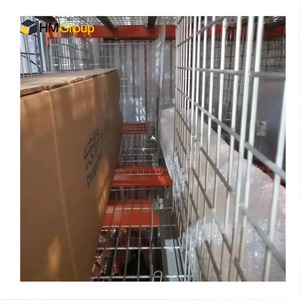
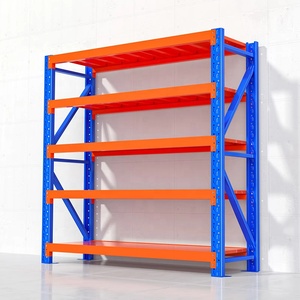
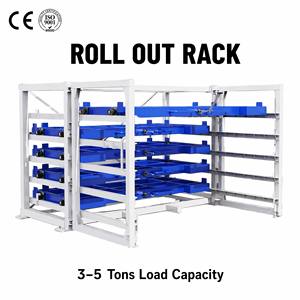
North America Storage Rack Customized Teardrop Pallet Rack Heavy Duty Storage System
- Pitch Modularity: 2.0-inch Incremental
- Standard Steel: ASTM A1011 / Q235B
- Unit Capacity: Up to 4,500 kg / Bay
- Interchangeability: Universal Punch Compatibility
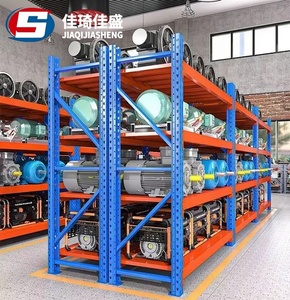
Every shelving and pallet racking structure is precision cold-formed, punched, and automated-welded using structural grade Q235B/Q355B steel, backed by comprehensive finite element analysis (FEA).
Operating over 30,000 m² of modern industrial production facilities since 2001, Guangzhou Heda Shelves Co., Ltd. delivers direct-from-factory racking systems engineered to bridge structural engineering with scalable commercial warehousing.
Compliant with European standard EN 15512, RMI specification MH16.1, and holding CE Certification (No. 2435-CPR-8605159) alongside ISO 9001:2015 (No. 18624Q00169R0M). Structural calculation reports and mill test certs (MTC) accompany every container.
From hot-rolled coil slitting and computerized continuous roll-forming to robotic twin-wire beam welding, chemical pickling, phosphating pre-treatment, and electrostatic polyester powder coating, zero processing is subcontracted.
Turnaround on customized 2D warehouse CAD layout drawings, finite element load simulation, and photorealistic 3D warehouse digital twins delivered in 24 to 48 hours to minimize procurement iteration cycles.
Navigating soaring square-meter lease costs, hyper-automated omnichannel distribution centers, and strict ESG requirements through intelligent structural engineering.
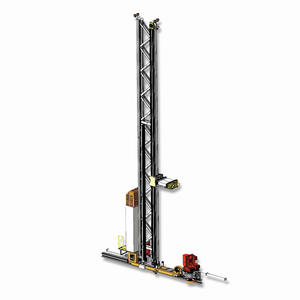
The industry is moving aggressively from conventional wide-aisle static selective racking to hybrid semi-automated setups. Pallet Shuttle systems, 4-Way Radio Carriers, and mini-load ASRS interfaces demand profile straightness tolerances within ±1.0 mm per 10 meters and deflection ratios under L/300.
As mega-distribution hubs expand across seismic belts in Southeast Asia, Japan, and the Americas, rack designs require dynamic modal analysis. Upright columns now feature high-yield Q355B alloys, broader footprint base plates, and double-shear floor anchors to absorb lateral ground acceleration without progressive collapse.
With the boom in fresh grocery and biopharma storage, sub-zero warehouse racking is surging. Conventional cold paints suffer micro-cracking at -30°C. Modern systems adopt pre-treatment zinc phosphating paired with dual-layer thermoplastic powders or continuous hot-dip galvanizing (HDG conforming to ISO 1461).
| Racking Architecture | Space Utilization | Selectivity | Throughput Speed | Ideal SKU Profile | Capital Expenditure (CapEx) |
|---|---|---|---|---|---|
| Selective Pallet Racking | 40% - 50% | 100% Direct Access | High (Forklift Direct) | High SKU Variety, Low Volume/SKU | Low / Baseline |
| Drive-In / Drive-Through | 65% - 75% | 15% - 20% (LIFO/FIFO) | Moderate (Truck enters rack) | Low SKU Variety, High Bulk Pallets | Moderate |
| Radio Shuttle System | 80% - 85% | Variable Lane Control | Very High (Automated Carrier) | Cold Storage, Food FMCG, 3PL Depots | Moderate-High |
| Rack-Supported Mezzanine | Double / Triple Vertical Space | 100% for Hand Picking | Optimized for Multi-Level Picking | E-commerce, Auto Spares, Apparel | Economical vs Civil Construction |
| Automated Miniload / ASRS | 85% - 90%+ | 100% Automated Pinpoint | Maximum (Unmanned High Speed) | Critical Spare Parts, Micro-fulfillment | High / Strategic Long-Term |
Key technical factors, standards, freight consolidation, and engineering safeguards examined before placing volume orders with Chinese manufacturers.
We primarily use certified Q235B and Q355B grade cold-rolled and hot-rolled structural steel, corresponding closely to ASTM A36 / A1011 Grade 50 and European EN 10025 S235JR / S355JR. Material Test Certificates (MTC) stating precise chemical composition (Carbon, Manganese, Silicon) and yield/tensile strength are issued for each production heat.
Our structural designs calculate beam deflection strictly in compliance with ANSI MH16.1 and EN 15512 specifications, maintaining maximum deflection below 1/200th of the span for conventional pallet racks and under 1/300th for automated automated shuttle aisles under full operational dead and live loading.
Yes. Our in-house engineering team regularly simulates zone 3 and zone 4 seismic conditions (e.g., Philippines, Indonesia, Chile, New Zealand). We adjust upright steel gauges, configure cross-bracing patterns, expand footer base plate thicknesses, and deploy heavy-duty chemical expansion anchors with third-party verified seismic calculation reports.
Uprights are pre-assembled or shipped in flat-pack knocked-down formats based on client site labor costs. Uprights, step beams, and mesh decking are nested using customized steel frames and corrugated edge protectors to maximize cubic utilization inside 40ft High Cube (40HQ) maritime containers, safeguarding components against transit friction.
All fabricated steel undergoes an automated 4-stage surface wash: acid pickling for scale removal, surface phosphating to passivate steel, deionized water rinsing, and drying. Electrostatic polyester powder is cured at 180°C–200°C, producing a resilient uniform thickness of 60 to 90 microns that meets strict cross-hatch adhesion and salt spray tests.
Yes. As a primary manufacturer, we support regional racking distributors and system integrators with OEM/ODM production. This includes customized punching patterns, tailored RAL color matchings, branded load capacity stickers, and private-label packaging to help distributors strengthen their regional brand equity.
Collaborate directly with our technical team. Submit your warehouse floor plan, clear building height, pallet loading metrics, and forklift specifications for a comprehensive load-checked structural layout and transparent ex-factory pricing within 24 hours.