1500–4500 kg / Level
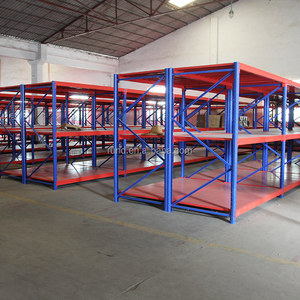
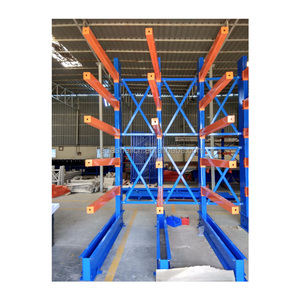
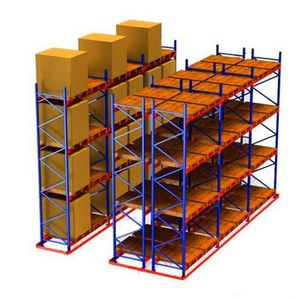
Heavy Duty 5-Layer Selective Pallet Rack 1500-4500kgs/level Storage System
100% Selectivity
Interlocking Beams
EN 15512
Manufactured using certified high-tensile structural steel (Q235B & Q355B). Explore our core product inventory configured for maximum space optimization, seismic integrity, and harsh industrial environments.
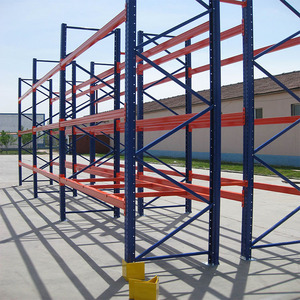
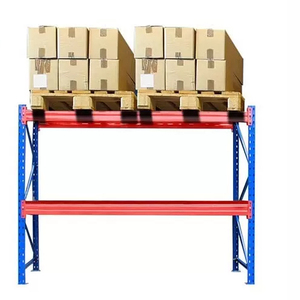
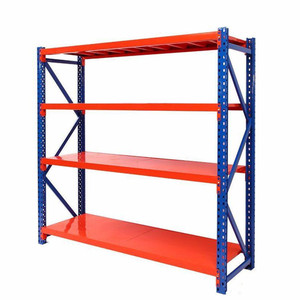
Monthly Steel Processing Volume
Certified Guangzhou Mega-Plant
Global Engineering Tenure (Since 2001)
Global Port Export Footprint
Industrial pallet racking is not merely static steel assembly; it is an active load-bearing structural framework subjected to dynamic seismic forces, torsional moments, continuous forklift impact, and cyclic fatigue stress.
Top-tier heavy-duty pallet racking performance begins with raw material homogeneity. Guangzhou Heda Shelves Co., Ltd. procures hot-rolled structural strip steel exclusively from prime tier-one mills such as Baosteel and Shougang. Materials are verified against rigid standards: cold-formed upright profiles are predominantly engineered with Q235B and high-yield Q355B steel grades, offering minimal yield strengths of 235 MPa and 355 MPa respectively.
During the roll-forming process, our automated 24-station continuous rolling mills manipulate the profile strip into an omega-shaped, multi-ribbed upright column. This cold work hardening increases structural yield strength along bend radii by up to 12%. The multi-folded web and flange geometry delivers an exceptionally high second moment of area (Ix and Iy axes), significantly mitigating local torsional buckling and flexural-torsional distortion under heavy vertical loads.
| Engineering Metric | Standard Selective Racking | Heavy Duty VNA Systems | Heavy Cantilever Profiles |
|---|---|---|---|
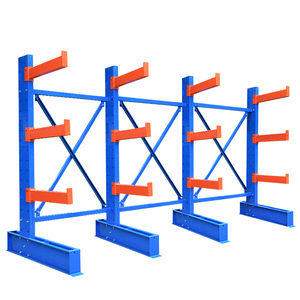
| Primary Material Grade | Q235B Cold-Formed Steel | Q355B High-Tensile Steel | Q235B / Q345 Hot-Rolled H-Section |
| Maximum Bay Load | 12,000 kg – 18,000 kg | 15,000 kg – 24,000 kg | Up to 30,000 kg Per Mast |
| Beam Deflection Limit | L/200 (EN 15512 / FEM 10.2.02) | L/250 (ANSI MH16.1 Certified) | L/180 Under Full Point Load |
| Perforation Pitch Step | 50 mm or 75 mm Adjustable | 50 mm Precision Micro-Pitch | 100 mm / 140 mm Heavy Splice |
| Surface Pretreatment | 8-Stage Immersion Phosphating | Shot Blasting + Zinc Pretreatment | Hot-Dip Galvanized / Epoxypowder |
The beam-to-column connector is the critical locus of structural safety. Unlike primitive bolted systems, modern heavy-duty racking relies on cold-punched teardrop, diamond, or trapezoidal claw connectors with 3-claw to 5-claw interlocking designs. The claws transfer moment stresses across the beam-end connector, effectively distributing eccentric loads evenly into the column wall.
Every connector configuration undergoes rigorous laboratory shear and semi-rigid connection testing in accordance with EN 15512:2020 Annex C. Our beam assemblies utilize twin-C interlocking roll-formed section profiles (box beams) with plasma or automated robotic submerged double-sided seam welding. Furthermore, spring steel automatic safety locks ensure beams cannot be inadvertently dislodged during erratic forklift operations, exceeding standard OSHA and Australian AS 4084 requirements.
Global supply chain volatility, urban real estate valuation surges, and stringent sustainability standards are reshaping how warehouse procurement executives, 3PL managers, and general contractors source structural racking systems.
Procurement is rapidly pivoting away from standalone manual racking toward future-proofed, automation-compatible frameworks. Buyers demand systems engineered with tolerances tight enough (within ±0.5 mm) to accommodate automated guided vehicles (AGVs), autonomous mobile robots (AMRs), and four-way radio shuttles without structural retrofitting when automation capital expenditure is greenlit later in the facility lifecycle.
ESG mandates and Carbon Border Adjustment Mechanisms (CBAM) are compelling multinational corporations to track embodied carbon. Sourcing strategies now prioritize manufacturers employing energy-efficient electric arc furnaces (EAF), zero-VOC electrostatic polyester powder coatings, and recyclable closed-loop chemical pre-treatment baths that comply strictly with European RoHS and REACH directives.
Sophisticated supply chain directors recognize that initial steel price constitutes only a portion of lifetime costs. Structural failure, premature rusting, or field installation misalignment costs exponentially more. Procurement evaluations now emphasize certified anti-corrosion lifetimes (up to 500-hour salt spray resistance), finite element seismic certifications, and complete container loading optimization that reduces ocean freight freight-per-pallet by up to 28%.
With industrial land leasing rates escalating in primary logistics hubs (e.g., Singapore, Dubai, Bangkok, and Los Angeles), procurement focuses heavily on height optimization. Standard 6-meter selective layouts are giving way to 12-meter to 15-meter Very Narrow Aisle (VNA) systems and multi-tier rack-supported mezzanine floors, essentially doubling storage density within the exact same structural warehouse footprint.
Disruption risks make factory scale paramount. Sourcing teams select manufacturers capable of sustaining continuous raw material inventories of 10,000+ tons, guaranteeing rapid 15–20 day dispatch times from southern Chinese maritime hubs (Guangzhou / Shenzhen / Hong Kong) directly to emerging logistics corridors across Asia, Latin America, and the Gulf region.
The manufacturing of heavy-duty storage racking is undergoing an unprecedented technological evolution. Discover the high-precision fabrication methods shaping the modern industrial logistics industry.
Prior to roll-forming, digital structural engineers model each installation using 3D FEA simulation software (ANSYS and STAAD.Pro). By simulating non-linear post-buckling behavior, load eccentricity, and dynamic seismic response spectrums, profiles are iteratively optimized to eliminate structural deadweight while increasing ultimate load thresholds.
Traditional mechanical presses often produce micro-burrs and pitch variances that degrade structural integrity over time. Advanced servo-driven CNC continuous punching ensures hole pitch tolerance across 12-meter upright lengths remains strictly within ±0.1 mm, assuring instantaneous, binding-free on-site beam alignment and perfect perpendicularity.
Advanced pre-treatment chemistry now uses nano-ceramic and silane conversion coatings as a superior, phosphate-free alternative. This yields molecular-level adhesion for thermo-set epoxy-polyester powders. The finish delivers exceptional impact resistance against daily forklift scuffs, extreme temperature tolerances from -30°C in deep freezers to +50°C in desert warehouses, and zero peeling.
Operating out of our 30,000 square meter facility in Guangzhou, China, every component undergoes strict supervision across ten serialized quality verification phases.
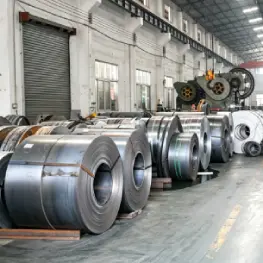
Spectrometric alloy analysis & tensile yield testing.
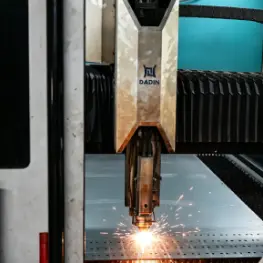
High-speed coil uncoiling & micro-tolerance slitting.
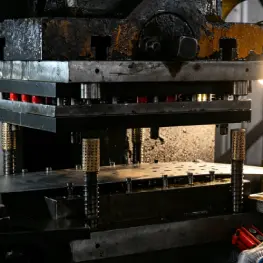
Automated hole pattern stamping (50/75mm pitch).
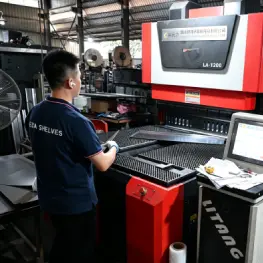
Progressive hydraulic bending of structural braces.
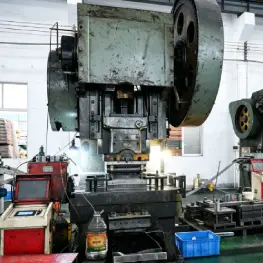
24-station rolling of omega uprights and box beams.
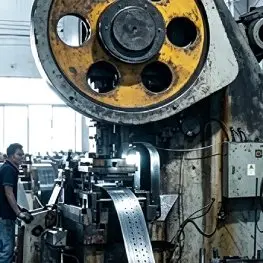
Edge de-flashing, weld cleanup, and surface smoothing.
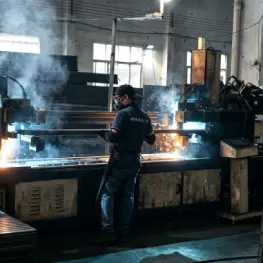
Automated dual-torch robotic beam connector welding.
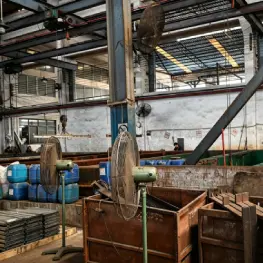
Acid rust removal, degreasing, and phosphating bath.
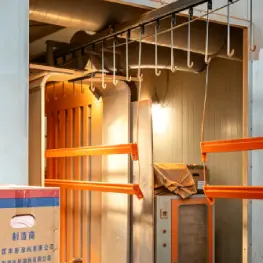
Electrostatic GEMA powder line cured at 200°C.
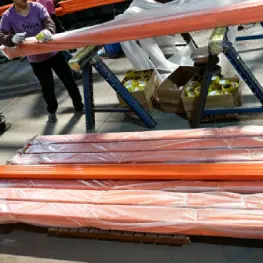
Protective bubble wrapping & container loading plans.
Essential technical, regulatory, and logistics answers for international procurement managers, project engineers, and warehouse logistics contractors.
Connect directly with our structural engineering department. Share your facility dimensions and storage requirements to receive an optimized CAD layout, 3D render, and an official factory-direct quote within 24 hours.
Contact Us