[email protected] Serving Southeast Asia, South Asia & the Middle East
EN
Industrial Engineering Whitepaper 2025–2030

Top China Gravity Flow Pallet Rack Suppliers & Exporter

Dynamic FIFO High-Density Pallet Roller Systems: Complete Engineering Specifications, Kinematic Calculations, and Direct Factory Sourcing from South China.

Factory Engineered Models

Featured Gravity Flow & Heavy-Duty Storage Configurations

Factory-direct gravity flow lanes, stainless skate wheel racks, and high-density warehouse solutions manufactured in Guangzhou to stringent EN 15512 and ISO 9001 standards.

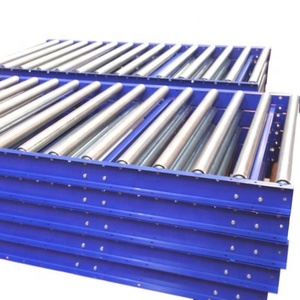
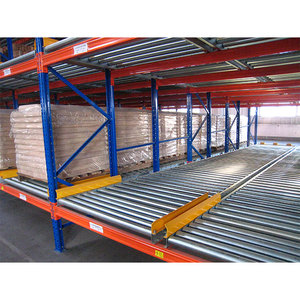
Warehouse High Density Gravity Roller Pallet Flow Racking FIFO Optimized

Warehouse High Density Gravity Roller Pallet Flow Racking

Full-width steel rollers featuring centrifugal brake governors for strict stock rotation in pharmaceutical & cold stores.

Cap: 1500kg/pallet Gradient: 3.5%
View Details
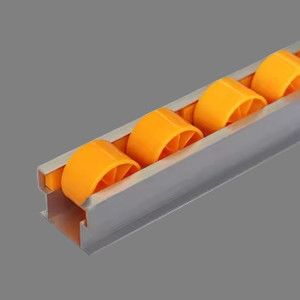
Gravity Pallet Flow Stainless Roller Racks Sanitary Grade

2025 Hot Sell Gravity Pallet Racking Industrial Shelves Flow Stainless Roller Racks

Corrosion-proof 304 stainless steel dynamic roller beds designed for cleanroom chemical plants and blast freezers.

SS304 Finish Food & Beverage
View Details
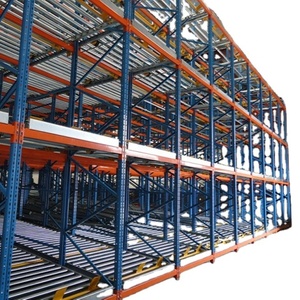
Heavy Duty Industrial Gravity Flow Racking System Modular Dynamic

Racking System Gravity Flow Racks Pallet Flow Roller Shelving Carton Flow Industrial Warehouse Modular Metal Heavy Duty Storage

Dual-depth dynamic flow rack with integrated carton-flow mezzanine levels for simultaneous fast-moving pick faces.

Carton & Pallet Flow Q235B Cold Steel
View Details
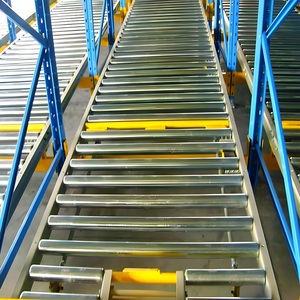
URGO Professional Intensive Storage Flow Rack Roller Pallet Racking Multi-Lane Flow

URGO Professional Intensive Storage Flow Rack Roller Pallet Racking For Gravity Racks

High-density multi-lane gravity racking engineered with heavy-duty pallet separators to relieve terminal load pressure.

Anti-Jam Brakes Seismic-Certified
View Details
Factory Custom FIFO High Efficient Warehouse Storage Gravity Pallet Flow Racks Custom Rail Pitch

Factory Custom FIFO High Efficient Warehouse Storage Gravity Pallet Flow Racks Roller Rack/Pallet Flow Racking

Custom engineered dynamic roller bed with variable roller pitch accommodating standard wooden, plastic, or steel pallets.

Custom Pitch Impact End Stops
View Details
Q235 Steel 2000kg Capacity FIFO High Density Gravity Pallet Flow Rack 2000kg Heavy Duty

Q235 Steel 2000kg Capacity FIFO High Density Industrial Warehouse Storage Gravity Pallet Flow Rack System

Structural Q235B cold-rolled channel uprights designed for ultra-dense manufacturing buffers and raw material depots.

2000kg Unit Load Zinc Phosphated
View Details
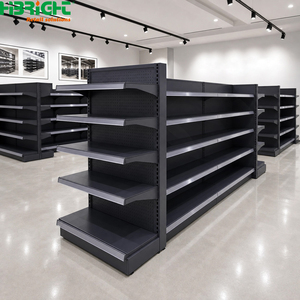
One-stop Supermarket Shelving Heavy Duty Display Racks Solution Omnichannel Ready

One-stop Supermarket Shelving Heavy Duty Display Racks Equipment Solution With Free 3D Design For Grocery Store

Hybrid backroom gravity live-storage combined with consumer-facing cantilever display systems for retail fulfillment centers.

Free 3D Layout Modular Bays
View Details
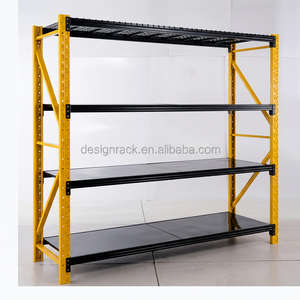
Mobile Wide Span Storage Racks Light Duty Racks High Mobility

Mobile Wide Span Storage Racks Light Duty Racks for Warehouse Stainless Building Materials Tool Shelf Rack

Track-guided mobile bases integrated with wide-span dynamic shelving for maintenance spares, tooling, and batch staging.

Track-Mounted Galvanized Deck
View Details
Kinetic Engineering & Physics

Kinematic Design Principles of Dynamic Gravity Flow Pallet Racks

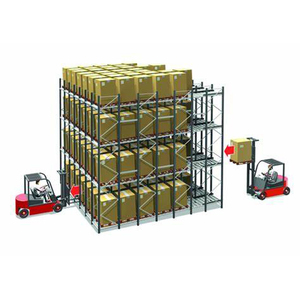
Gravity flow pallet racking (often termed dynamic live storage or pallet flow racking) is an ultra-dense, self-replenishing intralogistics system utilizing an engineered downward slope to propel unit pallet loads along dedicated roller lanes via gravitational potential energy. Acting as a continuous First-In, First-Out (FIFO) buffer, gravity flow structures establish distinct, isolated replenishment and extraction aisles. This physical separation completely segregates forklift traffic, virtually eliminating internal warehouse collisions while elevating order-picking velocity by over 40% compared to conventional static selective racking.

The core kinematic calculation governing a successful gravity flow lane hinges on maintaining an equilibrium between gravitational acceleration down the incline plane and the resistive braking torque applied by integrated centrifugal speed controllers. The typical inclination angle ranges strictly between 2.5% to 4.0% (1.5° to 2.3°) depending on the gross pallet mass (typically 500 kg to 1,500 kg per position), runner contact geometry, and ambient operating temperatures:

Governing Kinematic Equation for Lane Acceleration:
a = g · (sin θ - μr · cos θ) - (Fbrake / m)
Where θ is the slope angle, μr is the rolling friction coefficient between roller steel and pallet runner material, Fbrake represents the dynamic torque exerted by centrifugal resistance rollers, and m is the total unit load mass. A well-engineered lane maintains terminal rolling speed below 0.30 m/s (18 m/min) to eliminate dynamic impact at the discharge stop face.

Without precision dynamic engineering, gravity lanes suffer catastrophic failure modes such as terminal velocity impact shock, uncontrolled load skewing, or stalled pallets mid-lane. Top-tier China manufacturers like Guangzhou Heda Shelves Co., Ltd. address these risks through finite element analysis (FEA), multi-tier brake roller distribution matrices, and drop-forged mechanical separation devices installed directly at the unloading face to neutralize cumulative line hydrostatic pressure.
Storage Topology Volumetric Density (%) Inventory Logic Forklift Travel Time Initial CAPEX Ideal SKU Profile
Gravity Flow (FIFO) Up to 85% Strict FIFO Low (Dedicated Aisles) Moderate to High High-throughput, perishable, FMCG, cold chain
Drive-In / Drive-Thru Up to 75% LIFO / FIFO High (Enters Racking Bay) Low to Moderate Low SKU count, bulk seasonal reserves
Radio Shuttle System Up to 90% Flexible FIFO / LIFO Low (Aisle Pick Face) High (Automated Carriers) Medium-to-high velocity batch production
Push-Back Cart Rack Up to 70% Strict LIFO Moderate (Single Aisle) Moderate 2–6 deep pallet staging, non-expiring goods
Standard Selective 35% – 45% Random Access High (Long Aisle Travel) Low High SKU variety, 100% immediate accessibility
Enterprise Reliability & Experience

Guangzhou Heda Shelves Co., Ltd. Structural Manufacturing Excellence

Founded in 2001, Guangzhou Heda Shelves Co., Ltd. has spent over a quarter of a century pioneering cold-formed structural steel storage systems for global logistics operators, distribution hubs, and multinational brand facilities. Operating an intensive 30,000 square meter intelligent manufacturing base in Guangzhou, South China, HEDA combines end-to-end roll-forming precision, robotic welding automation, and advanced environmental pretreatment to ship over 30,000 metric tons of certified racking hardware annually.

For international procurement directors, general contractors, and supply chain integrators, HEDA represents direct accountability from raw coil metallurgical inspection to complete 3D structural CAD modeling and on-site container stowage optimization. Every gravity flow project undergoes rigorous seismic and static deflection reviews, ensuring code compliance across earthquake-prone belts including Indonesia, the Philippines, Japan, and the Middle East.

2001
Year Established
30,000m²
Factory Floor Area
30,000t
Monthly Steel Output
120+
Export Destinations

Certified Metallurgy

Certified Q235B and Q355B high-tensile structural steel sourced directly from major state mills. Verified with CE Certification (No. 2435-CPR-8605159) and ISO 9001:2015 QA compliance.

Automated Production

Ten-stage manufacturing: automated CNC continuous hole-punching, cold roll-forming omega uprights, laser cutting, robotic seam welding, and acid pickling phosphating pre-treatment.

Climate-Specific Finishes

Heavy electrostatic powder coating (70–90µm DFT) meeting RoHS environmental directives, alongside hot-dip galvanizing options resistant to coastal monsoon humidity and deep sub-zero freezers.

Free 3D & CAD Design

Dedicated structural engineers calculate rack bay deflection, lane gradient tolerances, and forklift mast clear heights, providing full CAD blueprints and 3D renderings within 24 to 48 hours.

Industry Foresight

Future Procurement Trends & Technological Evolution

As global warehousing shifts toward automated material handling, green cold-chain corridors, and resilient multi-echelon networks, gravity flow racks are evolving dramatically.

1. AMR & AGV Pick-Face Interfacing

Modern fulfillment facilities are retrofitting gravity discharge faces with precision electro-optical sensors and hydraulic pallet lift dampeners to allow autonomous mobile robots (AMRs) and automated guided forklifts to retrieve loads seamlessly without manual driver intervention.

2. Ultra-Low Temperature Kinetic Rollers

Cold chain growth in perishable food and biopharma demands gravity systems operational down to -30°C. New self-lubricating synthetic sleeve bearings and specialized low-viscosity silicone dampeners prevent brake-roller freezing and fluid coagulations typical of standard units.

3. Sensorized IoT Predictive Braking

Embedded wireless vibration and temperature sensors inside critical brake rollers provide predictive failure analytics. Facility maintenance teams receive early alerts regarding bearing wear before a roller locks up, preventing unexpected lane shutdowns in 24/7 automated distribution hubs.

4. Near-Net Decarbonized Steel Sourcing

Global enterprise buyers are progressively requiring verified Environmental Product Declarations (EPDs). Leading Chinese exporters are transitioning toward electric arc furnace (EAF) steel coils and closed-loop powder coating reclamation to reduce Scope 3 embodied carbon footprint.

5. Sea Freight Nesting Optimization

With ocean freight volatility, procurement directors favor manufacturers providing specialized KD (knock-down) roller tracks and pre-punched upright nesting profiles that fit up to 35% more pallet positions per 40ft High Cube container, slashing landed shipping costs per bay.

6. Adaptive Multi-Format Roller Beds

Modern manufacturing requires buffering disparate pallet types (EUR 800x1200mm, GMA 48x40in, and Asian 1100x1100mm). Next-generation gravity flow lanes feature continuous triple-track staggered roller configurations accommodating varied runner directions without lane re-tracking.

Procurement Knowledge Base

Frequently Asked Engineering & Procurement Questions

Clear, technically verified answers regarding structural integrity, roller physics, international shipping, and project execution from our Guangzhou engineering team.

How do your engineers determine brake roller spacing and lane gradient for varying load weights?

Lane slope and brake roller distribution are calculated using the dynamic weight range of your pallet loads, pallet bottom board flatness, and the rolling resistance coefficient of the rollers. Typically, a slope of 3.0% to 3.5% is chosen for standard wooden pallets weighing between 500 kg and 1,200 kg. For heavy pallet loads (over 1,000 kg), centrifugal speed controllers (brake rollers) are positioned every one to two pallet depths down the lane. When an incoming pallet accelerates past 0.25 m/s, internal centrifugal flyweights inside the brake roller expand against an internal friction drum, dissipating excess kinetic energy as heat and regulating speed to a smooth, uniform drift.

What happens if a pallet stalls midway through a dynamic gravity flow lane?

Mid-lane stalling typically occurs due to broken pallet runners, soft wood warping under humidity, or nail protrusions exceeding 3mm. To prevent costly manual intervention, HEDA gravity lanes can be equipped with manual mechanical "bump-assist" release levers or pneumatic indexing actuators. Furthermore, our engineering team specifies continuous staggered triple-rail steel rollers rather than twin-tracks for high-friction pallet profiles, distributing contact stress across a larger surface area and reducing local indentation depth on softer timber bottoms.

How does HEDA Shelves protect gravity rack structures from seismic forces in regions like Southeast Asia?

Warehouses in seismic zones (e.g., Indonesia, the Philippines, Japan, and Taiwan) require rigorous dynamic structural modeling under cyclic horizontal loads according to EN 15512, RMI MH16.1, or local building regulations. We engineer custom heavy-duty baseplates with dual M16/M20 chemical floor anchors, increase upright column cross-sections (using high-yield Q355B steel with profiles up to 120mm x 95mm x 2.5mm thickness), and integrate heavy-duty K-bracing and portal cross-ties across the top and rear frames. Full finite element analysis (FEA) reports are supplied to local authorities for municipal building permit clearance.

What is the function of a mechanical pallet separator, and is it mandatory on every lane?

A mechanical separator is positioned immediately ahead of the discharge pick face. In lanes deeper than 4 or 5 pallets, the cumulative gravitational forward thrust exerted by trailing pallets against the front pallet (known as hydrostatic back-pressure) can exceed several thousand kilograms. This pressure pins the lead pallet against the front end stops, making extraction by a forklift hazardous and often resulting in ripped pallet boards or mast overload. A mechanical separator locks trailing pallets roughly 300mm behind the lead pallet. Once the forklift lifts and extracts the lead pallet, the separator automatically triggers and allows the next pallet in line to roll smoothly into the pick position.

How do tropical humidity and cold storage temperatures affect coating longevity and steel corrosion?

Standard paint finishes can bubble and rust rapidly in tropical monsoon environments or high-condensation blast freezer docks. HEDA mitigates this through an automated 7-stage surface preparation line involving alkaline degreasing, ultrasonic water rinsing, acid pickling, and zinc phosphating prior to electrostatic powder application. Our thermosetting epoxy-polyester powder coating cures at 200°C to achieve a tough 70–90 micron dry film thickness (DFT) certified under salt spray test standards for over 500 hours. For extreme marine coastal sites or continuous wash-down rooms, hot-dip galvanization (HDG) per ISO 1461 is available, providing sacrificial zinc protection of 65 to 85 microns.

What exact specifications and floor conditions are required from the client to initiate layout engineering?

To deliver an optimized 2D CAD layout and structural pricing schedule, our engineering team requires: (1) Warehouse architectural drawings indicating column grids, clear ceiling height, overhead obstructions (HVAC, fire sprinklers, lighting), and dock door locations; (2) Pallet specifications including overall dimensions (W x D x H), minimum and maximum gross weight, entry orientation, and bottom board configuration (two-way or four-way entry); (3) Forklift model, turning radius, and maximum reach height; (4) Concrete slab bearing capacity (e.g., 50 kN/m²) and floor levelness tolerance (ASTM E1155 FF/FL numbers or DIN 18202 standards); and (5) Throughput targets (pallets per hour in and out).

What export packaging and shipping measures ensure roller tracks arrive undamaged?

Racking components, especially pre-assembled gravity roller beds, are vulnerable to torsional damage during rough maritime transit. HEDA packs upright frames in bundled steel-strapped modules with protective corner angle guards. Roller channels and sensitive speed controllers are wrapped in moisture-resistant vapor barrier film, secured within heavy-duty wooden dunnage or reinforced steel cradles. Every container leaving South China ports (Guangzhou Nansha or Shenzhen Yantian) comes with an engineered 3D container loading scheme to maximize container volume while allowing safe forklift unloading at the destination port.

Request Your Custom Gravity Flow Layout & Engineering Dossier

Connect directly with our senior structural engineers in Guangzhou. Receive a complimentary CAD floor plan, 3D dynamic rendering, lane gradient calculation, and container shipping budget for your warehouse facility within 24 to 48 hours.