High Density
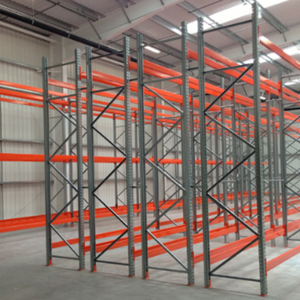
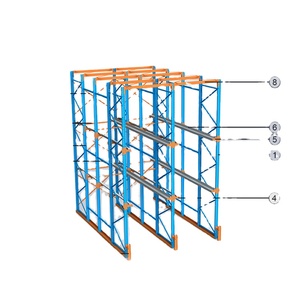
Double Deep Pallet Rack Heavy Duty Storage (500kg-3000kg/Layer)
500-3000kg / Layer
2-Pallet Depth
Pantograph Reach
Engineered to international FEM 10.2.02, EN 15512, and RMI standards. Cold-formed from premium Q235B/Q345B structural carbon steel with electrostatic thermoset powder coatings.
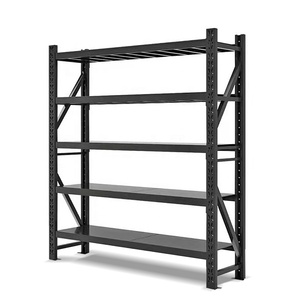
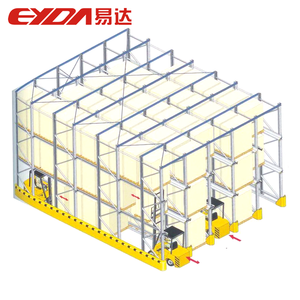
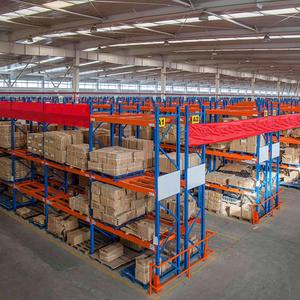
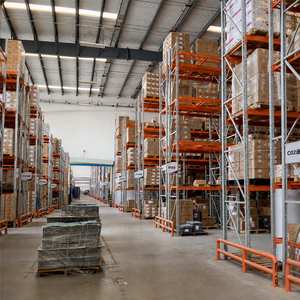
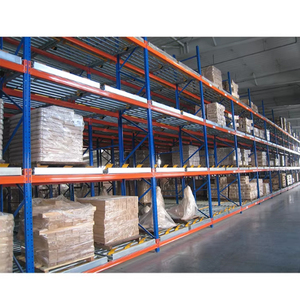
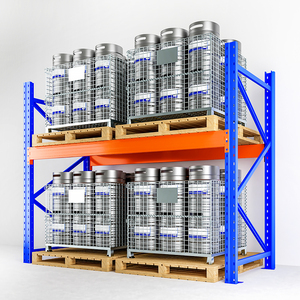
In modern industrial logistics, the selection of heavy-duty warehouse shelving is no longer a trivial commoditized equipment buy; it is a critical structural decision directly impacting cubic utilization rate (CUR), pallet cycle velocity, and balance-sheet asset productivity. Driven by regional nearshoring, omnichannel retail proliferation, and sky-high urban industrial land valuations across the Asia-Pacific (ASEAN), GCC, European, and North American distribution hubs, supply chain executives are facing massive operational friction. Storing higher SKU density within identical facility perimeters demands engineered racking profiles capable of resisting dynamic live forces while remaining compliant with local seismic building codes.
When engineering a modern distribution center, calculating volumetric space efficiency supersedes simple square-meter leasing. Facilities utilizing conventional selective pallet layouts frequently sacrifice up to 60% of their warehouse cube strictly to forklift aisle clearances. Transitioning toward specialized racking configurations—such as Double Deep, Drive-In, Gravity Pallet Flow, and Radio Shuttle networks—enables operations to increase storage volume from 45% upwards of 85%. However, this operational gain introduces complex structural design requirements: horizontal beam deflection limits (1/200th of beam length per FEM 10.2.02 standard), baseplate anchor shear forces during seismic displacement, and impact kinetic absorption at high-traffic rack end frames.
CSUI measures total usable pallet volume divided by total facility building envelope cube. While floor-stacked operations rarely exceed a CSUI of 0.28, custom engineered multi-tier structural racking and drive-in systems routinely deliver CSUIs between 0.68 and 0.82 without compromising safety deflection safety margins.
Navigating global suppliers requires a multi-dimensional qualification matrix beyond baseline price-per-ton pricing. Tier-1 warehouse racking manufacturers and global exporters are differentiated by automated production consistency, finite element structural modeling capabilities, raw material metallurgical integrity, and full transparency in international certification audits. When procuring heavy-duty pallet racking systems, logistics planners must benchmark suppliers against four non-negotiable structural criteria:
Verification of certified high-tensile Q235B or Q345B hot-rolled strip steel. Minimum yield strength exceeding 235-345 MPa ensures structural rigidity, preventing micro-fractures during heavy cold-forming punching cycles.
Industrial longevity in tropical monsoon or maritime ports requires rigorous pre-treatment: full chemical immersion pickling, zinc phosphating, and 60-80μm electrostatic epoxy-polyester powder baking.
Direct adherence to EN 15512:2020 and RMI MH16.1 specifications. Each beam level must guarantee a structural safety factor of 1.5 against plastic deformation under maximum rated static and live pallet weight loads.
In addition to physical metallurgy, global exporter capability hinges on export packaging protocols and container stowage optimization. Racking frames and upright columns present difficult aspect ratios that, if packed improperly, incur transport torsion damage and high dimensional freight costs. Leading manufacturers deploy custom wooden cradles, heavy-gauge protective strapping, automated pallet-bundling wraps, and container 3D CAD loading layouts that maximize ocean container payload capacity up to 98.5% of permissible weight ceilings.
To assist operations teams in selecting the optimal structural layout for specific SKU velocity profiles, the following engineering matrix contrasts the core performance indicators across industrial storage categories:
| Racking Architecture | Storage Density Index | Pallet Accessibility | Inventory Rotation Logic | Ideal Industry Application | Capital Cost / Pallet |
|---|---|---|---|---|---|
| Selective Pallet Rack | Baseline (1.0x) | 100% Immediate | FIFO / LIFO Dynamic | FMCG, 3PL Multi-Tenant, Retail | Low ($) |
| Double Deep Racking | High (1.3x - 1.4x) | 50% Direct Access | FILO (First In, Last Out) | Dry Grocery, Paper, Manufacturing | Low-Medium ($$) |
| Drive-In / Drive-Through | Very High (1.75x) | Low (Lane-Dependent) | Strict LIFO (Drive-In) / FIFO (Through) | Cold Chain Storage, Beverage Bottling | Medium ($$) |
| Pallet Flow (Gravity Roller) | Ultra-High (2.1x) | High (Face-Aisle Only) | Strict FIFO (Gravity Driven) | Perishables, Pharma, Fast Dairy | High ($$$$) |
| Heavy Duty Cantilever | Custom Linear | 100% Unobstructed Face | Dynamic Direct Access | Structural Steel, PVC Pipe, Timber | Medium ($$$) |
| Multi-Tier Mezzanine Platform | Maximum Vertical (3.0x) | 100% Manual Hand-Pick | Dynamic Zoned Picking | E-Commerce Fulfillment, Auto Spares | Medium-High ($$$) |
The global warehousing landscape is experiencing structural transformation. Procurement teams must anticipate five defining industry trends over the coming five-year cycle to avoid procuring obsolete infrastructure:
The boundary between mechanical racking and automated handling is dissolving. Traditional warehouses are increasingly requesting "automation-ready" structural racking capable of integrating automated guided vehicles (AGVs), autonomous mobile robots (AMRs), and crane-based Automated Storage and Retrieval Systems (ASRS). This requires upright roll-forming tolerances within +/- 0.5mm across a 12-meter span, ultra-flat ground baseplates, and pre-engineered mounting brackets for optical retroreflective positioning reflectors.
Cross-border supply chains face carbon border adjustment mechanisms (such as the EU CBAM). In response, leading manufacturing exporters have transitioned away from solvent-heavy paints to zero-VOC, RoHS-compliant electrostatic powder formulations, coupled with low-energy gas-fired curing ovens and closed-loop phosphating wastewater recycling units.
Rapid logistics expansion across hot, humid, and salt-laden atmospheres (such as the ASEAN trade corridor, Red Sea logistics clusters, and GCC freeports) has rendered standard single-coat paint systems obsolete. High-specification procurement calls for dual-layer zinc-rich epoxy primers beneath outdoor polyester topcoats, or continuous hot-dip galvanization conforming to ISO 1461 with minimum 65-85μm zinc thickness to prevent catastrophic galvanic corrosion.
Recent seismic occurrences in the Pacific Rim (Indonesia, Philippines, Japan, Taiwan) have altered municipal building safety permits. Commercial racking projects now regularly demand dynamic modal analysis and site-specific structural calculation packages (PE stamped) validating baseplate slab anchoring against lateral shear and moment rotations.
Modern cold-roll forming has evolved far beyond basic manual press brakes. Contemporary factory facilities run high-speed, continuous CNC-controlled roll-forming mills equipped with in-line servo-driven mechanical punching presses. Upright columns feature complex multi-bend geometric omega profiles with up to 12 distinct bending facets. These multiple structural bends dramatically increase the section's second moment of area (moment of inertia), allowing thinner profile walls to support equivalent or higher buckling loads while reducing unnecessary dead steel weight.
Beam-to-column connections have likewise shifted from welded pin connectors to precision one-piece stamped multi-claw connector brackets. The mechanical wedging action created between the claw taper and the upright teardrop/diamond punch increases connector stiffness under increased pallet load, substantially diminishing horizontal frame sway without requiring expensive diagonal sway frames on every bay.
Providing direct factory-to-site supply chain solutions, professional engineering design, and structural safety assurance for global logistics facilities.
Direct control over high-precision roll-forming, automatic laser cutting, robotic seam welding, chemical phosphating, and powder coating lines in Guangzhou.
Experienced in-house structural engineers turn your floor plans into optimized 2D CAD engineering layouts and 3D architectural renderings with exact pallet counts.
Fully audited CE Certification (No. 2435-CPR-8605159), ISO 9001:2015 Quality Management (No. 18624Q00169R0M), and non-toxic RoHS certified finishes.
Deep export expertise out of South China maritime gateways (Guangzhou / Shenzhen / Hong Kong) ensuring optimized container stuffing, low breakage, and reliable schedules.
Authoritative technical answers to common engineering, compliance, and logistics questions encountered during cross-border warehouse racking orders.
Connect directly with HEDA Shelves' engineering department. Receive an accurate CAD layout, load capacity calculation report, and factory-direct commercial quotation within 24 to 48 hours.