Engineered Industrial Storage Systems Ready for Global Deployment
Certified, heavy-duty warehouse racking and modular platform solutions cold-formed from high-yield structural steel and manufactured in our precision facility.
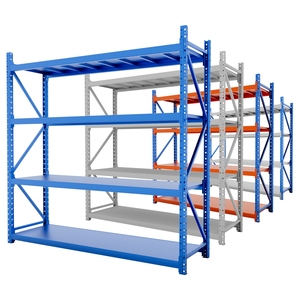
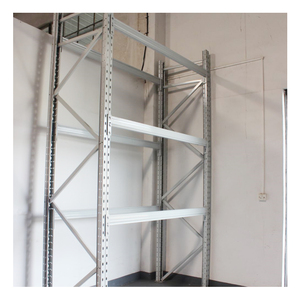
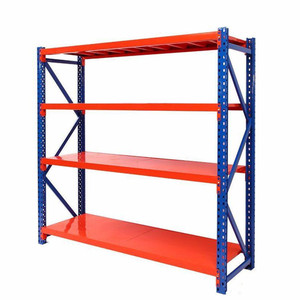
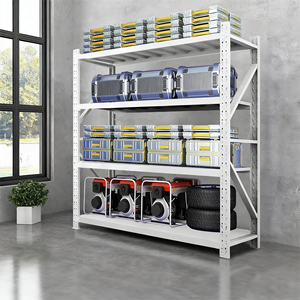
Top 10 Global Warehouse Rack & Shelf Manufacturers & Factory Landscape
A technical structural comparative analysis for procurement engineers, supply chain directors, and logistics facility developers.
Modern global logistics networks face unprecedented demands: skyrocketing land leasing rates in primary hubs, accelerated fulfillment velocities powered by omnichannel retail, and the rigorous safety demands of seismic building regulations. Consequently, identifying an optimal warehouse rack and shelf manufacturer is no longer merely a purchasing transaction; it is a critical capital engineering decision. Structural racking systems serve as the structural backbone of fulfillment infrastructure, directly impacting floor-space utilization efficiency, automated material handling throughput, and personnel workplace safety.
When surveying the global manufacturing landscape, Tier-1 engineering conglomerates (such as SSI Schaefer, Mecalux, Dexion, Stow Group, Interlake Mecalux, Daifuku, and Jungheinrich) provide turn-key material handling integration, yet their capital expenditures and engineering markups frequently exceed budget constraints for expanding regional third-party logistics (3PL) operations and industrial distributors. Conversely, established direct manufacturing powerhouses—exemplified by Guangzhou HEDA Shelves Co., Ltd. (founded 2001)—deliver an indispensable strategic equilibrium: European-standard structural compliance (CE EN 15512), ISO 9001:2015 precision manufacturing, customizable cold-roll-formed profiles, and agile factory-direct lead times at substantially optimized unit economics.
| Manufacturer Classification | Typical Engineering Focus | Structural Standards Compliance | Customization & OEM Flexibility | Lead-Time & Cost Efficiency |
|---|---|---|---|---|
| Western European Integrators (SSI Schaefer, Stow, Mecalux) | Turn-key automated mega-hubs, proprietary automated storage systems | EN 15512, FEM 10.2.02 | Standardized catalog systems, high customization surcharge | Premium capital expenditure, prolonged 16–24 week lead times |
| North American Manufacturers (Interlake Mecalux, Ridg-U-Rak) | Standard teardrop pallet racking, cross-docking heavy storage | RMI MH16.1, ANSI MH26.2 | Pre-configured structural shapes, limited custom light industrial | High domestic raw material costs, localized regional delivery |
| Japanese & APAC Automation Giants (Daifuku, Murata) | ASRS crane racking, high-bay automated material handling | JIS, Seismic Zone IV | Rigid mechanical specifications tied to proprietary robotics | High implementation costs, specialized maintenance lock-in |
| HEDA Shelves & South China OEM Direct Factories | Heavy-duty pallet racking, multi-tier mezzanines, bespoke longspan | CE (EN 15512), ISO 9001:2015, AS4084, RoHS | 100% modular bespoke customization, private label & OEM support | Direct factory pricing, short South China maritime transit (2–4 weeks) |
| Regional Trading Middlemen / Generic Fabricators | Light commercial iron shelves, low-duty utility racking | Inconsistent or self-declared verification | Standard stock only, inability to provide seismic engineering | Low initial purchase cost, elevated long-term structural risk |
Emerging Warehouse Racking Procurement Trends (2025–2030)
Key market vectors defining how multinational enterprises select storage systems.
Vertical Volume Capitalization
With real estate costs in distribution corridors surging by up to 34% post-2022, procurement teams are shifting focus from floor-area metrics to cubic-foot utility via multi-level, rack-supported structural mezzanines and very-narrow-aisle (VNA) systems.
Automation-Ready Hybrid Profiles
Operations are hedging against long automation lead times by purchasing hybrid racking configurations—deploying conventional selective racking today that can be retrofitted tomorrow with radio shuttles or autonomous mobile robot (AMR) top-decks.
Seismic & Environmental Resilience
Due diligence now heavily scrutinizes finite-element seismic analysis (FEA). Across the Pacific Rim and Middle East, project tenders mandate certified moment calculations, dynamic load displacement ratings, and custom-anchored baseplates.
Decarbonized Cold Chain Supply
The expansion of perishable food and biopharmaceutical distribution requires cold-storage racking that reduces refrigeration power consumption per pallet position while resisting cryogenic steel embrittlement and surface frost delamination.
Racking Engineering & Product Development Directions
The technological milestones transforming modern steel storage component fabrication.
Micro-Alloy High-Tensile Steels
Factories are migrating from standard carbon structural grades to cold-rolled micro-alloyed steel (e.g., Q355B and high-yield SS400 alternatives). By optimizing upright profile geometry through multi-bend roll forming, structural rigidity is elevated by 22% while reducing overall deadweight, which slashes shipping costs and foundation stress loads.
Surface Nanotechnology & Eco-Coating
Conventional wet-paint finishes are thoroughly obsolete due to VOC emissions and rapid flaking. Next-generation production facilities utilize an exhaustive 10-step surface treatment process: continuous shot-blasting, chemical pickling, non-toxic zinc phosphating, and thermo-cured electrostatic epoxy powder coating compliant with international RoHS and REACH limits.
Modular Boltless Interlocking Precision
Field assembly bottlenecks represent up to 28% of total project expenditures. Progressive factories engineer CNC-stamped 50mm and 75mm teardrop and diamond-slot connection lugs that lock into box beams via integrated safety pins, ensuring rapid zero-welding on-site assembly, effortless re-pitching, and maximum shear resistance during unintended forklift impacts.
Guangzhou HEDA Shelves: 25 Years of Heavy-Duty Manufacturing Excellence
A premier Chinese manufacturing force empowering industrial distributors, 3PL giants, and facility planners globally.
Established in 2001, Guangzhou Heda Shelves Co., Ltd. has evolved over a quarter-century into one of South China's leading manufacturing enterprises dedicated exclusively to structural pallet racking, multi-tier industrial mezzanines, and high-density warehouse storage systems. Operating from our expansive 30,000 square meter standardized production hub staffed by over 300 experienced engineers, CNC technicians, and project delivery managers, HEDA controls the entire production value chain in-house.
Unlike commercial shelf trading brokers, HEDA Shelves controls strict structural tolerances through ten rigorous, automated in-house manufacturing stages: (1) Prime raw steel coil spectroscopic testing, (2) High-speed automated precision cutting, (3) Continuous CNC upright column punch presses, (4) Cold bending profile forming, (5) Heavy roll-forming for step and box beams, (6) Surface mechanical deburring & polishing, (7) Robotic precision CO₂ shielding welding, (8) Comprehensive industrial acid pickling & phosphating pre-treatment, (9) Automated electrostatic epoxy powder coating, and (10) Dimensional QC inspection, weight-load deflection testing, and export container seaworthy packaging.
International Certified Verification
Eliminate project approval delays. HEDA systems carry authentic international certifications: CE Certification (No. 2435-CPR-8605159), ISO 9001:2015 Quality Management (No. 18624Q00169R0M), and verified RoHS environmental compliance certificates for all coating applications.
Complimentary 2D CAD & 3D BIM Engineering
Never guess your layout capacity. Within 24 to 48 hours of receiving your warehouse architectural drawings, our in-house engineering squad provides complete 2D CAD aisle-geometry layouts, structural deflection calculations, forklift turning-radius validations, and photorealistic 3D spatial renderings completely free of charge.
Direct South China Maritime Routing
Situated in the Pearl River Delta industrial belt with swift logistical access to Guangzhou and Shenzhen deep-water ports, HEDA guarantees rapid shipping routes across Southeast Asia (Singapore, Malaysia, Thailand, Vietnam, Indonesia, Philippines), South Asia, the Middle East GCC, Europe, and the Americas with container-packing optimization software that eliminates wasted freight volume.
Frequently Asked Questions in Global Racking Procurement
Crucial technical and compliance questions raised by project engineers and supply chain directors before issuing purchase orders.
What engineering information is required to formulate an accurate warehouse racking quote and 3D layout?
How does HEDA Shelves accommodate specific seismic building codes across earthquake-prone regions?
What are the performance differences between roll-formed steel and structural structural-channel steel racking?
How does HEDA ensure surface rust protection for tropical climates and cold-chain facilities?
Can HEDA Shelves accommodate private label OEM/ODM branding for regional racking distributors?
Upgrade Your Facility Storage Density Today
Collaborate with HEDA’s senior warehouse layout engineers. Request an exhaustive technical catalog, load testing validation certificates, or a complimentary 24-hour CAD spatial plan.