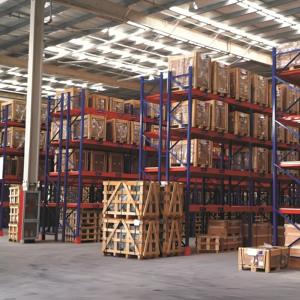
30,000 m²
Integrated Factory
30,000 t
Monthly Output
120+
Export Nations
CE & ISO
9001:2015 Verified
Factory Direct Catalog
Engineered Warehouse Racking & High-Density Storage Solutions
Precision cold-rolled steel structures designed for structural stability, modular expandability, and seamless intralogistics integration.
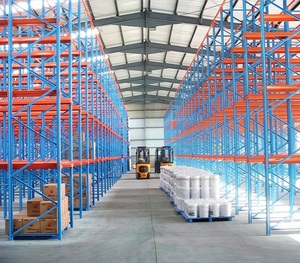
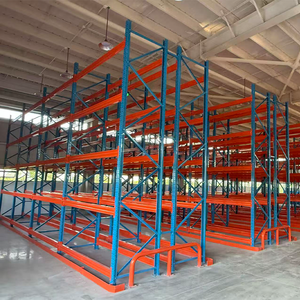
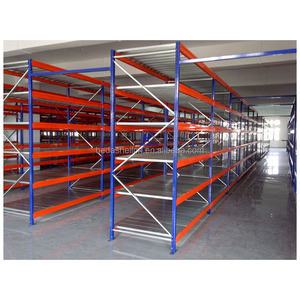
Technical Whitepaper
Engineering Movable Warehouse Racking: Structural Mechanics, Operational Dynamics, and Global Sourcing Standards
In modern industrial logistics, static floor footprints represent one of the highest cost liabilities for enterprise supply chain operators. The evolution of movable warehouse racking—frequently designated as mobile pallet racking, motorized chassis storage, or rail-guided dynamic base racks—has completely transitioned high-density warehousing from a volumetric compromise to a high-throughput science. By mounting conventional heavy-duty selective superstructures onto electronically or mechanically synchronized bogies moving along embedded floor guidance tracks, facilities effectively collapse redundant access aisles into a single, on-demand operational corridor. This mechanical shift unlocks an immediate 80% to 100% expansion in pallet holding capacity within the identical cubic envelope, without requiring structural building expansion.
For warehouse operations directors, structural engineers, and third-party logistics (3PL) executives evaluating international exporters, selecting a racking supplier transcends simple steel tonnage pricing. Structural engineering integrity, seismic safety compliance (EN 15512, RMI MH16.1), drive motor synchronization, anti-crush multi-beam photoelectric safety barriers, and regional climate adaptations are critical parameters governing facility return on investment (ROI). This industrial brief analyzes the engineering architecture of modern mobile systems, presents competitive manufacturer evaluation matrices, highlights structural sourcing vectors, and outlines future automation interfaces.
1. Kinematic Mechanics & Base Rail Structural Integration
The operational reliability of any movable racking deployment rests fundamentally on floor-rail interaction dynamics and foundation load distribution. Unlike static racking, where point loads from upright baseplates remain static, movable racking exerts concentrated dynamic cycling loads across embedded steel tracks. High-capacity systems require precision leveling of inverted cold-rolled or milled guide rails embedded directly into the concrete slab during floor pouring or retrofit slot trenching.
The mobile chassis houses low-profile, high-torque geared electric motors linked by splined driveshafts. In premium movable systems, Variable Frequency Drives (VFD) govern rack acceleration and deceleration ramps to prevent pallet load dislodgment during carriage traversal. Optical distance sensors situated at the leading edges maintain continuous carriage-to-carriage parallelism, preventing mechanical binding and premature flange wheel degradation over prolonged operational duty cycles.
| Storage System Classification | Aisle Space Consumption | Pallet Selectivity | Volumetric Efficiency | Energy Consumption Overhead | Primary Application Profile |
|---|---|---|---|---|---|
| Standard Selective Rack | 60% – 65% of Footprint | 100% Direct Access | Baseline (40% Density) | Neutral | High-turnover SKU distribution centers |
| Drive-In / Drive-Through | 20% – 25% of Footprint | LIFO / Low Selection | High (75% Density) | Neutral | Batch manufactured goods, bulk single SKUs |
| Radio Shuttle Automation | 15% – 20% of Footprint | High Density LIFO/FIFO | Ultra-High (85% Density) | Low (Battery Charging) | High-volume automated buffering hubs |
| Motorized Movable Racking | 10% – 15% of Footprint | 100% Random Access | Maximum (85%–90% Density) | Moderate (Intermittent Dynamic) | Cold storage, raw materials, premium real-estate hubs |
2. Top 10 Movable Warehouse Racking Factories & Exporters Evaluation Criteria
When selecting tier-one manufacturing partners across international industrial centers, procurement committees evaluate factories across strict parameters: structural manufacturing automation, steel coil certification grades (Q235B, Q355B, SS400), surface chemical pre-treatment methods, electrical component reliability, and export compliance engineering. Below are the core benchmark profiles characterizing leading global manufacturers and exporters:
01. Heavy Structural Integrity
Automated multi-station roll-forming lines producing continuous un-welded upright columns up to 12 meters with optimized profile geometry for dynamic moment-load resistance.
02. Pre-Treatment Chemistry
Multi-stage automated acid pickling and immersion phosphating before powder coating, eliminating corrosion propagation in high-humidity and sub-zero cold room environments.
03. Sensor & Safety Redundancy
Integration of Category 4 safety circuits, continuous laser obstacle scanners, chassis touchbars, and localized emergency stop stations across every mobile chassis.
3. Future Procurement Trends in Industrial Movable Racking
Strategic capital expenditure decisions made today must accommodate long-term supply chain shifts over the next 10 to 15 years. Across our engineering collaborations worldwide, three major trends are reshaping procurement specifications:
A. Decoupling Cold Storage Operating Costs via Extreme Density: The exponential expansion of refrigerated logistics—driven by prepared food supply chains, biopharmaceuticals, and agricultural perishables—has driven warehouse refrigeration utility costs to unprecedented levels. Cooling an empty aisle costs identical kilowatt-hours as cooling dense inventory. Movable racking systems eliminate wasted aisle cubic volume, reducing thermal refrigeration loads per pallet by up to 40% compared to traditional selective racking.
B. Hybrid Autonomous Mobile Robot (AMR) & AGV Integration: Traditional movable racking relied on human-operated counterbalanced or reach forklifts waiting for mobile aisles to open via radio remote control. Emerging procurement guidelines demand Application Programming Interface (API) handshakes between the Warehouse Management System (WMS), automated guided vehicles, and mobile rack motor controllers. The rack begins shifting ahead of the autonomous vehicle's arrival at the aisle coordinate, eliminating idle travel latency.
C. Carbon Footprint and Circular Steel Traceability: Major global engineering contractors are prioritizing suppliers who provide verifiable Environmental Product Declarations (EPD). Demands for cold-formed structural steel sourced with low-emission electric arc furnace (EAF) methods, coupled with zero-VOC TGIC-free polyester powder coatings, are becoming non-negotiable clauses in international municipal and private logistics tenders.
4. Future Technology Evolution: The Intelligent Kinetic Framework
The coming decade will see the complete convergence of passive steel structures and industrial Internet of Things (IIoT) telemetry. Movable racking carriages are transitioning into intelligent edge nodes. Structural load-cell sensors embedded within chassis bolster beams continuously monitor dead-weight distribution, alerting floor management to uneven load distributions that could trigger rail misalignment or structural fatigue. Furthermore, kinetic energy recovery systems (KERS) within chassis variable-frequency braking modules are being prototyped to harvest deceleration energy back into DC microgrids, further lowering facility power demands.
Why Choose HEDA Shelves
Engineering Excellence & Turnkey Manufacturing Direct From Guangzhou
Combining 25+ years of structural steel experience, precision manufacturing, and comprehensive project governance for global logistics operators.
25+ Years Industrial Mastery
Founded in 2001, HEDA Shelves operates a modern 30,000 m² facility with 300+ skilled personnel, delivering over 10,000 completed structural racking installations across 120+ countries.
Full In-House Fabrication
Complete control over coil slitting, cold roll-forming, automatic robotic beam welding, multi-stage acid pickling, phosphating, and electrostatic powder coating under one roof.
Rigorous Certifications
Production audited and certified to CE Certification (No. 2435-CPR-8605159), ISO 9001:2015 Quality Management Standards, and RoHS environmentally compliant finish protocols.
Free 2D CAD & 3D Modeling
Our experienced structural engineering team provides custom structural calculations, comprehensive warehouse layout CAD drawings, and photorealistic 3D renders within 24 to 48 hours.
Procurement Guidance
Frequently Asked Technical Questions on Movable Racking Procurement
Direct technical answers addressing engineering parameters, concrete slab requirements, safety standards, and project logistics.
What concrete slab specifications are needed for movable racking?
Movable systems impose dynamic wheel point loads on embedded rails. Slabs should typically be reinforced concrete with a minimum compressive strength of C25/C30 (often C30/C37 for high-bay configurations) and flatness meeting DIN 18202 or ASTM E1155 standards to avoid mechanical drag on carriages.
How are personnel and forklifts protected within moving aisles?
Modern mobile carriages are built with integrated fail-safe safety architectures: long-range front/rear laser photoelectric safety curtains that immediately interrupt carriage drive circuits if a person or obstacle breaks the beam, alongside full-length floor mechanical bumper tripbars.
Can movable racking operate in sub-zero cold chain facilities?
Yes. Movable racking is exceptionally well suited for -30°C cold storage. We specify specialized low-temperature lubricants, sealed IP65-rated drive motors, heated control enclosures, and cold-rated steel grades to eliminate structural brittleness under prolonged thermal stress.
How does HEDA handle export packaging and container load balancing?
Structural components are strapped with protective angle boards, heavy-gauge non-marking plastic wrapping, and bespoke steel dunnage pallets. Every export shipment includes an engineered 3D container stuffing plan to maximize maritime volume while preventing transit abrasion.
Can movable racking be designed for seismic zones?
Yes. For seismically active regions across Southeast Asia, South America, and the Pacific Rim, upright sections, frame bracing geometry, base carriage anchorages, and top cross-ties are calculated according to local seismic codes, accompanied by full structural calculation reports.
What is the typical production lead time for complete systems?
Standard fabrication runs between 20 to 35 business days depending on total project tonnage and whether hot-dip galvanized or specialized powder-coated finishes are specified. Standardized modular components maintain continuous ready-stock buffers.
Request an Engineered 2D/3D Warehouse Layout Proposal
Send our senior engineering team your warehouse dimensions, pallet profiles, and forklift data. We provide comprehensive CAD layouts, volumetric comparisons, and factory direct quotations within 24 hours.