[email protected] Serving Southeast Asia, South Asia & the Middle East
EN

OEM/ODM Warehouse Shelving Racks Suppliers & Exporters

Precision Engineering, Custom Structural Manufacturing & Global Seismic-Rated Storage Solutions Built to European CE & ISO 9001:2015 Standards

Enterprise Sourcing Portfolio

High-Efficiency Warehouse Storage Architectures

From extreme tonnage beam systems to dynamic gravity feeds, explore our heavy-duty industrial storage racks manufactured with certified cold-rolled steel and custom corrosion barriers.
Enterprise Manufacturing DNA

Direct Factory Capabilities & Engineering Credibility

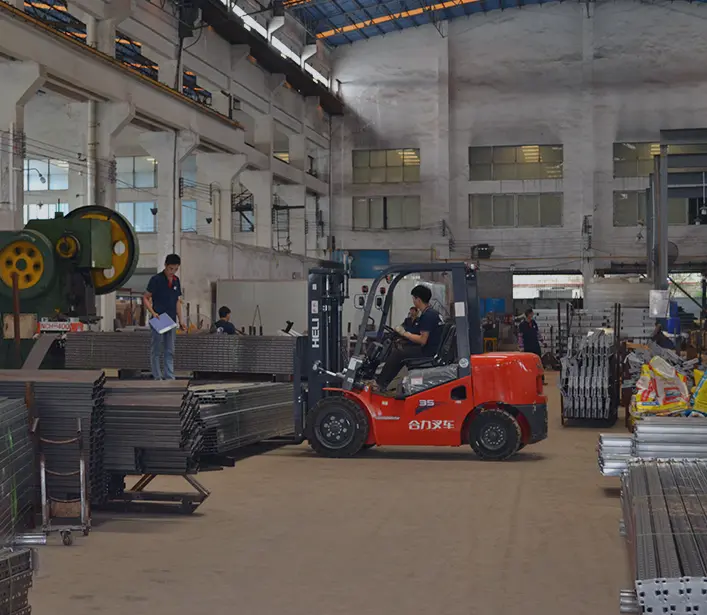
Founded in 2001, Guangzhou Heda Shelves Co., Ltd. operates an advanced 30,000 m² automated production facility, shipping industrial-grade racking solutions directly to over 120 countries. We bridge engineering consultation, finite element structural analysis (FEA), and high-volume cold-forming production to empower supply chains across Southeast Asia, the Middle East, Europe, and the Americas.

2001 Year Founded
30,000m² Plant Footprint
30,000t Monthly Output
10,000+ Global Projects
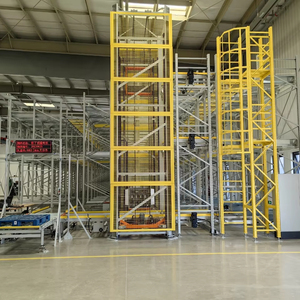
HEDA Shelves Roll-forming Facility in Guangzhou
Industry Technical Insights

Engineering Evolution in Structural Storage Design

Logistics facilities are experiencing higher volumetric density demands, aggressive automated material handling integrations, and stricter geographical compliance mandates.

📐

Finite Element Seismic Verification

Modern distribution hubs in seismically active corridors (such as Japan, the Philippines, Indonesia, and the US West Coast) require bespoke FEA modeling. Upright column buckling limits, nonlinear base plate ductility, and diagonal cross-bracing configurations are engineered according to EN 16681 and RMI standards to prevent progressive structural collapse during seismic load excitation.

🛡️

Advanced Surface Metallurgical Shielding

Monsoon climates and cold-chain condensation induce aggressive electrolytic corrosion. Leading OEMs combine multi-stage chemical pickling and phosphating with high-durability electrostatic thermoset powders or hot-dip galvanizing (HDG) per ISO 1461. This ensures zero micro-pitting and rust creep across extreme temperature fluctuations from -30°C in blast freezers to 45°C in tropical container hubs.

🤖

Automated Guided Vehicle (AGV) & AS/RS Tolerancing

Human-operated forklifts accommodate dimensional variances of ±5mm, but high-bay automated retrieval shuttles and autonomous reach trucks require robotic-grade tolerances under ±1.5mm across entire 30-meter vertical spans. Modern upright punch tooling is digitally synchronized with automated roll-formers to deliver the precise beam interlocks required for continuous multi-tier automated racking.

Procurement Strategy 2026-2030

Shifting Dynamics in Global Warehouse Shelving Sourcing

Forward-thinking supply chain directors and third-party logistics (3PL) conglomerates are executing distinct procurement adaptations to counter supply volatility and escalating square-meter land rents.

Pre-Engineered Mezzanine Hybridization

Rather than committing massive CapEx to land acquisition in high-cost logistics nodes (Singapore, Dubai, Rotterham), buyers are pairing double-deep pallet racks with rack-supported multi-tier mezzanine floors to reclaim 100% of vertical air rights for manual assembly and sorting.

Turnkey OEM/ODM Modular Standardization

Regional distributors seek modular upright punch configurations (e.g., standard 50mm and 75mm pitch profiles) allowing interchangeable cross-beam deployments across different customer fleets without carrying redundant structural SKU inventories.

Total Cost of Ownership (TCO) Prioritization

Procurement analysis now factors in freight packaging cubic optimization (nested shipping profiles that save 25% shipping volume per 40HQ container) alongside corrosion lifecycle longevity over initial steel tonnage costs.

Carbon-Footprint Compliant Cold Rolled Steel

With cross-border carbon adjustment mechanisms gaining regulatory enforcement, top warehouse developers demand transparent mill-test material tracking, using verified Q235B and Q355B coils roll-formed via energy-efficient electric plants.

B2B Procurement Knowledge Base

Frequently Asked Questions on Industrial Racking Sourcing

Clear, uncompromised technical answers addressing structural integrity, international export protocols, layout planning, and compliance certifications.
What precise technical parameters must be submitted for an exact structural calculation and 3D CAD design? +
To generate an accurate load-bearing analysis and optimized layout, our structural engineering department requires: (1) Architectural floor plan indicating clear internal warehouse height, column spacing, floor slab thickness, and concrete compressive strength (psi/MPa); (2) Pallet dimensions (W×D×H), including pallet overhang and maximum gross unit weight; (3) Material handling equipment (MHE) specifications, specifically forklift minimum aisle width (AST), mast staging height, and turning radii; and (4) Operating environmental conditions (ambient temperatures, seismic zone rating, and local fire protection riser positions).
How does HEDA ensure steel tensile compliance and structural safety on custom OEM rollings? How does HEDA ensure steel tensile compliance and structural safety on custom OEM rollings? +
We source prime certified structural steel (predominantly Q235B and high-yield Q355B) from established Tier-1 steel producers. Every production run undergoes verified mechanical testing: tensile yield strength testing, chemical composition spectrometer analysis, and destructive weld penetration tests per AWS D1.1 guidelines. Production is maintained strictly under our ISO 9001:2015 Quality Management System and European CE Standard EN 15512 (Steel static storage systems), with full Mill Test Certificates (MTC) supplied with project documentation.
Can warehouse systems be configured specifically for high-risk seismic zones? +
Yes. Standard gravity-load racking calculations are insufficient for seismic installations. For clients in regions such as Japan, the Philippines, Indonesia, or New Zealand, we deploy dynamic response spectrum analyses. Modifications include thickened footplates, high-ductility anchor bolts with deepened embedment depths, box-profile vertical upright reinforcements, heavy-duty K-bracing or X-bracing truss networks, and bolted beam-to-frame connector locks to absorb dynamic lateral kinetic energy.
What are the lead times and shipping packaging strategies to minimize international freight damage? +
Standard OEM production spans 15 to 25 business days from CAD final sign-off depending on batch tonnage. For export transit, upright frames are strapped with corrugated cushion interleaves and wooden blocking; cross beams are bundle-nested with high-tensile polyester bands to prevent surface abrasion and edge deformation; and all structural hardware accessories are vacuum-shrink wrapped inside fumigated plywood crates. Our specialized container loading software simulates load placement to guarantee maximum payload utilization without crushing fragile profile flanges.
How does hot-dip galvanizing compare to industrial powder coating in cold-chain and chemical storage? +
While high-adhesion electrostatic thermoset powder coatings (60-80μm) offer exceptional cost-effectiveness and chemical resistance in controlled ambient warehouses, hot-dip galvanization (HDG, yielding 70-100μm zinc alloy metallurgical bond) is strictly recommended for blast freezers (-25°C to -40°C), open wharf sheds, or chemical fertilizer facilities. HDG prevents subsurface cathodic rust creeping caused by condensation ice thaw cycles and forklift pallet impact scuffs.

Request an Engineered Layout & Factory Quote

Connect with our senior logistics engineers today. We furnish free 2D layout planning, 3D photorealistic renderings, and comprehensive structural load analyses within 24 to 48 hours.

Contact Us