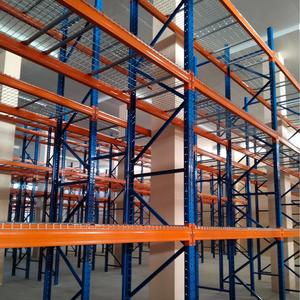
30,000m²
Integrated Factory Scale
25+Years
OEM/ODM Engineering
10,000+
Projects Completed Globally
CE / ISO
Certified Quality Assurance
Engineered Industrial Racking & Pallet Flow Systems
Precision-manufactured in our Guangzhou factory. Structural calculations, certified raw steel coils, and bespoke roller bed inclinations ensure zero jamming and maximum FIFO throughput.
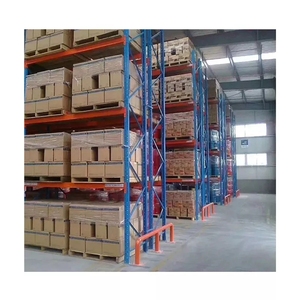
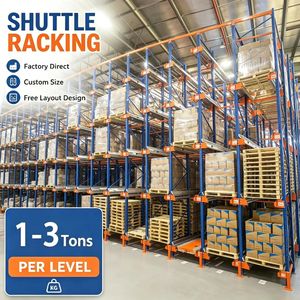
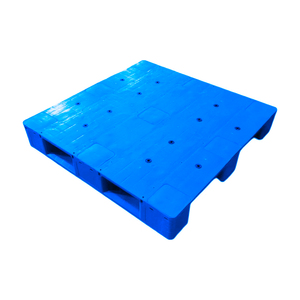
Engineering Authority: Gravity Flow Pallet Racking Mechanics & Physics
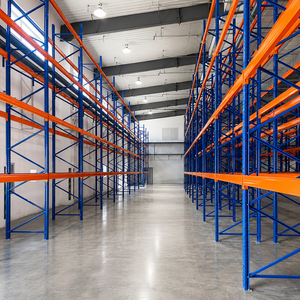
Gravity flow pallet racking systems—also designated across the material handling industry as pallet flow racking or dynamic flow-through storage—represent the pinnacle of high-density, mechanical First-In, First-Out (FIFO) warehousing. Operating entirely on gravitational potential energy, these advanced configurations utilize inclined roller conveyor beds integrated into heavy-duty structural steel frameworks. By segregating the loading face (charging aisle) from the unloading face (discharging aisle), gravity flow eliminates 60% of traditional forklift travel distances, dramatically mitigating internal facility traffic congestion and virtually eradicating operational downtime.
From an engineering perspective, establishing an unyielding gravity flow system mandates rigorous mathematical modeling of slope dynamics, kinetic friction variables, and load momentum. Standard systems implement a track incline gradient ranging strictly between 2.5% and 3.5% (approximately 1.5° to 2.0°). If the gradient is shallow, static friction overcomes gravitational force, resulting in stall points midway down deep-lane channels; if the gradient is excessively steep, uncontrolled runaway pallet acceleration presents severe catastrophic impact risks at the discharge face.
Engineering Rule: Kinetic velocity must remain governed below 0.3 m/s. Integrated centrifugal speed-controller rollers calibrated to specific tare weights absorb excessive kinetic energy, keeping deceleration smooth and line-loads fully stabilized.
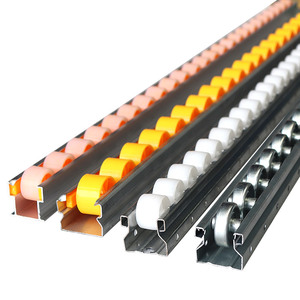
At Guangzhou Heda Shelves Co., Ltd., our engineering team evaluates cold-rolled structural steel profiles (Q235B/Q355B equivalent to ASTM A36 and SS400) under finite element analysis (FEA). Each roller channel is constructed using cold-drawn seamless carbon steel rollers fitted with precision sealed labyrinth bearings, rated for dynamic loads exceeding 1,500 kg per pallet unit. End-stop impact separators and safety entry guides are tailored to match either Euro pallets (800x1200mm), ISO standard industrial GMA pallets (1000x1200mm), or custom perimeter-base plastic skids, delivering seamless kinematic throughput.
Current and Future Industrial Procurement Trends in Dynamic Storage
Global supply chains are navigating intense cost compression, localized labor scarcity, and soaring industrial real estate valuations. When evaluating OEM/ODM gravity flow systems, corporate procurement managers and third-party logistics (3PL) integrators are increasingly discarding generic off-the-shelf shelving in favor of tailored turnkey solutions. The following strategic trends dominate modern procurement specifications:
SKU Proliferation & Expiration Traceability
Strict cold-chain and pharmaceutical regulations demand automated stock rotation. Dynamic gravity flow inherently guarantees deterministic FIFO rotation without requiring expensive energy inputs or continuous supervisory monitoring.
Hybrid Pallet Flow + AGV/AMR Interfacing
Modern layouts require pallet flow picking lanes equipped with magnetic dock sensors, optical positioning retroreflectors, and pneumatically actuated load separation locks to support autonomous mobile picking fleets.
Seismic Resilience & Severe Climate Finishing
In regions susceptible to seismic acceleration or tropical humidity, buyers mandate certified structural bracing calculations alongside hot-dip galvanization or multi-stage pickling and phosphating electrostatic treatments.
Technological Horizons: The Next Evolution of Pallet Flow Racking
The evolutionary trajectory of dynamic flow storage is steering directly toward smart gravity management and hybrid semi-automation. The frontier innovations rapidly transitioning into standard deployment include:
- Kinetic Energy Harvesting & IoT Braking: Advanced centrifugal speed governor rollers are being integrated with micro-generators. The kinetic motion generated by downhill rolling pallets powers low-energy IoT occupancy and descent-velocity sensors, reporting real-time lane blockages or pallet deviations to the facility's Warehouse Management System (WMS).
- Magnetic Deceleration Rollers (Non-Contact Braking): Eliminating mechanical wear, next-generation speed controllers utilize eddy current magnetic induction. Because resistance scales dynamically with speed, lightweight and 1,500kg heavy loads decelerate smoothly without pad degradation or noise emissions.
- Autonomous Pallet Decouplers: In traditional deep-lane channels, pallet line pressure at the pick face can reach tens of kilonewtons. Next-generation mechanical and electro-pneumatic separators disengage the front-most pallet completely from back-pressure, ensuring forklifts lift units cleanly without catching upper structural edges.
Enterprise Competence: Why Global Enterprises Choose HEDA Shelves
Operating as an elite manufacturing entity for over two decades, Guangzhou Heda Shelves Co., Ltd. provides unmatched vertical integration. Our 30,000 square meter factory complex features state-of-the-art continuous automatic roll-forming lines, automated laser cutting tables, high-precision punching presses, and an in-house environmentally certified electrostatic powder coating workshop.
We are not a trading intermediary; we are a foundational engineering manufacturer. Holding CE Certification (No. 2435-CPR-8605159) and ISO 9001:2015 Quality Management Accreditation (Certificate No. 18624Q00169R0M), every beam, column, connector, and roller track manufactured in our facility undergoes rigorous pull-testing, weld ultrasonic inspection, and load deflection trials complying strictly with FEM 10.2.02 and EN 15512 racking standards.
Rapid OEM/ODM Layout & 3D Modeling
Our veteran structural engineering team generates full 2D CAD floor plans, dynamic 3D structural visualizers, and stress analysis calculations within 24–48 hours of initial requirement intake.
End-to-End Precision Manufacturing
Equipped with computerized uncoilers, continuous punch dies, robotic seam welders, and phosphating anti-corrosion lines, we produce up to 30,000 metric tons of steel storage systems per month.
Global Port Proximity & Short Sea Transit
Situated in Guangzhou with direct access to Pearl River Delta ports, we orchestrate specialized container nesting patterns that minimize dead volume and safeguard roller beds against maritime corrosion.
Gravity Flow Pallet Racking: Technical FAQ for Procurement Engineers
How does HEDA determine the precise bed inclination for mixed-weight pallet channels?
During the pre-engineering stage, our test lab benchmarks the coefficient of friction using your specific bottom-board configuration (wood, HDPE, or metal) and payload variances (e.g., 400kg to 1,200kg). The slope is typically fixed between 2.5% and 3.0%, while dynamic centrifugal brake rollers are staggered every 1 to 2 pallet lengths to establish speed equilibrium regardless of payload differentials.
Can bottom-defective or non-standard wooden pallets be processed safely on roller lanes?
Pallet flow systems perform best on consistent base boards. However, for operations utilizing lower-grade wooden pallets with split runners or protruding fasteners, HEDA equips lanes with full-width cylindrical steel rollers rather than twin-wheel tracks, combined with entry alignment guides and under-pallet slave trays to prevent snagging.
What surface protection do you supply for humid, coastal, or cold storage facilities?
For cold stores down to -30°C or high-salinity coastal logistics centers, we provide hot-dip galvanization (HDG) per ISO 1461, yielding zinc coatings exceeding 60–80 microns. For standard indoor environments, our steel profiles undergo a 9-stage degreasing, pickling, and phosphating immersion treatment followed by TGIC-free electrostatic polyester powder coating cured at 200°C.
What is the maximum lane depth achievable in HEDA gravity flow engineering?
Standard lane configurations typically range from 4 to 12 pallets deep. However, with our heavy-duty mechanical load separators and magnetic speed regulators, HEDA has successfully engineered high-density flow systems up to 25 pallets deep for large-scale beverage bottling plants and bulk cold chain centers.
Do you provide installation supervision and project certification abroad?
Yes. Every order ships with a detailed step-by-step CAD assembly blueprint, torque specification chart, and container packing list. Upon client request, we dispatch certified bilingual site engineers to supervise erection, perform laser plumb line checks, and issue structural load compliance certificates on-site.
Consult HEDA's Senior Racking Engineers Today
Send us your warehouse CAD floor plan, floor load ratings, pallet dimensions, and throughput specs. Receive an optimized 2D/3D dynamic gravity flow layout and comprehensive structural quotation within 24 hours.