Featured Industrial Racking & Dynamic Storage Solutions
Explore our heavy-duty product lineup engineered for extreme warehouse cube utilization. Manufactured from premium Q235B and Q355B structural steel with electrostatic powder coating, our racking lines conform to the most stringent international structural deflection guidelines.
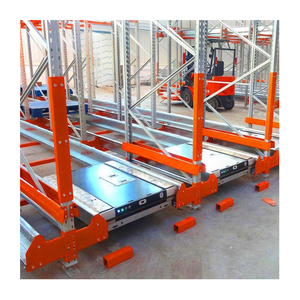 Automated FIFO
Heavy Duty Shuttle Racking System Industrial FIFO Pallet Shuttle Racking
High-density semi-automated carrier running on precision guide rails. Maximizes depth utilization for cold storage and FMCG high-throughput operations.
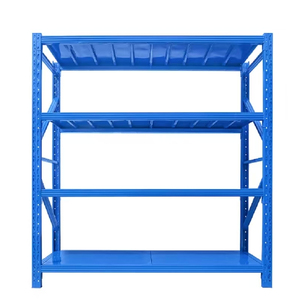 Multi-Tier Ready
Multi-Level Boltless Steel Storage Shelving Unit & Rack
Precision interlocking boltless medium-duty modular shelving. Engineered for fast clip assembly, high vertical pick density, and multi-tier catwalk expansion.
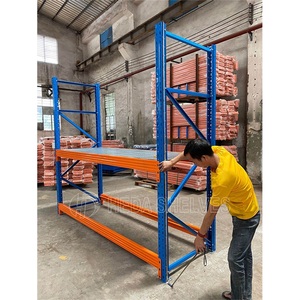 Selective 3000kg
Heavy Duty Industrial Pallet Racking (1000kg–3000kg/Layer)
Universal structural beam and upright configuration offering 100% immediate pallet selectivity. Features custom punch pitch (50mm/75mm) and high safety factors.
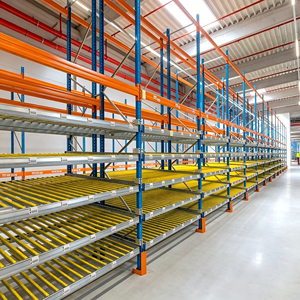 Dynamic Flow Bed
Gravity Carton Flow Racking Roller Shelving for Fulfillment
Ergonomic inclined roller tracks utilizing gravitational force for strict FIFO replenishment. Separates restocking aisles from active picking lanes to avoid collisions.
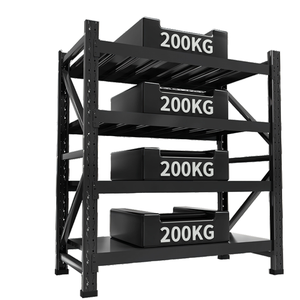 Adjustable 5-Layer
Long Span 5-Layer Adjustable Boltless Metal Shelving Units
Light-to-medium industrial steel shelving featuring reinforced ribbed steel decks. Designed for manual sorting, retail stockrooms, and maintenance spares.
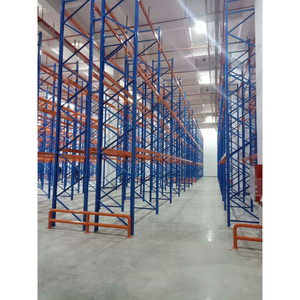 High Bay Structure
Blue-Orange High Bay Heavy Duty Racking Adjustable System
Ultra-tall upright profiles rolled on 24-station continuous roll-forming mills. Accommodates extreme vertical clearances up to 16 meters for high-cube distribution hubs.
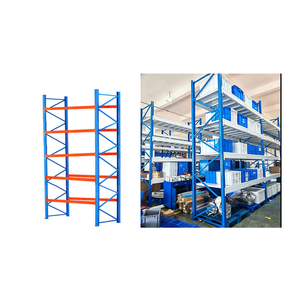 Structural Steel
Heavy Duty Structural Steel Platforms & Thick Plate Shelving
Engineered H-beam and box-beam structural mezzanine and floor system. Multiplies usable square footage vertically without structural building extensions.
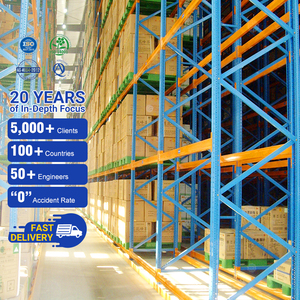 Very Narrow Aisle (VNA)
Strong Load Capacity Narrow Aisle & Movable Pallet Rack System
Space-saving VNA and motorized mobile base racking. Reduces operating aisle widths down to 1.6 meters, recapturing up to 85% of dormant warehouse volume.
Engineering Anatomy of Industrial Flow Rail Racking Systems
Understanding the physics, component kinematics, and structural tolerances required to design fail-safe dynamic live storage systems.
Gravity Gradient & Pitch Calibration
Flow rail tracks operate on controlled gravitational kinetics. For standard 1000×1200mm GMA/EUR wooden pallets, the optimal gradient ranges from 2.5% to 3.5% (approx. 1.4° to 2.0°). Too shallow, and pallet restart stiction causes line blockages; too steep, and terminal velocity exceeds safe discharge thresholds. OEM calibration takes pallet bottom runner orientation, weight variations, and deflection into account.
Centrifugal & Magnetic Braking Systems
To regulate kinetic acceleration over deep storage lanes (up to 20 pallets deep), intermediate brake rollers are engineered at intervals of one pallet length. We incorporate self-governing centrifugal mechanical brakes and non-contact eddy-current magnetic rollers. These regulate pallet travel speed to a steady, non-destructive 0.2 to 0.3 m/s, safeguarding fragile inventories and racking structures.
Pallet Separation & Safety Backstops
Hydro-mechanical separator units decouple line pressure at the picking face. When the first pallet reaches the end discharge bumper, the mechanism locks incoming pallets 150mm behind it. This relieves hydraulic back-pressure, allowing forklift operators to lift the lead pallet cleanly without drag friction, eliminating catastrophic pallet hung-ups and dropped loads.
| Storage Topology | Pallet Flow Rail (FIFO) | Push-Back Cart (LIFO) | Radio Shuttle (FIFO/LIFO) | Drive-In Racking (LIFO) |
|---|---|---|---|---|
| Cube Volume Utilization | Up to 85% Maximum | 70% - 75% | Up to 90% | 60% - 70% |
| Stock Rotation Discipline | Strict FIFO (Automatic) | LIFO (Last-In-First-Out) | Configurable FIFO/LIFO | Strict LIFO (Prone to stagnant pallets) |
| Throughput (Pallet Cycle/Hour) | Very High (Dedicated loading/unloading) | Medium | High (Automated traverse) | Low (Forklifts enter rack channels) |
| Forklift Rack Impact Risk | Zero (Operates outside lane perimeter) | Low | Zero (External aisle picking) | Severe (High upright collision frequency) |
| Lane Depth Potential | 2 to 25 Pallets Deep | 2 to 6 Pallets Deep | Up to 40+ Pallets Deep | Up to 10 Pallets Deep |
| Cold Storage Energy Optimization | Outstanding (Eliminates warm air dead zones) | Moderate | Excellent | Poor (High internal volume required) |
Guangzhou HEDA Shelves: 25+ Years of Export Authority
Established in 2001, Guangzhou Heda Shelves Co., Ltd. operates one of South China’s most technically advanced warehouse racking production centers. Spanning over 30,000 square meters, our plant directly controls raw coil sourcing, multi-station roll forming, robotic welding, and automated powder coating.
Certified Metallurgy (Q235B & Q355B)
We utilize certified high-tensile hot-rolled steel coils with guaranteed yield strengths. Uprights and heavy box beams undergo mill-test traceability, ensuring tensile reliability under dynamic live loading.
24-Station Roll Forming Lines
Continuous cold-roll profiles eliminate structural residual stresses. Uprights feature continuous omega profiles with intricate multiple rib folds, maximizing structural section modulus and torsional rigidity.
9-Tank Pickling & Phosphating Pre-treatment
Prior to coating, steel members undergo immersion degreasing, ultrasonic acid pickling, rust removal, and zinc phosphating. This guarantees 1,000+ hours salt spray resistance in humid tropical export regions.
Full OEM/ODM Branding & Pitch Tailoring
Private-label manufacturing for regional storage integrators across Southeast Asia, the Middle East, Europe, and the Americas. Custom beam connectors, hole patterns, punch shapes, and RAL color finishes.
In-House 10-Step Quality Engineering & Verification Workflow
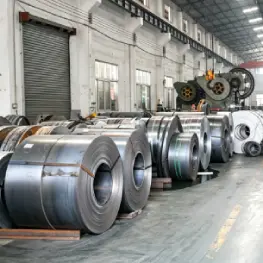
Raw Coil Metallurgical Inspection
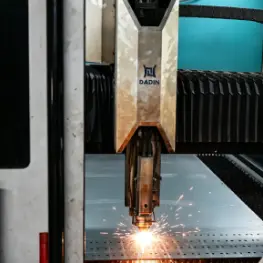
Precision CNC Steel Slitting & Cutting
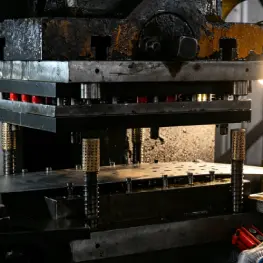
Automated High-Speed Upright Punching
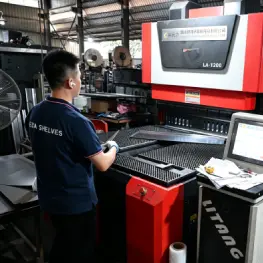
Cold Bending & Structural Channeling
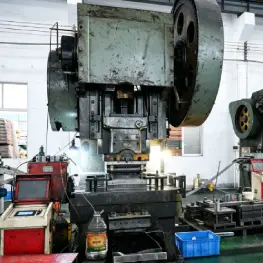
Continuous 24-Station Roll Forming
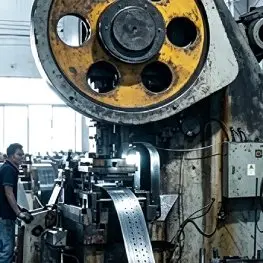
Mechanical Deburring & Surface Polishing
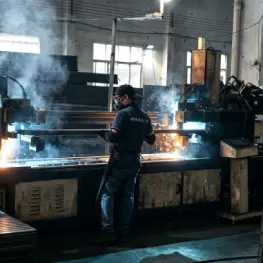
Robotic Weld Penetration Assembly
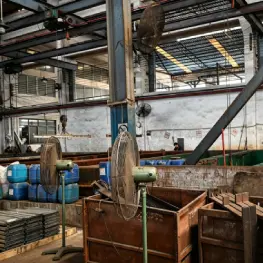
Ultrasonic Pickling & Phosphating
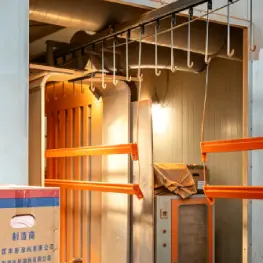
Automated Powder Coating & Curing
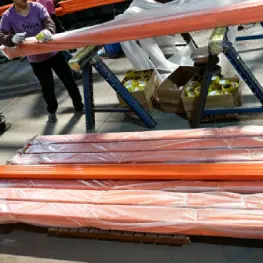
Final QC, Steel Strapping & Loading
Globally Audited Structural Standards
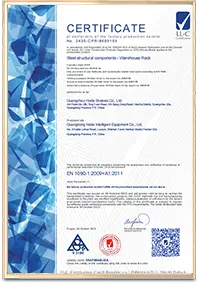
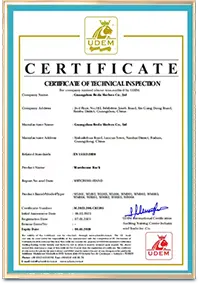
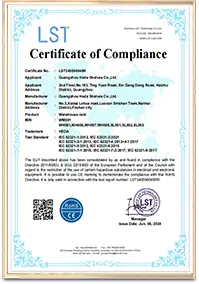
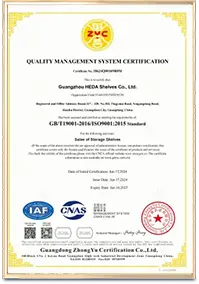
HEDA Shelves products hold documented structural safety certificates essential for customs clearance, municipal fire ratings, and third-party warehouse safety audits. We provide project-specific finite element calculation reports (FEA) validating deflection margins under full dead and live seismic dynamic conditions.
- CE Certification: Certificate No. 2435-CPR-8605159 (EN 1090-1 Structural Steel)
- ISO 9001:2015 Quality Management: Certificate No. 18624Q00169R0M
- RoHS & REACH Compliance: Non-toxic, lead-free polyester polymer finishes


Future Procurement Trends for Flow Rail & Dynamic Racking (2025–2030)
Procurement executives and supply chain engineers are shifting from basic static storage to intelligent dynamic hardware. Discover the macro trends shaping international storage investment.
AMR & AGV-Interfaced Gravity Discharge Stations
Traditional flow racks relied exclusively on manual forklift interaction. The 2025–2030 procurement cycle is heavily driven by Autonomous Mobile Robot (AMR) compatibility. Modern flow rail racking is engineered with phototransistor sensor cutouts, robotic centering funnels, and precision mechanical stops that align pallets within ±3mm tolerances, enabling automated guided forklifts to perform unassisted pallet pickups directly from the discharge face.
Thermal Efficiency & Low-Temperature Dynamic Grease
With the global surge in temperature-controlled pharmaceuticals, pre-packaged fresh foods, and biologics across Southeast Asia and the Gulf, cold-store dynamic racking procurement has expanded by over 34% annually. Buyers demand specialized synthetic polyalphaolefin (PAO) low-temperature roller bearings rated down to -35°C without freezing. Dynamic flow systems reduce refrigerated air volume by over 60% compared to standard selective setups, drastically slashing utility power draw.
Modular Standardization & Circular Reconfigurability
Global 3PL operators are discontinuing non-standard, fully welded racking in favor of highly standardized roll-formed profiles that can be unbolted, re-pitched, and moved across leasehold fulfillment centers. In procurement evaluations, lifecycle maintenance—specifically roller track interchangeability, bolt-on brake replacements, and universal beam interfaces—outweighs initial capital expenditure by a factor of three over a ten-year operational lifespan.
Technological & Structural Development Milestones
From micro-sensor health tracking to ultra-high-strength steel alloys, continuous material science advancements are redefining gravity flow durability.
IoT-Enabled Kinetic Health Monitoring
Emerging dynamic flow rail installations incorporate passive vibration and thermal telemetry chips directly inside the brake roller shafts. These micro-sensors register anomalous roller rotation speeds, sudden impact shocks, or roller bearing degradation. Data feeds directly into cloud Warehouse Management Systems (WMS), alerting facility maintenance supervisors before a frozen roller can induce line blockages or pallet runaway hazards.
High-Yield Q355B Thin-Wall Geometries
By leveraging advanced finite-element analysis (FEA) and continuous multi-bend roll forming, structural engineers have reduced overall steel deadweight by 14% while concurrently increasing vertical column axial buckling resistance. The incorporation of stiffened side flanges and return lips on upright uprights ensures maximum torsional rigidity without escalating ocean freight tonnage costs for overseas importers.
Hybrid Gravity-Magnetic Speed Retarders
Traditional friction-disc brake rollers suffer from inevitable mechanical pad wear, requiring periodic disassembly and replacement under heavy multi-shift operations. The industry is transitioning to contactless neodymium permanent-magnet eddy-current brakes. As the pallet traverses the roller, conductive eddy currents generate counter-electromotive braking force proportional to pallet velocity, providing zero-wear, maintenance-free deceleration for over a decade.
Frequently Asked Questions by Industrial Buyers & Importers
In-depth technical answers covering design parameters, seismic compliance, ocean container packing, and customized OEM/ODM flow rail specifications.
How do you determine the correct slope gradient for varying pallet weights?
The optimal gradient is mathematically calibrated based on the minimum pallet weight (to guarantee static restart from rest) and maximum pallet weight (to avoid over-accelerating brake controllers). For standard EUR/GMA wooden pallets weighing between 400kg and 1200kg, a baseline gradient of 3.0% (approx. 1.72°) is standard. If plastic pallets with flat bottom runners or perimeter bases are used, contact friction drops, allowing a 2.5% slope combined with dual-flanged guide rollers. We conduct empirical slope test runs in our factory testing bay using client-supplied pallet samples before finalizing frame manufacturing.
Can HEDA Shelves flow rail systems be certified for active seismic zones?
Yes. For installations situated across the Pacific Ring of Fire (e.g., the Philippines, Indonesia, Japan, New Zealand, Western Americas), our structural design department incorporates seismic design parameters conforming to EN 16681, FEM 10.2.08, and RMI MH16.1. We upsize upright profiles, thicken base plates up to 12mm–16mm, integrate heavy-duty seismic back bracings with cross-tensioners, and specify high-tensile chemical wedge floor anchors. Full structural engineering calculation packages with PE stamps can be supplied for municipal building permits.
How are components protected against corrosion during tropical sea transit and humid warehouse operation?
Every steel component undergoes an automatic 9-step chemical immersion process: alkaline degreasing, rinse, double acid pickling, rinse, zinc phosphating, and deionized neutralization. This creates a dense microscopic crystal layer that anchors the thermosetting epoxy-polyester powder coat (applied at 70–90 microns). For roller tracks, we utilize sendzimir pre-galvanized or hot-dip galvanized steel rails (up to 45 microns zinc coating). Precision ball bearings inside rollers are permanently sealed with rubber contact seals (2RS) and packed with water-repellent synthetic greases to eliminate moisture ingress.
What container packaging methods are utilized to maximize cube and prevent transit scratching?
Export shipments from South China ports are meticulously planned using 3D container packing software. Heavy upright frames and beams are nested on customized treated wooden runners, banded with heavy PET strapping, and cushioned with corrugated buffer boards and corner edge protectors. Flow tracks and roller segments are wrapped in multi-layer protective PE shrink film and boxed in export-grade fumigated wooden crates. This avoids metal-to-metal rubbing during rough ocean sea voyages and enables fast unloading via forklift slip-sheet or reach truck ramps at the destination port.
What is the typical production lead time for an OEM flow rail project?
For standard OEM/ODM projects (1 to 5 forty-foot high cube containers), standard manufacturing lead time is 20 to 25 calendar days upon client approval of the CAD engineering layouts and color swatch confirmation. Fast-track production lines can be mobilized for urgent distribution center expansions. Initial 2D architectural warehouse layouts, 3D structural renderings, and budgetary Bill of Materials (BOM) are provided free of charge within 24 to 48 hours of initial inquiry.
Can you provide custom punch pitches and private label branding on uprights?
Yes. We regularly supply distributors with private-label OEM manufacturing. Our CNC punching presses can accommodate 50mm, 75mm, 76.2mm (3-inch imperial), or teardrop punch geometries. Company logos, load rating markings, and project batch numbers can be continuous laser-etched or stamped into upright members. Full customized branded assembly manuals, label tags, and distributor packaging are supported.