Engineered Industrial Storage Systems
Direct factory supply of bespoke structural profiles, upright assemblies, and dynamic modular frames designed to integrate with automated, seismic, and heavy-duty global supply chain installations.
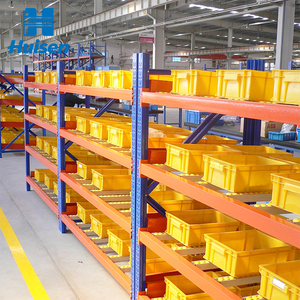
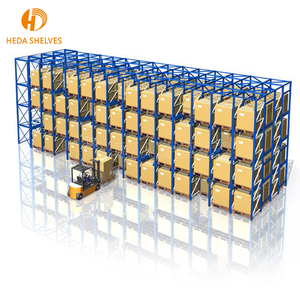
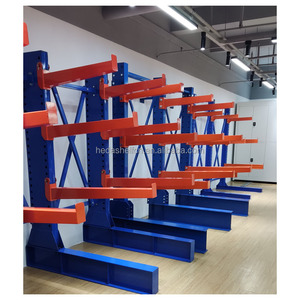
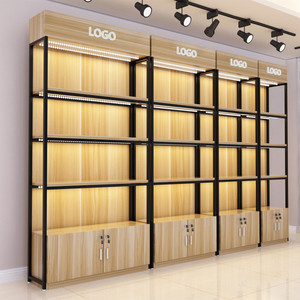
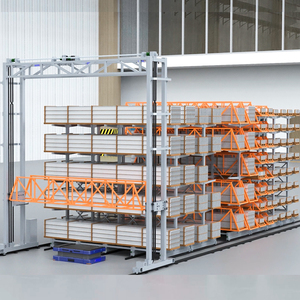
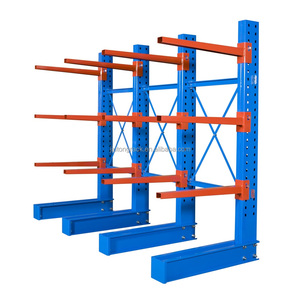
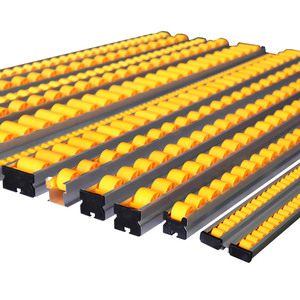
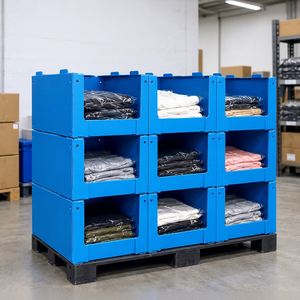
Industrial Structural Integrity Statement: Upright profiles represent the core compressive strength component of any structural storage assembly. When subjected to multiaxial torsional stress, dead weight pallet loading, dynamic material handling impacts, and localized seismic actions, the mechanical properties of cold-formed steel sections dictate total facility safety.
At Guangzhou Heda Shelves Co., Ltd., we combine high-grade Q235B/Q355B structural coil steels, continuous multi-stage roll-forming configurations, and automated laser-indexed punching to ensure zero-deflection uprights with load envelopes extending beyond standard safety margins.
Technical Whitepaper: Custom OEM Upright Manufacturing & Structural Engineering
Warehouse racking uprights—also designated as vertical posts, upright frames, or column sections—are fundamentally responsible for transferring combined axial loads, vertical loads, and lateral impact stresses down into the sub-slab foundation. In modern high-bay facilities, narrow-aisle deployments, and automated dynamic picking operations, upright profiles are engineered not simply as static posts, but as structurally dynamic, cold-formed architectural elements subject to complex shear, torsional buckling, and post-yield failure states.
The manufacturing complexity of custom OEM uprights is governed by several precise metallurgical and mechanical parameters. To meet divergent worldwide codes—such as RMI (Rack Manufacturers Institute) in North America, EN 15512 across the European Economic Area, and AS 4084 throughout Australia—upright frames require continuous cold-roll forming lines equipped with multi-station tooling passes. Every punch configuration (teardrop, hex-hole, diamond-slot, or custom metric pitch) must maintain sub-millimeter axial alignment along profiles reaching up to 15 meters in continuous roll length.
Material Metallurgy, Profile Geometry, and Roll-Forming Mechanics
The foundation of long-term structural reliability resides in raw material selection. Cold-rolled structural strip steels undergo tensile yield point verifications prior to roll forming. The transformation of a flat strip into a high-capacity Omega profile or multi-bend C-section demands incremental plastic deformation across 18 to 26 individual forming roller stations. Each pass introduces precise corner radii designed to distribute strain hardening evenly, thereby increasing local yield strength along the structural flanges without inducing micro-fractures in the core material matrix.
Omega-profile uprights, engineered with distinct front return flanges, internal reinforcing ribs, and rear flange stiffeners, offer superior resistance against torsional-flexural buckling compared to conventional open-channel sections. By moving material furthest from the centroid axis, the profile maximizes both the moment of inertia (Ix, Iy) and the radius of gyration (rx, ry), permitting higher unbraced vertical spans between horizontal and diagonal framing nodes.
Continuous Roll-Forming Precision
Multi-roller forming lines produce profiles with uniform thickness profiles, controlled edge strain hardening, and precise return angles that minimize residual internal stresses.
Surface Chemical Pretreatment
Comprehensive 8-stage chemical pickling and phosphorizing ensures optimal surface passivation, stripping surface oxides to guarantee flawless polymer-powder adhesion.
Seismic and Fatigue Modeling
Every frame assembly is optimized utilizing 3D Finite Element Analysis (FEA) to verify baseplate anchor ductility, frame bracing rigidity, and seismic wave energy dissipation.
Dynamic Upright Engineering: Seismic, Climatic, and Operational Demands
For operations located in seismic belts or corrosive microclimates—from seismic zones throughout the Pacific Rim to coastal humidity environments across Southeast Asia and the Gulf—generic catalog upright frames are inadequate. Seismic design parameters require accurate calculation of ground acceleration spectra, ductility coefficients, and second-order (P-Delta) sway amplification effects. As building heights push vertically beyond 12 to 24 meters in automated rack-supported warehouse buildings, deadweight and dynamic operational loads escalate exponentially.
Under these conditions, upright engineering involves integrating thicker gauge materials (ranging from 1.5mm up to 3.0mm), deploying bespoke bolt-together or fully welded diagonal bracing trusses, and pairing uprights with ductile, oversized baseplates anchored using high-tensile torque-controlled expansion or chemical anchor studs. Furthermore, in sub-zero frozen storage environments where cold embrittlement compromises standard carbon steel ductility, specialized low-temperature impact-tested steel grades are deployed alongside hot-dip galvanizing to mitigate stress corrosion cracking caused by daily condensation cycles.
Global Procurement Trends in Warehouse Racking Systems
The global warehousing landscape is witnessing unprecedented structural changes driven by land availability constraints, surging urban logistics lease rates, and accelerating autonomous handling technologies. Procurement directors and supply chain engineers are adapting their sourcing strategies accordingly:
1. Shift Toward Automation-Ready Structural Tolerances: Traditional static racking allowed for wider mechanical deflection margins. Conversely, facilities installing Automated Storage and Retrieval Systems (AS/RS), autonomous mobile robots (AMRs), and four-way radio shuttles demand upright structural tolerances within +/- 1.0mm per 10 meters of height. Tight plumb tolerances prevent optical sensor interference and mechanical docking jams.
2. Consolidation into Full OEM Customization: Rather than sourcing proprietary systems that lock operators into single-source replacement loops, multi-site 3PL operators increasingly commission custom OEM profiles. By standardizing proprietary hole-pitch patterns, gauge dimensions, and load ratings across their network, enterprise logistics firms ensure interchangeable components, easier cross-facility expansions, and substantially lower lifetime capital costs.
3. Resilience via Advanced Environmental Metallurgy: Procurement evaluations now emphasize total life-cycle durability over initial acquisition expense. The demand for duplex protective finishes—combining zinc immersion or electro-galvanizing with electrostatically applied thermoset epoxy-polyester coatings—is expanding rapidly throughout humid and coastal shipping territories.
Future Technology & Evolutionary Horizons in Industrial Upright Racks
Looking ahead, upright frames are transitioning from purely passive structural elements into intelligent structural health nodes within the industrial Internet of Things (IoT). As warehouses push structural density limits, the following technological trends are actively redefining manufacturing horizons:
Real-Time Structural Health Monitoring: Next-generation high-bay upright installations are beginning to incorporate micro-strain gauges, piezoresistive sensors, and continuous tilt monitoring devices along critical column bases. These embedded sensor systems alert logistics operations managers to accidental forklift impact damage, localized structural overload conditions, or gradual post-earthquake slab shifts prior to progressive structural collapse incidents.
Ultra-High-Strength Structural Steels: Advancements in thermo-mechanically controlled process (TMCP) steels permit the production of thinner, lighter upright sections that maintain equal or superior axial strength compared to heavier, thicker traditional carbon steel profiles. This metallurgical shift reduces dead structural weights, slashes ocean container shipping footprints, lowers embodied carbon, and increases net storage payload capacities per square meter.
Digital Twin Automated Integration: Physical upright frame production is becoming intrinsically linked with cloud-based building information modeling (BIM). Real-time digital twins of complete warehouse layouts allow logistics planners to test automated material handling robot speeds, simulated weight relocations, and dynamic structural oscillations before high-volume steel coils even pass through the factory decoiler.
Why Global Importers Partner with Guangzhou Heda Shelves
Founded in 2001, Guangzhou Heda Shelves Co., Ltd. has established itself as an authoritative global manufacturer and exporter of heavy-duty industrial storage systems, structural mezzanines, and precision cold-formed racking components. Spanning a modern 30,000 square meter factory base supported by over 300 experienced engineers, metallurgical specialists, and project coordinators, HEDA maintains rigorous, direct control over the entire structural supply chain.
Unlike trading intermediaries or uncertified fabrication shops, every upright column, horizontal load beam, and diagonal brace manufactured in our facility undergoes continuous precision testing. Our manufacturing operations are fully certified under ISO 9001:2015 quality management standards, holding CE Certification No. 2435-CPR-8605159 and comprehensive RoHS environmental compliance. Utilizing automated robotic welding lines, CNC multi-station column punch systems, and industrial pre-treatment phosphating wash systems, we ensure that every exported batch achieves absolute mechanical reliability.
HEDA delivers complete OEM and ODM manufacturing capability, providing global racking distributors, material handling systems integrators, and project contractors with customized profile geometry, bespoke brand labeling, optimized shipping container floor plans, and comprehensive structural calculation reports tailored to local building safety codes.
Procurement Frequently Asked Questions (FAQ)
Essential structural and commercial considerations for sourcing custom warehouse uprights and racking systems directly from our factory.
What parameters are required to calculate custom upright load capacities?
How does HEDA ensure upright anti-corrosion performance in humid environments?
Can you manufacture OEM uprights matching existing proprietary hole patterns?
What international testing standards and certifications apply to HEDA storage systems?
How are upright frames packed to prevent transport damage during ocean freight?
Request Your Custom Engineering Layout & Production Estimate
Connect directly with our senior racking structural engineering team to receive a free 2D CAD warehouse design, 3D photorealistic rendering, and comprehensive structural calculation report within 24 to 48 hours.
Inquire Now