High-Bay Warehouse Storage & Anti-Collapse Systems
Constructed from high-grade Q235B and Q355B structural cold-rolled steel, each rack assembly is tailored to precise pallet weight distributions, reach truck operational thresholds, and fall prevention standards.
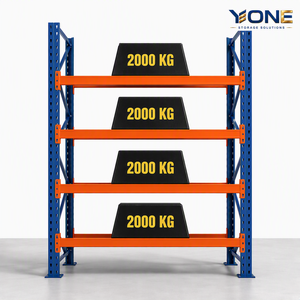
Custom Steel Storage Rack Pallet Racking System Heavy Duty Boltless Adjustable for Factory Warehouse
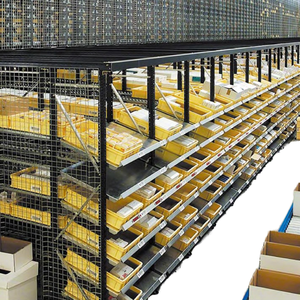
Customized Light Duty Carbon Steel Corrosion Protection Carton Flow Racking System Electrostatic Powder Coating 3 Layers Racks
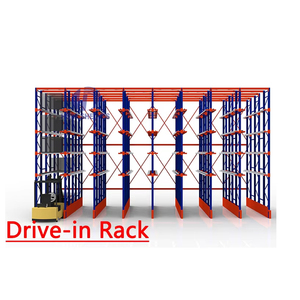
High-Capacity Drive-In Pallet Racking System Drive-Through Pallet Rack for Storage Warehouses
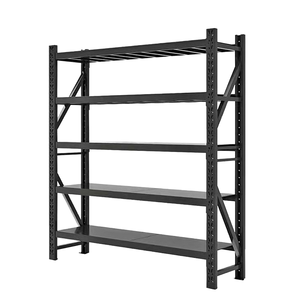
Xinanda Light Duty Steel 5 Adjustable Shelving Unit Slotted Angle Rack Home Storage Garage Workshop Corrosion Protected
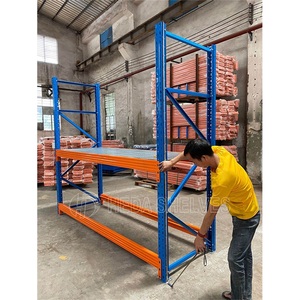
Mracking Heavy Duty Metal Pallet Storage Racking 1000kg/2000kg/3000kg Per Layer Industrial Pallet Shelving Rack
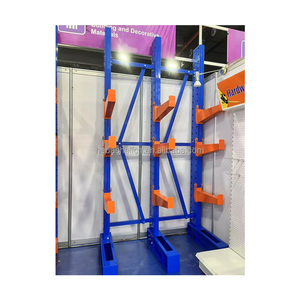
Wholesale Industrial Shelves Storage Racks Double Sided Heavy Duty Cantilever Racking System Cantilever Racks
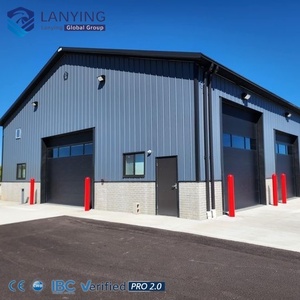
One-Stop Supplier Light Steel Structure Warehouse Prefab Industrial Storage Building For General Warehousing Needs
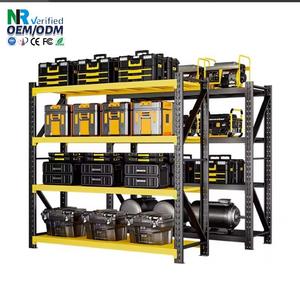
Manufacturer Long Span Storage Adjustable 200Kg Steel Racking Shelving Stacking Racks
End-to-End Production & Heavy-Duty Structural Integrity
Backing international tier-1 logistics operators, distribution contractors, and industrial supply wholesalers with fully integrated manufacturing, finite element load analysis, and documented quality guarantees.
30,000 m² Facility & 30,000t Output
Founded in 2001, our Guangzhou manufacturing base houses multi-station automated roll-forming lines, automated continuous laser punching, and robotic MIG welding, fulfilling over 30,000 metric tons of custom warehouse racking monthly.
Global Safety Approvals: CE & ISO
Manufactured strictly according to EN 15512, ANSI MH16.1, and FEM 10.2.02 codes. Certified under CE Certification No. 2435-CPR-8605159, ISO 9001:2015 No. 18624Q00169R0M, and RoHS anti-corrosion safety coatings.
Anti-Fall Dynamic Protective Matrix
Eliminating warehouse collapse risks with custom engineered back-of-rack safety netting, modular wire mesh decking, heavy-gauge upright column protectors, dynamic pallet backstops, and anti-dislodgement safety locking pins.
Engineering Structural Resilience: Mitigating Falling Loads & Progressive Collapse in High-Bay Warehouse Racking
In modern high-density distribution hubs, catastrophic rack failure and load-shedding events represent the most critical operational safety and legal liabilities. Racking failure modes typically stem from three distinct dynamics: forklift mast collision impacts against base uprights, harmonic resonance during seismic events, and beam deflection exceeding allowable design tolerances ($L/200$) under localized point loads. As an OEM manufacturer and exporter, our engineering focus centers on structural fail-safes that prevent individual localized component faults from escalating into progressive, multi-bay warehouse collapses.
1. Multi-Stage Structural Anti-Fall Barrier Systems
Preventing pallet fall-through and rear-aisle load ejection requires a multi-layered hardware ecosystem tailored to forklift lift velocities and bay depths:
- Heavy-Gauge Wire Mesh Decking: Formed with rolled-channel support waterfall edges that wrap over step-beams. These platforms distribute irregular or non-standard skids evenly, preventing fragile pallets from snapping and falling through cross-beams.
- Back-of-Rack Safety Containment Panels: In flue spaces separating back-to-back rack runs or along pedestrian-traversed picking tunnels, framed wire mesh barriers and heavy-duty nylon safety nets absorb kinetic impact from shifting loads up to 1,500 kg, confining unstable pallets within the rack bay envelope.
- Mechanical Pallet Backstops (Stop Beams): Bolted structural tubular sections positioned 100mm to 150mm behind the nominal pallet line, providing forklift operators with tactile, rigid depth confirmation during blind high-elevation insertions above 8 meters.
2. Cold-Formed Steel Yield Properties & FEA Load Distribution
Our custom upright profiles are roll-formed from cold-rolled structural sheet steel (SS400, Q235B, and Q355B), engineered with continuous return ribs along the omega post section. This multi-flange profile elevates torsional stiffness and Euler buckling limits under vertical eccentric compression.
| Component | Material Grade | Yield Strength (MPa) | Standard Surface Finish | Safety Redundancy Factor |
|---|---|---|---|---|
| Omega Upright Column | Q355B High-Tensile Steel | ≥ 355 MPa | Electrostatic Powder (60-80μm) | 1.95:1 Ultimate Factor |
| Interlocking Box Beam | Q235B Cold-Formed Steel | ≥ 235 MPa | Thermo-Cured Epoxy Powder | 1.65:1 Deflection ($L/200$) |
| Seismic Footplate | Q235 Hot-Rolled Plate | ≥ 235 MPa | Hot-Dip Galvanized / Powder Coated | 2.20:1 Shear Pullout |
| Column Protectors | Q355 Structural Channel | ≥ 355 MPa | High-Visibility Safety Yellow | Resists 400 J Impact (EN 15512) |
3. Chemical Pre-Treatment & Corrosion Resistance Protocols
Structural oxidation in refrigerated cold stores or high-humidity coastal distribution centers degrades wall thickness, creating invisible micro-fissures that precipitate sudden buckling under standard payload ratings. Our in-house surface preparation incorporates a 10-step immersion cycle: degreasing, industrial pickling, alkaline washing, zinc phosphating, and nano-ceramic passivation before electrostatic powder application. This achieves over 500 hours of continuous ASTM B117 salt spray endurance, ensuring tensile strength retention throughout decades of service.
Future Procurement Trends for Warehouse Racking Buyers
How global distribution supply chains, EPC firms, and 3PL enterprises are adapting their procurement specifications to address automated fulfillment, seismic regulations, and total lifecycle costs.
Lifecycle Value Over Initial Capex
Procurement directors are shifting focus from lowest per-ton steel quotes toward Total Cost of Ownership (TCO). High-durability coatings, standardized teardown/reconfiguration modularity, and verified seismic engineering reduce structural retrofitting and downtime expenses during facility re-leases.
Specification for Automation-Ready Footprints
Warehouses are increasingly planned with future automation in mind. Buyers insist on tight fabrication tolerances (±0.5mm) across beam connectors and upright verticality, ensuring racks can immediately accommodate Autonomous Mobile Robots (AMRs), automated pallet shuttles, and ASRS crane guides without structural rework.
Stringent Regional Seismic Certification
Procurement teams across Pacific Rim and Middle Eastern territories mandate certified structural calculation reports verified by registered professional engineers (PE) before container departures. Sizing thicker baseplates, increased anchoring depth, and reinforced K-bracing patterns is becoming standard baseline practice.
Container Space & Freight Optimization Engineering
With ocean freight volatility, procurement managers demand smart modular nesting. We engineer upright frames in optimized knock-down assemblies and nesting beam profiles that max out 40ft High Cube container payloads to 26-28 metric tons, slashing per-pallet-position freight landed costs.
Engineering & Technology Trends Reshaping Warehouse Racking
From digital twin structural monitoring to advanced metallurgy, next-generation warehousing relies on precision structural design to optimize volumetric throughput.
Ultra-High Yield Micro-Alloy Steels
Advances in cold-rolled metallurgy allow the roll-forming of high-yield Q355B and specialized micro-alloy dual-phase steels into thinner, multi-ribbed profiles. This reduces deadweight loads on concrete slabs by up to 14% while retaining full moment-resisting structural capacities.
IoT Dynamic Strain & Impact Telemetry
Smart rack deployments integrate Bluetooth and wireless strain-gauge sensors directly into key column protectors and cross-aisle ties. These units log forklift impacts in real-time and alert safety coordinators if deflection crosses acceptable elastic deformation thresholds.
Seismic Base Isolation & Dissipative Connectors
Rather than relying solely on oversized rigid anchors, modern earthquake-resistant racking incorporates elastomeric dissipation pads and friction-damped beam-to-column connectors. These mechanical joints absorb seismic energy shocks without transferring destructive shear forces to the slab.
High-Precision Automated Continuous Roll Forming
Advanced roll-forming mills equipped with in-line laser measurement and servo-driven hydraulic punching eliminate pitch drift over 12-meter upright upright spans. This guarantees pitch accuracy of ±0.2mm, preventing connector binding and ensuring flawless on-site erection.
Frequently Asked Questions: Custom OEM Racking
Detailed technical clarifications addressing load verification, engineering certifications, containerization protocols, and customization options for international buyers.
How do you calculate safe working loads (SWL) and guard against rack fall-down failures?
Can your engineering team custom design racking for local seismic building codes?
What anti-corrosion finishes are recommended for cold storage and humid facilities?
What data do you require from an importer or EPC contractor to issue a 3D layout & quotation?
Do you offer OEM private-label branding and custom color powder matching?
How are export shipments bundled to prevent ocean freight transit damage?
Plan Your Heavy-Duty Warehouse Storage Infrastructure
Connect with our senior structural engineering team to receive a complimentary 2D/3D CAD warehouse layout design, seismic load calculation, and factory-direct OEM manufacturing proposal.