Engineered Heavy-Duty Single & Modular Pallet Racks
Precision-rolled cold-formed structural steel profiles built to custom bay dimensions, load thresholds up to 4,500kg per level, and electrostatic powder coatings resistant to high humidity and thermal fluctuations.
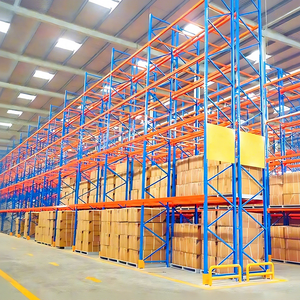
Stackable Selective Pallet Storage Rack System
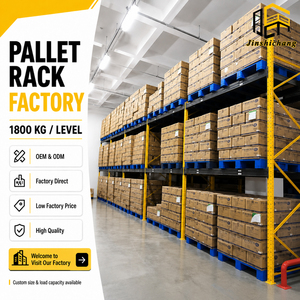
3000KG Industrial Powder-Coated Pallet Rack
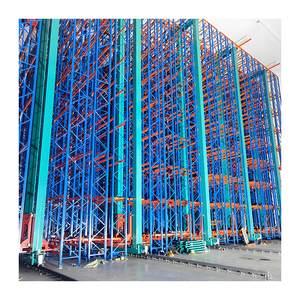
Automatic High-Density Pallet Shuttle Frame
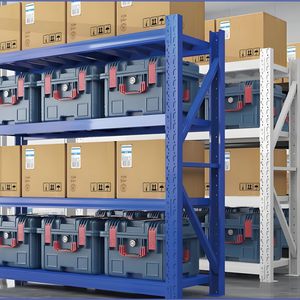
4-Tier Drive-Through / Drive-In Warehouse Rack
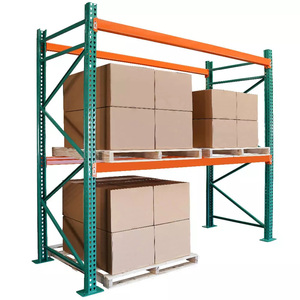
Precision Uprights, Beams & Flue Dividers
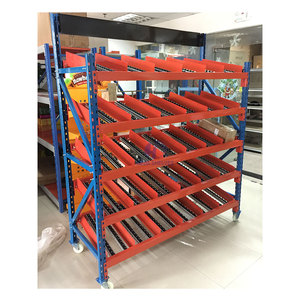
Gravity Lineside Roller Carton & Pallet Flow Rack
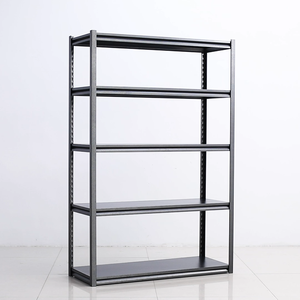
5-Tier Heavy-Duty Adjustable Steel Racking Units
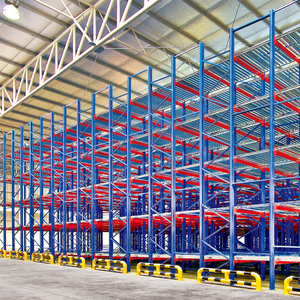
High-Utilization Live Pallet Flow Roller Rack
Single Pallet Rack Engineering: Structural Integrity, Load Factors & OEM Standards
A deep dive into finite element analysis (FEA), cold-formed profile geometries, seismic anchoring dynamics, and European EN 15512 / American RMI MH16.1 compliance specifications for heavy-duty single pallet storage systems.
The Mechanics of Custom OEM Single Pallet Racking
Single pallet racks—often configured as single-pallet-wide bays or single-deep selective runs—are the precision backbone of fast-moving distribution centers, cold-storage air blast zones, and automated narrow aisle (VNA) corridors.
1. Omega (Ω) Upright Geometry & Moment of Inertia
HEDA uses continuous cold-roll forming lines to shape high-tensile Q235B and Q355B coil stock into multi-bend Omega upright profiles (80mm to 120mm web widths, thickness 1.5mm to 2.5mm). The precision cold-work corners dramatically increase the radius of gyration, elevating buckling resistance under axial compressive loads up to 24 metric tons per frame.
2. Dual-C Welded Box Beams vs. Step Beams
For single pallet bays, beam deflection must strictly adhere to the $L/200$ or $L/300$ limit under maximum operational loading conditions according to FEM 10.2.02. We manufacture interlocking twin-C cold-rolled profiles seamlessly joined by robotic seam welders, ensuring torsional resistance against pallet impact and uneven point loads.
3. 4-Hook & 5-Hook Stamped Connector Claws
Load transfer from horizontal beam to vertical column is mediated through heavy-gauge stamped end-connectors. Integrated drop-lock safety pins with automatic anti-dislodgement locks prevent beam accidental release when forklifts extract pallets at speeds up to 12 km/h.
4. Base Plates, Seismic Ties & Anchor Bolts
For high-seismic locations across Southeast Asia and the Pacific Rim (PGA ≥ 0.2g), upright footings feature heavy base plates (160x140x6mm to 200x200x10mm) secured by dual M12/M16 chemical or mechanical wedge anchors to safely dissipate cyclic ground accelerations into slab foundation meshes.
Key Formulas Governing Safe OEM Single Pallet Rack Clearances
When engineering a custom single pallet frame, our CAD teams employ precise geometric clearances based on EN 15620 classes:
- Lateral Bay Clearance ($C_L$): Minimum 75mm between pallet edge and upright column for selective operations; 100mm for heights exceeding 6,000mm.
- Vertical Lift Clearance ($C_V$): Minimum 100mm between pallet top load and underside of overlying beam to accommodate forklift lift acceleration.
- Flue Space Integrity ($F_S$): 150mm longitudinal flue spaces between back-to-back single runs to ensure ESFR ceiling sprinkler spray cones penetrate directly down to floor storage levels without obstruction.
Future Procurement Trends for Industrial Racking Systems
How automation, sustainability mandates, supply-chain resilience, and digital twin technology are transforming international B2B pallet racking procurement through 2030.
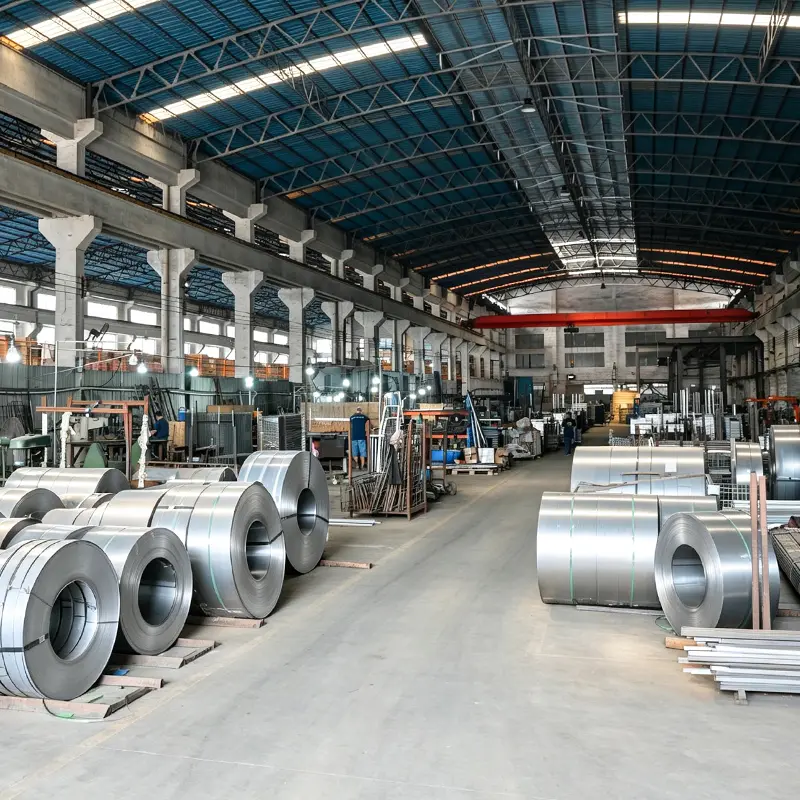
AGV & AMR Autonomous Alignment
Warehouses are replacing standard reach trucks with Autonomous Mobile Robots (AMRs) and automated counterbalanced forklifts. Future racking contracts demand tighter floor tolerances (DIN 18202 / VDMA 15251 Class 3) and laser-guided visual reflector targets fitted straight onto upright frames at the factory level.
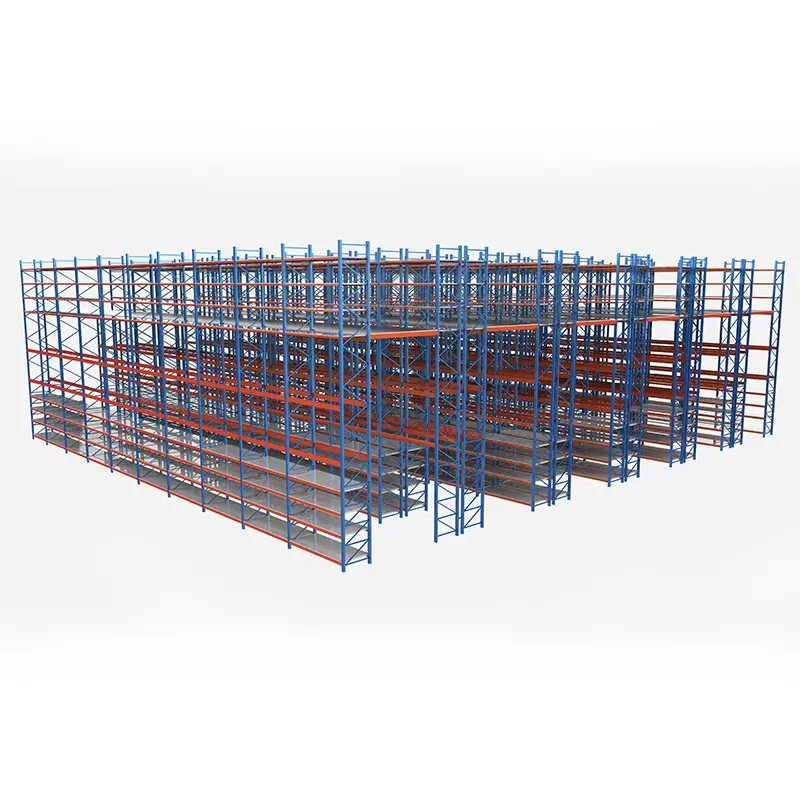
IoT Structural Health Telemetry
Modern distribution hubs require permanent telemetry. Specifiers increasingly request pre-drilled brackets and conduit paths for beam deflection sensors, acoustic emission impact monitors on bottom uprights, and IoT weight telemetry to trigger overload alerts before mechanical failure occurs.
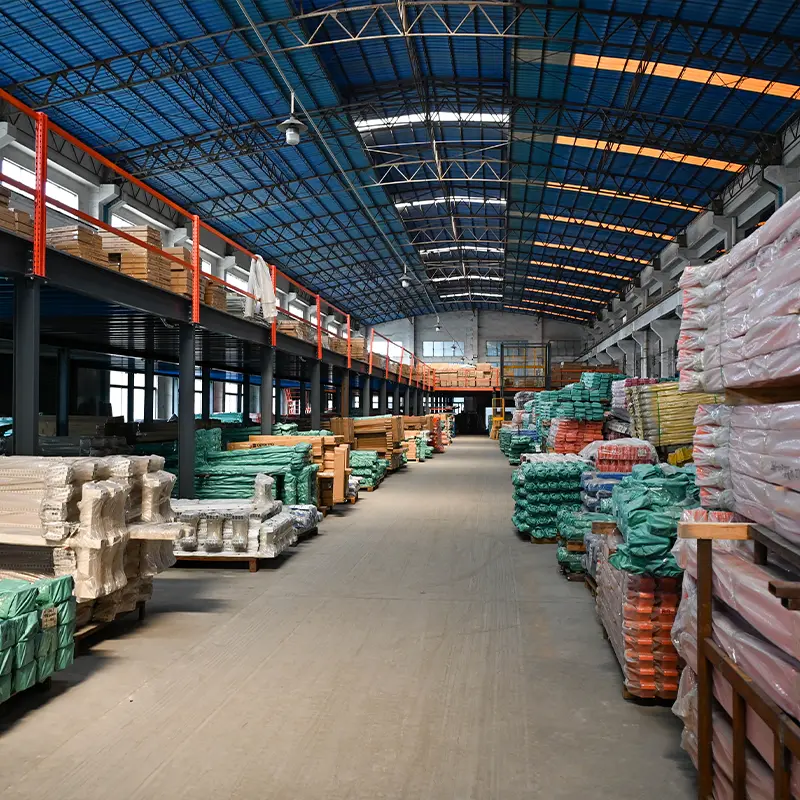
High-Tensile Thin-Walling & ESG
Scope 3 emissions accounting drives procurement towards higher-yield HSLA (High-Strength Low-Alloy) steels that maintain identical flexural rigidity with 15% less total steel weight per pallet position, slashing sea freight container footprint and overall embodied carbon.
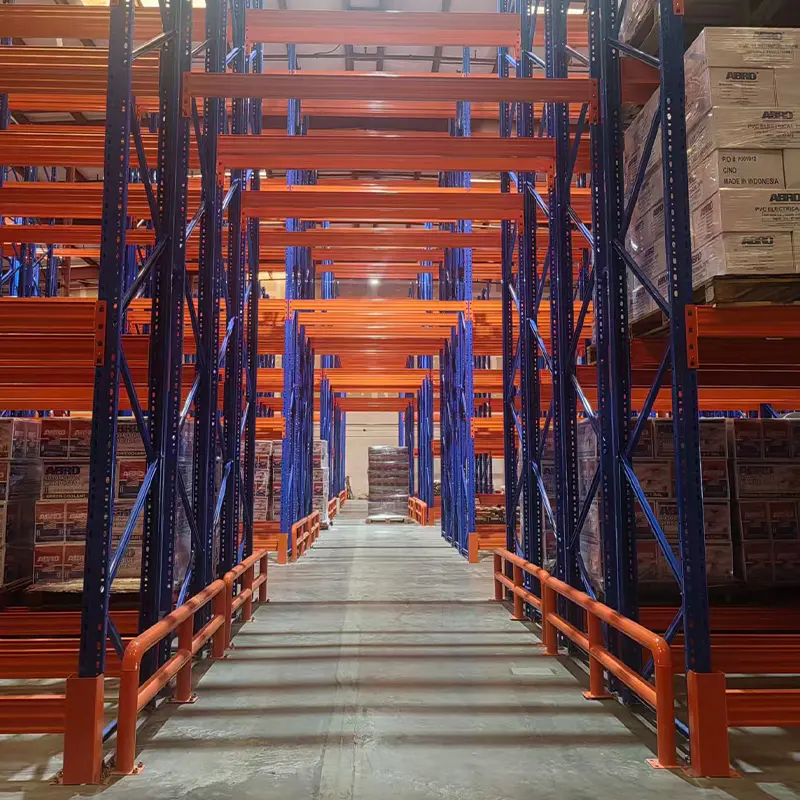
Standardized Knock-Down Modules
Global sea freight fluctuations make container pack-density paramount. Importers prefer bolt-together upright frames shipped in knocked-down (KD) bundles with pre-calculated 40HQ stuffing algorithms, saving up to 35% on ocean freight logistics compared to welded frames.
10-Step Precision Cold-Forming & Surface Treatment Workflow
Every upright, beam, baseplate, and bracing tube undergoes automated cold processing, multi-stage chemical pretreatment, and robotic electrostatic polymer coating inside our Guangzhou plant.
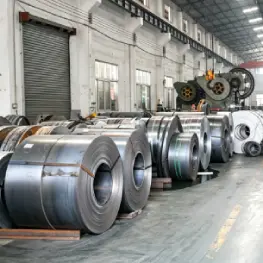
Raw Material Test
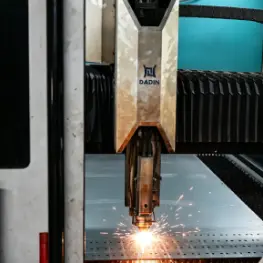
Precision Shearing
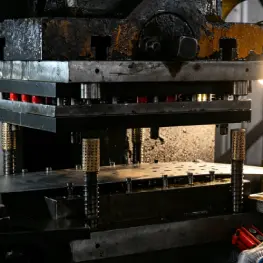
CNC Slot Punching
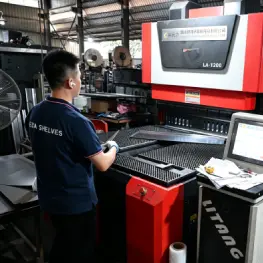
Cold-Bending Press
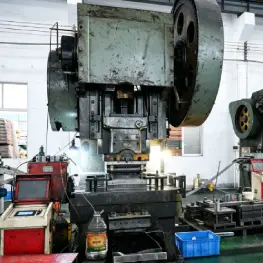
Roll Profiling
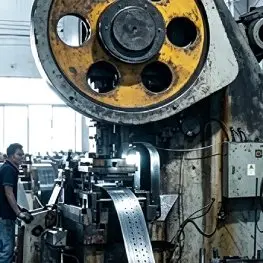
Surface Polishing
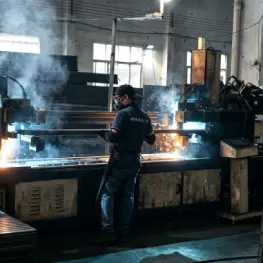
Robotic Welding
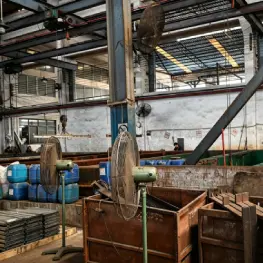
Pickle & Phosphate
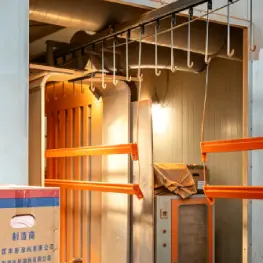
Powder Coating
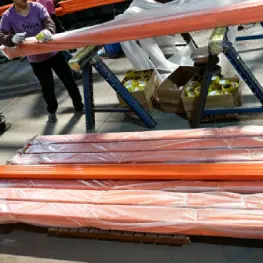
QC & Palletizing
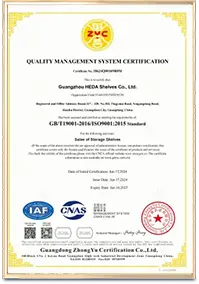
Verified Quality Compliance & International Certifications
Guangzhou Heda Shelves Co., Ltd. provides certified quality documents, mill certificates, salt-spray chamber test ratings, and third-party structural engineering proofs for building permits worldwide.
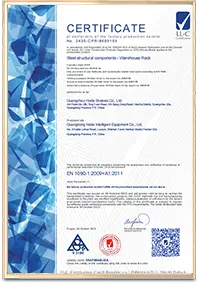
CE Certification
Certificate: 2435-CPR-8605159
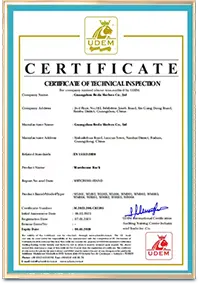
ISO 9001:2015
Certificate: 18624Q00169R0M
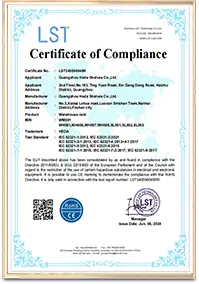
RoHS Compliance
Heavy-Metal Free Coating
Load Test Report
Destructive Rigidity Proofs
Single Pallet Rack Engineering & Procurement FAQ
Common questions answered by HEDA's structural design engineering team regarding load deflection, finishes, seismic safety, and OEM private labeling.
What is the maximum allowed deflection limit for single pallet rack beams?
Under international codes (EN 15512 and ANSI/RMI MH16.1), the maximum elastic deflection of a horizontal rack beam under its rated uniformly distributed load (UDL) must not exceed $L/200$ (where $L$ is beam length between upright faces). For automated narrow-aisle installations where robotic shuttles operate, we engineer custom beams to a stricter $L/300$ threshold to safeguard sensors.
How does HEDA prevent rust on racking installed in humid tropical or cold chain environments?
All structural steel sections undergo an 8-stage chemical bath including immersion degreasing, acid pickling, and hot zinc phosphating. We apply 70–90 μm of electrostatic polyester powder cured at 190°C. For sub-zero cold rooms (-30°C) or open-air coastal docks, we provide full hot-dip galvanization conforming to ASTM A123 / EN ISO 1461 with minimum 65 μm zinc coat thickness.
Can you manufacture custom OEM slot patterns to match our existing racking inventory?
Yes. We regularly supply distributors with custom teardrop punches (compatible with major North American profiles), 50mm pitch Omega patterns, 75mm European standard punches, and proprietary slotted patterns. Our CNC punching lines can adjust pitch, hole geometry, and beam end-connector lugs to interlock seamlessly with your existing systems.
What documentation do you provide for local municipal and building safety approvals?
We supply a complete engineering dossier including 2D CAD layouts, 3D renderings, finite element analysis (FEA) stress distribution curves, structural calculation reports stamped by certified structural engineers, steel mill test certificates (MTC 3.1), and CE/ISO declarations of performance.
What is the typical production lead time and container stuffing capability?
Standard production lead times range between 15 to 25 days depending on project tonnage. Our dedicated container loading engineering team generates specialized 3D packing manifests to maximize container cubic space utilization up to 98%, packing beams on timber pallets and bundle-strapping upright frames with protective edge boards.
How do you calculate seismic resistance for warehouses located in earthquake zones?
We compute the spectral response acceleration ($S_s, S_1$) and ground site class according to ASCE 7 or Eurocode 8. Based on these seismic demand values, our engineers increase column web thicknesses, design heavy-duty back-to-back row spacers with dynamic horizontal bracing trusses, and incorporate oversize baseplates anchored with epoxy capsule studs.
Request an Engineered Layout & Factory-Direct OEM Quotation
Send your warehouse architectural plans or pallet load parameters. Our design engineering department will prepare a complete 2D/3D CAD layout, bill of materials (BOM), and certified load table within 24 to 48 hours.