Featured Heavy-Duty & Custom Racking Systems
Cold-formed structural profiles engineered to European EN 15512, RMI, and AS4084 design benchmarks. Fully customizable with client-specific beam depths, frame profiles, column punch patterns, and powder finishes.
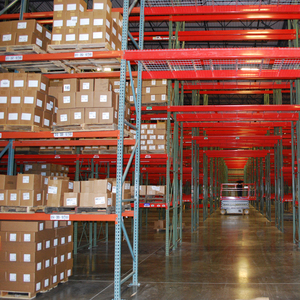
Steel Material Warehouse Rack Numbering System Warehouse Racking Systems for Goods Storage
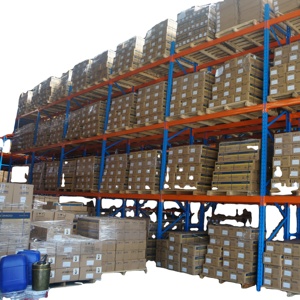
China Manufacturer Heavy Duty Warehouse Shelving/Storage Pallet Rack /Selective Heavy Duty Racking System
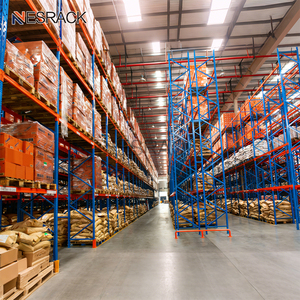
High Density Heavy Duty Galvanized Steel Adjustable Durable Double Deep Industrial Warehouse Pallet Racking System
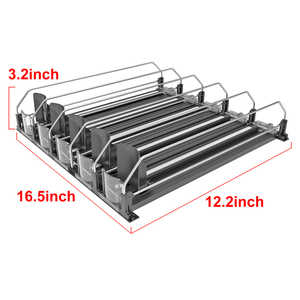
Automatic Spring Loaded Slow Motion Adjustable Multi-functional Pusher Rack for Beverage Snacks Retail Heavy Duty
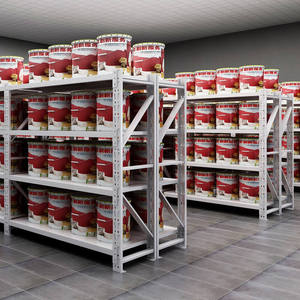
Heavy Duty Industrial Pallet Rack Storage Shelves System Metal Stacking Units Warehouse Steel Pallet Racking
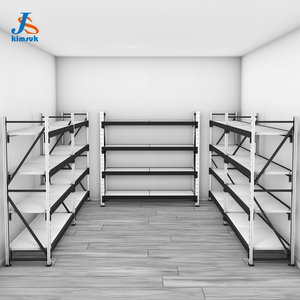
Racking Warehouse Storage Warehouse Shelving Solutions Cantilever Stacking Racks Shelves Selective Pallet Rack
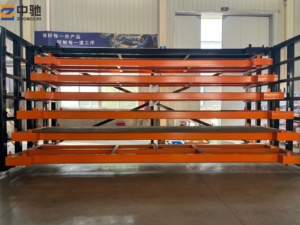
High Load Capacity 8-Layer Anti-Rust Powder Coated Steel Rack Heavy Duty Warehouse Storage System For Industrial Pallet Use
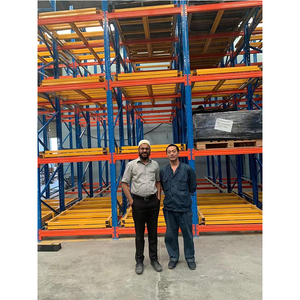
Push Back Racking High Quality Price Ratio Warehouse Storage Racks Customized Deep Pallet Rack Movable Push Back Racks
Industrial Storage Systems: Engineering Specification Comparison
Selecting an industrial rack profile requires balancing volumetric floor utilization, stock rotation principles (FIFO vs. LIFO), structural aisle tolerances, and mechanical handling equipment (MHE) integration.
| Storage System Type | Space Efficiency | Throughput Principle | Typical Beam Loading (UDL) | MHE Compatibility | Seismic & Cold Adaptability |
|---|---|---|---|---|---|
| Standard Selective Rack | 40% – 50% Floor Area | 100% Direct SKU Selectivity | Up to 4,500 kg / Level | Counterbalance, Reach Trucks | High ductility base plates, 75mm beam adjustment |
| Double Deep Racking | 60% – 65% Floor Area | 50% Immediate Access (LIFO) | Up to 3,200 kg / Level | Pantograph Double-Reach Truck | Requires guide rails, custom backstop stops |
| Drive-In / Drive-Thru | 75% – 85% Floor Area | Bulk Homogeneous (LIFO/FIFO) | Up to 1,800 kg / Pallet Spot | Standard Reach (Drive-Through mast) | Reinforced top-tie bracing, ground guide channels |
| Push Back (Nested Carts) | 70% – 75% Floor Area | Dynamic Gravity Lanes (LIFO) | Up to 1,500 kg / Cart Platform | Standard Counterbalance, Reach | Non-jamming sealed bearing wheels, cold-resistant steel |
| Radio Shuttle Automation | 85% – 90% Floor Area | Semi-Automated Continuous | Up to 2,000 kg / Pallet Position | AGV, AMR, Standard Forklift load | Integrated laser positioning, -30°C Lithium batteries |
| Rack-Supported Mezzanine | 200% – 300% Vertical Volume | Manual Piece & Carton Picking | 300 – 1,000 kg / m² Floor Deck | Conveyors, Vertical Cargo Lifts | Built-in staircase egress, sprinkler conduits, kickplates |
Future Procurement Trends in Industrial Storage Systems (2026–2030)
Modern supply chain logistics procurement has migrated from commoditized steel per-kilogram bidding to total cost of ownership (TCO) calculations, carbon footprint verification, and automation readiness.
1. Raw Material Hedging & Traceable Steel Origin
Global volatile hot-rolled coil (HRC) steel pricing requires tier-one OEM suppliers to offer forward mill pricing agreements. Procuring directly from mills like Baosteel or Shougang ensures standardized chemical composition (low carbon, high manganese) with verified mill test certificates (MTC) matching EN 10204 3.1 standards, safeguarding tensile and yield compliance.
2. "Automation-Ready" Structural Tolerances
Warehouses initially operating manual reach trucks are increasingly retrofitting Autonomous Mobile Robots (AMRs) and Automated Storage and Retrieval Systems (ASRS). Racking purchased today must adhere to tighter plumbness tolerances (±1.5mm per 10m height) and minimal beam deflection ratios (≤ L/250 under static loads) to prevent autonomous optical sensor tripping.
3. Environmental Durability & Low-VOC Powder Coating
Global carbon borders and corporate ESG compliance require clean pre-treatments. Eliminating toxic chromium, modern continuous lines leverage multi-stage ultrasonic degreasing, zinc phosphating, and electrostatic epoxy-polyester thermosetting coatings cured at 200°C. This delivers 500+ hours salt spray corrosion resistance without volatile toxic off-gassing.
4. Modular Expandability & Disassembly Agility
Third-party logistics (3PL) contracts are shortening to 2-3 year windows. Facilities demand boltless, interlocking connector hooks, drop-in wire decking, and modular beam levels. Racking systems must allow rapid reconfiguration, mezzanine multi-tier extensions, or complete knockdown and containerized relocation with zero structural metal fatigue.
5. Seismic & Geotechnical Engineering Validation
Warehouses situated along the Pacific Rim, Southeast Asia, or Middle Eastern seismic zones require regional calculation dossiers. Racking procurement contracts mandate non-linear response spectrum analysis, enlarged floor anchor shoeplates with chemical resin expansion anchors, and specialized top bracing to prevent resonance during seismic wave propagation.
Key Technological Developments in Heavy Racking Infrastructure
Examining how advances in metallurgical finite element analysis (FEA), sensor telemetry, and cold-chain thermal barriers are reshaping warehouse racking integrity.
FEA-Driven Cold-Rolled Profiles
Rather than using excessive steel weight to ensure safety, state-of-the-art roll forming utilizes advanced computer simulation to optimize rib patterns, fold radii, and web perforations. Upright columns with multi-bend Omega (Ω) profiles maximize torsional rigidity while reducing total steel mass by up to 14%, directly lowering ocean container freight costs.
IoT Strain Gauges & Impact Sensor Telemetry
Critical distribution hubs are integrating wireless micro-strain sensors on lower aisle upright columns. These battery-free RFID sensors log structural deflection and record mechanical impacts from forklifts in real-time. Maintenance superintendents receive automated alerts before microscopic steel buckling precipitates a progressive collapse.
Thermal-Compensated Cold Chain Racking
In -25°C blast freezers, carbon steel becomes brittle and vulnerable to notch sensitivity. Next-generation racking employs modified micro-alloyed steel formulations with proven Charpy V-notch impact toughness at sub-zero temperatures, paired with hot-dip galvanized coating (ASTM A123) to eliminate condensation-induced peeling.
Guangzhou Factory: 10-Stage Precision Manufacturing Workflow
Total quality management governed under certified ISO 9001:2015 and CE standards. Every cold-rolled section, beam weld, and powder finish undergoes strict laboratory verification.
Why Logistics Leaders Partner with Our Guangzhou Hub
Founded in 2001, Guangzhou Heda Shelves Co., Ltd. has grown from a specialized metal fabrication workshop into a primary OEM/ODM manufacturer for leading material handling brands, rack distributors, and global contractors across Asia, the Americas, and EMEA.
Operating a dedicated 30,000 m² heavy-machinery production complex equipped with 300+ technicians, we bridge the gap between engineering consulting and factory-direct price efficiency. Every project is backed by structural safety documentation, free 2D/3D CAD layout planning, and certified load-bearing verifications.
Free 3D Architectural CAD Modeling
Send your architectural drawings, column layouts, and fire suppression heights. Our application engineers deliver full 2D AutoCAD equipment footprints and 3D isometric BIM models within 24 to 48 hours.
Seismic Calculation & Tropical Weatherproofing
We formulate racking systems with tailored bracing geometry for active seismic zones (Philippines, Indonesia, Japan) and offer hot-dip galvanizing protection for coastal, open-air, and high-humidity facilities.
Engineered Container Loading Optimization
Using custom nesting software, upright frames and beams are bundled to maximize container volume and tonnage capacity. We consistently reduce sea transport cost per pallet location by 18% to 26%.
Frequently Asked Technical Questions (FAQ)
Direct, engineering-backed answers to clarify loading factors, building code compliance, installation, and procurement logistics.
What essential warehouse parameters are required to calculate a certified racking quote?
- Building Footprint: Floor plan in DWG/PDF format showing structural column spacing, clear ceiling height under beams, and fire sprinkler clearances.
- Load Units: Pallet dimension (Length × Width × Overall Height including cargo) and maximum gross weight per pallet.
- Pallet Characteristics: Type of pallet (Euro, ISO, timber, plastic, skids) and bottom deck board configuration.
- Material Handling Equipment (MHE): Forklift model, minimum aisle turning radius (AST), mast staging height, and collapsed mast height.
- Floor Slab Integrity: Slab depth, concrete compressive strength (e.g., C25/30), and rebar layout.
How does your factory ensure compliance with European EN 15512 and American RMI standards?
What are the differences between Q235B and Q355B steel in racking fabrication?
How do you protect pallet racks installed in cold rooms or coastal high-humidity facilities?
- Pre-Galvanized Coils: Upright and bracing profiles formed directly from galvanized coil stock (Z275 coating).
- Hot-Dip Galvanizing (HDG): Steel dipped in 450°C molten zinc bath (ASTM A123) producing a 65–85μm metallurgical zinc alloy layer that resists corrosion for 25+ years.
Can you support custom punch pitch dimensions for OEM distributor product compatibility?
Accelerate Your Warehouse Capacity with Expert Engineering
Request a comprehensive storage footprint analysis, 2D AutoCAD layout drawings, 3D renderings, and factory-direct volume pricing. Our bilingual structural engineering team will review your project parameters within 24 hours.