Engineered Warehouse Storage Solutions for Global Logistics
Beyond our custom push back racking lines, Guangzhou HEDA Shelves designs, roll-forms, and delivers integrated warehouse systems. From automated shuttle systems to heavy-duty selective and agricultural farming racks, our solutions match precise industrial payloads and global building standards.
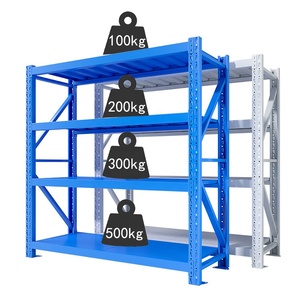
Low Price Steel Adjustable Height Flexible Storage Medium Duty Industrial Shelving Rack System
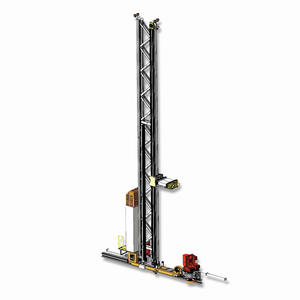
Pteris Miniload-Single Column-High Speed Warehouse Racking Systems ASRS Automated Shuttle Pallet Racking System
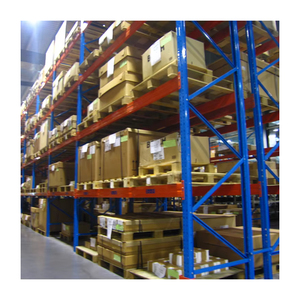
Heavy Duty Rack Steel Warehouse Rack Industrial Pallet Storage Shelf Warehouse Metal Racking System Heavy Duty Boltless Shelving
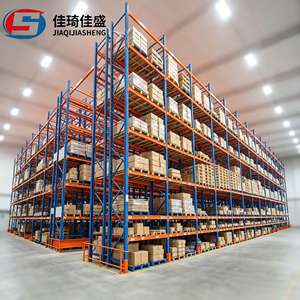
Custom Surface Finish OEM Heavy Loading Modular Assembled Beam Type Heavy Duty Pallet Racking for Production Workshop Storage
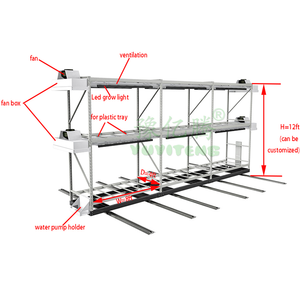
2025 Hot Selling Hydroponics 4ft X 8ft Vertical Grow Rack for Indoor Farming
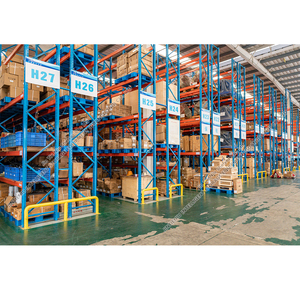
Heavy Duty Corrosion Protected Racking System Beam Structure Industrial Warehouse Rack Steel Panels Carton Parts Picking 1000KG
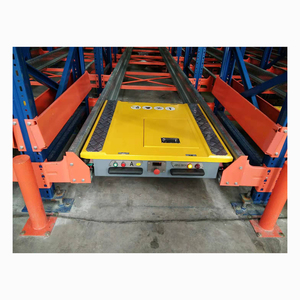
Warehouse Economic RGV Shuttle Pallet Shuttle Rack System Equipment Rail Guided Vehicle For Automatic Warehouse Storage
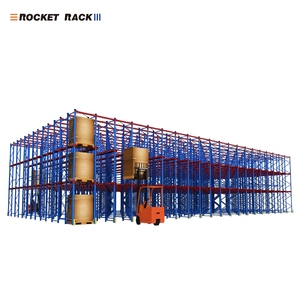
High Quality Customizable Drive-In Pallet Rack System Sturdy Through-Type Metal Warehouse Storage Heavy Duty Powder Coated Racks
The Mechanics & Kinematics of Push Back Racking Systems
Push back pallet rack systems operate on an inclined rail and nested cart framework. Understanding the mechanical dynamics of gravity feeds, deceleration friction, and cart telescoping is critical for warehouse project directors aiming to eliminate pallet hang-ups and equipment downtime.
Nested Cart Kinematics & Profile Geometry
Unlike traditional roller flow lanes where pallets roll on discrete cylinders, push back utilizes structural nested steel carriages traversing precision cold-rolled structural C-channels or inclined structural angle rails. The outer pallet rests on the top cart. When the second pallet is introduced, the forklift operator pushes the first cart backward, exposing the underlying carriage. This telescoping action maintains strict pallet containment, preventing misaligned pallets from shifting off-center or jumping tracking rails during loading cycles.
Gravity Gradient & Incline Calibration
A push back system relies on a strictly engineered slope, typically between 1.5% and 2.5% (approx. 15mm to 25mm per meter). If the incline is too shallow, light loads fail to advance forward during picking. If the slope is excessive, dynamic acceleration generates violent impact forces against the front stops, causing load shedding or weld fatigue. Our engineering department calculates the exact rolling friction coefficients based on client pallet weight spectra (e.g., 500kg up to 1,500kg per position), ensuring uniform return velocity.
Zero-Forklift Entry Structural Protection
Drive-in racking accounts for up to 45% of warehouse racking structural failures because forklifts must navigate deep inside structural bays, frequently striking uprights with counterweights or mast carriages. Push back racking completely confines forklift transit to the outer working aisle. The forklift mast never breaches the upright face plane, reducing column damage by over 80% and drastically reducing the need for costly post replacements and downtime-inducing rack repairs.
Critical Design Insight: Low-Profile vs. High-Profile Cart Assembly
In facilities with tight vertical clearances beneath ESFR sprinkler heads, vertical stack height is paramount. Standard push back carts add substantial cumulative profile thickness in 5-deep and 6-deep configurations. Our proprietary low-profile nested carts utilize offset flanged roller bearings recessed within the cart perimeter tubing. This reduces vertical stack loss to just under 110mm across the entire nesting assembly, saving up to 350mm of total bay height and frequently enabling an entire additional horizontal beam level within the building envelope.
| Storage System Type | Selectivity & Access Mode | Space Utilization Efficiency | Forklift Cycle Speed | Upright Collision Risk Profile | Floor Space Recovery |
|---|---|---|---|---|---|
| Custom Push Back Racking | High (LIFO by Lane, Independent Levels) | Up to 75% Floor Utilization | Fast (No Entry Required) | Extremely Low (Aisle-Bound Driving) | +40% to +60% vs. Selective |
| Standard Selective Racking | 100% Immediate Direct Access | Low (35% - 40% Floor Utilization) | Moderate (Extensive Travel Required) | Low to Moderate (Aisle Navigation) | Baseline Reference |
| Drive-In / Drive-Through | Strict LIFO / Block-Based | High (65% - 75% Floor Utilization) | Slow (Mast Navigation Inside Bays) | High (Frequent Column Collisions) | +50% vs. Selective |
| Pallet Flow (Gravity Roller) | Strict FIFO (First-In, First-Out) | Very High (Up to 80% Utilization) | Fast (Dedicated Load & Unload Aisle) | Low (Dedicated End Aisle Access) | +60% (Requires 2 Working Aisles) |
| Radio Shuttle System | FIFO or LIFO Lane Configurable | Maximum (Up to 85% Utilization) | Automated Internal Transfer | Extremely Low (Automated Carrier) | +70% to +85% (High Initial CapEx) |
OEM & ODM Custom Fabrication Capabilities
Guangzhou HEDA Shelves Co., Ltd. does not offer rigid off-the-shelf catalog compromises. Every push back rack system is engineered from raw coil slitting to precision roll-forming to match the client's pallet dimensions, warehouse clear heights, floor slab slab load constraints, and international seismic criteria.
Structural Steel Grades
Uprights and load-bearing beams are cold roll-formed using high-tensile certified Q235B and Q355B structural steel coil. Heavy gauge uprights (up to 2.5mm wall thickness) guarantee deflection limits compliant with EN 15512, RMI, and AS 4084 standards.
Bearings & Wheel Engineering
Carts feature heavy-duty shielded, permanently lubricated deep-groove ball bearings encased in CNC-machined steel wheels. Rated for over 500,000 traverse cycles under full dynamic payload, preventing cart jamming or rolling seizure.
Corrosion & Climate Coatings
Pre-treatment includes automated alkaline degreasing, acid pickling, and zirconium phosphating, followed by electrostatic thermosetting polyester powder coating baked at 200°C. Hot-dip galvanization is available for sub-zero cold rooms and marine salt-fog air.
OEM Private Labeling & Colors
For regional distributors, engineering contractors, and storage integrators across Europe, Southeast Asia, and the Americas, we provide full private labeling, custom RAL color combinations, bespoke packaging, and container loading optimization.
Our 10-Step In-House Production & Quality Control Pipeline
Every component of your push-back assembly is verified across dimensional tolerance, weld penetration, and coating adhesion.
Raw Material QC
Mill test certificates & ultrasonic sheet thickness verification.
Laser & Shearing
High-precision fiber laser profiling for cart nested frames.
Column Punching
Continuous CNC multi-die automated punching lines.
Roll Forming
Multi-stand precision profiling cold-roll forming machines.
Robotic Welding
CO2 gas-shielded automated robotic arm seam welding.
Shot Blasting
Mechanical surface scale removal to Sa 2.5 purity standard.
Phosphating
Multi-stage immersion cleaning & rust-inhibiting conversion coat.
Powder Coating
Electrostatic spray booth with uniform 60-90µm film cure.
Cart Alignment Test
Full 1:1 nested cart slope test with nominal dynamic weights.
Export Packing
Corrugated banding, steel strapping & container loading plan.
Push Back Racking Procurement & Technological Trends
As land costs escalate and supply chain disruptions prompt shifts from "Just-In-Time" to "Just-In-Case" buffer inventories, procurement managers must evaluate how warehouse storage systems adapt to automation, sustainability, and seismic regulatory tightening.
Hybrid Autonomous Mobile Robot (AMR) Integration
The boundary between static dynamic storage and robotics is narrowing. Emerging warehouses deploy autonomous reach trucks and heavy-payload counterbalanced AMRs to handle push back lanes. This requires tightened push back cart tolerances: ±1.5mm alignment along the front cart lip and optical laser retro-reflective targets mounted on cart face plates for automated pallet detection sensors.
Surging Cold Chain Density Demands (-30°C)
Refrigerated and frozen food distribution centers face exorbitant power consumption costs per cubic meter. Push back racking is rapidly replacing selective racking in cold storage due to its aisle elimination and operational simplicity over automated shuttles, which suffer battery degradation in sub-zero environments. OEM procurement now mandates synthetic polyurea low-temperature bearing greases rated down to -40°C.
Performance-Based Seismic Engineering
Municipal building permits in seismic zones (such as Japan, the Philippines, Indonesia, Turkey, and the US West Coast) require dynamic finite element seismic simulations. Modern push back procurement insists on oversized ductile floor baseplates, seismic heavy-duty upright frames, and positive mechanical cart retention stops that prevent carts from jumping their track during ground acceleration spikes.
Why Global EPC Contractors & 3PL Operators Partner with HEDA Shelves
Guangzhou HEDA Shelves Co., Ltd. combines quarter-century manufacturing heritage with advanced structural analysis. We deliver direct-from-factory pricing while guaranteeing rigorous technical support from project inception through final facility commissioning.
Free 2D CAD & 3D BIM Modeling (24-48 Hours)
Our structural engineering team produces fully dimensioned CAD warehouse floor layouts, 3D renderings, and comprehensive pallet capacity schedules within 24 to 48 hours of receiving your building drawings. This enables accurate spatial and ROI evaluations before commercial commitments are made.
CE & ISO 9001:2015 International Certification
Our manufacturing operations are audited under ISO 9001:2015 (Certificate No. 18624Q00169R0M) and hold structural CE certification (No. 2435-CPR-8605159) along with RoHS compliance for all coatings. Complete material mill certificates and destructive structural test reports are delivered alongside project documentation.
South China Port Access & Optimized Packing
Located in Guangzhou near Nansha, Huangpu, and Shenzhen ports, we maintain direct multimodal shipping corridors globally. Our specialized container nesting plans utilize custom steel cradles and protective wrapping to maximize container cube utilization and prevent transit damage across long ocean voyages.
Frequently Asked Questions by Industrial Buyers
Key technical, operational, and commercial insights to support procurement officers, plant engineers, and project developers in specifying push-back racking systems.