Heavy Duty Push Back Pallet Racking System
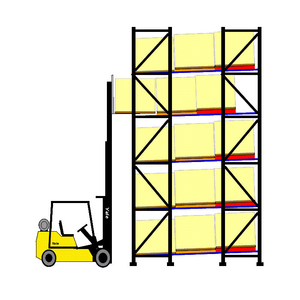
Engineered nested cart design accommodating 2 to 6 pallets deep on inclined steel structural channels with dynamic braking for safe LIFO inventory control.
Precision-fabricated from high-tensile Q235B and Q355B cold-rolled coil steel. Fully customizable beam apertures, roll-formed column profiles, and electrostatically cured finishes tailored for distribution centers, manufacturing facilities, and automated high-bay hubs.
Engineered nested cart design accommodating 2 to 6 pallets deep on inclined steel structural channels with dynamic braking for safe LIFO inventory control.
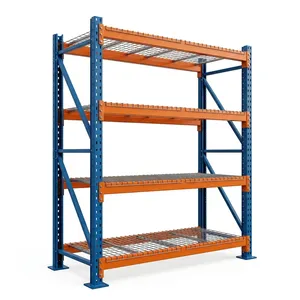
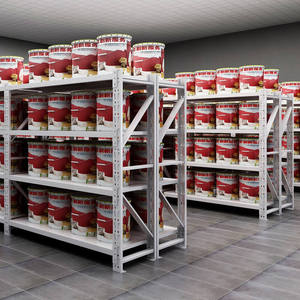
Selective storage rack with adjustable 50mm/75mm upright pitch, reinforced multi-hook beam connectors, and 100% individual pallet selectivity.
Engineered for large-scale logistics distribution centers. Features heavy omega-profile cold-rolled uprights with robotic dual-welded interlocking box beams.
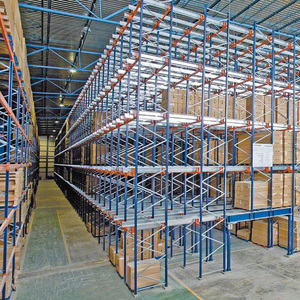
Ultra-dense deep-lane storage system utilizing wireless pallet runner shuttles. Eliminates forklift lane entry, drastically increasing throughput speed and safety.
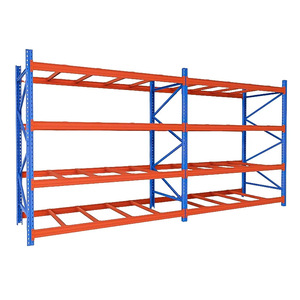
Heavy gauge cold-rolled steel design equipped with drop-in locking safety pins, seismic floor anchor plates, and chemical-resistant epoxy powder coating.
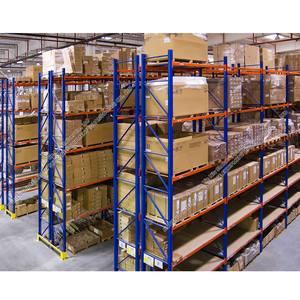
Designed for high stacking density and mixed merchandise logistics. Integrates cross-aisle portal bracing, base impact protectors, and wire mesh decking.
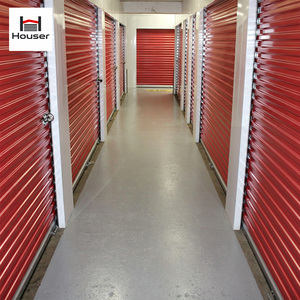
Corrosion-proof indoor self-storage and partitioned warehouse units. Features corrugated hot-dip galvanized panels with tamper-proof latching mechanisms.
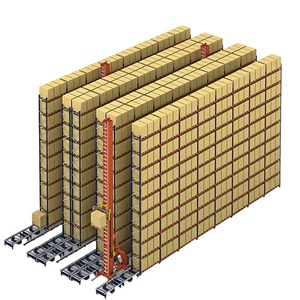
Ultra-tall rack-supported structures engineered for automated stacker crane operations up to 40 meters. Calibrated with sub-millimeter tolerances under ISO 9001.
Founded in 2001, Guangzhou Heda Shelves Co., Ltd. has established itself as an authoritative global manufacturer and original equipment manufacturer (OEM) exporter of industrial storage rack infrastructure, warehouse mezzanines, and high-density material handling platforms. Operating from an integrated 30,000 m² high-precision production complex staffed by over 300 experienced engineers, structural designers, and manufacturing specialists, HEDA delivers factory-direct engineering integrity directly to international contractors, 3PL conglomerates, and commercial rack distributors worldwide.
Strict Engineering Accountability: Unlike trading intermediaries or fragmented assemblers, our integrated foundry controls raw steel coil slitting, cold roll-forming, computerized CNC piercing, robotic metal inert gas (MIG) welding, automated pre-treatment surface phosphating, and electrostatic powder curing entirely under one roof. This single-source responsibility ensures absolute structural deflection control (under L/200 thresholds) and batch-to-batch metallurgical conformity.
International supply chain infrastructure demands unassailable third-party verification. Every structural profile, anchor assembly, and load-bearing beam produced by HEDA Shelves complies with the most demanding global building codes, local fire marshaling guidelines, and occupational safety mandates.
Certified in accordance with EN 15512 (Steel static storage systems), EN 15620, and Construction Products Regulation (CPR 305/2011/EU) for execution classes up to EXC2 for load-bearing industrial structures.
Audited quality assurance system covering structural design, computer-aided 3D finite element stress analysis (FEA), metallurgical inspection, cold-bending precision, and export logistics packaging.
Verification that electrostatic powder formulations and pre-treatment chemical baths remain entirely non-toxic, lead-free, and cadmium-free, safeguarding dry food facilities and pharmaceutical cleanrooms.
From mill-certified hot-rolled steel coils to ocean-ready breakbulk crating, our manufacturing pipeline employs computerized automation at every critical nexus to eliminate physical component variance, stress concentrations, and premature corrosion vectors.
Spectrometric carbon verification and tensile yield testing of premium Q235B & Q355B steel coils directly sourced from Tier-1 national steel mills.
Continuous automated slitting lines strip steel coils into exact strip widths with laser edge-tracking within a strict +/- 0.1mm micro-tolerance.
High-speed hydraulic presses punch continuous teardrop or diamond hole arrays with identical pitch registers for modular multi-tier assembly.
Multi-stand roller forming stations incrementally shape sheet steel into high-yield structural omega upright frames, preserving internal tensile strength.
Box beams, step beams, and interlocking C-profiles are cold roll-formed with closed-loop seam geometry to maximize torsional rigidity.
Mechanical surface chamfering and shot-peening treatments remove thermal spatter and razor edges, ensuring zero worker snag hazards.
Precision 6-axis robotic arms weld beam-end connectors to horizontal box beams with uniform argon-shielded weld beads, ensuring zero micro-fracturing.
A multi-stage chemical immersion sequence removes oxidation, scale, and oils, creating a microscopic zinc phosphate conversion layer for superior adhesion.
Thermosetting TGIC polyester powders are electrostatically deposited and baked in curing tunnels at 200°C for superior impact, scratch, and chemical resistance.
Dimensional laser calibration, ultrasonic weld testing, and heavy-duty shrink-banded packing designed for damage-free ocean container transits.
Warehouse real estate inflation, labor scarcity, and heightened omnichannel demand have permanently reshaped how industrial supply chain executives evaluate warehouse racking procurement. Procurement directors no longer purchase racking as static iron; systems are now evaluated on volumetric density, automation compatibility, seismic resilience, and total lifecycle economics.
Through exhaustive data accumulated across 10,000+ completed projects in Southeast Asia, the Middle East, Europe, and North America, our engineering taskforce identifies four defining procurement shifts:
| Racking Topology | Aisle Space Requirement | Volumetric Storage Efficiency | Throughput Dynamics | Forklift & Crane Integration | Relative CapEx vs. TCO Index |
|---|---|---|---|---|---|
| Selective Pallet Racking | 3.0m – 3.5m standard aisles | 40% – 50% building volume | 100% direct access (Moderate speed) | Standard Counterbalance & Reach Trucks | Lowest Initial CapEx (Baseline 1.0) |
| Double Deep Pallet Racking | 2.8m – 3.2m dedicated aisles | 55% – 65% building volume | 50% immediate access (FILO batches) | Deep-Reach Pantograph Forklifts | Low CapEx / Medium TCO (1.25) |
| Very Narrow Aisle (VNA) | 1.6m – 1.8m wire-guided | 65% – 75% building volume | High-speed picking up to 17m height | Specialized VNA Man-Up/Man-Down Turret | Medium CapEx / High Efficiency (1.80) |
| Radio Shuttle Automation | Single perimeter access lane | 75% – 85% building volume | Fast lane throughput (LIFO/FIFO options) | Standard forklifts + Autonomous Shuttles | Optimal ROI / Low Labor TCO (2.40) |
| Rack-Supported ASRS | Zero human aisles required | 85% – 95% total clear height | Ultra-rapid 24/7 continuous cycles | Automated Stacker Cranes & Rail Shuttles | High CapEx / Lowest Operating TCO (4.50) |
1. Capitalizing on the Shift to "Semi-Automated" Deep-Lane Systems: While full-scale ASRS investments can require multi-million-dollar upfront outlays with extended paybacks, Tier-1 facility planners increasingly favor radio shuttle racking. This allows operations to transition from traditional lift trucks to automated shuttle runners without modifying concrete floor slabs or investing in complete robotic gantry infrastructures.
2. Nearshoring, Regional Hubbing, and Modular Scalability: Global disruption has emphasized regional distribution nodes. OEM buyers are specifying standardized, boltless frame geometries that can be rapidly disassembled, re-pitched, and expanded vertically as throughput volumes surge. Systems engineered under unified standards (such as universal teardrop or slotted omega posts) minimize long-term retooling expenditures.
3. Total Cost of Ownership (TCO) vs. Initial Price per Pallet Position: Bargain structural fabricators often reduce steel gauge thickness, compromise on baseplate thickness, or skip pre-treatment pickling baths. This results in premature beam deflection, paint delamination in humid tropical environments, and structural failures under modest reach-truck impacts. Enterprise buyers now evaluate quotes against lifecycle durability, ISO/CE verification, anti-corrosive coating warranties, and certified dynamic load deflection ratings.
The physical engineering of warehouse steel structures is undergoing significant technological advancement:
Ultra-High-Tensile Cold-Rolled Micro-Alloys: The integration of micro-alloyed niobium-titanium steels (such as high-grade Q355B and specialized micro-alloy formulations) permits thinner, lighter cross-sections with increased structural rigidity. This reduces steel deadweight on concrete foundational slabs while enhancing dynamic seismic shock tolerance.
Sensorized Structural Health Monitoring (SHM): Advanced mega-distribution facilities are testing integrated piezoelectric strain gauges and wireless accelerometers anchored to critical frame uprights. These IoT sensors register minor forklift collisions, excessive concentrated live loads, and floor settlements, feeding structural telemetry directly to the facility’s Warehouse Management System (WMS) before catastrophic frame deformation occurs.
Environmental Zinc-Alloy & Dual-Polymer Finishes: With cold-chain logistics expanding rapidly across humid coastal corridors (Southeast Asia, Gulf Cooperation Council, Latin America), conventional powder paints often degrade near freezing thresholds. Next-generation coatings blend pre-galvanized continuous substrate coats with cross-linked polymer topcoats, delivering 1,500+ hours of continuous salt-spray resistance under ASTM B117 testing standards.
Key structural considerations, engineering calculations, and export logistics guidelines addressed directly by HEDA's lead technical engineering team.
Send our structural design team your warehouse architectural floorplan. Receive a professional 2D CAD layout, realistic 3D visualization, seismic calculation check, and a direct factory quotation within 24 to 48 hours.