Heavy Duty
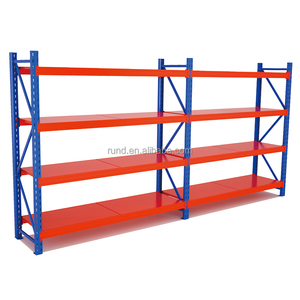
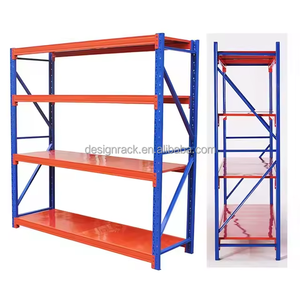
Heavy-Duty Industrial Metal Shelving Racks Durable Anti-Rust Units
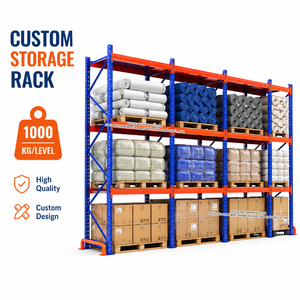
500-1000kg/Tier
Anti-Rust Treated
Cold-Rolled Steel
Our factory fabricates fully tailored industrial shelving assemblies engineered from cold-rolled steel coils (SPCC / Q235B). Each modular system supports custom upright perforation profiles, bespoke powder coatings, and validated structural load capacities from 100 kg to 3,000 kg per tier.
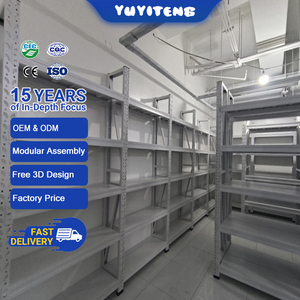
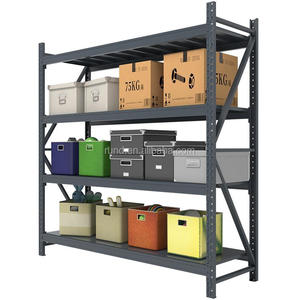
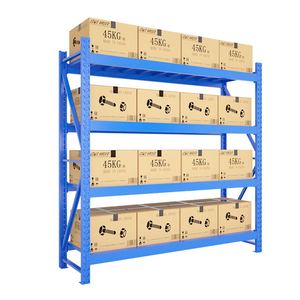
Established in 2001, Guangzhou Heda Shelves Co., Ltd. is an industry-leading manufacturer with over two decades of metallurgical, roll-forming, and automated electrostatic coating experience. We provide tier-one industrial distributors, architectural specifiers, and retail conglomerates with rigorous OEM and private-label contract manufacturing.
Our facility maintains strict compliance with CE (Certificate No. 2435-CPR-8605159) and ISO 9001:2015 (Certificate No. 18624Q00169R0M). Every production run conforms to RoHS safety norms, ensuring all electrostatic epoxy-polyester powder formulations are non-toxic, lead-free, and safe for consumer-facing environments.
We eliminate design ambiguity through in-house structural engineering teams. Clients provide basic warehouse blueprints, commercial floor plans, or architectural mood boards, and receive complete 2D layout drawings, finite element analysis (FEA) load calculations, and photorealistic 3D renderings within 24 to 48 hours.
Steel profiles undergo an automated 10-step surface pretreatment process: degreasing, ultrasonic cleaning, acid pickling, zinc phosphating, and multi-stage deionized water rinsing before electrostatic spraying. This treatment provides over 500 hours of ASTM B117 salt-spray corrosion resistance, ideal for humid tropical and coastal deployments.
From stamped logos on cold-rolled uprights to customized retail knock-down (KD) box packaging with barcode labeling and color-printed multilingual assembly manuals, we empower brand owners to scale their industrial shelving line without deploying capital into domestic manufacturing plants.
For installations situated in seismically active corridors across Southeast Asia, Japan, and the Americas, our structural engineering team verifies base plate sizing, heavy-duty floor expansion anchor shear ratings, and diagonal sway-bracing configurations to ensure life-safety and seismic compliance under national building codes.
Situated within the Greater Bay Area manufacturing belt, our factory utilizes Guangzhou and Shenzhen deep-water container ports. We engineer automated 3D container loading diagrams (maximizing container volume efficiency up to 98%), significantly reducing the landed ocean freight cost per cubic meter.
Industrial style shelving bridges structural utility with raw, modern aesthetics. Unlike generic lightweight wire racking, heavy-duty industrial shelving demands strict metallurgical control, deflection-tested beam geometries, and specialized finishing treatments to serve high-end retail, hospitality, micro-fulfillment centers, and modern workspaces.
| Engineering Parameter | Commercial Utility Grade | HEDA Custom OEM Industrial Grade | Procurement & Performance Advantage |
|---|---|---|---|
| Raw Material Specification | Commercial Scrap/Hot-Rolled Strip Steel (Variable yield strength) | Certified SPCC / Q235B Cold-Rolled Prime mill coils with continuous tensile testing | Guarantees uniform wall thickness (±0.05 mm), superior yield strength ($R_e \ge 235 \text{ MPa}$), and clean roll-formed edge finishes free of mill scale. |
| Upright Column Geometry | Standard single-bend angle iron with loose rivet holes | Multi-Flange Omega (Ω) Profile Precision CNC cold roll-formed with 55mm/75mm pitch | Omega-profile uprights provide 38% higher torsional resistance and superior moment capacity under asymmetrical dynamic loads. |
| Surface Pretreatment & Coating | Manual solvent wipe followed by single-coat dip painting | 10-Step Automated Phosphating Electrostatic powder coating (60–90 μm film thickness) | Passes 500-hour ASTM B117 salt spray testing. Eliminates chipping, bubbling, and solvent odor; offers textured matte industrial black or architectural raw clear-coat. |
| Beam Deflection Threshold | Deflection ratio > L/150 at nominal rated capacity | Strict Deflection ≤ L/250 Engineered according to FEM 10.2.02 and ANSI MH28.1 | Eliminates structural sagging under heavy merchandise or palletized bins, ensuring continuous alignment and long-term joint integrity. |
| Fastening & Connection System | Nut-and-bolt assembly requiring pneumatic hand tools | Toolless Bolt-Free Interlock Butterfly/keyhole/teardrop locking lugs with safety drop-pins | Cuts commercial on-site installation labor costs by up to 65%. Allows rapid reconfiguration of shelving levels without disassembling upright frames. |
| Decking Material Options | Single low-grade particle board or wire grid | Multi-Substrate OEM Compatibility Solid steel panels, wire decking, or industrial distressed timber | Provides designers and warehouse planners complete architectural freedom, pairing heavy black steel frames with anti-slip wire mesh or warm industrial woods. |
When engineering shelving systems for high-traffic environments, load calculations must consider both static Uniformly Distributed Loads (UDL) and localized concentrated impacts. Our engineering matrix utilizes cold-rolled step-beam profiles where internal roll-formed returns nest the steel or wooden shelf panels flush with the beam edge. This flush profile prevents perimeter peeling, reduces snag hazards for material handlers, and distributes horizontal shear directly through the connector lugs into the high-moment column face.
Global supply chains, omnichannel retailing, and structural changes in commercial real estate are fundamentally shifting how procurement heads, 3PL contractors, and retail fixtures buyers source industrial shelving systems. We analyze the four dominant macroeconomic trends reshaping global demand.
The traditional boundary between utilitarian back-of-house warehouse racking and polished front-of-house commercial display fixtures has eroded. Contemporary retail stores, micro-breweries, corporate work-lofts, and omni-channel retail distribution hubs require shelving that looks like an architectural industrial design feature—matte powder finishes, visible heavy steel welds, and raw rivets—while sustaining commercial load ratings of 300 kg to 800 kg per tier. Buyers are consolidating procurement with single-source factories capable of high aesthetic fidelity and structural certification.
With global ocean container freight volatility and climbing regional warehousing storage costs, international procurement officers are measuring the efficiency of shelving not by factory gate price, but by pallet-density inside shipping containers. Next-generation OEM buyers mandate nested upright designs, telescopic bracing, and sectional multi-fold steel decks that fit into ultra-dense knock-down (KD) master cartons. Increasing sea container volumetric packing efficiency from 78% to 96% yields an immediate 18% savings on net landed unit costs.
As consumer retail fulfillment cycles contract and localized dark stores proliferate, static warehouse shelving installations represent operational liability. Procurement teams actively specify modular, boltless teardrop or butterfly node systems that warehouse associates can reconfigure in minutes without calling outside millwright contractors. Modern industrial systems must accept retrofitted picking bins, dividers, garment hanging bars, and overhead LED task illumination rails without requiring structural modification.
Global importers based in Europe, North America, and Australasia face rigorous Corporate Sustainability Due Diligence directives. Future procurement agreements require suppliers to provide mill test certificates (MTC) proving steel origins, verification of low-VOC or zero-VOC thermoset powder formulas, and evidence of closed-loop industrial wastewater treatment during phosphating pretreatment. Sustainable manufacturing capabilities have transformed from an optional marketing bullet into a mandatory vendor qualification checkpoint.
Industrial shelving is evolving from passive steel structures into integrated, technology-enabled supply chain infrastructure. Discover the engineering transformations taking place on our manufacturing floors.
The rapid rise of automated warehouse robotics necessitates shelving systems fabricated to microscopic tolerances. Shelf decks must maintain planarity within ±1.5 mm across a 2-meter span to allow optical laser scanners and robotic picker arms to accurately grab totes and cartons. Our CNC laser cutting and automated profile bending processes yield repeatable tolerances that prevent robot sensor errors common with conventionally manufactured shelving.
Rising industrial land valuations in global metropolitan hubs require vertical space maximization. Modern industrial-style shelving is engineered with pre-punched structural top-caps and splice-channel provisions, allowing single-tier floor-supported shelving runs to be converted into 2-tier or 3-tier catwalk mezzanine picking systems without scrapping the initial capital equipment investment.
By strategically employing micro-alloyed high-strength steels (HSLA) in primary uprights, our engineers achieve higher safe working loads while reducing overall steel tonnage by up to 14%. This light-weighting reduces raw material consumption, decreases shipping emissions, and minimizes floor slab dead-loads—critical when installing high-bay shelving on suspended concrete slabs in multi-story urban warehouses.
Critical engineering, quality assurance, logistics, and private-labeling answers direct from our technical export division.
Partner with an established South China manufacturer trusted by over 10,000 projects worldwide. Send your project layout, technical specs, or OEM drawings to receive complimentary 3D CAD modeling and direct-factory wholesale volume pricing within 24 hours.