Engineering-Grade Industrial Racking Portfolios
Factory-direct custom load-rated storage systems manufactured from high-yield Q235B/Q355B cold-rolled steel, specifically designed to withstand seismic actions, corrosive storage atmospheres, and rigorous cycles.
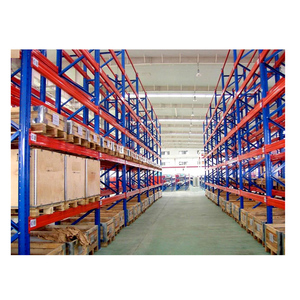
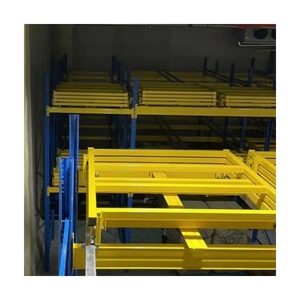
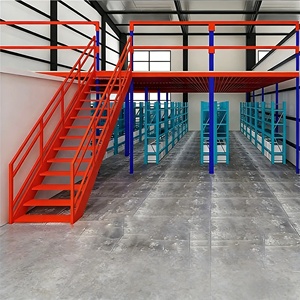
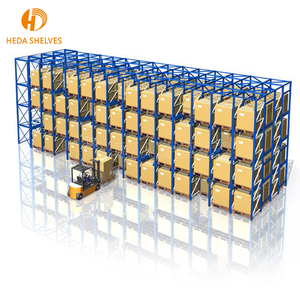
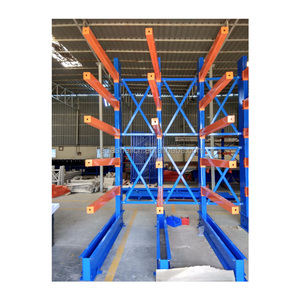
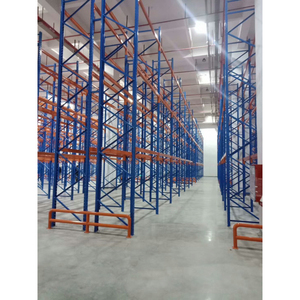
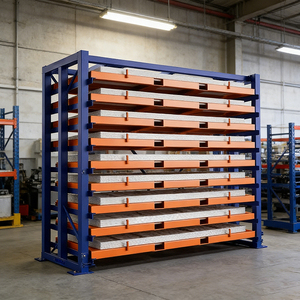
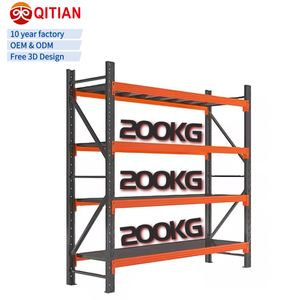
Engineering Authority & Manufacturing Capability
A rigorous industrial perspective on custom OEM structural steel racking compliance, performance metrics, and surface integrity.
The contemporary supply chain demands absolute operational resilience. As an industrial procurement decision-maker or logistics planner, sourcing an industrial storage rack is no longer a transactional purchase of steel components; it is a critical structural investment that defines operational safety, throughput velocity, and cubic-foot economics. Guangzhou Heda Shelves Co., Ltd. (HEDA Shelves) has maintained a forward-thinking engineering focus since its inception in 2001. Operating out of our advanced 30,000-square-meter manufacturing plant in Guangzhou, China, our team translates finite element analysis (FEA), metallurgical precision, and structural mechanical modeling into fail-safe warehousing frameworks.
Industrial rack engineering demands adherence to load deflections not exceeding 1/200th of the clear beam span, as dictated by stringent international structural norms. Unlike light commercial fabricators who utilize generic hot-rolled slitted steel, our OEM production pipelines utilize premium, high-ductility cold-formed structural steel coils (certified Q235B and Q355B). Each profile is processed across dedicated automated multi-station roll-forming lines, guaranteeing uniform cold work hardening and consistent cross-sectional moment of inertia. This meticulous manufacturing integrity delivers verifiable compliance with the European EN 15512 design code for pallet racking, alongside recognized American ANSI/RMI MH16.1 specifications.
Environmental degradation remains one of the silent causes of catastrophic rack collapse, particularly within coastal chemical facilities, equatorial tropical hubs, and cold-chain distribution terminals. HEDA Shelves integrates a thorough 10-step surface-treatment sequence within our centralized facility. Every welded assembly and punched upright undergoes automated chemical degreasing, multi-stage acid pickling, zinc phosphating, and electrostatic deposition of cross-linked thermosetting epoxy-polyester powder. For severe exposure scenarios, components receive full-immersion hot-dip galvanization in accordance with ISO 1461, establishing an impenetrable metallurgical barrier against corrosive attack, industrial off-gassing, and sub-zero condensation cycles.
Dynamic Seismic Design
Every industrial structural profile is analyzed via 3D matrix modeling for dynamic base shear response. We calculate precise bracing stiffness, heavy base plate thicknesses, and epoxy anchor embedment depths for earthquake-prone geographies spanning the Pacific Rim to Central Asia.
Custom OEM Extrusions
Specialized warehouse environments require unique profile geometries. Our in-house engineering and tooling facility fabricates custom pitch uprights, specialized roll-in teardrop patterns, nested push-back carts, and heavy box-beam configurations matched strictly to client lifting equipment.
Traceable Quality Control
From metallurgical spectrometer validation of incoming raw steel coils to non-destructive weld inspection and digital micron paint-thickness checks, every production run is certified through our ISO 9001:2015 and CE (EN 1090-1) quality control systems.
Future Procurement Trajectories: 2026–2030 Strategic Whitepaper
Evaluating high-density dynamics, automated material handling synergy, and life-cycle asset valuation.
Industrial logistics procurement is undergoing a fundamental structural transition. Driven by escalating commercial real-estate lease costs, supply chains can no longer tolerate low-density, wide-aisle storage models. As enterprise facilities modernize, the demand for conventional selective pallet racks is steadily being augmented by semi-automated and automated vertical footprints. Modern procurement heads are factoring structural deflection tolerances directly against the high-speed operating requirements of autonomous mobile robots (AMRs), automatic guided vehicles (AGVs), and automated storage and retrieval systems (AS/RS).
The operational landscape demands that structural storage systems interact seamlessly with automated intralogistics ecosystems. When specifying cantilever systems, structural mezzanine platforms, or multi-deep radio shuttle lanes, rack deflection under dynamic load ceases to be merely a structural safety concern—it becomes a critical automation performance parameter. A deflection of only a few millimeters in an upright or guide rail can trigger optical sensor faults on automated shuttles or turret trucks, grounding facility fulfillment operations. As an OEM manufacturer, HEDA Shelves addresses this technical friction point by integrating laser-cut alignment tabs, continuous robotic seam welding, and reinforced column bases engineered to absorb both vertical dead loads and dynamic lateral braking moments.
Concurrently, ESG compliance and cold-chain energy expenditures have altered the total cost of ownership (TCO) equation. In temperature-controlled distribution hubs, the cost of chilling empty interstitial aisle spaces far outweighs initial structural steel expenditures. Procurement trends increasingly favor deep-lane push back and automated radio shuttle configurations that achieve volumetric space utilization rates of over 85%, cutting the thermal mass required per stored SKU. HEDA Shelves remains at the forefront of this industrial transition, supplying major regional distributors, cold-chain enterprises, and third-party logistics (3PL) conglomerates with engineered steel systems that yield accelerated payback cycles.
Industrial Procurement Technical FAQ
Authoritative technical guidance compiled by senior HEDA structural engineers for global warehouse contractors, engineers, and supply chain managers.