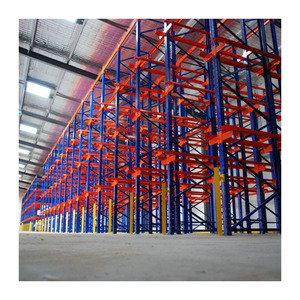
Mracking Industrial Drive-In Steel Racking System
LIFO Storage
Anti-Corrosion
Custom Rails
Engineered directly at our certified manufacturing base in Guangzhou. Select from precision-designed gravity flow systems, automated matrix lanes, and industrial cantilever structures configured for global container freight.
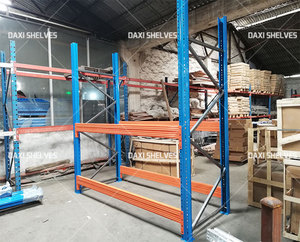
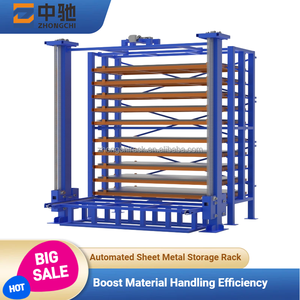
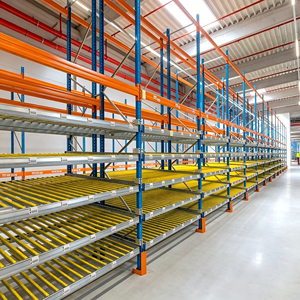
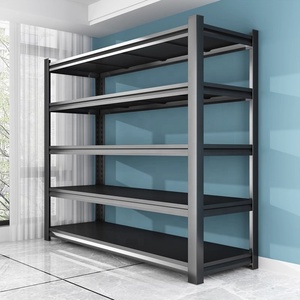
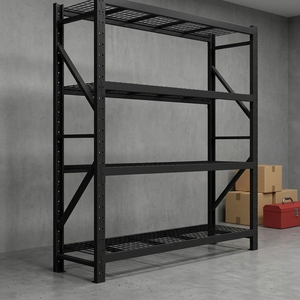
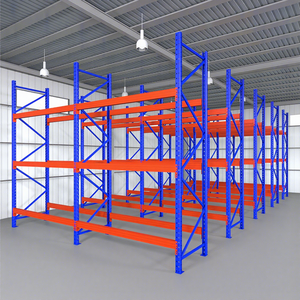
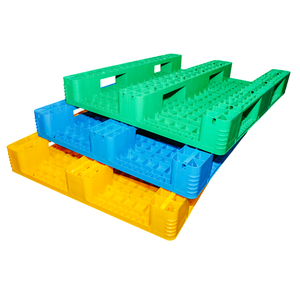
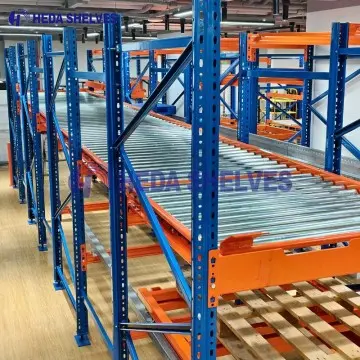
In modern high-density intralogistics, Gravity Feed Pallet Racking (frequently termed Pallet Flow Racking or Dynamic Live Storage) functions as the definitive mechanical solution for automated FIFO (First-In, First-Out) inventory rotation. Unlike static drive-in or selective racking systems, gravity flow operates on inclined roller tracks—typically calibrated at a precision pitch gradient between 2.5% and 4.0% (1.5° to 2.3°).
By leveraging terrestrial gravity, pallets deposited at the elevated loading face automatically glide toward the retrieval face. This physical separation of loading and picking channels eliminates forklift congestion, cuts round-trip transit distances by up to 45%, and reduces operating energy consumption to zero during material conveyance.
Structural Safety Requirement: Every OEM gravity lane engineered by our Guangzhou factory incorporates self-energizing centrifugal speed controllers (brake rollers) calibrated to arrest uncontrolled pallet acceleration, guaranteeing consistent travel velocities below 0.3 m/s regardless of pallet weights ranging from 300 kg to 1,500 kg.
Equipped with mechanical ramp separators at the discharge terminal, the system physically decouples the leading pallet from line-pressure generated by upstream pallets. This prevents binding during forklift extraction and eliminates upright mast collision risks.
Serving EPC contractors, regional rack distributors, and cold storage operators worldwide since 2001. We deliver verified structural engineering, complete documentation, and turnkey custom manufacturing.
From prime cold-rolled steel slitting, CNC upright roll-forming, and robotic beam welding to our automated pickling, phosphating, and electrostatic epoxy-polyester powder lines—100% of critical manufacturing steps remain in our 30,000 m² Guangzhou facility.
Our structural production strictly complies with European Standard EN 15512:2020 and RMI specification standards. Backed by factory-held CE Certificate (No. 2435-CPR-8605159) and ISO 9001:2015 (Certificate No. 18624Q00169R0M) for tender documentation.
Receive comprehensive bay elevation schemes, pallet position capacity matrices, and forklift clearance analysis within 24 to 48 hours. Our structural engineering department delivers full static calculations and seismic certifications for local permitting.
To combat high ambient humidity across Southeast Asia and sub-zero condensation in deep cold storage (-30°C), our components receive multi-stage chemical pretreatment followed by industrial thermosetting coatings or hot-dip galvanizing exceeding 85 microns.
We manufacture custom punched pitch sections (50mm, 75mm, 76.2mm teardrop), specialized column base plates, branded end-row safety barriers, and lane track extrusions designed to interface with third-party automation networks.
Operating adjacent to major South China shipping terminals (Guangzhou / Shenzhen / Nansha). Our logistics engineers construct bespoke timber dunnage and 3D container loading diagrams, maximizing freight utilization to lower transit cost per pallet position.
Review standard physical, mechanical, and material metrics designed for high-throughput distribution environments.
| Engineering Parameter | Standard Specification | Heavy-Duty / Cold-Store Variant | Compliance / Verification |
|---|---|---|---|
| Structural Steel Grade | Q235B Cold-Rolled Carbon Steel | Q355B High-Yield Structural Alloy | Mill Test Certificates (EN 10204 3.1) |
| Lane Gradient (Slope) | 2.5% to 3.5% (1.4° - 2.0°) | 3.5% to 4.2% (Adjusted for bottom runner flex) | Field Calibrated Incline Brackets |
| Flow Roller Construction | Zinc-Plated Steel Ø50mm / Ø60mm | Hardened Zinc Ø60mm with Sealed Bearings | Continuous Load Rating > 250kg/Roller |
| Speed Braking Mechanism | Centrifugal Gear-Driven Brake Rollers | Low-Temp Fluid Centrifugal Controller (-30°C) | Maintains Pallet Speed < 0.3 m/s |
| Pallet Entry & Exit Controls | Funneled Entry Guides + Impact Stops | Ergonomic Foot-Pedal / Auto-Separators | Zero Backpressure Separation |
| Surface Protection System | Electrostatic Epoxy Powder (60-80μm) | Hot-Dip Galvanized (>85μm) / Zinc Spray | ISO 9227 Salt Spray > 500 Hours |
Market intelligence for global supply chain leaders, warehouse project consultants, and procurement directors steering capital investments from 2026 through 2032.
Procurement teams are shifting away from standalone manual racking. Tomorrow's gravity flow systems feature laser-guided precision discharge stops and roller deck geometries calibrated for direct Autonomous Mobile Robot (AMR) and AGV dock pallet extraction, eliminating fork truck travel across primary staging zones.
With corporate ESG mandates and soaring warehouse energy tariffs, gravity pallet flow offers a high-density footprint with zero ongoing electrical power consumption. Facilities convert dynamic throughput buffer zones from motorized conveyors to gravity kinetics, lowering carbon intensity scores.
Driven by rapid frozen food, FMCG, and biopharmaceutical cold-chain expansion, operators face astronomical refrigeration costs per cubic meter. Gravity systems provide up to 70% floor utilization density compared to selective systems, directly slashing cooling refrigeration loads.
Next-generation dynamic live lanes feature integrated piezoelectric vibration monitors and load-presence sensors along deep roller channels. Real-time telemetry detects roller bearing wear, pallet hangs, and inventory depths directly inside Warehouse Management Systems (WMS).
Global warehouse tenants demand adaptable infrastructure. Modular drop-in gravity tracks allow operators to convert conventional selective or drive-in racking bays into dynamic FIFO roller channels without torch cutting or structural beam replacements.
Escalating middleman markups across regional system integrators have led enterprise EPCs to procure factory-direct from certified manufacturers. Procuring mill-direct with certified engineering drawings preserves capital budgets and accelerates customized rollouts.
Avoid expensive operational failure modes by conducting engineering verifications prior to production commitment.
Gravity systems rely on consistent physical contact between the roller beds and pallet runners. Euro-pallets (800x1200mm), GMA styles (40x48 in), or perimeter-base plastic pallets display different deflection characteristics under full payload. Warped timber, protruding nails, or missing bottom deck boards will cause lane stoppage. Sample test runs on actual client pallets are imperative prior to full fabrication.
A frequent design deficiency in low-cost flow lanes is inadequate brake roller placement. In deep-lane storage (6 to 20 pallets deep), a single failed or missing brake roller allows runaway inertia to crush bottom discharge stops. Engineering calculations must determine exact brake roller spacing based on the heaviest pallet variant and lowest ambient temperature.
Because gravity lanes depend on millimetric slope tolerances, foundation concrete slab flatness (DIN 18202 or ASTM E1155 FF/FL criteria) must be documented. Excessive building settlement changes the effective incline gradient, turning a 3.0% engineered slope into an unmovable flat section or an overly steep high-velocity run.
Comprehensive engineering insights addressed by Guangzhou HEDA Shelves' international technical sales and logistics department.
Submit your warehouse floor layout, pallet footprints, and target storage throughput. Our senior structural engineers deliver your complimentary 2D CAD layouts, 3D renderings, and transparent FOB/CIF factory cost schedules within 24 to 48 hours.