LIFO / FIFO
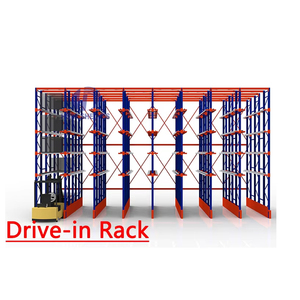
Explore our custom OEM high-capacity pallet racking series engineered for maximum volumetric cube efficiency, heavy uniform loads, and rigorous logistics throughput across cold storage and FMCG facilities.
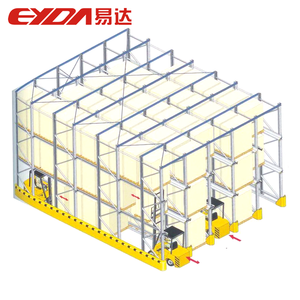
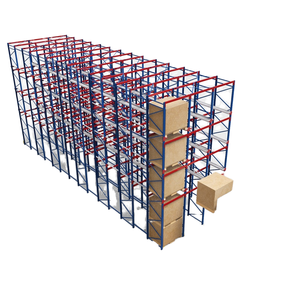
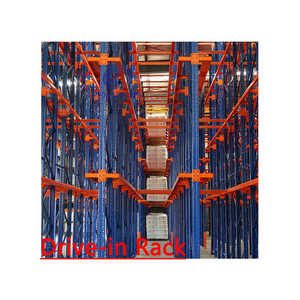
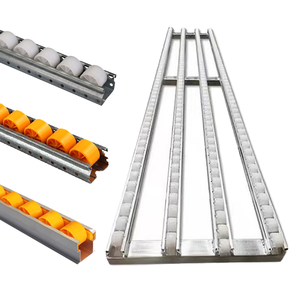
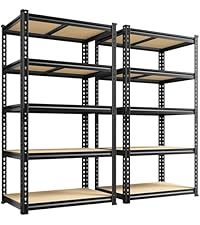
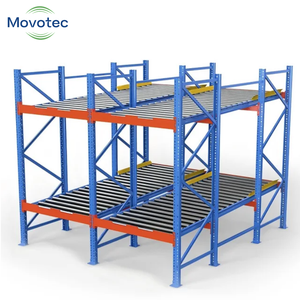
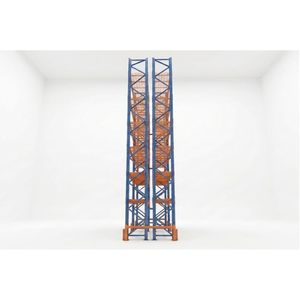
Drive-in racking eliminates traditional horizontal load-bearing shelf beams within the storage lane. Understanding its load transfer dynamics is essential for structural safety and compliance with EN 15512 and FEM 10.2.02 international racking standards.
Unlike standard selective beams, Drive-In systems support pallets on continuous cold-formed side rails. Our corbel arms are stamped from 4.0mm heavy-gauge steel and cold-riveted or securely locked into upright slot perforations with high-tensile shear pins, distributing dynamic forklift placement forces into vertical columns without torsional deflection.
Because forklifts enter the system bays directly, front-to-back beam ties cannot be installed at lower elevations. System stability relies on top horizontal bracing trusses, top portal tie beams, and full-height rear diagonal x-bracing. This structural network prevents lane sway and frame buckling under maximum live-load capacities.
Forklift impact inside narrow storage lanes represents the primary structural hazard in drive-in layouts. Our engineering specifications incorporate heavy-duty floor-anchored angle guide rails (typically L100x75x8mm) and wrapped column footplate protectors with high-yield M12/M16 chemical anchoring bolts to isolate upright steel from mast collision damage.
As warehouse real estate rental rates surge globally and automated material handling matures, industrial buyers must evaluate total cost of ownership (TCO) beyond initial steel tonnage pricing.
Global procurement teams increasingly demand Drive-In profiles that feature pre-punched rail attachments capable of being retrofitted into semi-automated 2D Radio Shuttle systems as throughput volume rises.
Standard solvent coatings fracture under severe sub-zero thermal cycling. Industrial buyers now specify continuous phosphating with low-temperature cross-linked thermosetting epoxy powder coatings or batch hot-dip galvanizing for -30°C freezer operations.
Insurance underwriters and municipal building authorities now mandate FEA (Finite Element Analysis) seismic calculation dossiers matching local zone accelerations (e.g., Philippines, Indonesia, Japan, New Zealand) before racking permits are granted.
Procurement directors are shifting away from intermediate brokers toward verified factory-direct manufacturers capable of issuing original steel heat-number certificates, Q235B/Q355B yield test reports, and CE CPR execution certificates.
The high-density racking sector is rapidly evolving from passive structural steel framing into intelligent warehouse sub-systems driven by computational design, robotic handling interfaces, and IoT health monitoring.
In chilled and frozen storage, electrical power for cooling accounts for more than 60% of daily warehouse opex. Classical selective racking wastes over 55% of the refrigerated cubic volume on forklift transit aisles. By consolidating inventory into 4 to 8 pallet-deep drive-in lanes, cubic thermal efficiency increases by up to 85%, cutting per-pallet refrigeration refrigeration compressor kilowatt consumption dramatically.
Advancements in roll-forming technology allow the continuous roll-forming of high-strength micro-alloyed steels (such as Q355B and high-yield cold-rolled coils) with multi-bend omega (Ω) stiffener ribs. This engineering configuration provides superior section modulus and radius of gyration, increasing structural buckling thresholds while reducing raw dead-weight steel tonnage shipped per container.
Modern drive-in systems are increasingly paired with forklift-mounted proximity laser arrays, floor-embedded magnetic guidance, and impact-absorbing polyurethane column wraps. Real-time telemetry strain gauges can now be installed on critical baseplates to detect micro-deflections and send automated maintenance alerts prior to permanent structural deformation.
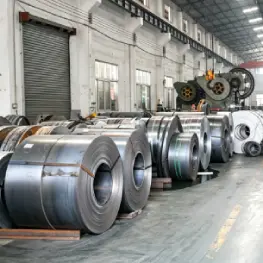
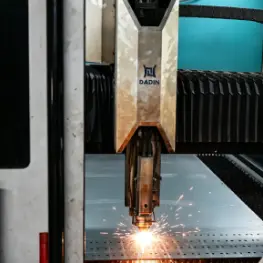
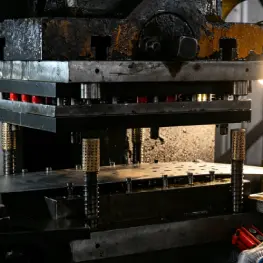
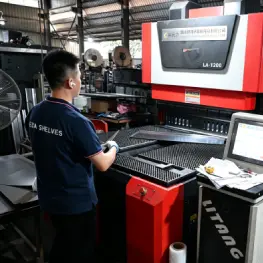
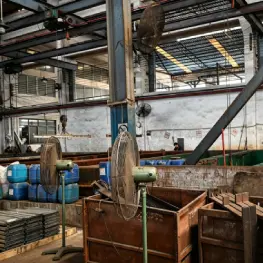
Founded in 2001, Guangzhou Heda Shelves Co., Ltd. operates a premier manufacturing complex in South China, delivering factory-direct warehouse storage infrastructure across Southeast Asia, South Asia, the Middle East, and beyond.
Continuous innovation in warehouse racking and OEM structural fabrication since 2001.
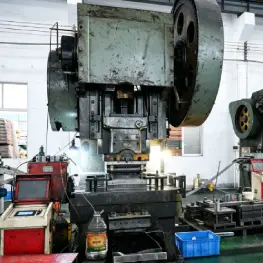
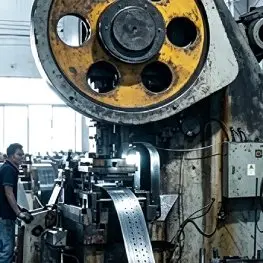
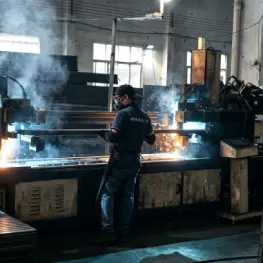
Integrated plant with automated roll-forming lines, robotic welding, and powder coating bays.
Sustained production volume backed by 300+ skilled engineers and operational specialists.
Exporting verified warehouse storage solutions to over 10,000 global warehouse projects.
Critical engineering and commercial answers to streamline your OEM drive-in pallet racking procurement, design validation, and customs import workflow.
Drive-In racking utilizes a single operating aisle for both entry and exit, operating strictly under the Last-In, First-Out (LIFO) inventory model, making it ideal for non-perishable high-density bulk storage. Drive-Through racking provides access aisles at both the entry and discharge faces, operating under First-In, First-Out (FIFO) principles. However, Drive-Through requires additional overhead portal bracing, reducing total structural rigidity and requiring slightly heavier upright profiles.
Our engineering team adheres strictly to EN 15512, RMI MH16.1, and AS4084 standards. For pallet support corbel arms and rails, the maximum permissible elastic deflection under full uniform dead and live load cannot exceed L/200 (where L is the span length between upright columns). Structural upright columns are verified with a minimal material safety factor of γ = 1.5 against yield point and Euler buckling limits under combined vertical and seismic loads.
Yes. For projects located in high-risk seismic zones across Southeast Asia (Indonesia, Philippines), East Asia (Japan, Taiwan), and the Middle East, our licensed structural engineers calculate dynamic seismic coefficients (Ss, S1) tailored to the project GPS coordinates. We optimize upright column thickness (up to 3.0mm), reinforce baseplates with 4-hole seismic tie-downs, and supply signed CAD layouts with structural calculation reports.
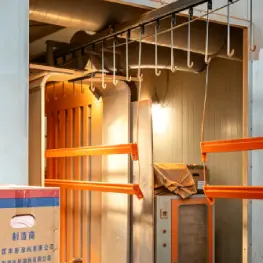
In humid ASEAN environments, atmospheric moisture causes premature steel corrosion under substandard paint coatings. At HEDA Shelves, all steel profiles undergo an automated 9-tank chemical pre-treatment cycle consisting of acid pickling, surface degreasing, and zinc phosphating. This is followed by an automated electrostatic thermosetting epoxy-polyester powder coating cured at 200°C. For sub-zero freezers and coastal ports, full hot-dip galvanization is available.
Drive-in system lane width is calculated based on overall pallet width plus a minimum side clearance of 75mm to 100mm per side. For standard 1200x1000mm pallets loaded along the 1200mm side, clear lane dimensions typically measure 1350mm to 1400mm. The forklift mast width must be checked against the clear width between left and right pallet support arms (typically 1000mm to 1050mm) to prevent mast contact during vertical travel.
Guangzhou Heda Shelves Co., Ltd. holds CE Certification (No. 2435-CPR-8605159) under the European Construction Products Regulation, ISO 9001:2015 Quality Management Certification (Certificate No. 18624Q00169R0M), and RoHS compliance certification for non-toxic industrial coatings. Original Baosteel/Shagang mill test sheets and chemical composition reports are archived with each batch export shipment.
Collaborate directly with our senior structural racking engineers. Provide your facility floor dimensions, clear building eaves height, pallet specifications, and forklift model to receive a complimentary 2D CAD architectural plan, 3D structural rendering, and comprehensive budget proposal within 24 to 48 hours.