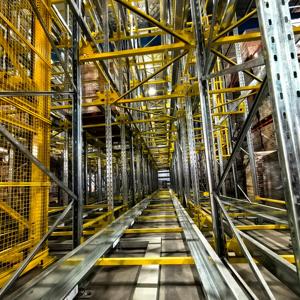
 Automated Cold Chain
Jracking High-Load Cold Storage Four-Way Radio Shuttle Rack System
- Up to -30°C low-temperature rated steel profiles
- High-precision cold-formed Q355B guide rails
- CE Certified multi-directional automated shuttles
Engineered for cold chain infrastructure, heavy manufacturing, distribution logistics, and dense automated multi-level facilities. Certified for global project deployments.
Automated Cold Chain
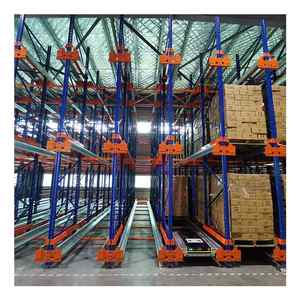 High-Density FIFO
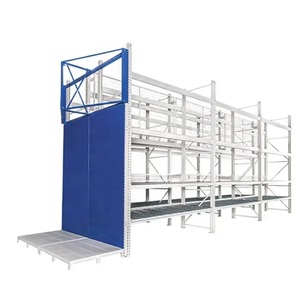 Heavy-Duty Chill
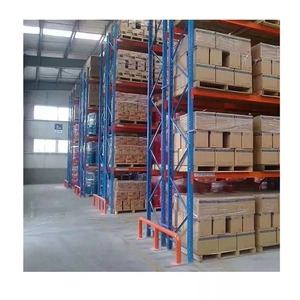 Adjustable Modular
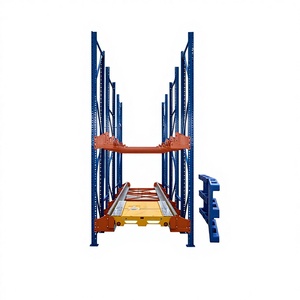 Multi-Level Shuttle
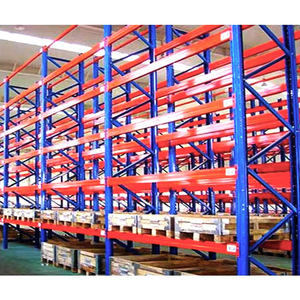 ISO Standard
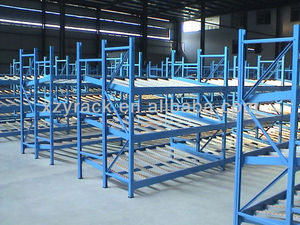 Gravity Flow Live
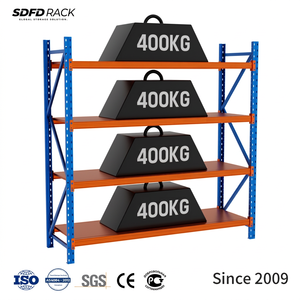 Galvanized Long-Span
In high-throughput distribution environments, aisle racking serves not merely as passive structural steel, but as a critical dynamic interface between material handling equipment (MHE), building civil structures, and high-velocity inventory cycles. Selecting an enterprise-tier custom OEM aisle racking supplier requires deep scrutiny into material chemistry, profile cross-sectional geometries, cold-roll forming tolerances, and finite element structural modeling. When warehouses expand vertically toward 15-meter to 30-meter clear heights to mitigate skyrocketing industrial real estate land premiums, structural tolerances must transition from nominal millimeter ranges to precision sub-millimeter allowances.
Key Engineering Metric: Cold-formed upright profiles must demonstrate a minimum yield strength of 355 MPa (Q355B structural steel grade) with torsional rigidity calculated to sustain simultaneous dynamic impact, live harmonic load resonances from automated shuttle carriers, and regional seismic acceleration factors (PGA up to 0.4g).
Aisle racking columns are subject to complex structural vectors: combined axial compression, bi-axial bending moments, and local torsional buckling. As an established OEM manufacturing authority, HEDA Shelves utilizes proprietary roll-forming dies featuring up to 24 cold-rolling passes. This incremental shaping process prevents micro-fracturing along the profile return flanges, ensuring that the cold work of forming actually augments the yield strength of the steel coils at critical load-bearing corners without sacrificing ductility. Upright frames are pierced using high-precision CNC punch presses operating on standardized 50mm, 75mm, or 76.2mm (3-inch) pitch centers, permitting field flexibility while maintaining web cross-sectional area and net-section load factors governed by EN 15512:2020 and RMI ANSI MH16.1 specifications.
The structural rigidity of an unbraced aisle racking row depends predominantly on the rotational stiffness (characteristic value Kb) of the beam-end connector. Conventional weldments often fail under cyclical cyclic load reversals caused by rapid forklift pallet placement. Premium OEM engineering mandates multi-claw interlocking connectors (typically 3 to 5 claw configurations) stamped from high-tensile hot-rolled steel plates with integrated safety locking pins capable of resisting upward shear forces exceeding 5.0 kN. This stiff moment connection minimizes lateral sway along longitudinal aisles, reducing building column dependence and ensuring absolute plumbness required by narrow-aisle (VNA) reach trucks and automated guide vehicles (AGVs).
Full-scale nonlinear FEA structural analysis simulating seismic ground motion, cyclic impact, and beam deflection ratios restricted within L/200.
Automated 24-station roll lines maintaining cross-sectional dimensional tolerance under ±0.5mm across continuous 12-meter single-piece upright sections.
Pre-treatment with alkaline degreasing and zinc phosphating provides molecular bonding strength for 80-120 micron electrostatic powder coatings.
Complete custom tooling capabilities: tailored beam connectors, specialized shuttle track rails, seismic baseplates, and private-label client stamping.
Global supply chain disruptions, soaring logistics facility construction costs, and automation integration are rapidly shifting B2B procurement strategies worldwide.
High warehouse energy costs—particularly in temperature-controlled -25°C cold storage facilities across Asia, Europe, and the Middle East—are driving buyers away from standard static drive-in racks. Procurement teams are overwhelmingly specifying 4-way and 2-way semi-automated radio shuttle racking. These systems compress aisle volume by over 60%, condensing refrigeration demands while eliminating forklift physical impact within storage lanes.
Aisle racking is no longer engineered solely around human-operated counterbalanced forklifts. Modern structural procurement tenders mandate strict integration tolerances for Autonomous Mobile Robots (AMRs) and Automated Guided Vehicles (AGVs). This includes precision bottom beam deflection criteria (L/300 minimum), floor-level optical reflector mounting points, and laser-guided racking end-frame alignment tolerance within ±1.5mm.
Procurement directors are shifting focus from initial CapEx purchase price to 20-year operational lifecycle metrics. In humid monsoon territories (such as Southeast Asia) and corrosive coastal distribution zones, pre-galvanized and hot-dip galvanized (HDG compliant with ASTM A123 / ISO 1461) aisle racking finishes are outpacing conventional basic wet paints, eliminating long-term maintenance re-coating interruptions.
Understanding the dimensional, mechanical, and economic tradeoffs of different aisle layout architectures is foundational for warehouse developers and supply chain directors:
| Racking Topology | Typical Aisle Width (mm) | Volumetric Storage Efficiency | SKU Selectivity Ratio | Forklift / MHE Profile Required | Relative CapEx Index |
|---|---|---|---|---|---|
| Selective Pallet Racking | 3,200 – 3,800 mm | Standard (35-40%) | 100% Direct | Standard Counterbalance / Reach Truck | Baseline (1.0x) |
| Very Narrow Aisle (VNA) | 1,600 – 1,900 mm | High (55-65%) | 100% Direct | Specialized VNA Turret Truck / Rail Guide | Moderate (1.35x) |
| Drive-In Racking System | 1,800 – 2,200 mm (Lane) | Very High (70-75%) | Low (LIFO Batch) | Standard Reach / Counterbalance | Economical (1.20x) |
| Gravity Pallet Flow Rack | Consolidated Loading Aisles | Maximum (75-80%) | Strict FIFO | Standard Forklift (Separated In/Out) | High (2.10x) |
| Radio Shuttle System | Single Staging Aisle | Maximum (80-85%) | Configurable FIFO/LIFO | Standard Forklift + Radio Carrier | Advanced (1.80x - 2.40x) |
A true OEM manufacturing partner must maintain end-to-end provenance over every link of the fabrication cycle. At our 30,000 square meter Guangzhou production facility, quality governance starts at raw steel receipt. Every coil of high-strength steel is subjected to chemical spectroscopic testing to verify carbon, manganese, and silicon limits, followed by tensile yield verification. This eliminates the catastrophic structural risks associated with brittle steel failure under low-temperature or dynamic shock conditions.
Our automated production sequence encompasses 10 rigorous stages: precision coil decoiling and leveling, high-speed multi-station CNC punching, continuous cold-roll profile shaping, automatic fiber-laser cutting, robotic precision MIG welding of end plates, chemical degreasing, ultrasonic multi-stage pickling and zinc-phosphating, automatic electrostatic epoxy powder coating, high-temperature convection curing, and moisture-sealed containerized export packaging. With a monthly capacity exceeding 30,000 tons, we accommodate high-volume OEM framework contracts for global material handling distributors, EPC contractors, and multinational third-party logistics (3PL) conglomerates.
Every batch of fabricated components is fully certified under international standards, supported by official third-party credentialing including European CE Certification (Certificate No. 2435-CPR-8605159), ISO 9001:2015 Quality Management System Certification (Certificate No. 18624Q00169R0M), and environmental RoHS safety compliance for all applied finishes.
In-depth technical answers addressing load calculations, seismic standards, environmental durability, and OEM delivery procedures.
Connect directly with our structural engineering department. We deliver complimentary 2D CAD floor plans, comprehensive pallet position density calculations, and static load verification within 24 to 48 hours for your specific project specifications.