Heavy-Duty Pallet Racking & Industrial Storage Systems
Explore our wholesale modular racking configurations engineered for standard North American teardrop profiles, heavy-load bulk distribution, and automated warehouse material flow.
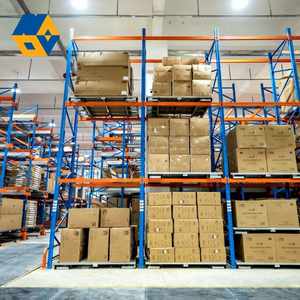
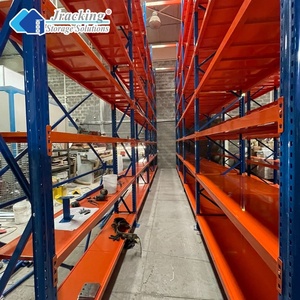
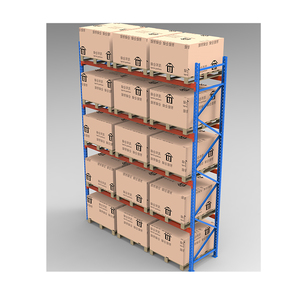
Guangzhou HEDA Shelves: 25 Years of Engineering & Manufacturing
Established in 2001, Guangzhou Heda Shelves Co., Ltd. operates a vertically integrated 30,000 m² smart manufacturing plant delivering ISO 9001:2015 and CE-certified industrial pallet racking to over 120 global destinations.
Continuous Cold-Roll Forming
Our facility runs high-speed automated roll-forming mills that profile structural steel strip up to 3.0mm thickness with tight sectional tolerances (±0.15mm), creating rigid teardrop upright columns without residual torsional stress.
- High-strength Q235B & Q355B prime coils
- Standard 2-inch pitch teardrop punching
10-Step Surface Treatment
Corrosion protection is guaranteed through a fully automated 10-step immersion system: chemical degreasing, ultrasonic water rinsing, hot acid pickling, zinc phosphating, and electrostatic thermoset powder curing at 180°C.
- Coating thickness: 70–90 μm (RoHS compliant)
- 500-hour neutral salt-spray test pass
RMI & European Code Compliance
Every beam section and upright configuration is load-rated under ANSI MH16.1 (Rack Manufacturers Institute) and European EN 15512 specifications. Full calculation dossiers and finite element analyses (FEA) are provided for client engineering sign-off.
- CE Certification: 2435-CPR-8605159
- ISO 9001:2015 Registered (No. 18624Q00169R0M)
Technical Deep-Dive: Teardrop Racking Engineering & Procurement Dynamics
An engineering assessment of teardrop hole geometries, connection rigidity, seismic anchoring, and cold-formed structural integrity for wholesale project planners.
1. The Mechanical Advantage of the Standard Teardrop Profile
In high-throughput distribution environments throughout North America, Southeast Asia, and Australasia, the teardrop hole configuration remains the universal benchmark for selective pallet storage. The fundamental mechanical superiority of teardrop geometry lies in its progressive taper: when the dual-rivet connector pin of the step beam or box beam slides down into the narrowing slot of the upright column, gravitational load automatically converts into horizontal clamping force.
This self-wedging connection mechanism virtually eliminates joint looseness, providing rotational stiffness without requiring bolting through the front face. Under dynamic loading conditions—such as the sudden set-down force of a 1,500 kg laden pallet—the tapered design resists beam unseating while maintaining structural plumbness across multi-bay continuous runs.
2. Structural Steel Grade Selection: Q235B vs. Q355B vs. ASTM A1011
A critical vector often overlooked in wholesale procurement is the yield-strength-to-thickness ratio of the raw coil steel. In commercial teardrop fabrication, upright columns range in gauge from 15 Ga (1.8 mm) for light retail applications to 11 Ga (3.0 mm) for industrial heavy-duty applications reaching heights over 12 meters. The mechanical behavior of these cold-formed steel sections depends on material ductility and elongation limits:
| Steel Grade (Standard) | Yield Strength (fy, min) | Tensile Strength (fu) | Elongation (δ5) | Recommended Warehouse Application |
|---|---|---|---|---|
| Q235B (GB/T 700) | ≥ 235 MPa | 370 – 500 MPa | ≥ 26% | Standard selective pallet racking, beam spans ≤ 2.7m, indoor temperature-controlled DCs. |
| Q355B / Q345B (GB/T 1591) | ≥ 355 MPa | 470 – 630 MPa | ≥ 21% | Heavy-duty frame posts, high-bay automated warehouses (>10m), seismic zones, heavy cantilever arms. |
| ASTM A1011 HSLAS Gr. 50 | ≥ 345 MPa | ≥ 450 MPa | ≥ 22% | North American specification match for direct wholesale teardrop beam end connectors and heavy base plates. |
By specifying cold-rolled structural steel with mill test certificates (MTC) verifying chemical composition (Carbon ≤ 0.20%, Manganese ≤ 1.40%, Silicon ≤ 0.35%), HEDA Shelves guarantees that column punching does not cause micro-fracturing along the edge radii of the teardrop apertures.
3. Future Procurement Trends in Industrial Pallet Storage Systems
Procurement teams navigating the 2026–2030 planning cycle face rapid shifts in warehousing topologies driven by omnichannel fulfillment, floor-space cost inflation, and autonomous mobile robot (AMR) adoption:
A. Integration of Under-Rack Autonomous Mobile Robots (AMRs): Modern teardrop selective systems are increasingly engineered with extended clear ground-level floor elevations. High-clearance first-tier beam placements allow AMR shuttles and automated guided vehicles (AGVs) to navigate beneath standard pallet lanes to pick bottom-level totes without interfering with reach trucks operating on the upper teardrop bays.
B. Cold-Chain Resiliency & Sub-Zero Corrosion Resistance: With the explosive growth of regional cold storage infrastructure across Asia and the Gulf, traditional electro-galvanized finishes are proving insufficient. Wholesale buyers are moving toward specialized zinc-rich epoxy powder coatings cured for sub-zero (-30°C) thermal contraction, or pre-galvanized cold-formed profiles complying with ASTM A653 G90 standards to eliminate flaking caused by condensing moisture.
C. Seismic Dynamic Analysis (IBC & ASCE 7 Standards): In active seismic zones (such as Indonesia, the Philippines, Japan, and the American West Coast), standard prescriptive anchor configurations are no longer approved by municipal building authorities. Factory-engineered heavy baseplates (minimum 150mm × 150mm × 8mm) combined with mechanical wedge anchors or chemical anchor bolts are calculated via spectral acceleration response parameters (Ss and S1) to guarantee ductility without progressive collapse under horizontal ground shear.
Frequently Asked Questions on Wholesale Teardrop Racking
Technical guidance and answers to critical commercial, engineering, and export inquiries direct from our manufacturing team.
Are HEDA teardrop racking components 100% interchangeable with major North American brands? +
What are the allowable deflection limits for your pallet rack beams under full load? +
How does your factory protect container shipments from rust during ocean transit? +
What documentation and structural calculations are supplied for municipal permitting? +
What is your typical manufacturing lead time for standard wholesale container orders? +
What quality control inspections take place before shipment from Guangzhou? +
Why Tier-1 Warehouse Operators Source Direct from HEDA
Combining factory-direct price advantages with Western-grade structural engineering standards, our Guangzhou facilities support system integrators, distributors, and logistics real estate developers worldwide.
25–35% Landed Cost Reduction
By bypassing third-party intermediaries and sourcing directly from our Guangzhou production lines, wholesale distributors achieve substantial price advantages while retaining complete control over customized component dimensions and paint specifications.
Optimized Container Load Planning
Racking freight requires specialized volumetric loading engineering. Our export team pre-models every container using specialized 3D packing software, nesting upright column profiles and bundling step beams to maximize container payload weight up to the legal maritime limit.
Free 2D CAD & 3D Engineering Layouts
Submit your warehouse architectural floor plan, clear building height, forklift minimum turning radius, and pallet load dimensions. Our engineering department returns an optimized structural rack layout and pallet count calculation within 24 to 48 hours.
Initiate Your Wholesale Racking Project Today
Connect directly with our engineering and export team in Guangzhou to receive structural load calculations, factory-direct container quotations, and comprehensive CAD layout designs.
Get a Quote