Engineered Stainless & Heavy-Duty Storage Products
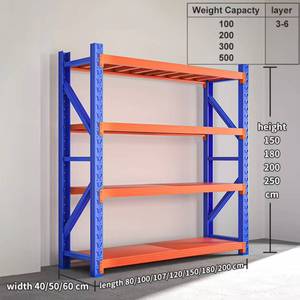
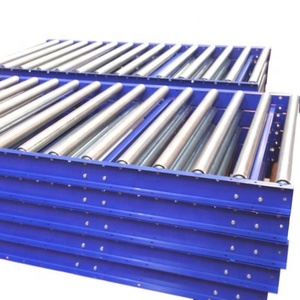
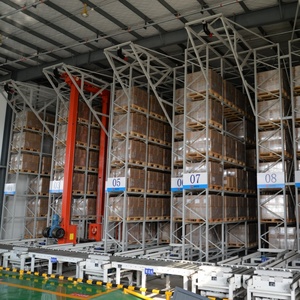
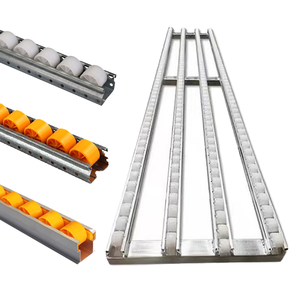
Manufactured in our South China facilities according to ISO 9001:2015 and CE standards. Choose from our high-throughput pallet systems, roller lanes, automated AS/RS modules, and sanitary boltless units.
Engineering Whitepaper: Metallurgical Selection, Sanitary Criteria & Structural Dynamics in Stainless Rack Shelving
Industrial stainless rack shelving systems serve an essential role within high-exposure supply networks. Unlike carbon steel profiles protected solely by organic epoxy powder coats—which inevitably chip under heavy forklift impact and allow hidden sub-surface ferric oxidation—austenitic stainless steel profiles provide continuous passive film regeneration. However, global buyers must clearly recognize that not all stainless steel racking provides the same structural performance. Raw grade chemistry, ferrite phase content, cold-forming work hardening, and surface roughness (Ra) directly determine mechanical integrity and sanitation compliance.
1. Austenitic Metallurgy: SUS304 vs. SUS316L Chemical Mechanics
The mechanical feasibility of stainless steel storage relies on chromium and nickel ratios designed to suppress intergranular corrosion while retaining structural tensile properties under sub-zero or chemical-wash conditions. When evaluating Chinese export manufacturers, procurement specialists should scrutinize specific chemical assays:
| Alloy Grade | Chromium (Cr) % | Nickel (Ni) % | Molybdenum (Mo) % | Yield Strength Rp0.2 (MPa) | Optimal Operating Applications |
|---|---|---|---|---|---|
| SUS304 (AISI 304 / 1.4301) | 18.00 – 20.00 | 8.00 – 10.50 | — | ≥ 205 (Annealed) / > 350 (Work Hardened) | Dry cleanrooms, ambient food packaging, dairy warehouses, general light washdown |
| SUS316L (AISI 316L / 1.4404) | 16.00 – 18.00 | 10.00 – 14.00 | 2.00 – 3.00 | ≥ 220 (Annealed) / > 380 (Work Hardened) | Seafood processing, brine refrigeration, saline air exposure, pharma cleanrooms |
| SUS201 / Low-Ni Austenitic | 16.00 – 18.00 | 1.00 – 1.50 | — (High Mn 5.5-7.5%) | ≥ 260 | Light commercial dry display only; strictly avoided in cold rooms or washdowns |
For heavy-duty pallet configurations and multi-tier mezzanine frameworks, cold roll-forming of SUS304 yields substantial strain-hardening advantages. By roll-forming post-annealed coil stock through sequential CNC roller matrices, the yield threshold across upright flange corners increases by 35% to 50% relative to static plate. This mechanical increase allows upright frame ratings exceeding 24,000 kg per bay without excessive steel weight, saving shipping cubic volume for international sea freight.
2. Hygienic Geometric Detailing & Elimination of Microbial Niches
In facilities governed by Hazard Analysis Critical Control Point (HACCP), European Hygienic Engineering & Design Group (EHEDG), or US FDA 21 CFR standards, racking geometry must prioritize complete washdown drainage. Standard carbon steel racking uses closed boxed sections with internal hollows where moisture, spilled organics, and sanitizers collect, creating anaerobic corrosion and bacterial colonization.
High-grade stainless rack shelving manufactured by qualified Chinese exporters incorporates open-profile geometry:
- Omega (Ω) Profile Uprights: Open roll-formed channels with inward-turned returns, providing multi-axial stiffness while exposing all internal faces to high-pressure cleaning nozzles (CIP/COP).
- Continuous Heliarc (TIG/MIG) Weldment: Elimination of intermittent stitch-welding. Connector brackets are fully seal-welded to box or step beams to avoid micro-crevice bacterial harborage.
- Slotted Sanitary Decking: Perforated stainless steel wire mesh or punched profile planking with continuous pass-through water apertures, preventing liquid retention while optimizing sprinkler coverage in compliance with NFPA 13 rules.
Future Procurement Trends & Technological Developments (2025–2030)
The international supply chain for industrial racking is evolving rapidly. Simple static steel framing is giving way to automated, sensor-enabled, and environmentally verified storage ecosystems. Global B2B buyers must account for these macro shifts when negotiating manufacturing supply contracts.
AS/RS & AGV Cleanroom Compatibility
Automated storage and retrieval systems demand sub-millimeter beam tolerances (±0.5 mm) to avoid robotic optical positioning errors. Stainless profiles are laser-indexed for seamless robotic pallet shuttles.
Low-Carbon & Recycled Metallurgy
Global CBAM (Carbon Border Adjustment Mechanism) mandates require verifiable mill test certificates detailing EAF (Electric Arc Furnace) recycled content and reduced carbon footprints per ton of finished stainless steel.
Modular Fast-Lock Sanitary Brackets
Eliminating exposed threaded fasteners that corrode or loosen under vibration. Next-generation stainless racks use hook-in connector brackets with tool-less safety spring tabs manufactured from SUS301 spring steel.
Cold Chain Thermal Shock Resilience
Blast-freezer storage (-40°C) transitioning to rapid ambient defrost cycles demands metallurgical grain boundary stability. Stainless steel eliminates the embrittlement risks that often affect low-grade structural carbon steels.
Technical Forecast: Structural Deflection and Micro-Tolerances
Under EN 15512:2020 and RMI (Rack Manufacturers Institute) standards, structural deflection limits for conventional pallet beams are set at L/200 (span length divided by 200). However, the rising implementation of automated high-bay racking systems operated by high-speed narrow-aisle stacker cranes has tightened this procurement requirement to L/300 or L/400. Stainless steel has a modulus of elasticity ($E \approx 193\text{ GPa}$) slightly lower than carbon steel ($E \approx 205\text{ GPa}$). Consequently, qualified exporters use computer-modeled moment-resistant upright beam connections, stiffer omega rib profiles, and increased web thicknesses to match stringent deflection standards without adding excess weight.
Sector-Specific Storage Engineering Matrix
Industrial racking systems operate across diverse environmental and mechanical conditions. Deploying the wrong material grade or surface finish can lead to catastrophic structural failure or hygiene violations.
Biopharma & Cleanroom Class 100/1000
Specification: SUS304/SUS316L electropolished to Ra ≤ 0.4 μm. Fully welded joints with flush grinding to prevent particle generation and allow frequent hydrogen peroxide (VHP) vapor sterilization cycles.
Commercial Food Processing & Dairy
Specification: SUS304 pickling & passivation finish. Perforated sanitary shelves with 60% open air flow to prevent thermal blockage in blast chillers, meeting USDA dairy and 3-A sanitation guidelines.
Chemical, Acid & Saline Environments
Specification: High-molybdenum SUS316L with 2B or glass-bead blasted surfaces. Resists localized pitting corrosion from chloride salts, chlorine wash solutions, and volatile acid fumes.
Manufacturing Scale, International Engineering Experience & 10-Step Quality Assurance
Certified Compliance & Engineering Credentialing
We eliminate procurement risks for international engineering contractors, 3PL providers, and factory operations through complete third-party certification. Our production operations adhere strictly to:
- CE Marking Attestation: Certificate No. 2435-CPR-8605159, certifying structural conformity for warehouse steel framing.
- ISO 9001:2015 Quality Management System: Certificate No. 18624Q00169R0M, ensuring full tracking from raw coil assay to final container stowing.
- RoHS Eco-Compliance: Ensuring non-toxic surface passivations, powder coatings, and pre-treatments suitable for direct food and pharmaceutical supply networks.
- Seismic Engineering Calculations: Every customized design includes FEA (Finite Element Analysis) stress simulations and anchor-pull calculations tailored to project seismic codes across the Asia-Pacific (PNS, SNI, JIS) and GCC regions.
Our 10-Stage In-House Precision Manufacturing & Quality Control Workflow
Full quality control requires handling every manufacturing phase under one roof without subcontracting. Our Guangzhou plant executes this comprehensive ten-stage quality workflow:
Raw Material Assay
Spectrographic verification of Cr, Ni, Mo, and C chemistry on every incoming coil; tensile verification.
Precision Slitting
CNC slitting lines shear master coils to width with strict burr controls (< 0.05 mm).
CNC Column Punching
High-speed hydraulic turret presses punch 50 mm / 75 mm pitch hole configurations with uniform spacing.
Multi-Pass Cold Roll
18 to 24-station roll-forming lines shape omega uprights without micro-cracking bend radii.
Beam Profile Forming
Interlocking box beams and step beams roll-formed with double-thickness load-bearing flanges.
Automated Surface Polish
Multi-head abrasive belt polishing achieves consistent satin (#4), hairline, or mirror finishes.
Robotic Laser & TIG Weld
Robotic arms apply shield gas welds to beam end-connectors, producing smooth, pinhole-free joints.
Pickling & Passivation
Chemical immersion baths strip heat tint, restoring a durable chromium oxide protective film.
Electrostatic Finish
For hybrid steel racking, automated 9-tank phosphate pre-treatment precedes dry epoxy polymer curing.
Load Deflection & Pack
Full-scale destructive test rigs verify structural deflection limits; items are packed for export container transit.
Frequently Asked Questions: Technical Engineering, Compliance & Import Protocols
Straightforward answers to critical questions commonly asked by procurement managers, structural consultants, and warehouse logistics directors when importing from China.
How do you verify genuine SUS304 / SUS316 metallurgy and avoid lower-grade adulteration?
What structural deflection criteria are applied during CAD rack modeling?
Can your warehouse racking systems be engineered for high seismic activity zones?
How do you prevent salt-mist corrosion and passivate weld heat tints for ocean transit?
What details are required to generate an accurate 3D CAD layout and quotation?
Connect Directly With Our Warehouse Engineering Team
Planning an upcoming cleanroom fit-out, cold storage expansion, or heavy-duty logistics facility? Our technical team delivers complete 2D CAD layouts, structural FEA load calculations, and comprehensive export estimates within 24 hours.