Featured Industrial Racking & High-Density Storage Systems
Cold-rolled Q235B/Q355B structural steel storage configurations precision-engineered in our Guangzhou manufacturing base. Designed for strict FIFO/LIFO inventory cycles, dynamic gravity loading, and heavy-duty load distribution.
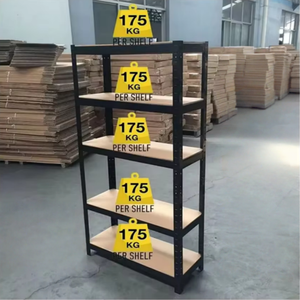
5 Tier Boltless Shelving Heavy Duty Rack Workshop Storage Rack Metal Shelves Garage Shelving Unit Opbergrek
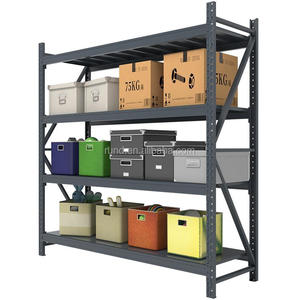
Medium Duty Metal Storage Rack Node Floor Type Fall-Free Design With Straw Free Cad/3D For Bathroom & Spice Storage Use
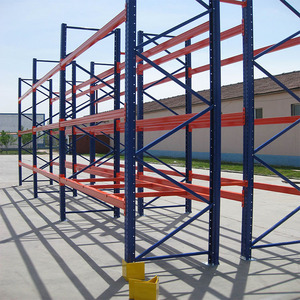
Warehouse Heavy Duty 5 Layer Stainless Steel Boltless Pallet Rack Shelving System with Corrosion Protection
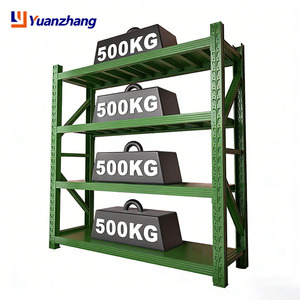
Boltless Adjustable Heavy Duty Load-Bearing 300kg/Layer Steel Racks Warehouse Industrial Stack Storage Racking Shelving System
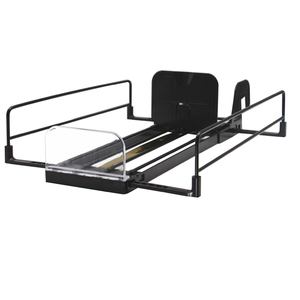
Supermarket Heavy Duty Foldable Automatic Magnetic Shelf Pusher System With Plastic Wire Tray And Hand Pusher Supermarket Rack
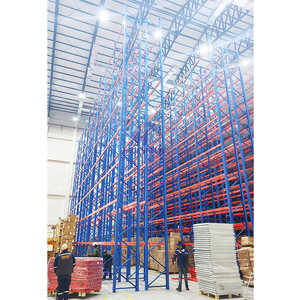
Tyre Racking System Steel Rack Manufacturer HEDA Teardrop Rack Heavy Duty Pallet Rack for Industrial Warehouse Storage
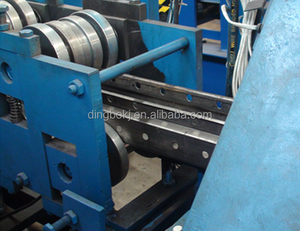
Storage Pallet Rack Machine With Competitive Price
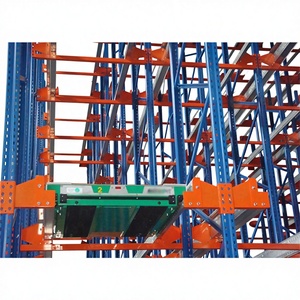
Heda High Density Shuttle Rack System Shuttle Racking System Double Deep Steel Pallet Rack Storage Racking System
Engineering Principles of Live Pallet Racking (Gravity Pallet Flow)
A granular analysis of kinematic velocity control, structural incline optimization, and dynamic braking physics for high-velocity logistics centers.
Live Pallet Racking, universally recognized across global material handling operations as Pallet Flow Racking or Gravity Dynamic Racking, represents the pinnacle of autonomous, gravity-propelled high-density storage. Operating on the uncompromising First-In, First-Out (FIFO) stock rotation principle, live pallet racking isolates replenishment operations from order-picking aisles. Pallets are inducted on an inclined roller track at the higher loading end, controlled by passive dynamic brake systems as they roll under gravitation, and presented at the lower unloading face for rapid extraction.
As logistics operations face unprecedented land acquisition costs and skyrocketing cold-room kilowatt-hour tariffs across Europe, Southeast Asia, and the Americas, live pallet racking eliminates intermediary service aisles. This achieves an extraordinary volumetric storage density enhancement of up to 65% to 75% over standard adjustable selective pallet racking (APR). However, dynamic live storage requires far more rigorous engineering than static shelving. The interplay of kinetic energy, rolling resistance, pallet underside deflection, and centrifugal braking tolerances demands absolute structural precision.
1. Slope Gradient & Kinetic Velocity
The standard incline angle in engineered gravity tracks is precisely calibrated between 3.0% and 3.8% (1.7° to 2.2°). Shallow angles risk pallet stall under lower ambient temperatures, while excessive inclines cause uncontrollable momentum buildup. Guangzhou Heda Shelves calibrates pitch to pallet runner profiles and base weights ranging from 300 kg to 1,500 kg.
2. Centrifugal Planetary Braking
To eliminate runaway risk, passive planetary speed-controller rollers are installed at intervals of one pallet position. Internal centrifugal flyweights engage against an internal drum when rotational velocity exceeds 0.3 m/s, keeping descent velocities within safe, uniform bounds regardless of whether the pallet weighs 400 kg or 1,200 kg.
3. Time-Delay Separation Systems
Accumulation pressure across deep lanes (10 to 20 pallets deep) causes dangerous crushing forces on the discharge end pallet. Our structural separator mechanisms physically isolate the leading pallet from rearward line pressure. Once the forklift lifts the lead pallet, the separator automatically releases the subsequent unit after a safe 3-second delay.
Structural Compliance Engineering: EN 15512 & RMI MH16.1
Every dynamic racking bay manufactured by Guangzhou Heda Shelves is calculated under European Standard EN 15512 (Cold-formed Steel Static Racking Systems) and US RMI MH16.1 specifications. Cold-formed omega uprights (up to 120 mm profile width with 2.5 mm steel gauge) undergo rigorous Finite Element Analysis (FEA) to account for live dynamic braking loads, seismic accelerations ($S_s$ and $S_1$ coefficients), and heavy forklift loading impact factors.
Comparative Performance Matrix: Dynamic vs. Static High-Density Systems
Procurement directors must balance upfront Capital Expenditure (CAPEX) with daily Operational Expenditure (OPEX). Live Pallet Racking offers extreme operational advantages in high-turnover FMCG, dairy, pharmaceuticals, and perishable cold-chain logistics where FIFO expiration tracking is legally mandated.
| Storage System Type | FIFO vs. LIFO | Volumetric Floor Utilization | Throughput Speed (Pallets/Hr) | Aisle Requirement | Mechanical / Energy Needs | CAPEX Index (Base 1.0) |
|---|---|---|---|---|---|---|
| Live Pallet Racking (Gravity Flow) | Strict FIFO (100%) | 75% – 85% | High (Autonomous Flow) | 2 Aisles Only (Input/Output) | Passive Gravity (0 kWh) | 2.2x – 2.8x |
| Radio Shuttle System | FIFO or LIFO | 80% – 90% | High (Motorized) | 1 or 2 Aisles | Lithium Batteries & PLC | 3.0x – 3.8x |
| Drive-In / Drive-Through Racking | Strict LIFO (Drive-In) | 60% – 70% | Slow (Forklift enters rack) | 1 Loading Aisle | None (Static) | 1.3x – 1.6x |
| Push-Back Pallet Racking | Strict LIFO | 65% – 75% | Moderate (Gravity Push) | 1 Single Operating Aisle | Telescopic Carts / Gravity | 1.8x – 2.2x |
| Standard Selective Racking (APR) | Random Access (100%) | 35% – 45% | High (Individual Pick) | Aisle per 2 Racks (3.2m+) | None (Static) | 1.0x (Baseline) |
Why Global B2B Buyers Partner with Guangzhou Heda Shelves
Founded in 2001, Guangzhou Heda Shelves Co., Ltd. is a premier Chinese manufacturer of heavy-duty pallet racking, industrial mezzanines, and complex automated warehousing systems. Operating from our state-of-the-art South China manufacturing complex.
Full CE & ISO Quality Certification
We operate under certified ISO 9001:2015 Quality Management Systems (Certificate No. 18624Q00169R0M) and hold mandatory European CE Certification (No. 2435-CPR-8605159). Our powder coatings are fully RoHS verified, containing zero heavy metal content or volatile toxic release.
Free 2D CAD & 3D Parametric Layouts
Our in-house design engineering department provides turn-around 2D CAD warehouse engineering layouts, load calculation tables, and full-color 3D architectural renderings within 24 to 48 hours. We assist international procurement teams in optimizing column spacing and forklift turnaround circles.
Engineered for Extreme Climates & Seismic Zones
From high-humidity tropical sites across Southeast Asia (requiring specialized multi-stage zinc phosphate pre-treatment and hot-dip galvanizing) to seismic regions in the Philippines, Indonesia, and Japan, we supply certified structural calculations and base-plate anchoring packages tailored to local building codes.
End-to-End In-House Manufacturing Control
Raw Steel Slitting
Prime certified Q235B and Q355B hot-rolled coil verified for carbon content, yield strength, and dimensional gauge tolerances.
Automated CNC Punching
High-speed hydraulic punching dies execute continuous teardrop, diamond, or metric butterfly pitch slots with 0.1 mm repeatability.
Cold Roll-Forming
24-stage progressive precision rolling mills shape high-rigidity omega upright sections and step/box beam channels without residual stress.
Pre-Treatment & Powder Coat
Automated immersion pickling and phosphating followed by thermosetting electrostatic powder coating cured at 200°C for zero peel.
Future Procurement & Technological Trends in Live Storage Systems
How autonomous mobile robots (AMRs), environmental product declarations (EPD), and IoT sensor monitoring are reshaping heavy-duty dynamic warehousing.
Procuring live pallet racking systems is undergoing a structural paradigm shift. Supply chain directors are no longer treating racking as passive structural steel; instead, it is evaluated as an integrated kinetic subsystem within automated distribution architectures. Procurement executives looking towards long-term ROI should account for four emerging technology drivers currently shaping live storage infrastructure:
1. AMR and AGV Docking Interface Integration
While traditional live pallet racking interfaces with counterbalanced or reach forklifts, the future procurement cycle mandates automated loading and unloading. Autonomous Mobile Robots (AMRs) equipped with optical line sensors and hydraulic forks require extreme tolerance consistency at the picking discharge face. Guangzhou Heda Shelves is at the forefront of designing zero-tolerance self-centering guide funnels and magnetic position-locking end-stops that allow standard AGVs to retrieve gravity-fed pallets without manual driver intervention.
2. Smart IoT Roller Health & Speed Diagnostics
A primary failure mode in high-bay gravity lanes has historically been unobserved brake roller wear resulting in pallet runaway or premature lane blockage. Next-generation live racking installations are introducing passive piezoelectric and RFID-monitored brake rollers. These rollers log RPM data and rotational friction levels each time a pallet rolls across them, wirelessly reporting potential bearing fatigue to warehouse management software (WMS) long before a structural stall occurs.
3. Sub-Zero Cold-Chain Thermal Optimization
With global cold-chain storage expanding exponentially to meet fresh food and biopharmaceutical distribution needs, live pallet flow is replacing wide-aisle selective systems. Because cold air circulation represents massive ongoing electrical cost, live racking's capacity to pack thousands of pallets into a compact refrigerated envelope lowers total thermal cubic meters by up to 40%. In sub-zero environments (down to -30°C), Heda utilizes low-temperature impact-resistant steel alloys, special synthetic low-viscosity roller lubricants, and stainless-steel or hot-dip galvanized finishes to eliminate condensation corrosion and bearing freeze.
4. Decarbonization and Low-Carbon Steel Supply Chains
International tenders across Europe, Australasia, and North America now demand verifiable Environmental Product Declarations (EPD). Chinese racking manufacturers are upgrading to closed-loop chemical pre-treatment plants and incorporating certified recycled scrap into electric arc furnace (EAF) steel coils. Guangzhou Heda Shelves continues to reduce the embodied carbon footprint per pallet position, providing our partners with green logistics verification documentation for LEED-certified warehouse developments.
Frequently Asked Questions: Sourcing Live Pallet Racking from China
Actionable, engineering-backed answers addressing structural calculations, quality assurance, logistics packaging, and seismic compliance.
Request a Factory-Direct Engineering Consultation & CAD Layout
Send your warehouse architectural drawings, pallet weight profiles, and forklift clearance dimensions. Our engineering team will return a certified structural CAD plan, volumetric density analysis, and comprehensive commercial quotation within 24–48 hours.