Corrosion-Resistant
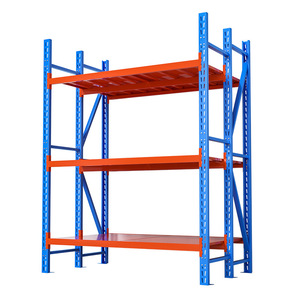
Steel Boltless Heavy Duty Rack System with Corrosion Protection
Boltless Interlock
Details →
Cold-formed from Q235B high-tensile steel, engineered according to FEM 10.2.02 and SEMA standards. Designed for dynamic carton flow, split-case picking, and high-density pallet handling.
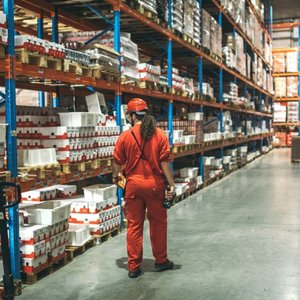
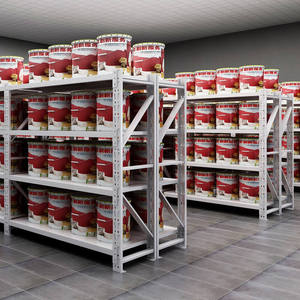
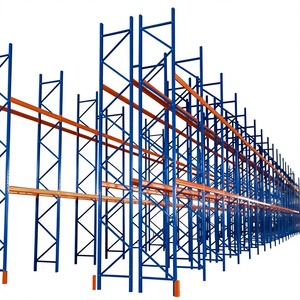
Flow racking (gravity live storage) bridges the gap between static storage density and dynamic SKU pick velocity. Discover how modern mechanics prevent line congestion and labor waste.
Proper gradient calculation is the single most critical factor in flow rack engineering. A standard 2.5% to 3.5% incline ensures smooth product movement without acceleration hazards. For carton flow, polyoxymethylene (POM) roller tracks reduce friction coefficients to 0.03, while pallet flow systems integrate centrifugal centrifugal brake rollers every 1.2 meters to limit speed to under 0.3 m/s.
Flow rack systems enforce true First-In, First-Out (FIFO) material movement by separating replenishment aisles from picking faces. Restocking personnel deposit inventory at the rear charge end without ever obstructing pickers at the front discharge face. This eliminates operational collisions, maximizes labor safety, and ensures that perishable food, pharma, and dated goods never spoil.
By condensing hundreds of SKUs along compact picking aisles, pick-line linear travel distances are slashed by up to 75%. Integrated lay-back tilt shelves and drop-down front presentation trays provide pickers with complete visual clarity and zero-strain reaching, accelerating hourly picks per worker from 120 units to over 350 units in high-velocity omnichannel order-fulfillment setups.
| System Dimension | Carton Flow Rack (Light/Medium) | Pallet Flow Rack (Heavy Duty) | Radio Shuttle Integration |
|---|---|---|---|
| Load Capacity | 50 kg to 500 kg per bed level | 500 kg to 2,000 kg per pallet lane | 1,500 kg+ per unit shuttle |
| Incline Slope Angle | 2.0° – 3.5° (Customizable by track) | 1.8° – 2.5° with speed controllers | 0° (Horizontal powered rail) |
| Roller / Bed Material | Impact POM, PP or Aluminum alloy | Cold-drawn structural steel zinc-plated | Heavy hardened guide tracks |
| Inventory Strategy | Strict FIFO (Split-case, tote, carton) | Strict FIFO (Bulk pallet dispatch) | Both FIFO & LIFO configurable |
| Throughput Boost | +150% manual order-line speed | +80% forklift loading density | +300% storage cube density |
Global supply chains demand adaptable, connected, and structurally resilient logistics hardware. Here is how modern manufacturers align flow racking systems with next-generation distribution centers.
Traditional passive gravity racks are evolving into intelligent cyber-physical systems. Modern manufacturing specifications now mandate built-in busway channels for pick-to-light (PTL) sensor arrays, pick-by-voice harnesses, and automated guided vehicle (AGV/AMR) interface points. Flow rack picking discharge faces are precisely calibrated in elevation to permit direct robotic arms and vision-guided AGV loading without human intervention.
Global procurement teams are shifting away from conventional basic electrostatic spraying towards dual-barrier cathodic treatments. In humid sub-tropical hubs across Southeast Asia, coastal storage facilities, and low-temperature cold chains (-30°C), micro-cracking and under-film rust represent disastrous failure points. The emerging gold standard combines automated acid pickling, zinc-iron phosphating, and nano-ceramic thermal powder coating.
Middlemen and third-party catalogue re-sellers often fail to address localized building regulations, soil compaction ratings, and seismic coefficient calculations. Enterprise buyers are pivoting toward primary Chinese manufacturers that maintain fully integrated CAD/BIM drafting units, structural finite element analysis (FEA) engineering teams, and dedicated container stowage optimization to prevent shipping deformation.
Founded in 2001, Guangzhou Heda Shelves Co., Ltd. operates a comprehensive 30,000 square meter intelligent fabrication complex. Complete vertical integration gives full control over steel rolling, profiling, and quality testing.
Certified Q235B high-grade steel coil verification and spectrometer batch testing.
CNC computerized shearing to sub-millimeter length tolerance specs.
Continuous heavy-tonnage presses for 50mm and 75mm pitch upright perforation.
Multi-roller forming mills producing rigid continuous beam and frame sections.
Closed-box beam shaping and roll profiling preventing torsional deformation.
Mechanical surface deburring removing slag and scaling for surface prep.
Automated carbon dioxide shielded continuous seam welding on all beam connectors.
Multi-tank immersion wash removing all surface oxides for epoxy adherence.
Continuous cure oven with non-toxic lead-free thermosetting powder (60-80μm).
Deflection load checks, bundle strapping, and container weight balancing plans.
Essential guidance for supply chain managers, warehouse operations leads, and procurement executives planning a high-density flow racking capital project.
Collaborate directly with HEDA Shelves engineers to design a turnkey flow rack picking installation customized to your facility dimensions, throughput rate, and budget.