Featured Drive-Through & Drive-In Storage Systems
Custom-rolled upright frames, seamless continuous support rails, and precision-engineered guide profiles tailored for multi-lane heavy industrial pallet configurations.
Engineering Whitepaper: Structural Mechanics of Drive-Through Racking Systems
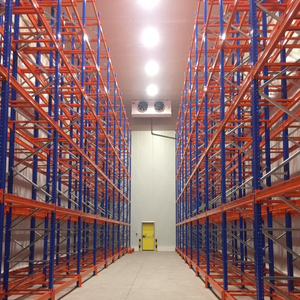
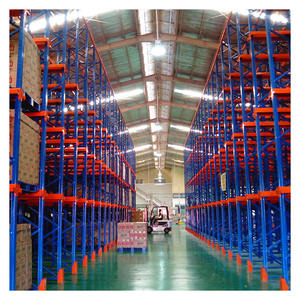
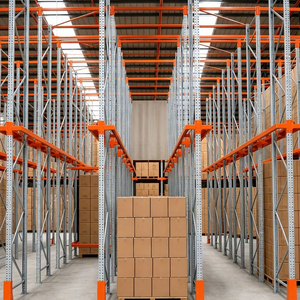
Modern industrial supply chains require maximized volumetric density alongside rigorous load containment. A drive through racking system represents an engineering breakthrough in structural spatial economics. Unlike standard selective pallet racking that requires dedicated intermediate operational access aisles for every single or double row, drive-through systems transform dead aisle space into continuous, accessible structural storage channels.
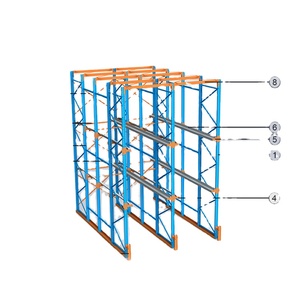
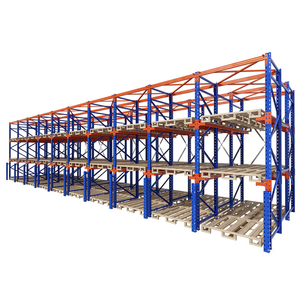
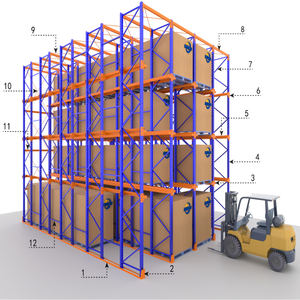
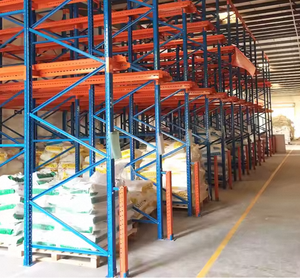
Configured with opposing access portals, drive-through racking provides full First-In, First-Out (FIFO) stock rotation. Forklifts load unit pallets at the rear elevation and retrieve them at the forward picking portal. This contrasts directly with closed-end drive-in (LIFO) configurations. By removing horizontal support beams from the internal access corridor, structural integrity relies on cold-formed continuous support rails anchored securely to upright frames via heavy-gauge cantilever arms. This configuration allows forklifts to drive inside the racking matrix without impacting overall structural rigidity.
To resist torsional loads caused by dynamic forklift transit, our systems incorporate upper horizontal top-ties, rigid cross-bracing frameworks, and robust back/top portal anchors. Cold-rolled from superior Q235B or Q355 structural steel grades, each upright assembly is engineered to absorb mechanical vibration, impact deflection, and high vertical loading—delivering safe operations up to 12 meters in clear ceiling environments.
Drive-Through vs Alternative High-Density Systems
Assess system capacities, operational workflows, and capital investment requirements before issuing design specifications.
| Storage Configuration | Inventory Rotation | Space Utilization Index | Lane Depth Capability | Relative Capex Multiplier | Ideal Industry Application |
|---|---|---|---|---|---|
| Drive-Through Racking | Strict FIFO (Two-Sided) | Up to 85% | 2 to 10 Pallets Deep | 1.0x (Baseline) | Cold Chain, Food & Beverage, Pharmaceuticals |
| Drive-In Racking | Strict LIFO (Single-Sided) | Up to 80% | 2 to 12 Pallets Deep | 0.95x | Bulk Seasonal Goods, Raw Material Reservoirs |
| Push-Back Cart Racking | LIFO (Gravity Nested) | Up to 75% | 2 to 6 Pallets Deep | 1.8x - 2.2x | Fast Turnaround Multi-SKU Buffers |
| Radio Shuttle Automation | FIFO / LIFO (Electromechanical) | Up to 90% | 2 to 40+ Pallets Deep | 2.8x - 3.5x | Automated Mega-Distribution Hubs |
Future Procurement Trends & Engineering Directions
Forward-looking factors reshaping capital equipment investments in high-density warehouse storage across Asia, the Middle East, and worldwide.
Seismic Damping & Dynamic Base Isolation
Global logistics hubs situated along the Pacific Rim (including Indonesia, the Philippines, Japan, and Western coastal regions) require upgraded structural ratings. Procurement programs prioritize certified dynamic load calculations under EN 15512:2020 and AS 4084 standards. Upright base plates feature increased plate thickness, anchored with chemical-capsule expansion bolts, coupled with engineered torsional bracing to withstand moderate seismic shifts.
Cold-Chain Energy Density Optimization
Rising electrical power tariffs have made high cold-storage energy efficiency critical. Every cubic meter of unutilized cold-air volume represents direct operating loss. Procurement managers are shifting away from traditional selective racking toward high-density drive-through systems that eliminate up to 60% of open aisle footprints, achieving consistent thermal containment while maintaining FIFO rotation for perishable date-coded inventory.
Surface Treatment & Environmental Resilience
Tropical and coastal port warehouse facilities face continuous atmospheric salinity and relative humidity levels exceeding 85%. Procurement trends favor high-adhesion 8-step pre-treatment operations—featuring acid pickling, zinc phosphating, and electrostatically applied thermo-curing polyester powder (60-80 microns). For extreme sub-zero blast freezers, heavy hot-dip galvanized (HDG) coating ensures corrosion immunity over 20+ years.
Automated AGV & Narrow-Chassis Compatibility
Modern fulfillment operations are transitioning from manually operated counterbalanced trucks toward vision-guided Automated Guided Vehicles (AGVs) and specialized narrow-chassis reach units. Drive-through rail systems are engineered with integrated bottom-mounted steel guidance tracks, visual alignment targets, and reinforced entry-funnel protectors to eliminate human driving error and speed up lane navigation.
Hybrid Structural Scalability
Dynamic warehouse lease agreements demand reconfigurable structural assets. Forward-thinking enterprises invest in modular drive-through systems that share bolt-hole punching profiles with selective pallet racks and drive-in modules. This design allows operators to reconfigure lane depths, adjust layer clearances, or convert bays into automated shuttle tracks as business volumes change.
Integrated Fleet Safety & Impact Sensor Telemetry
Because forklifts enter directly inside the structural lane frame, column impact safety is a central focus for warehouse risk managers. Modern setups integrate heavy-duty floor-anchored steel entry bullnoses, wrap-around column protectors, and IoT-enabled vibration sensors that log mechanical deflections. This infrastructure helps warehouse managers maintain safety compliance under EN 15635 inspections.
Certified 10-Step In-House Production Process
Full traceability from raw steel coil inspection to automated robotic profile shaping and finishing inside our 30,000 m² Guangzhou production facility.
Guangzhou Factory Advantages: Engineering Authority & Supply Reliability
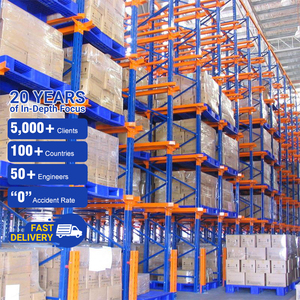
Founded in 2001, Guangzhou Heda Shelves Co., Ltd. has established itself as an authoritative manufacturer and engineering exporter of high-density warehouse storage systems. Operating out of a dedicated 30,000 square meter modern manufacturing facility staffed by over 300 experienced engineers, production experts, and international logistics coordinators, we maintain end-to-end control across every production phase.
Unlike sourcing intermediaries, our direct factory operations eliminate secondary margins and provide full technical transparency. Key institutional capabilities include:
- Certified Engineering Integrity: Fully certified under CE Certification No. 2435-CPR-8605159, ISO 9001:2015 Quality Management (No. 18624Q00169R0M), and European RoHS environmental coating standards.
- Rapid Engineering Validation: In-house structural teams provide professional 2D CAD floor plans, comprehensive 3D realistic renderings, and finite element load analyses within 24 to 48 hours of inquiry.
- High Monthly Throughput: A continuous manufacturing output capability exceeding 30,000 metric tons per month guarantees on-time delivery across large regional distribution projects.
- Strategic Export Port Location: Situated in Guangzhou near major South China container ports (Huangpu, Nansha, Shenzhen), we provide efficient, low-cost ocean freight transit to Southeast Asia, South Asia, the GCC, Africa, Europe, and the Americas.
Frequently Asked Questions: Drive-Through Racking
Clear technical guidance addressing common structural, operational, and commercial questions raised by international procurement managers.
What is the structural difference between Drive-In and Drive-Through racking?
What technical parameters are required to calculate structural load specifications?
How does the system mitigate forklift collision damage within internal drive aisles?
Can drive-through racking integrate with deep-freeze cold storage facilities?
What international quality certifications and load standards does HEDA Shelves comply with?
Accelerate Your Warehouse Capacity With Direct Manufacturer Pricing
Submit your warehouse floor plans to our engineering desk today. Receive a free 2D/3D layout, static load calculations, and a detailed containerized project estimate within 24 hours.