Heavy-Duty Industrial Racking & High-Density Storage Matrix
Cold-formed structural steel storage units engineered to meet EN 15512, RMI, and AS 4084 building codes, custom designed for third-party logistics (3PL), automotive assembly, chilled warehousing, and multi-SKU distribution hubs.
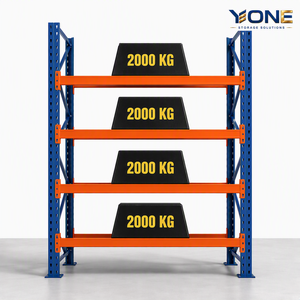
Custom Steel Storage Rack Pallet Racking System Heavy Duty Boltless Adjustable for Factory Warehouse
- Load: Up to 5,000 kg/tier
- Pitch: 50mm / 75mm
- Q235B / Q355B Steel
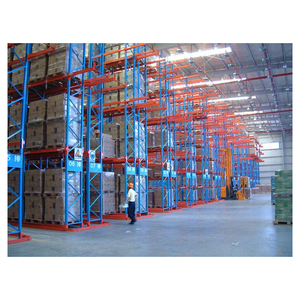
Narrow Aisle Racks Factory Price Heavy Duty VNA Rack Very Narrow Aisle Racking High Density Warehouse Storage Rack
- Aisle Width: 1,600-1,800mm
- Height: Up to 16 Meters
- Guide Rail Supported
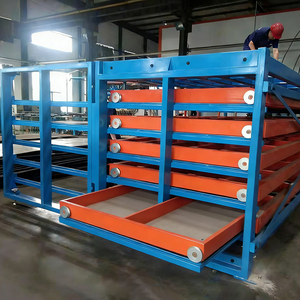
Stacking Racks Shelves Heavy Duty Steel Sheet Metal Drawer Type Storage System with Pallet Racking Warehouse Shelving Unit
- Roll-out Drawers: 100% Pull
- Plate Capacity: 3,000 kg
- Crane Operable
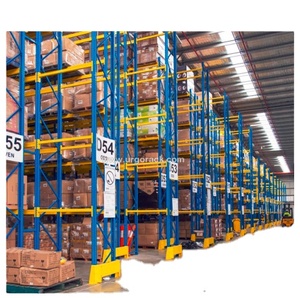
URGO High Utilization Warehouse Storage Pallet Vertical VNA Racking
- Utilization: 95% Volume
- Direct 100% Pallet Access
- Wire-Guided Capability
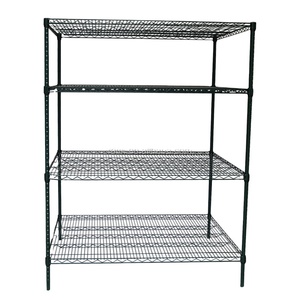
NSF Adjustable Cold Room Storage Racking System Metal Wire Shelf By China Rack Factory
- Temp: Down to -40°C
- Epoxy / Zinc / SS304
- NSF Sanitize Certified
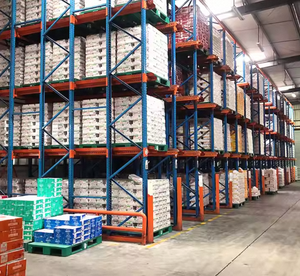
Heavy Duty Double Deep Selective Pallet Racking Drive-In Shelves Hot-Dip Galvanized Anti-Corrosion Warehouse Rack Bulk Order 30%
- ISO 1461 Galvanizing
- LIFO Dense Storage
- C5 Corrosion Proof
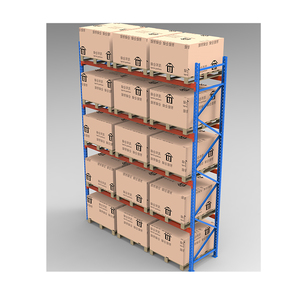
Warehouse Racking Heavy Duty Rack System Stack Warehouse Storage Steel Pallet Racks for Sale
- Modular Post-Pallet
- Stacking 4-5 Tiers
- Dynamic Overflow Buffer
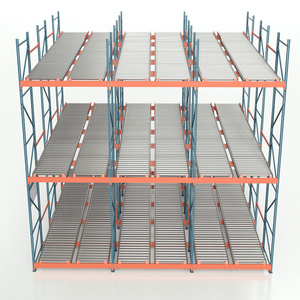
Gravity Pallet Flow Rack Shelf Heavy Duty Selective Rack Steel Carton Customized ISO9001/CE
- Gravity Roller Bed (3-4% slope)
- Strict First-In-First-Out
- Integrated Speed Controllers
Engineering Whitepaper: The Strategic Sourcing of Big Industrial Racking Systems from China
In modern supply chain engineering, warehouse verticality represents the primary lever for maximizing return on invested capital (ROIC) per square meter. As global prime industrial real estate lease rates continue their post-pandemic escalation across North America, Western Europe, Southeast Asia, and the GCC countries, logistics operators and chief supply chain officers face mounting pressure to double or triple volumetric density without incurring greenfield facility expansion costs. Procuring heavy-duty industrial racking systems directly from a top-tier Chinese original design manufacturer (ODM) and original equipment manufacturer (OEM) represents the industry standard path to achieving low total cost of ownership (TCO) while preserving structural integrity.
However, procuring large-scale warehouse racking across international maritime corridors entails complex engineering due diligence. Industrial pallet racks are not merely static steel shelves; they are complex, unbraced or semi-rigid moment-resisting steel space frames governed by strict global structural engineering standards, including the European EN 15512, the American Rack Manufacturers Institute RMI ANSI MH16.1, and Australian AS 4084. A single structural failure triggered by underspecified upright slenderness ratios, sub-yield cold-rolled steel coils, or inadequate seismic base plates can cascade into fatal structural collapse, catastrophic inventory destruction, and prolonged business disruption.
Founded in 2001, Guangzhou Heda Shelves Co., Ltd. has spent over two decades engineering, manufacturing, and commissioning complete intra-logistics racking structures for more than 10,000 warehouse projects across 120+ countries. Operating a modern 30,000 square meter integrated manufacturing base in Guangzhou with an annual processing capability exceeding 30,000 metric tons of prime structural cold-rolled steel, HEDA bridges Chinese metallurgical scale with Western and Asian building compliance frameworks.
1. Structural Engineering Fundamentals: Upright Profile Geometries & Load Vectors
The fundamental load-bearing safety of an industrial pallet racking system is dictated by the structural efficiency of its vertical upright columns (posts) and horizontal load beams. Our engineering department specifies certified high-tensile Q235B and Q355B structural hot-rolled pickling steel strip (equivalent to ASTM A36 and ASTM A572 Grade 50) sourced directly from verified Tier-1 Chinese mills (such as Baosteel and Shougang).
During cold continuous profile rolling, our CNC roll-forming lines introduce precision multi-rib bends (forming 11 to 13 continuous longitudinal cold-worked stiffening folds along the cross-sectional perimeter of each omega-profile upright). These cold-worked corners significantly elevate the local buckling threshold and torsional rigidity of the profile, maintaining upright slenderness ratios within critical European Federation of Materials Handling (FEM 10.2.02) safety parameters under eccentric axial loads up to 32,000 kg per upright frame.
2. Engineering Selection Matrix: Matching Racking Topologies to Operational KPIs
| Racking Topology | Floor Space Utilization | Direct Selectivity | Inventory Flow (FIFO/LIFO) | Structural Load Rating (Pallet) | Capital Expenditure Index |
|---|---|---|---|---|---|
| Standard Selective Rack | 40% - 50% | 100% Direct Access | Flexible FIFO / LIFO | 1,000 - 4,500 kg | Baseline (Low) |
| Very Narrow Aisle (VNA) | 60% - 70% | 100% Direct Access | Flexible FIFO / LIFO | 1,000 - 2,500 kg | Moderate (Medium) |
| Double-Deep Pallet Rack | 55% - 65% | 50% Direct Access | Strict LIFO Per Channel | 1,000 - 3,000 kg | Low - Moderate |
| Drive-In / Drive-Through | 65% - 75% | < 20% (Batch Access) | Strict LIFO (Drive-In) | 800 - 2,000 kg | Moderate |
| Gravity Pallet Flow Rack | 70% - 85% | Lane Facing Only | Autonomous Mechanical FIFO | 500 - 1,800 kg | High (Roller Beds) |
| Radio Shuttle Automation | 80% - 90% | Lane Controlled Auto | Automated FIFO & LIFO | 500 - 2,000 kg | Advanced / High |
Future Procurement Trends: How Modern Logistics Hubs Source Industrial Racking
Procurement workflows for massive distribution infrastructure have transitioned from simple per-ton commodity bidding to strategic system lifecycle optimization. As global supply chain operations confront rising labor shortages, aggressive ESG decarbonization targets, and erratic consumer demand spikes, several defining procurement trends dominate corporate capital expenditure budgets:
1. Automation-Ready Engineering Compatibility
Procurement teams rarely purchase purely static racks today. Even when deploying manual reach-truck selective configurations, forward-looking developers require uprights, beam tolerances, and aisle clearances engineered for rapid conversion into Automated Guided Vehicle (AGV), Autonomous Mobile Robot (AMR), or automated pallet shuttle corridors without structural teardown.
2. Strict Decoupling of Steel Chemistry & Seismic Design
With seismic events triggering catastrophic warehouse failure in Japan, Indonesia, the Philippines, and the Western Americas, engineering procurement contracts mandate certified structural finite-element base plate calculations. Buyers demand high-ductility steel formulations with verified yield-to-tensile ratios under cyclic earthquake fatigue.
3. Complete Container Cubing & Maritime Freight Optimization
Volumetric ocean freight rates represent a substantial percentage of delivered landed cost. Smart procurement favors Chinese factories equipped with modular nesting software that optimize 40-foot High Cube (40HQ) container pack-outs, using custom bundle configurations to eliminate dead space and achieve maximum gross weight payloads.
Technological Innovations: The Next Generation of Industrial Racking
The industrial racking sector is undergoing continuous manufacturing innovation. In high-throughput 24/7 fulfillment centers, racking is recognized as dynamic mechanical infrastructure. Several technological breakthroughs implemented across HEDA Shelves production facilities demonstrate this shift:
Advanced Anti-Corrosive Duplex Coatings
Standard dry-powder coatings often fail in high-humidity tropical microclimates or blast-freezer cold rooms (-30°C to -40°C). We deploy a multi-stage pre-treatment wash consisting of high-pressure zinc phosphating and alkaline degreasing, followed by automated electrostatic polyester powder application cured at 200°C. For aggressive subsea, marine, or chemical environments, continuous hot-dip batch galvanization per EN ISO 1461 guarantees over 25 years of corrosion-free performance.
Integrated BIM Modeling & Digital Twin Validation
Building Information Modeling (BIM) has become foundational for Tier-1 logistics park developers. HEDA provides precision Revit family models and 3D CAD clash detection outputs before raw steel processing begins. This eliminates physical interference with overhead fire suppression sprinkler mains, HVAC ducting, warehouse column foundations, and lighting conduits during on-site erection.
Self-Locking Beam Connector Safety Terminals
Human error during high-velocity forklift operations remains the primary cause of dislodged beams. HEDA's cold-stamped beam end connectors feature high-precision 3-to-4 tooth integral hooks paired with automated spring-steel safety locks. When dropped into place, the connector engages a tapered self-tightening wedging action against the upright face, neutralizing uplift forces caused by mast strikes.
Why Partner with HEDA Shelves: Enterprise Manufacturing Superiority
Headquartered in the global maritime trade hub of Guangzhou, China, HEDA Shelves has developed a vertically integrated manufacturing ecosystem that eliminates supply chain dependencies. Unlike trading firms or assembly-only workshops, our entire value chain is located under direct quality surveillance:
Our 10-Step In-House Production & Quality Control Discipline
By controlling structural fabrication directly at our Guangzhou production facility, HEDA eliminates intermediary markups, delivering factory-direct wholesale pricing while maintaining complete design accountability. Our close proximity to South China's deepwater ocean ports (Nansha, Huangpu, Shenzhen, and Hong Kong) provides direct sea routes to Southeast Asia within 3 to 7 days, the Middle East within 14 to 20 days, and European and American main ports within 24 to 32 days.
Frequently Asked Questions for Industrial Racking Procurement
In-depth answers addressing structural engineering, local building codes, installation tolerances, and import workflows.