Featured Industrial Storage Systems & Racking Configurations
Standard and bespoke load-bearing configurations manufactured in compliance with international seismic, deflection (1/200), and material standards (Q235B & Q355B structural steel).
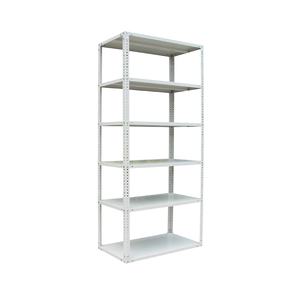
Angle Slotted Angle Shelving Rivet Metal Warehouse Rack
- Capacity: 100–250 kg / Tier
- Assembly: Boltless / Rivet Lock
- Finish: Epoxy Powder Coated
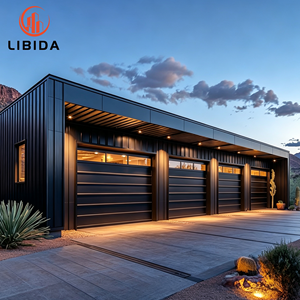
Large Span Prefab Steel Structure Logistics Warehouse
- Span Width: 12–48 Meters Custom
- Steel Grade: Q355B Heavy I-Beam
- Application: Distribution Hubs
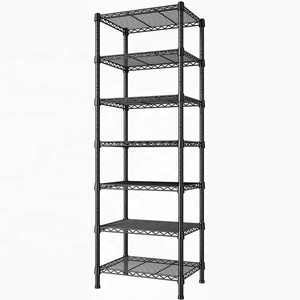
4-Tier Heavy-Duty Rolling Steel Wire Shelving Unit
- Mobility: Lockable PU Castors
- Decking: Open Truss Wire Grid
- Ventilation: 100% Airflow Circulation

Automatic Beverage Can Spring-Loaded Pusher Track
- Mechanism: Constant-Force Spring
- Compatibility: Bottles, Cans, Cartons
- Stocking: Self-Facing Front Display
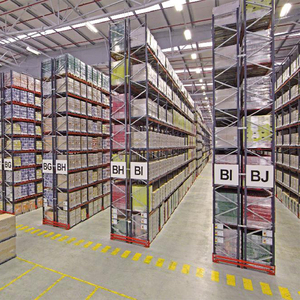
Adjustable Pallet Racking System (1000–3000 kg/Tier)
- Beam Pitch: 50mm / 75mm Adjustable
- Section Profile: Omega Upright Post
- Safety Pins: Spring Safety Interlocks
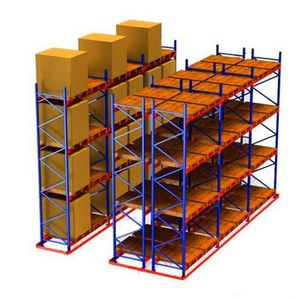
High Density VNA (Very Narrow Aisle) Pallet Racking
- Aisle Clearance: 1,500–1,800 mm
- Max Height: Up to 15+ Meters
- Guidance: Floor Rail / Wire Guided
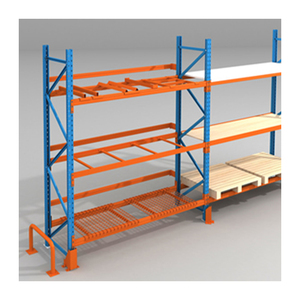
5-Layer Dual-Purpose Industrial Heavy Metal Rack
- Corrosion Spec: Phosphate Pre-Treated
- Decking Sheet: Solid Cold-Rolled Steel
- Adjustability: Modular Snap-In Beams
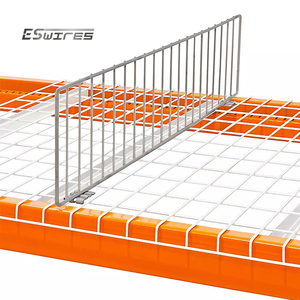
Custom Welded Steel Wire Pallet Rack Dividers & Decks
- Mesh Diameter: 4.0–6.0 mm Heavy Wire
- Fire Rating: NFPA 13 Sprinkler Ready
- Coating: Galvanized / Powder Coat
Structural Load Dynamics, Steel Metallurgy, and Global Code Compliance
In high-bay warehouse operations and modern intralogistics distribution centers, racking systems are not static steel frames; they are critical structural members subject to complex dynamic forces. These include vertical dead loads from inventory pallets, horizontal seismic ground accelerations, impact loads from material handling equipment (MHE), and wind loads on rack-supported cladding systems. When vetting industrial racking manufacturers in China, international procurement directors must prioritize certified structural calculation models rather than superficial unit weight comparisons.
At our Guangzhou manufacturing base, raw coil procurement relies strictly on certified mill runs of Q235B and Q355B low-alloy, high-strength structural carbon steel, conforming to GB/T 700 and GB/T 1591, which correlate directly with ASTM A36 and ASTM A572 Grade 50. Every steel heat undergoes in-house spectroscopic analysis and tensile yield validation. The yield-to-tensile ratio is strictly governed below 0.85 to maintain critical material ductility. This ensures that in the event of an overloaded bay or extreme seismic shockwave, upright columns undergo controlled plastic deformation rather than catastrophic brittle rupture.
| System Classification | Standard Upright Profiles | Beam Section Configurations | Safety Factor / Max Deflection | Applicable International Standards |
|---|---|---|---|---|
| Selective Pallet Racking | 80×60, 90×70, 100×70, 120×95 mm | 80×50 to 160×50 mm Box/Step | 1.65 to 1.95 / Deflection ≤ L/200 | EN 15512, RMI ANSI MH16.1, AS 4084 |
| Very Narrow Aisle (VNA) | 90×70, 100×70, 120×95, 140×100 mm | 100×50 to 180×50 mm Heavy Box | 1.95+ / Deflection ≤ L/300 | FEM 10.2.02, EN 15620 (Class 300) |
| Drive-In / Drive-Through | 90×70, 100×70 mm Omega Section | Continuous Cantilever Pallet Rails | Dynamic Impact Rated / 1.8 Factor | EN 15629, ISO 9001:2015 |
| Rack-Supported Mezzanines | 120×95 mm Columns + C/Z Joists | Primary I-Beams / Secondary Box | Floor Live Load: 300–1,500 kg/m² | CE No. 2435-CPR-8605159, IBC 2024 |
| Light/Medium Angle Shelving | 38×38, 40×40 mm Slotted Angles | P-Type / L-Type Formed Beams | Elastic Deflection ≤ L/150 | RoHS Compliant Electrostatic Coating |
The manufacturing integrity of the upright roll-formed profile dictates torsional rigidity. Our 24-station automated roll-forming mills produce continuous, seamless omega profiles with multi-bend corner radiuses. These increase the cross-sectional moment of inertia without adding dead steel tonnage. Precision column punchings spaced at 50mm or 75mm pitches are executed via CNC hydraulic presses prior to roll-forming, preserving micro-structural tolerances and eliminating punch-hole edge micro-cracks. Beams feature robotically welded 3-claw or 4-claw cold-stamped end connectors, equipped with galvanized spring-lock safety pins that resist dislodgement under violent upward fork strikes exceeding 1,000 N.
Guangzhou Manufacturing Infrastructure & Rigorous Quality Control
Founded in 2001, Guangzhou Heda Shelves Co., Ltd. has accumulated over 25 years of engineering expertise in high-density warehousing solutions. Operating a centralized 30,000 m² smart production hub with over 300 experienced engineers, structural technicians, and logistics planners, our factory supports an output capacity exceeding 30,000 metric tons per month. Having delivered more than 10,000 major distribution center projects across 120+ countries, our solutions bridge OEM cost competitiveness with European structural compliance.
Dual International Certifications
Every structural system complies with European CPR Regulations under CE Certification No. 2435-CPR-8605159 and factory-level ISO 9001:2015 Certificate No. 18624Q00169R0M (valid through 2027), ensuring documented traceability across every steel heat, weld, and structural inspection.
9-Stage Chemical Pre-Treatment
Raw roll-formed members undergo immersion degreasing, multi-stage acid pickling to eliminate mill scale, followed by iron-zinc phosphating and deionized passivation. This guarantees thermosetting epoxy-polyester powder adhesion passing 500-hour ASTM B117 salt spray tests.
Seismic-Aware Baseplate Engineering
For installations situated in seismically active regions (such as the Pacific Ring of Fire, Indonesia, the Philippines, Japan, and the Middle East), our engineers run finite element load calculations, designing enlarged gusset-welded baseplates and dynamic wedge anchors tailored to local UBC/IBC seismic zone codes.
Turnkey 3D CAD & BIM Engineering
Within 24 to 48 hours of initial requirement submission, our engineering office delivers comprehensive AutoCAD floor layouts, 3D parametric visualizations, forklift turning radius clearance verifications, and slab point-load distribution charts free of charge.
Optimized Container Cube Logistics
Direct proximity to South China shipping hubs (Guangzhou Port and Shenzhen Port) provides fast, cost-effective container routes. Automated 3D container packing software calculates beam nestings and component bundles to maximize volume utilization up to 98% per 40ft HQ container.
RoHS Compliant Polymer Powders
All industrial electrostatic powder applications use high-performance thermosetting resins compliant with international environmental directives (RoHS 2011/65/EU). Coatings are 100% free of heavy metals and VOCs, making them food-grade safe and resistant to industrial solvents.
10-Step Quality Verification Workflow
From the arrival of raw hot-rolled pickled coils to outbound container loading, our quality control inspectors enforce a rigid 10-step gate verification process:
Raw Material Test
Spectroscopic composition analysis and steel gauge ultrasonic micrometer check.
CNC Slitting & Cut
High-precision strip cutting maintaining coil width tolerances within ±0.15 mm.
Precision Punching
Continuous hydraulic stamping of pitch holes with zero burr and no stress cracking.
Roll Forming
Multi-stage cold bending progressively forming profiles without internal tensile shear.
Robotic MIG Welding
Shielded gas beam-end connector welding verified via ultrasonic non-destructive tests.
Chemical Immersion
Hot alkaline degreasing and acid de-rusting bath to strip all carbon residues.
Zinc Phosphating
Conversion coating layer creating a dense crystalline barrier for rust protection.
Electrostatic Coat
Automatic reciprocating spray guns applying 60–90 μm polymer resin powder evenly.
Future Procurement Trends in Industrial Warehouse Storage
Procurement directors and 3PL supply chain strategists are confronting shifting warehouse realities: escalating industrial land leases in logistics hubs like Singapore, Dubai, Rotterdam, and Dallas, acute warehouse labor shortages, and aggressive net-zero carbon directives. Consequently, racking procurement has moved from purchasing standard catalog shelving to commissioning integrated automation platforms.
1. The Convergence of Static Racking & AMR Systems
Traditional wide aisles (3.5–4.0 meters) intended for counterbalanced forklifts are rapidly being phased out in favor of Autonomous Mobile Robot (AMR) and Automated Guided Vehicle (AGV) layouts. Modern selective and pallet-flow racking profiles must now incorporate precision-machined floor-level navigation guide rails, optical sensor reflector brackets, and tighter manufacturing tolerances (±1.0 mm cumulative over 10 meters) to support sub-millimeter robotic docking accuracy.
2. Cold-Chain Densification Under Rising Energy Tariffs
With sub-zero refrigerated cubic volume incurring cooling power costs up to five times greater than ambient warehouses, cold-chain operators across Southeast Asia and the Middle East are transitioning to deep-lane Radio Shuttle Racking. These systems maximize volumetric storage density by eliminating operating aisles entirely. Steel components specified for -30°C freezer facilities require silicon-deoxidized structural grades to avert low-temperature impact brittleness, paired with hot-dip galvanized finishes or cold-flexible powder formulations.
3. Carbon Footprint Tracking & EPD Certification
Multinational industrial clients subject to Scope 3 carbon emission disclosures are mandating verified Environmental Product Declarations (EPDs) from steel fabrication suppliers. Chinese manufacturers with automated scrap reclamation, high-efficiency induction curing ovens, and renewable solar-assisted factory facilities provide lower embedded carbon footprints per ton of fabricated racking, directly facilitating regional LEED and BREEAM building accreditations.
4. Modular Multi-Tier Mezzanines over Capital Expansion
Faced with extended permitting timelines and steep interest rates on new logistics real estate developments, asset managers are choosing vertical optimization. Self-supporting structural steel platforms and rack-supported mezzanines (2 to 4 tiers) double or triple existing floor surface areas. These installations create dedicated e-commerce sorting, carton picking, and administrative office zones without triggering industrial construction tax re-assessments.
Frequently Asked Questions for Warehouse Racking Procurement
Direct answers from our structural engineers to address critical technical, commercial, and installation questions before placing an international production order.
How do you verify genuine steel thickness versus nominal thickness?
Under Chinese national standards (GB/T 700), hot-rolled and cold-rolled steel coils carry permissible negative rolling tolerances. In low-cost bidding, suppliers often deliver 1.8mm steel while quoting 2.0mm nominal thickness—reducing section modulus by up to 15%. At our factory, base metal thickness (BMT) is measured via calibrated digital ultrasonic micrometers excluding the powder coating film (60–90 μm). Certified mill test sheets showing chemical composition and heat numbers are supplied with each container batch.
What structural engineering data is needed to generate a free 3D CAD design?
To deliver an accurate 2D CAD layout and 3D finite element structural plan within 48 hours, our engineering team requires: (1) Architectural floor plan indicating building column coordinates, clear height to roof trusses, and overhead sprinkler/lighting drops; (2) Pallet dimensions (Length × Width × Total Height including cargo overhang); (3) Gross pallet weight; (4) Forklift model, mast collapsed height, and maximum lift reach; (5) Required total SKU inventory count.
How do you prevent upright punch slot deformation during seismic sway?
Under lateral seismic ground motion, high shear forces converge at the column-to-beam connection. To counter this, our upright profile features an engineered Omega section with stiffening ribs adjacent to the punch pattern. Punch tooling uses radiused slot corners rather than sharp angles to eliminate notch stress concentrations. End connectors engage across 3 to 4 staggered locking lugs, diffusing moment forces across the column web and maintaining structural rigidity per EN 15512 seismic performance criteria.
What concrete slab specifications are necessary for high-bay racking anchor bolts?
Standard selective racking systems (6 to 8 meters high) require a continuous reinforced concrete slab with a minimum compressive strength of C20/25 (3,000 to 3,500 PSI) and a floor thickness of at least 150–200 mm. For high-density VNA systems reaching 12 to 15 meters, floor slabs must meet C30/37 (4,500 PSI) with superflat surface tolerances conforming to DIN 18202 or ASTM E1155 (F-min 75 to 100) to prevent mast sway and anchor pull-out failure.
Can your factory provide customized OEM colors and distributor private-label branding?
Yes. We support overseas material handling equipment dealers and system integrators with comprehensive OEM and ODM services. Uprights and beams can be finished in any custom RAL color code (e.g., standard RAL 5015 Sky Blue uprights with RAL 2004 Pure Orange beams) using our automated dual-booth powder coating line. Custom-punched column identity marks, steel nameplates, and export carton packaging branded with your company insignia are available for volume agreements.
What is the maximum permissible deflection ratio under maximum operational pallet loads?
In strict accordance with international logistics standards (FEM 10.2.02 and EN 15512), the maximum vertical elastic deflection of a horizontal racking beam under full uniformly distributed load (UDL) must not exceed 1/200th of the clear beam span (Deflection ≤ L/200). For automated crane systems or high-precision VNA racking, deflection thresholds are designed to tighter tolerances of L/300 or L/400 to prevent automated shuttle or turret-truck sensor faults.
How do you prevent rust and corrosion on racking shipped to tropical ports?
High ambient humidity and coastal salt-mist during ocean transit to regions such as Southeast Asia, India, and the GCC can compromise inferior coatings. In addition to our standard pickling, phosphating, and 80 μm electrostatic coating, export components are packed with air-cushioned bubble wrap, heavy-duty corrugated angle protectors, and strapped onto steel-skid bases with desiccant packs inside the shipping container. For outdoor or marine environments, hot-dip galvanizing with a zinc coating thickness of 65–85 μm conforming to ISO 1461 is available.
What documentation is provided for local building permits and fire safety sign-off?
For municipal building inspector and insurance underwriting approval, we supply a comprehensive handover documentation package: (1) CE Declaration of Performance (DoP); (2) Factory ISO 9001:2015 certification; (3) Structural engineering static calculation reports signed off by qualified engineers; (4) Raw material mill test certificates; (5) Detailed installation and anchoring assembly blueprints; (6) NFPA 13 compliant flue-space and sprinkler clearance layouts.
Request a Custom Warehouse Layout & Factory Quote
Collaborate directly with our Guangzhou engineering office. Receive a comprehensive CAD floor plan, 3D structural render, load-deflection calculation, and itemized factory-direct quote within 24 to 48 hours.