Engineered Static Pallet Racking & Warehouse Systems
Direct factory-engineered storage systems cold-formed from certified high-tensile structural steel, fabricated to strict FEM and RMI industrial safety benchmarks.
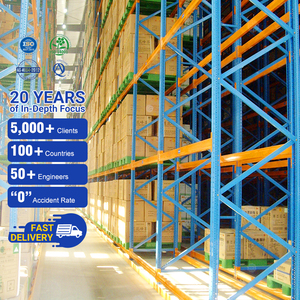
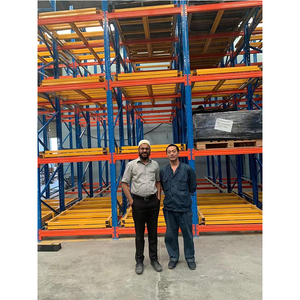
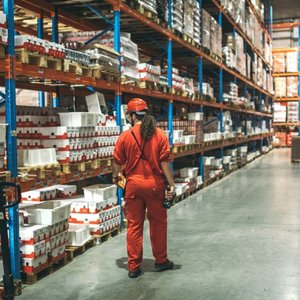
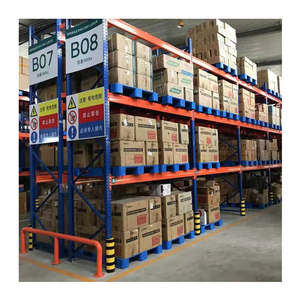
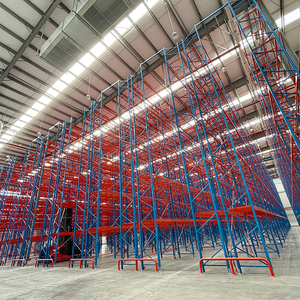
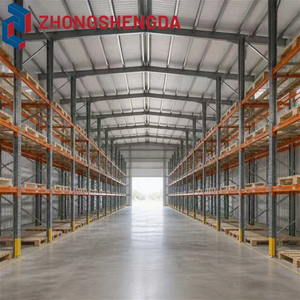
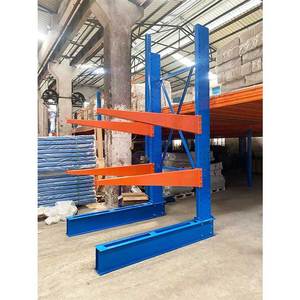
Engineering Anatomy of China's Static Pallet Racking Systems
When engineering global logistics infrastructure, selecting a reliable China static pallet racking factory is a critical structural decision directly impacting operational safety, vertical volumetric density, and multi-decade facility capital efficiency. Static pallet racking—spanning heavy-duty selective systems, double-deep profiles, narrow aisle (VNA) frameworks, and drive-in modules—forms the mechanical backbone of automated and conventional distribution centers worldwide. Unlike light-duty shelving or dynamic mobile systems, static pallet racks are stationary cold-formed steel frames engineered to absorb complex dynamic load distributions, torsional buckling forces, mechanical forklift impacts, and localized seismic ground accelerations.
The manufacturing authority of premier Chinese racking factories stems from end-to-end metallurgical control and automated roll-forming precision. Utilizing certified structural steels (predominantly Q235B and high-yield Q355B grades), leading Guangzhou industrial facilities maintain tight dimensional tolerances across column cross-sections and connector hook configurations. Upright columns feature cold-rolled omega-profiles engineered with continuous stiffening ribs along critical axes, ensuring maximum polar moments of inertia with minimal deadweight. Load beams are fabricated from twin C-sections seam-welded automatically via robotic GMAW (gas metal arc welding) systems, yielding an engineered box beam that eliminates localized weld fatigue and guarantees structural deflections within standard L/200 limits under maximum continuous operating payloads exceeding 5,000 kg per level.
Certified Metallurgy
Strict utilization of Q235B and high-yield Q355B mill-certified structural steel coils, maintaining consistent tensile tolerances and chemical compositions across long production cycles.
Seismic Engineering
Finite element analysis (FEA) compliant with FEM 10.2.02 and RMI standards, sizing base plates, anchor embedment depths, and cross-bracing for active seismic zones.
Nanoscale Coating
Multi-stage chemical pickling and phosphating followed by electrostatic thermosetting polyester powder coating, achieving salt-spray resistance exceeding 500 hours.
Future Procurement Trends: Where Industrial Sourcing is Headed
As warehouse automation, supply chain decentralization, and volatile shipping rates redraw global procurement maps, the sourcing methodologies for warehouse storage systems are fundamentally shifting. Supply chain directors are moving away from purely initial-cost transactions toward comprehensive Total Cost of Ownership (TCO) calculations, in which freight packing density, structural life cycles, modular adaptivity, and compliance governance dictate partner selection.
Freight-Optimized Nesting
Freight rates necessitate advanced nested beam geometry and engineered bolt-together upright frames that double shipping container volume utility, dropping per-pallet transit costs.
Direct BIM Layout Integration
Leading enterprises bypass intermediaries by engaging directly with Tier-1 Chinese engineering departments to receive native 3D Building Information Modeling (BIM) files and Revit layouts within 48 hours.
Rapid Modular Hybridization
Procuring static systems built with standardized multi-pitch punching allows future warehouse conversion from traditional selective racking into automated carton flow or radio shuttle channels.
Technological & Evolutionary Trends in Racking Manufacturing
The manufacturing architecture across top Chinese static pallet racking factories has transformed from labor-intensive welding shops into automated roll-forming, laser-punched, and robotically welded facilities. Technological evolution focuses heavily on thin-wall structural optimization, seismic resiliency through dynamic computational analysis, and sustainable surface treatment chemistry.
High-precision multi-station roll-forming lines operate with variable electronic servomotors, punching complex pitch geometries (such as 50mm, 75mm, and 76.2mm teardrop or Euro-pitch configurations) on the fly without inducing cold-work micro-cracking in the steel grain boundaries. Concurrently, environmental regulations across southern China have driven the complete phase-out of traditional hexavalent chromium pretreatments in favor of zirconium-based nanotechnology and phosphate conversion coatings. In cold-chain logistics hubs, where condensation and sub-zero cycling cause severe thermal fatigue, hot-dip galvanizing per ISO 1461 guarantees over 30 years of maintenance-free service life.
10-Step In-House Manufacturing & Quality Control Workflow
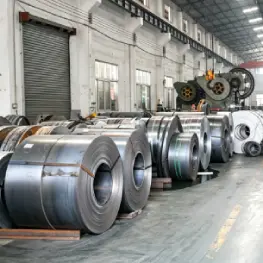
Raw Steel Assay
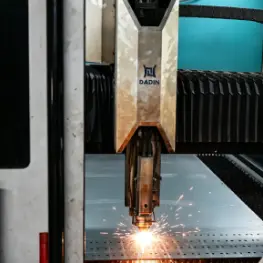
Precision Slitting
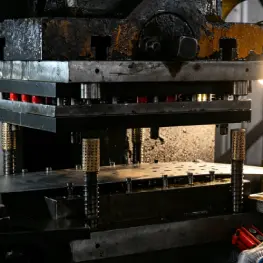
CNC Punching
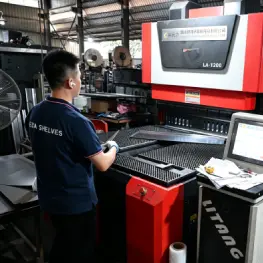
Cold Roll-Bending
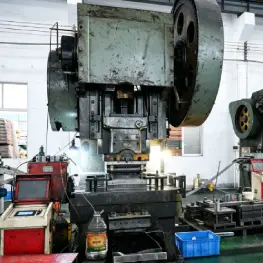
Profile Forming
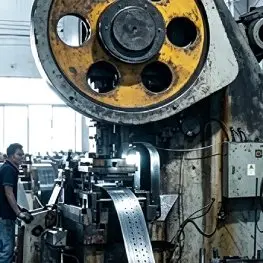
Surface Polishing
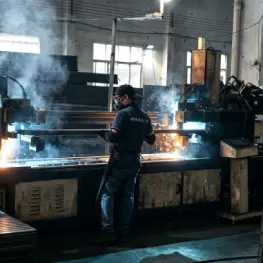
Robotic Welding
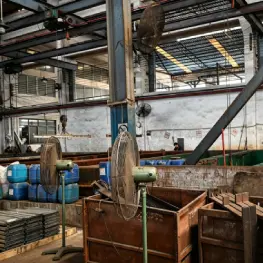
Acid Phosphating
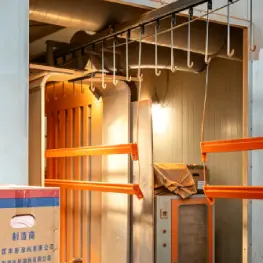
Powder Coating
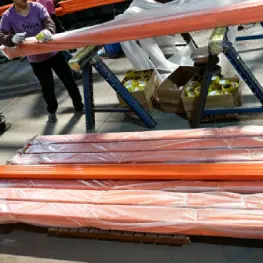
Deflection QC & Pack
Guangzhou Heda Shelves Co., Ltd.: Manufacturing Strengths
Founded in 2001, Guangzhou Heda Shelves Co., Ltd. has established itself as an authoritative manufacturer and turnkey supplier of static pallet racking, industrial cantilever platforms, and high-density warehouse storage systems. Operating from a modern 30,000 m² industrial manufacturing complex in Guangzhou, China, with over 300 experienced engineers, structural technicians, and production specialists, HEDA delivers end-to-end manufacturing reliability across more than 120 global regions.
Certified Compliance
Fully certified under CE Certification (No. 2435-CPR-8605159), ISO 9001:2015 Quality Management (No. 18624Q00169R0M), and RoHS environmental standards for clean coatings.
Scalable Output
Delivering 30,000 tons of monthly output capacity across automated slitting, punching, cold-bending, and electrostatic finishing lines with guaranteed batch repeatability.
Free 2D/3D Design
Our dedicated engineering department delivers custom 2D CAD floor plans, full 3D visual renderings, and complete structural load check calculations within 24 to 48 hours.
Frequently Asked Questions in Global Static Racking Procurement
Key technical, structural, and logistical questions addressed by our senior warehouse engineering team.
What parameters are needed for a precise factory CAD layout design?
How do static selective racks compare with double-deep and drive-in racks?
Can static pallet racking withstand regional seismic activity?
How does HEDA prevent rust and paint degradation in humid, coastal, or tropical regions?
What certifications and test reports accompany international factory shipments?
Plan Your Warehouse Storage Layout With Certified Engineers
Send your warehouse dimensions, pallet profiles, and handling requirements today to receive a comprehensive 2D CAD floor plan, 3D structural model, and complete quote within 24 hours.
Contact Us