Collapsible Mesh
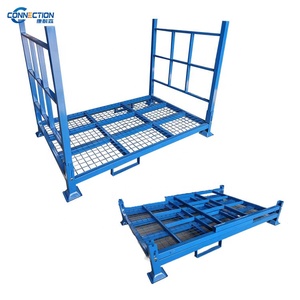
Steel Wire Mesh Foldable Stacking Tire Rack
Cap: 1500 kg
4-High Stack
Foldable
Compare factory-certified warehouse stacking solutions tailored for high-payload dynamic tiering, tire distribution, cold rooms, and rapid seasonal footprint elasticity.
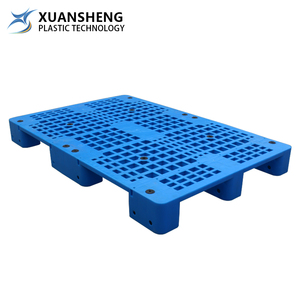
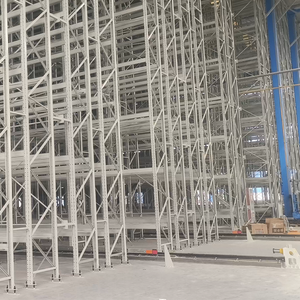
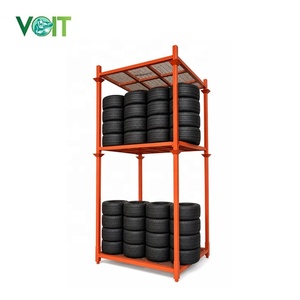
An engineering breakdown of load factors, nested geometry, steel metallurgy, and seismic resilience required for tier-one logistics procurement.
Warehouse stacking racks (frequently specified by global supply chain directors as post pallets, manuracks, or portable stack frames) endure severe compound physical stressors. Unlike static bolt-down selective racking that transfers vertical loads directly into a continuous engineered concrete floor slab via expansion anchor bolts, a tiered stack rack distributes kinetic loads through its four structural posts and interlocking stacking cups.
At our Guangzhou manufacturing base, raw material integrity serves as the fundamental baseline of operational safety. We roll-form structural bases and removable tubular uprights utilizing cold-formed high-strength carbon steel grades Q235B (Yield Strength $f_y \ge 235 \text{ MPa}$, Tensile Strength $R_m = 370\text{--}500 \text{ MPa}$) and Q355B (Yield Strength $f_y \ge 355 \text{ MPa}$, Tensile Strength $R_m = 470\text{--}630 \text{ MPa}$). For international supply chains specifying compliance with European EN 10025 or American ASTM A36 / A572 Grade 50 standards, mill test certificates (MTC) documenting chemical composition—specifically carbon equivalents (CEV) held below 0.38% to prevent heat-affected zone (HAZ) embrittlement during robotic MIG welding—are issued alongside each production lot.
"Structural safety in multi-tier stack racking relies entirely on the precise dimensional tolerance of the target guide and stacking foot (cup and cone). A deviation of merely 1.5mm in collar fitment can introduce an eccentric load angle exceeding 2.2 degrees, drastically multiplying bending moments on the bottom uprights."
The column capacity of a stacking rack post depends on its radius of gyration ($r$) and effective slenderness ratio ($\lambda = KL/r$). Where conventional budget suppliers utilize thin-gauge 1.5mm seam-welded hollow tubing, high-volume industrial installations mandate minimum wall thicknesses of 2.75mm to 3.25mm in square hollow sections (SHS: $50\times50\text{mm}$ or $60\times60\text{mm}$) or circular structural pipe ($60.3\text{mm}$ OD). This ensures adequate resistance to lateral impact from Class I, IV, and V counterbalance forklift tines during initial staging.
| Racking Architecture | Standard Steel Grade | Safe Working Load (SWL) | Stacking Tier Rating | Optimal Operating Environment |
|---|---|---|---|---|
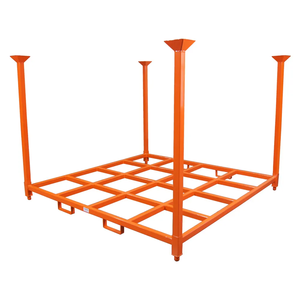
| Heavy Duty Post Pallet (Manurack) | Q235B / Q355B Cold Formed | 1,000 kg – 2,500 kg / unit | 1 + 3 to 1 + 5 High | 3PL seasonal overflow, bulk chemical sacks, seed storage |
| Foldable Mesh Tire Stacking Frame | Q235B + 4.8mm High-Tensile Mesh | 800 kg – 1,200 kg / unit | 1 + 4 High (Fully Laden) | Automotive logistics, TBR & PCR radial distribution |
| Inverted Nesting Stacking Cradle | Q235B Structural Hollow Section | 1,200 kg – 2,000 kg / unit | 1 + 3 High | Raw material bulk bins, fabric rolls, irregular manufacturing parts |
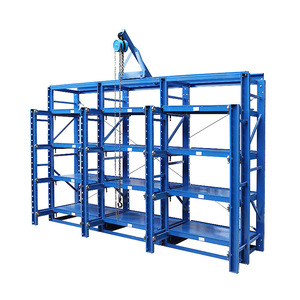
| Automated Pull-Out Tool & Die Rack | Q355B Heavy Structural Channel | 1,000 kg – 3,000 kg / drawer | 1 + 2 High with Overhead Hoist | Injection molding workshops, aerospace stamping tooling |
How Fortune 500 logistics buyers and 3PL facility planners are reshaping capital expenditure strategies through flexible modular infrastructure.
Rigid floor-anchored racks lock warehouses into permanent aisle layouts that prove disastrous when client contracts or SKU dimensions shift. In contrast, portable stacking racks create instantaneous temporary storage cells inside rented warehouses without damaging epoxy coatings or violating lease clauses regarding anchor hole rehabilitation. Logistics operators can condense 10,000 square meters of floor space into 2,000 square meters during low season by simply nesting empty bases.
With cross-border and domestic logistics rates continuing to fluctuate, the deadweight cost of shipping empty storage equipment has become a major line-item audit metric. Next-generation stacking racks utilize tapered "V-cup" feet and demountable uprights yielding return nesting ratios up to 1:6 or 1:8. This enables 240 knocked-down post pallet units to fit into a single 40ft High Cube sea container, lowering ocean freight amortizations to less than $12 per unit.
As Automated Guided Vehicles (AGVs) and Autonomous Mobile Robots (AMRs) replace manual forklift fleets, stacking rack procurement now mandates millimeter-accurate guidance targets. Leading warehouses are purchasing post pallets equipped with retroreflective visual tags, precision robot pickup skids, and laser-guided locating cups that allow autonomous straddle stackers to position 1,500kg payloads at four-tier heights with sub-5mm tolerance.
From robotic tandem MIG welding cells to eco-friendly multi-stage pre-treatment, manufacturing excellence defines product longevity in hostile operating environments.
Industrial stacking racks face constant friction from forklift tines, harsh outdoor loading docks, and aggressive thermal cycles down to -30°C in cold-chain seafood facilities. Traditional single-coat dip paints degrade rapidly, leading to steel oxidation, scale shedding, and catastrophic cross-contamination in food and pharma zones.
China's top-tier manufacturers now implement automated 9-stage phosphate pre-treatment followed by electrostatic thermoset polyester powder coating cured at 200°C (yielding 80–120μm dry film thickness). For coastal tropical warehouses across Southeast Asia and blast-freezer setups, racks are treated via continuous molten zinc Hot-Dip Galvanization conforming to ISO 1461 / ASTM A123, ensuring 25+ years of rust protection under saline atmospheres.
Empirical guess-work in stack rack fabrication has been superseded by Finite Element Analysis (FEA) software. Structural engineers simulate dynamic vertical impacts, fork mast acceleration shifts, and seismic shear forces corresponding to Uniform Building Code (UBC) Zone 4 or Eurocode 8 seismic parameters.
Prior to mass fabrication runs, certified prototypes are placed inside hydraulic load rigs to undergo 1.5× proof load testing (e.g., verifying a 1,500kg nominal cell under a continuous 2,250kg hydraulic load for 48 hours). Beam deflections must remain strictly within $L/250$ span thresholds, guaranteeing that upper-tier frames never pinch or experience weld fatigue under fully stacked operating cycles.
Headquartered in Guangzhou since 2001, we bridge the gap between heavy structural engineering rigor, cost-optimized manufacturing, and overseas delivery precision.
Every stack rack produced in our plant complies strictly with international commercial compliance protocols. We hold valid CE Certification No. 2435-CPR-8605159, comprehensive ISO 9001:2015 Quality Management System (Cert No. 18624Q00169R0M), and RoHS coating safety approvals, ensuring friction-free customs clearance and municipal building permit sign-offs.
Procuring custom stacking racks should never be a trial-and-error procedure. Our in-house technical engineering team prepares complete 2D warehouse CAD layout schematics, turning radius aisle calculations for your specific forklift models, and photo-realistic 3D BIM renderings within 24 to 48 hours—guaranteeing complete dimensional clarity prior to mass production.
Operating from Guangzhou gives our logistics team direct arterial access to major deep-water ocean terminals: Guangzhou Port (Nansha) and Shenzhen Port (Yantian/Shekou). We engineer container packing plans using specialized stacking nesting jigs, guaranteeing 95%+ cube utilization to drastically slash sea freight costs per pallet position to ASEAN, Middle Eastern, European, and American ports.
By controlling all 10 core metallurgical, fabrication, and finishing steps within our own manufacturing grounds, we eliminate the variance inherent in multi-subcontractor operations.
High-grade Q235B steel coil inspection & spectrometer validation.
CNC laser & automated multi-head cold cutting for clean edges.
High-tonnage hydraulic multi-die punching for cup alignment.
Continuous roll-forming ensuring exact structural profile radius.
Custom tooling for base runners, inverted channels, and cups.
Automatic mechanical deburring of corners to protect workers.
Multi-axis robotic MIG welding cells producing uniform beads.
9-stage chemical immersion removing mill scale and oil.
Electrostatic polymeric powder line cured at 200°C chamber.
Weld ultrasonic check, bundle strapping, and container staging.
Technical, structural, logistical, and commercial inquiries answered by HEDA Shelves lead structural engineers.
Connect directly with our senior structural racking engineers in Guangzhou. Receive a free tailored CAD floor layout, structural stress report, and container loading efficiency estimate within 24 hours.
Instant online connection with our commercial engineering department.
Inquire Now