High-Density Push Back & Industrial Storage Solutions
Manufactured using Q235B/Q355B structural steel, our dynamic cart-based storage systems deliver high-throughput density while minimizing forklift aisle impact. Every bay is custom-engineered to your pallet dimensions and building envelope.
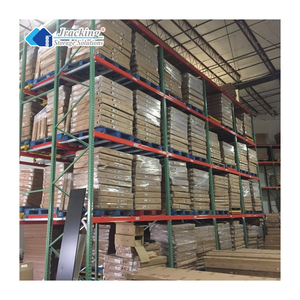
Highly Effective High-density Push Back Racking
- Up to 1500 kg/Pallet
- Nested Carts
- Low Incline Rails
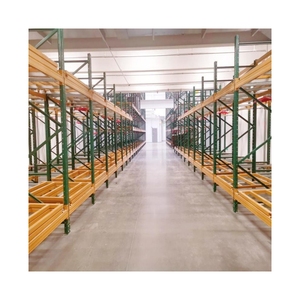
Custom Push Back Racking with Structural Guide Rail
- Heavy-Duty Flanges
- Dual Bearing Tracks
- Impact Absorbers
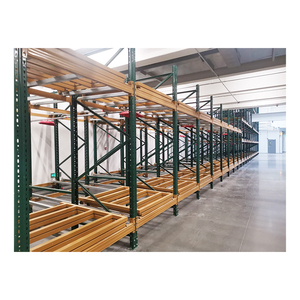
High Efficiency Push Back Storage Rack Solutions
- +75% Storage Gain
- Multi-SKU Access
- Seismic Rated
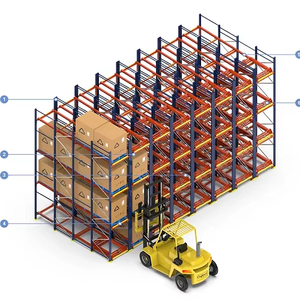
Adjustable Industrial Push Back Pallet Storage Racks
- Pitch 50/75mm
- Anti-Rust Powder Coat
- Modular Carts
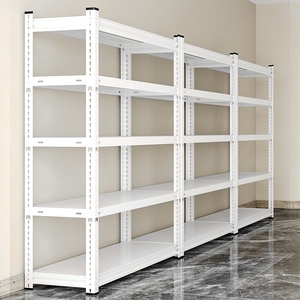
Heavy Duty Corrosion-Resistant Warehouse Pallet Racking
- Up to 4000 kg/Level
- Pickled & Phosphated
- Cold Chain Ready
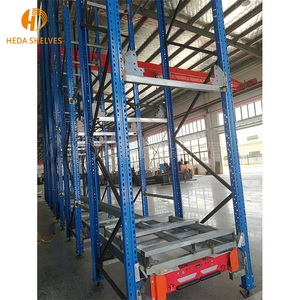
OEM Teardrop Industrial Radio Shuttle Rack System
- Radio Controlled
- FIFO/LIFO Switch
- Deep Channel Storage
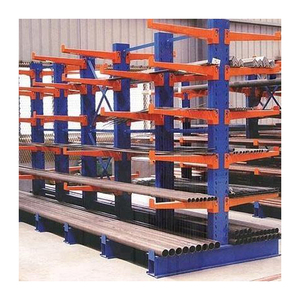
H-Beam Structural Cantilever Racks for Pipes & Timber
- Hot-Rolled H-Beam
- 3000 kg/Arm
- Unobstructed Front
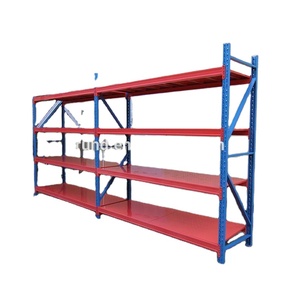
Heavy Duty Metal Warehouse Stacking Racks & Shelves
- Portable & Stackable
- Bulk Bag Handling
- Galvanized Finish
Push Back Racking Dynamics: Kinematics, Cart Geometry & Safety Factors
Unlike static selective racks or active shuttle robotics, push back systems leverage gravity and mechanical nesting carts to maximize storage density without specialized handling trucks. Here is the technical breakdown of structural design criteria.
Inclined Rail Friction Gradient
Push back rails are set at a controlled pitch between 1.5% and 2.5% depending on unit pallet weight and cart wheel bearing resistance. This gradient ensures steady gravity return of rear pallets to the pick face at an operational speed under 0.3 m/s, preventing kinetic impact against the aisle beam.
Low-Profile Telescopic Nesting
Our multi-tier carts feature precision laser-cut structural tubing engineered with stepped elevations. When unloaded, all nested carts compress to the front pallet position. Each cart rides on independent flanged wheels along structural structural angle tracks, guaranteeing that zero vertical profile is wasted.
Seismic Lock & Anti-Lift Protection
Every cart incorporates integrated anti-lift flanges and mechanical wheel retainers. Under sudden forklift deceleration or dynamic seismic oscillations (conforming to RMI MH16.1 & EN 15512), carts remain rigidly engaged with rail channels, eliminating tipping hazards.
| Racking Architecture | Space Utilization Ratio | SKU Selectivity Index | Handling Efficiency | Cold Chain Suitability | Capital Cost per Pallet |
|---|---|---|---|---|---|
| Push Back Racking (2–6 Deep) | 75% – 85% (High) | 1 SKU per lane (Excellent) | Fast (No truck entry) | Excellent (No batteries/wiring) | Moderate ($$) |
| Drive-In Racking | 80% – 90% (Maximum) | 1 SKU per bay (Low) | Slow (Truck enters bay) | Good (Risk of upright impact) | Economical ($) |
| Radio Shuttle System | 85% – 92% (Maximum) | FIFO or LIFO flexible | Automated transfer | Requires low-temp LiFePO4 | High ($$$$) |
| Pallet Flow (Gravity FIFO) | 85% – 90% (High) | 1 SKU per full lane | Continuous FIFO rolling | Fair (Roller track wear) | High ($$$) |
| Standard Selective Rack | 40% – 50% (Baseline) | 100% Direct Access | Standard aisle transit | Poor cubic efficiency | Lowest ($) |
Why Tier-1 Importers & Contractors Trust Our Guangzhou Facility
With 25 years of specialized storage manufacturing, Guangzhou Heda Shelves Co., Ltd. operates a 30,000 m² state-of-the-art production base delivering over 30,000 tons of structural steel storage equipment every month to 120+ countries.
Certified Structural Compliance
Fully compliant with CE certification (No. 2435-CPR-8605159), ISO 9001:2015 quality management (Certificate No. 18624Q00169R0M), and environmental RoHS standards. Calculations adhere to European EN 15512 and American RMI specifications.
10-Stage Precision Production
Every upright, beam, and cart passes through 10 in-house quality stages: steel coil inspection, continuous CNC column punching, roll profile forming, robotic plasma cutting, multi-station welding, 5-stage pickling/phosphating, and electrostatic powder curing.
Climate-Adaptive Surface Treatment
Specifically engineered for demanding environments across Southeast Asia, South Asia, and the GCC. Our thermo-set epoxy polyester coatings withstand 500+ hours of salt-spray testing. Hot-dip galvanization is available for sub-zero cold storage and coastal facilities.
Free 2D/3D Engineering Layouts
Within 24 to 48 hours, our certified warehouse planning team provides structural CAD blueprints, 3D parametric renderings, dynamic cart clearance checks, and container packing optimization diagrams to minimize sea freight cubic waste.
Global Procurement Trends: What Smart Warehouse Directors Are Buying
Industrial warehousing is shifting under land price inflation, green warehouse standards, and labor dynamics. Here are the core procurement shifts shaping high-density racking acquisitions over the next five years.
Densification in High-Power Cold Storage
With refrigeration power bills representing up to 40% of operating costs in FMCG, pharmaceutical, and seafood distribution, operators are systematically replacing wide-aisle selective racking with 3 to 5 deep push back systems. Eliminating operating aisles cuts conditioned cubic air volume by up to 35%, generating rapid energy payback.
Interoperability with Reach Trucks and AGVs
Modern supply chains demand solutions that bridge manual material handling and automated guided vehicles (AGVs). Push back racking does not require specialized mast programming or internal bay driving. AGVs can deposit and retrieve pallets directly at the exterior pick face, achieving automated buffering at a fraction of full ASRS costs.
Stricter Seismic Compliance in Emerging Logistics Hubs
Logistics developers across seismic zones—including Indonesia, the Philippines, Japan, and the Mediterranean—now demand certified nonlinear dynamic analysis. Procurement contracts require oversized baseplates, heavy dual-anchor points, and bolted structural bracing capable of dissipating lateral ground motion without rail de-nesting.
Technological Frontiers in Push Back Racking Engineering
Continuous mechanical refinement has solved legacy industry challenges such as cart binding, wheel seizure, and operator impact damage. Modern push back installations are sophisticated mechanical flow lines.
Eddy Current & Magnetic Retarders
To eliminate kinetic shocks when heavy pallets (1,200 kg+) roll forward in 5-deep and 6-deep configurations, advanced systems are embedding contactless magnetic eddy current speed governors within the rail channels. These devices apply proportional resistive braking without physical friction or mechanical brake lining wear.
Cryogenic Polymer Sealed Wheel Bearings
Standard lubricants freeze and seize at -25°C to -35°C in flash-freeze warehouses. Our newest generation of push back wheels incorporates proprietary ultra-high-molecular-weight (UHMW) polyurethane treads and synthetic polyalphaolefin (PAO) low-temperature greases rated down to -45°C, ensuring butter-smooth glide under continuous refrigeration.
Optical Alignment and RFID Lane Telemetry
Push back rails are increasingly accessorized with reflective target indicators and integrated ultrasonic lane-depth sensors. Integrated with warehouse management systems (WMS), operators receive real-time dashboard data on cart occupancy, exact pallet depths, and dynamic weight balancing across multi-tier storage bays.
Frequently Asked Questions on Push Back Racking Procurement
Direct, unedited technical answers from our chief structural engineers to ensure your warehouse investment delivers total compliance, high throughput, and maximum ROI.
Push back racking provides vastly superior throughput because the forklift truck operator never physically drives inside the rack structure. Pallets are deposited and retrieved strictly at the front aisle beam. This eliminates up to 60% of forklift transit time, virtually eradicates expensive rack column impact damage, and allows each lane to operate as an independent SKU channel rather than dedicating an entire multi-level bay to a single product.
Standard industrial configurations accommodate 2, 3, 4, 5, and 6 pallets deep per lane. Load ratings typically range from 500 kg to 1,500 kg per pallet cart (up to 9,000 kg total live load per lane level). For specialized applications such as steel coils, automotive dies, or heavy industrial machinery, HEDA Shelves engineers reinforced structural steel channel tracks and bespoke welded box carts supporting up to 2,500 kg per individual pallet position.
Yes, and this is a principal mechanical advantage over pallet flow (roller beds). In a push back rack, the pallet rests solidly on the structural cross-members of a rigid steel cart, rather than rolling directly on small cylindrical bearings. Consequently, plastic pallets, Euro pallets (800x1200mm), ISO/GMA pallets (1000x1200mm), and even pallets with broken or cracked bottom boards operate without snagging, binding, or dynamic jams.
Push back systems are remarkably low-maintenance because they rely purely on gravity and heavy-duty sealed bearing assemblies. Standard maintenance involves an annual visual inspection of the wheel flanges, rail debris cleaning, verification of the front safety stop bolts, and checking torque on structural beam-to-frame connector locks. Unlike radio shuttle systems, there are no electric motors, drive belts, sensors, or rechargeable lithium batteries requiring scheduled replacement.
Every component is roll-formed and laser-cut under ISO 9001:2015 automated manufacturing tolerances (±0.5mm). Prior to export packaging, prototype lane assemblies are test-erected on our factory floor to verify cart glide clearances, rail slope gradients, and nesting kinematics. Every export container is accompanied by 3D exploded assembly diagrams, color-coded component tagging, and numbered bolt/hardware packs to ensure rapid installation by your local contractor.
To calculate your optimal density layout, please furnish: (1) Warehouse architectural CAD layout showing column grids and clear ceiling heights; (2) Pallet dimensions including overall width, depth, height, and gross pallet weight; (3) Existing forklift model, mast height, and minimum aisle turning radius; and (4) Ambient warehouse operating temperature range (ambient, air-conditioned, or deep freeze). Our engineers deliver full plans within 24–48 hours.
Transform Your Warehouse Density with HEDA Push Back Racking
Get a factory-direct quotation, custom CAD layout, and full structural finite element calculation report prepared by Guangzhou Heda Shelves' senior logistics engineers.