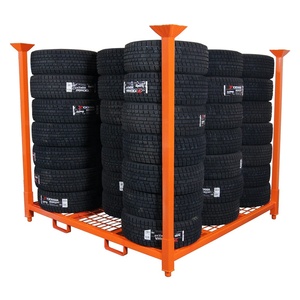
Engineered Track Racking Systems
Specialized Mobile, Dynamic & Guided Track Configurations
Custom-engineered systems designed to eliminate idle forklift aisles, reclaim up to 85% wasted cubic volume, and withstand seismic and heavy-duty cold-chain environments.
25+
Years Engineering Hub (Est. 2001)
30,000 m²
Direct Manufacturing Base
10,000+
Global Projects Installed
100%
FEM / RMI / CE Structural Check
Technical White Paper
Engineering Precision: How Pallet Racks on Tracks Maximize Density
In contemporary intralogistics, real estate expenditures represent upwards of 40% of ongoing warehousing overhead. Conventional selective racking architectures maintain an aisle-to-storage footprint ratio near 60:40, meaning more than half of usable building volume remains unmonetized as empty forklift access corridors. As an industry-leading China pallet racks on tracks supplier, we engineer high-density, rail-guided track systems—including motorized mobile pallet racks (MPO) and deep-lane radio shuttle track networks—transforming footprint allocation into an ultra-efficient 85:15 storage-to-aisle ratio.
Embedded In-Floor Track Tolerances
Rail guide tracks are cast directly into reinforced industrial concrete or bolted within engineered floor recesses. Utilizing precision cold-formed, wear-resistant steel, our guides ensure deflection deviation stays within 1.0mm per 10 linear meters, preventing mechanical friction and motor strain under 30-ton mobile base assemblies.
Synchronized Variable Drive Control
Mobile base racks leverage distributed Siemens or SEW drive systems. Soft-start and soft-stop vector controls eliminate harmonic load sway for pallet weights exceeding 1,500 kg per position, while multi-level photoelectric safety curtains guarantee complete worker protection during automatic aisle opening sequences.
Thermal & Sub-Zero Compatibility
Cold storage facilities incur heavy thermal losses per cubic meter. Implementing on-track mobile racking minimizes air conditioning volumes by up to 50%. Our structural components utilize Q355D steel grades pre-treated against sub-zero embrittlement (-30°C) with proprietary anti-crystallization lubricants.
Density, Selectivity & Capex Performance Matrix
Comparing conventional storage paradigms against rail-guided and on-track pallet rack architectures.
| Storage System Architecture | Space Utilization | Pallet Selectivity | Aisle Requirements | Floor Track Ingot / Rail | Best Application Profile |
|---|---|---|---|---|---|
| Standard Selective Racking | 40% – 45% | 100% Direct Access | 3.0m – 3.8m Aisle per Bay | None | High SKU variety, fast pick frequency |
| Track-Guided Mobile Racking | 80% – 90% | 100% Selective | Single dynamic aisle (2.8m - 3.2m) | Precision embedded rails | Cold storage, chemical stores, high land rent |
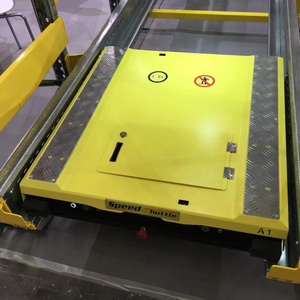
| Radio Shuttle Tracks | 75% – 85% | LIFO / FIFO by Lane | Staging / Truck access lanes only | Structural shuttle rail guides | Uniform SKUs, deep cold store, bulk FMCG |
| Gravity Flow Track Racks | 70% – 80% | Strict FIFO Rotation | Separate load & retrieval aisles | Full-width steel roller tracks | Perishable food, pharmaceuticals, cross-dock |
Market Intelligence
Future Procurement Trends: Where On-Track Racking is Headed (2026–2030)
1. Convergence of WMS & IoT Dynamic Routing
Static on-track configurations are migrating toward sensor-driven autonomous movement. Modern mobile racks integrate with Warehouse Management Systems (WMS) to dynamically open aisles based on pending forklift order waves, shaving down pickup retrieval cycles by up to 28%.
2. Hybridized Mobile Mezzanine Systems
Facilities constrained by zoning footprints are marrying rack-supported structural mezzanines on track platforms. This enables double-tier picking bays to glide together over primary ground lanes, creating multi-level capacity without structural civil construction.
3. Ultra-Low Carbon Cold Chains
With corporate Scope 3 emissions deadlines approaching, cold-chain operators favor mobile on-track infrastructure. By packing double the inventory into the same refrigerated envelope, energy footprints drop by 35%–42% per pallet position stored.
Enterprise Heritage & Quality
Why International EPCs & Warehouse Operators Partner With Us
Founded in 2001 in Guangzhou, HEDA Shelves provides single-source accountability from roll-forming to worldwide sea freight delivery.
CE & ISO 9001:2015
Certified under CE No. 2435-CPR-8605159 and ISO 9001:2015 No. 18624Q00169R0M with complete mill test certifications provided for every heat of steel.
10-Stage In-House QC
We do not outsource critical lines. Upright cold-forming, laser cutting, automated punching, pickling, phosphating, and electrostatic epoxy coating occur within our 30,000 m² site.
Free 3D & CAD Layouts
Within 24 to 48 hours, our technical engineers develop fully engineered CAD floor plans, load calculation sheets, and 3D walkthrough renderings before production commitments.
Global Export Ready
Direct routes from South China ports ensure optimized sea shipping across Southeast Asia, the Middle East, Europe, and the Americas with complete container stowage diagrams.
Procurement Guidance
Frequently Asked Questions on Pallet Racks on Tracks
Clear answers regarding tolerances, seismic compliance, civil installation, and shipping protocols.
What warehouse floor preparation is required for track-guided mobile pallet racks?
Mobile racks on tracks demand specific slab leveling and structural capacity. Generally, the concrete floor must support combined static and dynamic wheel loads of 80–120 kN per wheel. Depending on whether you choose surface-mounted flat rails or flush-embedded guide tracks, slab recesses of 100mm–150mm are cast or saw-cut during construction. Floor levelness should adhere to DIN 18202 standards (within ±2mm over a 2m straightedge) to prevent carrier drag.
Can these on-track systems be installed in high-risk seismic regions?
Yes. We have engineered track-guided and mobile systems across earthquake-prone areas including Indonesia, the Philippines, Japan, and Western Latin America. Our designs incorporate heavy-duty base plate anchoring, oversized tubular structural bracing, anti-tilt floor safety lugs, and mechanical wheel brake locks to absorb harmonic resonance under seismic accelerations.
How do radio shuttle tracks compare with electrically driven mobile base racks?
Radio shuttle tracks are high-depth dynamic channels within a fixed structural frame, making them ideal for high-throughput, low-SKU profiles (such as 50–500 pallets per SKU). Electrically driven mobile pallet racks place entire selective racking bays on guided floor rails, moving collectively to reveal an aisle. Mobile racking maintains 100% immediate selectivity for every pallet, while radio shuttle systems excel in rapid batch loading.
What surface treatment ensures steel longevity in tropical or sub-zero environments?
Every beam, column, and rail component passes through a thorough pre-treatment including acid pickling, alkaline degreasing, and zinc phosphating. This is followed by an electrostatic thermo-hardened epoxy powder coating (70–90 microns thick) cured at 180°C. For coastal warehouses with high salinity or constant washdown cold rooms, we provide continuous hot-dip galvanization with zinc coatings up to 85 microns.
What engineering documentation is delivered with an overseas export order?
All international orders include a comprehensive engineering dossier: 2D general arrangement drawings, 3D structural layouts, stamped structural calculation sheets (conforming to FEM 10.2.02 or RMI standards), component load certification tables, electrical/track wiring diagrams (for automated lines), and container packing lists with step-by-step installation manuals.