High-Performance Industrial Racking & Warehouse Systems
Cold-formed and structural steel storage solutions engineered for unyielding structural equilibrium, verified load compliance, and long-cycle warehouse safety.
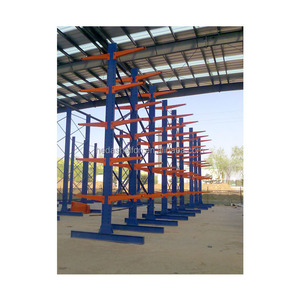
Double Sided Heavy Duty Cantilever Racking System Cantilever Racks Industrial Shelves Warehouse Racks
- Dual-Sided Load
- Up to 5000kg/arm
- Tubing & Beams
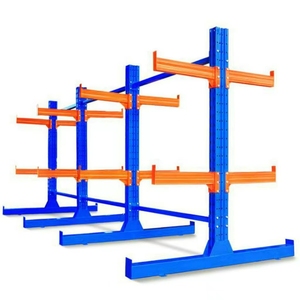
Steel Cantilever Pallet Racking Single Side Heavy Duty Multi-Level Corrosion Protection Garage Use CE Certified 500-3000kg Racks
- Single Wall Anchor
- 500-3000kg/Level
- Corrosion Proof
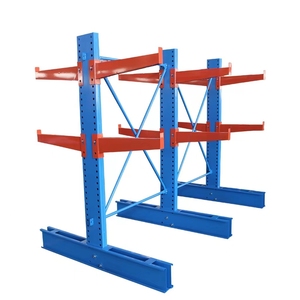
Factory Direct Cantilever Racking Heavy Duty Storage Rack For Long Pipe Lumber Material
- Long Stock Storage
- Q235B/Q355B Steel
- Adjustable Pitch
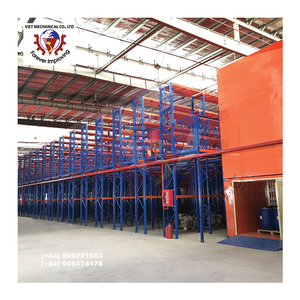
Customized Adjustable Metal Mezzanine Floor Racking System For Efficient Pallet And Warehouse Storage
- 2-4 Tier Levels
- Integrated Stairs
- Multi-tier Flow
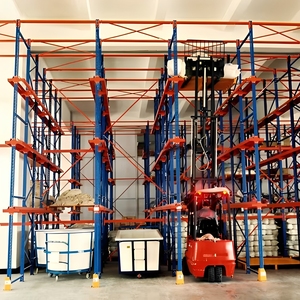
Top Quality Pallet Racking System Warehouse Storage Drive in Pallet Rack Drive Through Racking System
- LIFO/FIFO Logic
- Minus-Aisle Layout
- Cold Chain Ready
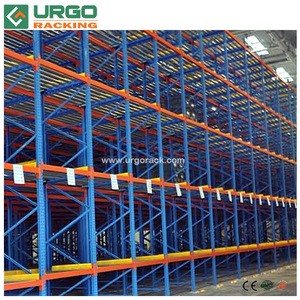
High Quality Industrial Rolling Shelves Stainless Steel Shelf Carton Flow Rack
- Gravity Rollers
- Strict First-In-First-Out
- Ergonomic Feed
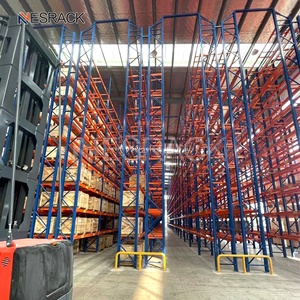
Heavy Duty Warehouse Rack Boltless Storage Shelving Heavy Duty High Pallet Racking For Industry Warehouse
- Modular Clip Hook
- Zero Bolt Assembly
- 1000-4000kg Beam
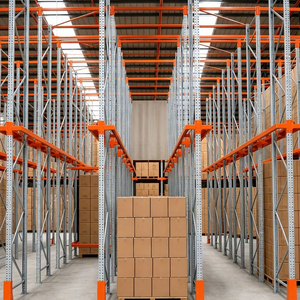
Industrial Heavy Duty Drive in Rack High Density Storage System for Warehouse
- Maximum Footprint
- Heavy Guide Rails
- Up to 85% Density
Over 25 Years of Engineering Distinction in Heavy Storage Architecture
Founded in 2001 in Guangzhou, HEDA Shelves operates a vertically integrated 30,000 m² smart manufacturing center, orchestrating full-cycle roll-forming, robotic welding, and automated surface finishing.
Structural Mechanics of Heavy Duty Cantilever Racking
Analyzing static load distributions, overturning moments, deflections, and seismic anchoring criteria for unconstrained linear cargo storage.
Moment Arm & Base Anchor Equations
Unlike standard selective pallet racks where vertical loads resolve purely into compressive axial column stresses, cantilever systems transfer large bending moments into central vertical columns and floor-anchored base beams. The cantilever arm behaves as a beam fixed at one end with a free tip.
Roll-Formed vs. Structural H-Beam Profiles
High-capacity systems hinge on the metallurgical choice between cold roll-formed gauge profiles and hot-rolled structural steel (IPE, HEA, or UB profiles). For load ratings exceeding 1,500 kg per arm, hot-rolled structural H-beams demonstrate zero micro-cracking and higher impact resistance against material handler impacts.
Safety Deflection Limits & Pin-Lock Pivots
Rigidly welded arms can fracture under shock forklift loading. Engineering cantilever arms with engineered vertical pin-lock connections allows slight upward vertical play (approx. 2°–4° upward camber). When loaded, the arm deflects downward to parallel, avoiding permanent plastic deformation.
| Racking Type | Typical Column Profile | Max Arm Capacity | Access Flexibility | Best Matched Material Profile |
|---|---|---|---|---|
| Light Cantilever | Cold-Rolled C/U Profile (2.0–2.5mm) | 200 – 600 kg/arm | Manual / Light Stacker | Plastic Extrusions, PVC Conduit, Light Trim |
| Medium-Duty Cantilever | Box-Welded Omega / Profile C300 | 600 – 1,200 kg/arm | Counterbalance Forklift | Timber Bundles, Aluminum Profiles, Sheet Pallets |
| Heavy Duty Cantilever | Hot-Rolled IPE 200 – IPE 400 | 1,200 – 3,500 kg/arm | Side Loader / Reach Forklift | Structural Steel Beams, Heavy Tubing, Engine Dies |
| Extra Heavy Structural | Wide Flange HEA/HEB 300+ | Up to 5,000+ kg/arm | Heavy Combilift / Specialized Crane | Oil & Gas Drill Strings, Concrete Molds, Heavy Coils |
Future Procurement Trends in Heavy Duty Material Handling
How evolving supply chains, automated handling equipment, and green industrial mandates are reshaping international cantilever rack specifications.
Integration with Autonomous Multi-Directional AGVs
Traditional cantilever setups relied almost exclusively on wide-turning counterbalance trucks or articulated narrow-aisle sideloaders. Procurement contracts now demand automated guidance rails, floor transponders, and laser-guided AGV tolerances embedded right into the cantilever rack bases. Arms must feature millimetric laser alignment sensors to prevent autonomous collision during pick-and-place cycles.
Digital Twin Modeling & Seismic FEA Validation
EPC contractors and enterprise logistics developers are moving away from static load tables. Tier-1 procurement standards now stipulate finite element analysis (FEA) reports validated against the warehouse's specific geographic earthquake spectrum (e.g., UBC Zone 4, IBC seismic categories, or Eurocode 8). Procurement includes Digital Twin 3D CAD step files pre-integrated into warehouse management systems.
Low-VOC Coatings and Circular Steel Mandates
Cross-border sustainability regulations, such as the EU Carbon Border Adjustment Mechanism (CBAM), are transforming raw material procurement. Leading suppliers must disclose scrap-to-virgin steel ratios, provide Environmental Product Declarations (EPD), and implement lead-free, zero-VOC electrostatic powder systems coupled with closed-loop pickling and phosphating lines.
Evolutionary Advancements in Cantilever Rack Engineering
Continuous improvements in tooling, multi-axis laser cutting, and dynamic structural systems unlock higher performance and space optimization.
Cantilever-Clad Rack-Supported Buildings
To curb escalating industrial land costs, warehouse operators are moving away from traditional structural sheds housing freestanding racks. The rack-supported building trend uses heavy-duty cantilever uprights as the primary load-bearing structural columns of the building itself, bearing direct wind, snow, and seismic roof loads while holding steel pipes or long timber internally.
Automated Mobile Cantilever Bases
By mounting heavy-duty cantilever uprights onto electrically driven motorized mobile bogies running on recessed floor tracks, the system eliminates fixed access aisles. A single operational aisle serves an entire block of 6 to 12 double-sided cantilever rows, surging storage density by 80% to 110% across pipe and metal manufacturing plants.
Robotic Plasma Profiling & Boltless Quick-Adjust Arms
Traditional manufacturing relied on manual torch cutting and bolt-through column drilling, causing structural notch stress. Next-generation cantilever systems use CNC 3D robotic plasma profiling that crafts interlocking connector teeth with sub-millimeter precision, allowing quick relocation of arm levels along a 100mm/140mm pitch without sacrificing structural rigidity.
Why International Buyers Partner with HEDA Shelves
Vertical engineering integration, rigorous certified quality, and responsive turnarounds make our Guangzhou manufacturing center a trusted industrial asset.
CE & ISO 9001 Certified
Certified by CE (No. 2435-CPR-8605159) and ISO 9001:2015 (No. 18624Q00169R0M). Every project includes structural calculation reports and material mill test certificates.
Rapid 3D CAD & Load Modeling
Our experienced structural engineering team delivers free comprehensive 2D CAD architectural plans, 3D photorealistic renderings, and load-deflection profiles within 24 to 48 hours.
Advanced Chemical Pre-Treatment
Steel profiles pass through multi-stage pickling, degreasing, and phosphating tanks before automatic electrostatic powder coating, guaranteeing salt-spray endurance in tropical sites.
Optimized Export Logistics
Positioned near major South China ocean ports, our logistics staff designs custom nesting and container pack sequences to prevent transit deflection and maximize container fill.
Frequently Asked Questions by Industrial Warehouse Specifiers
Authoritative technical guidance compiled by HEDA senior engineering leads to resolve your critical sourcing, installation, and design questions.
What exact parameters must be calculated to size cantilever uprights and arm profiles?
How does HEDA guarantee structural safety in earthquake-active regions?
When should a facility specify hot-dip galvanizing versus electrostatic powder coating?
Can our warehouse crew install cantilever racks using HEDA engineering drawings?
What is the standard manufacturing lead time and packing protocol for ocean export?
Optimize Your Warehouse Storage Density with HEDA
Connect directly with our senior racking engineering specialists. Submit your building dimensions, pallet load profiles, or CAD drawings to receive a complimentary 3D layout, static calculation review, and factory-direct quotation within 24 hours.