Featured High-Density Industrial Storage Systems
Explore our CE and ISO 9001:2015 certified warehouse racking equipment manufactured in our 30,000 m² Guangzhou production facility. Engineered for heavy-duty load capacities, high throughput velocity, and optimal cubic space utilization.
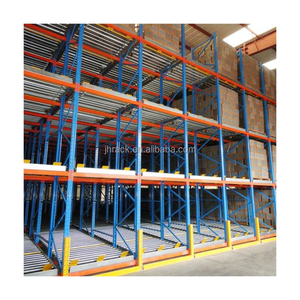
Jinhui Brand Galvanized Heavy Duty FIFO Pallet Flow Racks
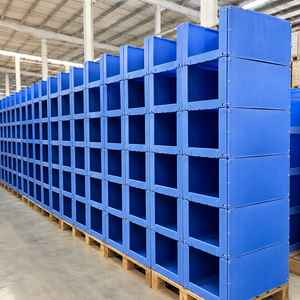
PP Corrugated Plastic Stackable Front-Opening Picking Bins
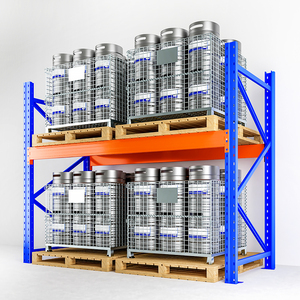
Heavy Duty Steel Pallet Storage Shelves (5000KG Load Capacity)
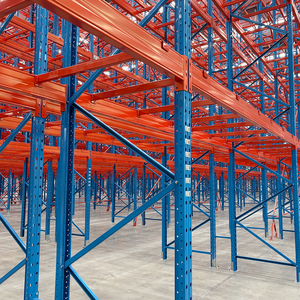
Modular Heavy Duty Cold Room Pallet Racking System
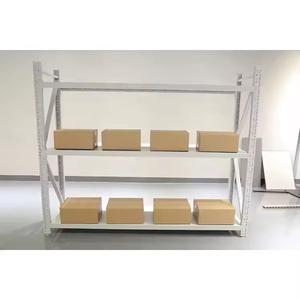
Long Span Medium Duty Industrial Warehouse Shelving Systems
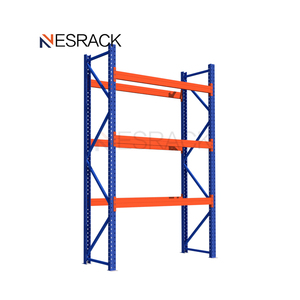
Conventional Heavy Duty Steel Selective Pallet Racking
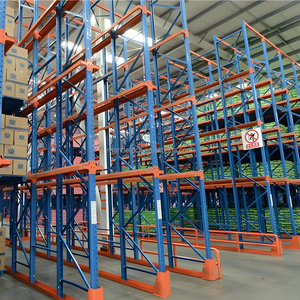
Heavy Duty Drive-In & Drive-Through Pallet Storage System
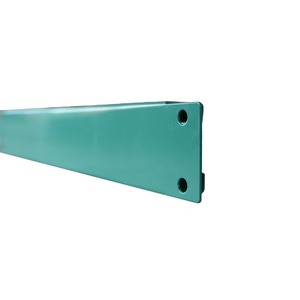
Customized Steel Racking Accessories, Row Spacers & Safety Bars
Technical White Paper: Kinematics & Mechanics of Gravity Feed Pallet Racking
Gravity feed pallet racking—frequently designated in material handling engineering as Pallet Flow Racking or live roller storage—represents the apex of unpowered, high-density dynamic storage logic. Operating strictly on the First-In, First-Out (FIFO) stock rotation paradigm, gravity flow systems utilize an engineered pitch gradient combined with precision roller tracks, centrifugal brake rollers, and impact separation mechanics to move heavy pallet loads dynamically from loading aisles to picking faces.
As global distribution centers face soaring real estate costs and escalating energy overheads, evaluating top manufacturing partners in China requires a comprehensive understanding of structural metallurgy, kinetic velocity control, and mechanical reliability. Guangzhou Heda Shelves Co., Ltd. brings over two decades of specialized expertise in cold-formed structural Q235B and Q355B steel fabrication, optimizing gravity lane geometry to prevent load binding, velocity runaway, and structural fatigue under high-frequency operational duty cycles.
Uncontrolled acceleration is the leading cause of pallet damage and rack frame deformation in gravity feed systems. An unbraked pallet weighing 1,000 kg traveling down a 12-meter lane at a 3.5% incline can achieve kinetic energies exceeding 1.2 kilojoules at the discharge stop. Elite Chinese manufacturers solve this via indirect magnetic eddy-current brake rollers set at strict calculated intervals (typically every 1.2 to 1.5 meters), capping pallet velocity at a safe, uniform speed of 0.25 to 0.3 meters per second regardless of pallet payload weight variations.
System Architecture Comparison: Gravity Flow vs. High-Density Alternatives
Choosing the correct storage architecture requires balancing access velocity, operational power demands, SKU variety, and floor footprint utilization. Below is a structural comparison prepared by our senior warehouse systems engineers:
| Storage System Type | Inventory Rotation | Aisle Requirement | Storage Density | Power / Automation Need | Primary Industry Application |
|---|---|---|---|---|---|
| Gravity Feed Pallet Racking | Strict FIFO | 2 Aisles (Load / Unload) | Very High (up to 85%) | Zero (Passive Kinematics) | FMCG, Food & Beverage, Cold Storage, Pharma |
| Selective Pallet Racking | 100% Direct Access | 1 Aisle per 2 Racks | Low (approx. 35-40%) | Forklift Dependent | Multi-SKU 3PL, Retail, Spare Parts |
| Drive-In Racking | Strict LIFO | 1 Access Aisle | High (approx. 65-75%) | Forklift Entry Required | Homogeneous Bulk Goods, Seasonal Items |
| Radio Shuttle Racking | FIFO or LIFO | 1 or 2 Aisles | Ultra High (up to 88%) | Lithium-Powered Shuttle | Deep-Lane Cold Stores, Automated Facilities |
Technological Innovations in Chinese Gravity Flow Manufacturing
The Chinese industrial storage manufacturing sector has undergone a massive technological shift. Moving away from standard light-duty manual shelving, leading producers now utilize robotic continuous cold-roll forming, automated laser punching, and specialized surface passivations. At Guangzhou Heda Shelves, engineering research has yielded three major mechanical enhancements in gravity flow architecture:
When multiple pallets rest in a gravity lane, cumulative line pressure makes picking the front pallet exceptionally difficult for forklift operators. Our dynamic ramp separators mechanically isolate the front discharge pallet from rear pallets by 150–200mm. This removes back-pressure and ensures smooth, safe forklift extraction without frame binding.
In cold chain environments operating down to -30°C, standard bearing grease freezes, rendering gravity rollers inoperable. HEDA’s cold-room flow racks utilize synthetic low-viscosity fluorinated lubricants paired with stainless steel ball bearings and zinc-plated anti-corrosive roller tubes to guarantee unhindered spin velocity in freezing conditions.
Depending on whether clients utilize wood Euro-pallets, plastic GMA pallets, or steel stillages, roller contact surfaces must minimize friction while resisting flat-spotting. HEDA offers custom roller compositions ranging from heavy-gauge galvanized steel cylinders to high-impact high-molecular polycarbonate wheels.
Require Custom Structural CAD Calculations for Your Gravity Flow Project?
Our engineering desk provides comprehensive FEM 10.2.02 and EN 15512 structural simulations, seismic loading verification, and 3D CAD layout models within 24 to 48 hours—100% free of charge.
Contact UsFuture Procurement Trends: Modernizing Global Supply Chains
Material handling procurement is shifting rapidly from low-cost component sourcing to end-to-end lifecycle value engineering. As multinational logistics operators, pharmaceutical hubs, and e-commerce fulfillment centers streamline operations, several critical trends are redefining how gravity feed pallet racking is manufactured, specified, and deployed globally:
1. Net-Zero Operational Energy Mandates
ESG directives are pressing warehouse managers to minimize power consumption. Fully automated ASRS systems require significant electrical power for motors and drives. Gravity feed pallet flow racking provides high-density FIFO storage using zero electrical power. By relying entirely on potential energy and gravity kinematics, facilities can dramatically lower carbon intensity while maintaining rapid throughput.
2. Hybridization with Pick-to-Light and AMR Robotics
Modern procurement tenders increasingly specify hybrid installations. Gravity flow rack discharge faces are being outfitted with digital Pick-to-Light LED displays and optical sensors. Autonomous Mobile Robots (AMRs) or Automated Guided Vehicles (AGVs) pick items directly from the gravity discharge point, blending the cost-efficiency of passive flow racking with flexible robotic automation.
3. Standardized Global Structural Compliance
Global buyers no longer accept unverified steel profiles. Tier-1 buyers demand strict compliance with international structural standards: EN 15512 (European rack design code), FEM 10.2.02, RMI (Rack Manufacturers Institute in North America), and ISO 9001 quality assurance. Chinese manufacturers with verified testing facilities and third-party laboratory certifications are winning preferential supplier status worldwide.
Why Partner with Guangzhou Heda Shelves Co., Ltd.?
Established in 2001, Guangzhou Heda Shelves Co., Ltd. is a premier Chinese enterprise specializing in the design, engineering, fabrication, and export of industrial pallet racking, warehouse mezzanine platforms, and high-density gravity flow systems. Operating out of a state-of-the-art 30,000 m² production facility in Guangzhou, Guangdong, HEDA combines Advanced Manufacturing 4.0 equipment with deep engineering talent.
Our in-house quality control tracks raw materials from certified steel mills (tensile & yield testing), through automated multi-station cold-bending profile forming, robotic welding, pickling/phosphating surface pretreatment, to 180°C electrostatic epoxy powder coating.
HEDA holds official CE certification (Certificate No. 2435-CPR-8605159) and ISO 9001:2015 quality management compliance (Certificate No. 18624Q00169R0M). All finished racks undergo rigorous static frame load tests, beam deflection checks, and corrosion resistance spray tests.
We work directly with industrial distributors, system integrators, and general contractors. From specialized row spacers and frame protectors to custom pitch dynamic flow beds, our team delivers custom branding, private labeling, and tailored packaging.
Enterprise Procurement FAQ: Technical & Logistics Queries
Below are technical answers to common questions asked by supply chain executives, warehouse project engineers, and international procurement managers when sourcing gravity feed racking from China:
Q1: What is the optimal slope angle for gravity flow racking, and how is it calculated for mixed pallet weights?
The industry standard incline angle ranges between 2.5° and 4.0° (or roughly a 3.5% to 5% pitch gradient). The precise angle is determined based on pallet bottom quality, runner orientation, and payload weight range. For example, plastic GMA pallets with smooth bottom runners require a slightly flatter pitch (approx. 3.0%), whereas standard wooden pallets with rough bottom boards require 3.5% to 4.0%. During pre-production engineering, HEDA performs empirical incline glide tests using sample client pallets to ensure consistent restart momentum without operator intervention.
Q2: How do indirect magnetic brake rollers control pallet acceleration in long lanes?
Magnetic brake rollers operate via internal eddy-current induction principles without requiring physical friction pads or electrical power. As a pallet rolls over the brake roller, its downward momentum turns an internal planetary gear mechanism that rotates magnets inside a copper cylinder. The resulting magnetic drag force produces resistance proportional to the pallet's speed. Heavier or faster pallets experience greater drag, effectively locking terminal velocity to approximately 0.3 m/s across the entire lane length.
Q3: How does Guangzhou Heda Shelves protect gravity feed steel structures from humidity and cold-room condensation?
Corrosion prevention is crucial for longevity in tropical climates and refrigerated facilities. All upright frames and beams undergo an 8-stage chemical immersion process involving degreasing, acid pickling, zinc phosphating, and deionized water rinsing. Next, an electrostatic epoxy-polyester powder coating is applied at 60–80 microns and heat-cured at 180°C. For extreme humidity, coastal sites, or cold rooms, hot-dip galvanizing (HDG) conforming to ISO 1461 is available, providing zinc coatings over 65 microns thick for decades of rust-free service.
Q4: What technical documentation is supplied with container shipments for local installation teams?
Every export order shipped from our South China plant includes a full technical project binder: 2D architectural CAD layouts, 3D component installation schematics, detailed container packing lists matched to numbered bundles, frame/beam structural capacity plaques, and formal CE/ISO mill certificate copies. Furthermore, our project engineering team offers video installation support and remote assistance for local assembly crews.
Q5: What is the typical lead time for custom manufacturing and shipping to global ports?
Standard production cycles range from 15 to 25 calendar days depending on project size and specialized finishes. Shipping from Guangzhou or Shenzhen ports offers fast sea freight routes: 7–12 days to Southeast Asian destinations (Singapore, Bangkok, Jakarta, Manila), 18–22 days to Middle Eastern ports (Dubai, Jeddah), and 25–35 days to European or North American ports. Optimized container loading plans ensure maximum cubic utilization per 40ft High Cube container, reducing freight costs per pallet position.
Accelerate Your Warehouse Efficiency with HEDA Shelves
Connect with our export engineering department today. Receive direct factory pricing, structural CAD proposals, and sample roller flow specifications tailored precisely to your operational requirements.
Contact Us